55.1 F
San Francisco
Wednesday, May 20, 2026
Home Blog Page 1517

Salon Owner Turned Politician: Shelley Luther Conquers Texas House 62

0

Key Takeaways:

– Shelley Luther, notable for defying COVID-19 shutdown measures, won Texas House District 62.
– She netted over 75% of the vote, firmly beating Democrat Tiffany Drake.
– Despite being jailed and slapped with hefty fines for contempt of court, Luther’s transition from salon owner to Texas House representative is now sealed.

From Styling Chairs to Political Arena

Shelley Luther, the owner of Salon à la Mode in North Dallas, is now better known for her role in the political world rather than hairstyling. Her resistive approach to pandemic-related lockdowns initially earned her widespread recognition and now, she’s celebrated an electoral win. She was victorious in the Texas House District 62 race, outpacing her competitor, Tiffany Drake, by capturing over 75% of the total votes.

Lockdown Defiance Triggers Widespread Attention

In the thick of the COVID-19 pandemic in 2020, Luther trumpeted headlines. She was imprisoned for a week over charges related to both civil and criminal contempt of court. The center of this storm was her stubborn stance on keeping her salon operating despite strict lockdown measures, contrary to the court’s orders. However, this gracious defiance of the lockdown, oddly enough, emerged as a key part of her persona rather than a stain on her repute.

Penalties Transformed Into Career Shift Catalyst

Court-ordered lockdowns triggered hefty fines for the salon owner. Each day she continued to operate her business despite these orders put a $1,000 dent in her wallet. Though faced with a monetary bruise and time behind bars, Luther stayed steadfast and didn’t let these hindrances pull her down. Instead, her ordeal became a catalyst, driving her into the public service career path.

Acclaim and Criticism: A Mixed Response

Luther’s actions sparked a melee of reactions across the nation, with some seeing her as a freedom fighter and others as a public health villain. Despite the obvious polarity in public sentiment, her win signals many voters saw her as a tenacious leader who doesn’t shy away from battle.

Stepping Stones to the Political Career

From enforcing the right to maintain her livelihood during the lockdown, to standing up against hefty fines, Luther leveraged this newfound popularity to propel her political ambitions. Her victory denotes a notable transition from salon owner to Texas House representative. Paradoxically, it was the court’s actions against her business’s defiance, which picked up national attention, that boosted Luther’s renown, thereby setting the foundation for her political rise.

A Resounding Victory

Luther’s broad electoral victory over Tiffany Drake stamps the monumental change in her career direction. The time when she was known exclusively for salon affairs seems distant, indeed. With her seat in the Texas House sparkling new and over 75% of voter approval backing her, she is all set to influence Texas policies and legislation.

In conclusion, Shelley Luther’s story from salon owner to a voice in the Texas House is a testament to resilience and tenacity. Heavily fined and jailed for lockdown defiance, she did not bow down. Instead, she seized these chain of events as a stepping stone to redirect her life, entering politics, and eventually, soundly winning a seat in Texas House District 62. This saga eloquently suggests that Luther is unafraid of challenges and will fight for what she believes in, come what may. At the end of the day, it is her spirit and courage that have guided her unexpected, yet rewarding transition from the styling chair to a key voice in Texas politics.

Trump’s Second Term: What It Means for Israel and the Middle East

0

Key Takeaways:

* Israel views President Trump’s re-election with hope amid ongoing conflict.
* Trump pledges to end wars that escalated during former President Biden’s tenure.
* Skeptics worry about Israeli position in potential peace deals.
* Israel may face challenges in security aid from the U.S. due to Trump’s foreign aid aversion.
* PM Netanyahu welcomes Trump back to office.
* Reimplementing previous successful Trump policies and re-examining failing Biden decisions may be on the cards.
* The Iran issue, the rebuilding of Gaza and the role of Qatar will be major points to watch in Trump’s second term.

Excitement and Optimism Amid Skepticism

As the dusk fell on Jerusalem, an air of cautious optimism pervaded the city. President Trump’s re-election sparked hope among Israelis as they faced one of their most challenging periods, which began on October 7th, 2023. For many, the winding down of Biden’s presidency and the start of Trump’s second term promises a shift in momentum to their favor in the Middle East.

However, this optimism also mixes with skepticism. There are concerns that Trump’s haste to resolve conflicts might leave Israel in a less-than-ideal position. The current wars, including those with Hamas and Hezbollah, have been a significant strain for the nation.

Support and Skepticism

Trump’s adamant stance against terrorism, showcased in his powerful message to Hamas during his RNC address, gave a robust reassurance to Israelis. This forceful posture seems more promising compared to the comparably passive approach of the Biden administration.

Israeli Prime Minister Benjamin Netanyahu was among the first international leaders to congratulate Trump on his victory. The two leaders have generally maintained a productive working relationship, despite occasional conflict points.

However, concerns linger around Israel’s security aid from the U.S., which is due for renewal in 2028. Trump’s aversion to foreign aid and wars raises questions about the future assistance Israel can expect.

A Look Back to Move Forward

There’s speculation that Trump’s second term might mark a return to policies that brought peace and prosperity to the Middle East during his first term. The disastrous fallout from a hasty U.S. withdrawal from Afghanistan and Israel’s deep civil strife over judicial reforms, both under Biden’s watch, provide critical learning points for the re-elected president.

Trump’s successful Abraham Accords, which advanced peace in the region significantly by breaking away from the traditional approach to the Palestinian issue, may see a comeback. Additionally, a re-examination of UNRWA’s funding, after the organization’s role in several atrocities against Israelis, could be on Trump’s agenda.

Future Concerns Indirectly Connected

Three significant challenges lie ahead for the Trump administration – the fate of Gaza, the potential annexation of Judea and Samaria, and the threats from Iran and Qatar. How these are resolved will have significant implications for Israel and broader Middle East peace.

Trump will have to decide how to approach these issues, straddling his ties with Qatar’s ruler Sheikh Tamim Bin Hamad Al-Thani, unseating the Hamas rule from the Gaza strip, thwarting Iran’s efforts in the Middle East, and managing the melting pot of civil unrest in Judea and Samari.

Trump’s path forward is a watchful waiting game for Israelis. With two months before his re-entry to office, there is much that could change, and much that could be influenced by his comeback. Amid all the uncertainty, one thing is clear – his approach towards the Middle East will be under a scrutinizing eye.

Reflections on the Current Perception of Mainstream Media and Its Consequences for Presidential Politics

0

Key Takeaways:

– The reputation and trust in mainstream media have significantly deteriorated.
– The media failed to address or acknowledge President Biden’s noticeable mental and physical decline.
– Critics claim a similar bias was noted during Vice President Kamala Harris’ handling of media interactions.
– Most mainstream media outlets rarely articulate or agree with the position of numerous US citizens.
– The potential increase in viewership due to Donald Trump’s presence could worsen the situation.

The Tide Turns on Traditional Media

Evidently, traditional mass media’s influence over the national discourse may be waning, as evident in the recent 2024 presidential election. This shift is not merely a random occurrence, but a result of a deeply-rooted skepticism towards the mainstream media. Their inability to instill fear or create outrage among average voters has brought to the surface a crucial revelation: that media institutions are less trusted than many other significant organizations in America.

The Field of Deception or Truth-Seeking?

While some journalists might believe they are disliked due to their forthright investigation and reporting of contentious issues, critics argue that the public’s mistrust may be a consequence of perceived deceit and bias. A lack of genuine accountability for widely publicized stories such as the Russia collusion narrative or the Hunter Biden laptop incident is suggested to have catalyzed this negative response.

Examining the Media’s Role in the White House

As the 2024 election approached, questions were raised regarding the media’s role in covering President Biden’s apparent cognitive and physical decline. Critics point out that the media seemed to prioritize fact-checking opposition statements over investigating alarming issues within the Biden administration. This contrast has further reinforced the need for objective and unbiased journalism.

Questions Surrounding Vice President Kamala Harris

Following the spotlight on President Biden, focus swiftly turned to Vice President Kamala Harris. Accusations of mainstream media hastily trying to install Harris as president were particularly concerning. A further cause for mistrust was the media’s portrayal of Harris as a uniquely talented political figure despite inconsistency and reluctance in public appearances.

Bias in Media Reporting

The current editorial landscape in major media outlets rarely reflects the opinions or positions held by a sizable fraction of the country. This skewed representation has led to accusations of bias in media reporting. This issue became particularly apparent on election night, where it seemed that even the anchors were a party to the bias.

Misinterpreted Public Sentiment

In the wake of the election and subsequent defeat of Kamala Harris, mainstream media seemed, at times, out of touch with public sentiment. It appears there is a stark lack of self-awareness in established media – in their labeling of everyone who disagrees with them as ‘fascists’ without considering the possible implications on public opinion.

Towards A More Diversified Media

With a further increase in ratings set to occur due to Donald Trump’s possible association, the media landscape doesn’t seem to be changing any time soon. The key, critics suggest, is the adoption of humility and objectivity in reporting. The sooner the mainstream media adopts these virtues, the quicker they will regain the trust and respect of the public.

In the final analysis, irrespective of growing concerns, one upside seems to be gradually surfacing: less reliance on mainstream channels. This development suggests that the public is actively seeking out more diversified and impartial sources of information.

Fed Cuts Benchmark Lending Rate Again Amidst Slow Inflation

0

Key Takeaways:

– The Federal Reserve cuts its benchmark lending rate for the second time this year.
– The decision is influenced by the ongoing situation of slow inflation.
– Economic considerations are a major factor for voters in the recent U.S. election.
– Federal Reserve Chair Jerome Powell held a press conference to discuss the decision.

The Federal Reserve Lowers Rate – The Second Slash This Year

In an action aimed at dealing with sluggish inflation, the U.S. Federal Reserve announced another cut to its benchmark lending rate on Thursday. This step, a quarter-point reduction, is the second of its kind during the year.

What’s Behind the Decision?

The move is a response to the critical economic situation created by the slow pace of inflation. This economic health measure is being carefully watched by authorities and everyday people as the U.S. heads toward a new political chapter under a new president.

How Does This Impact the Economy?

The Federal Reserve’s decision influences various aspects of the economic landscape. Lowered benchmark lending rates are designed to encourage more borrowing from banks, facilitating investment, and stimulating economic activities. However, it’s no secret that too much inflation can lead to an unstable economy.

Role of the Economy in Recent Elections

The condition of the economy, specifically rising price levels, played a huge role in the most recent U.S. presidential election. People indicated that their votes were heavily influenced by these economic aspects, demonstrating the importance of stabilizing the economic situation.

Chair Jerome Powell’s Press Conference

Jerome Powell, Chair of the Federal Reserve, shared details about the rationale behind the decision at a post-meeting press conference. While he didn’t disclose all the intricacies of the discussion, it was clear that the state of the economy and the direction it’s heading in was at the heart of their deliberations.

Looking Ahead – What Does This Mean?

As a result of this move, consumers could see a slight reduction in the borrowing costs for mortgages and other loans. However, the move also highlights the Federal Reserve’s ongoing concerns about the health of the economy. The slower pace of inflation suggests that the economy is not growing at its potential pace, a concern given the recent political shift. These concerns, coupled with the uncertainty of a new presidential mandate, imply that the Feds have a challenging task ahead.

In summary, the Federal Reserve is treading cautiously in an effort to maintain economic stability amidst the challenges of slow inflation and a new presidential era. This rate cut may influence the short-term economic landscape by reducing borrowing costs. However, how much this move will boost the sluggish economy remains to be seen. Given the significance of these economic situations, it is important to keep informed updates of these developments. With a new president and ongoing economic challenges, the actions of the Federal Reserve will remain a key factor in the U.S. economy’s fate.

Argentina’s Expected Inflation Drops – Latest from Central Bank Analysts

0

Key Takeaways:

– The latest forecast sees full-year inflation in Argentina at 120.0%, a drop by 3.6%.
– October’s month-over-month inflation is estimated at 3.0%, slightly lower than the earlier figure of 3.4%.
– In November, prices are projected to increase by 2.9% from October.

A Fresh Outlook on Argentina’s Economy

Analysts from Argentina’s central bank recently revised their inflation estimates. This change shows a slight ease in the country’s long-standing inflation struggle. The analysts now foresee the full-year inflation settling at 120.0%. This is a dip of 3.6 percentage points from the prediction made last month.

October’s Inflation Figures

Another key factor to note in this latest report concerns the month-over-month inflation for October. Initially, an estimate of 3.4% was put forward by the analysts. However, this figure underwent a revision. Now, the month-over-month inflation for October is expected to be slightly less, at 3.0%.

This statistical change reveals a hopeful shift towards a somewhat more stable economic trajectory. Despite the numbers remaining high, the change itself indicates a slight slowdown in the rate of inflation.

Predictions for November

Moving forward, the analysts also provided some predictions regarding November. They expect prices to rise by 2.9% from the numbers seen in October. Although this projection doesn’t represent a significant shift, it still shows some signs of continued inflation.

Further Projections from the Poll

In addition to these figures, the latest survey also yielded a few more projections. One of them was a 3… (This information has been left incomplete by the source and cannot be accurately reassumed).

What does this Mean?

Well, these changes in the anticipated inflation rates might seem like small shifts, but they matter. Inflation can significantly impact how much purchasing power consumers have. It might not be evident immediately, but over time, even small changes in inflation can add up.

Think about it this way – if the price of a loaf of bread increases by just a few cents every month because of inflation, at the end of the year, it could cost several dollars more than it did at the start. So, the impact of inflation is something that everyone feels, not just economists and policymakers.

In short, these tweaks in the expected inflation percentages highlight evolving trends in Argentina’s economy. The moderation in inflation rates signifies potentials for a more stable economic atmosphere in the country, a necessary step toward a healthier market environment.

Conclusion

Inflation is a central concept in economics and plays a substantial role in shaping a country’s financial health. The recent adjustments in the estimates by the analysts offer a fresh insight into Argentina’s economic forecast. However, it is important to remember that these are just forecasts and might evolve with fluctuating market conditions.

While we see a slow but steady move towards a more stable economic pathway, it remains a watchful time for observers of Argentina’s financial horizon. Monitoring the changes and trends in inflation rates will continue to offer crucial information about the economy’s pace and direction.

Federal Funds Rate Dips Again amid Trump’s Economic Policies

0

Key Takeaways:

– The Federal Reserve cut the federal funds rate for the second time in a row.
– Interest rates now stand between 4.5 and 4.75%, the lowest since March 2023.
– Trump’s economic policies are causing economists to question future interest rates.

Lowered Federal Funds Rate: Spurring Growth or More Uncertainty?

The Federal Reserve has made another move to steer the US economy during complex times. It lowered the federal funds rate, marking the second consecutive decrease. The rate, which is now between 4.5 and 4.75%, is at its lowest level since March 2023.

This announcement emerged from the Federal Open Market Committee’s two-day meeting. For those who don’t know, this committee is responsible for setting monetary policies. It’s like the strategic playmaker of the US economy. Their job? To make sure our economy stays on the right path and doesn’t fall off.

The Domino Effect of Lower Interest Rates

The federal funds rate decrease may seem like a distant concept, especially for your average teenager. However, it’s vital to know that it affects everyone to some capacity – from big businesses to everyday people.

You see, when the Federal Reserve cuts interest rates, borrowing money becomes cheaper. If you were a business or individual looking to take on a loan, this might seem like really good news. Loans become less expensive, businesses are more likely to borrow and invest. This can ultimately stimulate economic growth.

Yet, as beneficial as it could be, lowered interest rates don’t always mean everything’s rosy.

The Flip Side to the Coin

Lowering interest rates can be a double-edged sword. On one hand, it encourages financial activity, from business expansions to loan applications. However, it can also bring uncertainty. If interest rates are continually lowered, people may start to worry about the economy’s health.

In essence, when the Federal Reserve reduces rates twice in a row, it could be an indicator that the economy needs a boost.

Trump-Era Policies: Impact on Future Interest Rates

President-elect Donald Trump’s proposed economic policies have made waves across the country. Now, they are adding an extra layer of uncertainty to the future of interest rates.

Economists are scratching their heads, trying to predict what will come next. Everyone’s asking the same question: will Trump’s economic moves have a negative or positive impact on the already lowered rates?

The speculations are many, but for now, what we do know is that the Federal Reserve has taken a step that could either spur economic growth or brew more uncertainty. The effectiveness of this decision will unfold in time. Meanwhile, the US economy awaits the potential impacts of Trump’s economic plans.

Regardless of the outcome, we are watching history in the making. The moves made today by the Federal Reserve and upcoming ones by President Trump will undoubtedly shape the course of our economy. Whether this leads to prosperity or recession, it shows just how important these decisions can be in determining economic stability and growth for our nation.

Change always brings a mixture of excitement and anxiety, but one thing is certain; we are living in unique economic times. As we watch the chessboard of the economic world, every decision has the power to tip the balance, for better or worse. These are pages of our history we should not only learn but understand and remember, as they will inevitably shape our future.

US Secretary of State Blinken and French FM Barrot Pledge Continued Support for Ukraine

Key Takeaways:

– Secretary of State Antony Blinken and French FM Jean-Noël Barrot confirm strong support for Ukraine
– The leaders discussed key foreign policy issues including conflicts in Lebanon and Gaza
– The US State Department shows readiness to focus on key priorities during the transition period

Joint Commitment Towards Ukrainian Assistance

In a united display of support, U.S. Secretary of State Antony Blinken, along with French Minister for Europe and Foreign Affairs Jean-Noël Barrot, has reiterated commitments to provide sustained aid to Ukraine. The two officials had a comprehensive discussion, wherein they spoke about their shared determination to aid Ukraine in its pursuit of freedom and success.

Both leaders underscored the joint commitment to aid Ukraine. They assured their assitance in supporting the efforts of Ukrainians to defend their independence and attain victory. This ongoing commitment to support the Eastern European country demonstrates an international resolve to assist nations struggling for freedom, in spite of various ongoing geopolitical crises across the globe.

Delving Into Comprehensive Foreign Policy Issues

The robust discussion between Secretary Blinken and Minister Barrot did not limit itself to Ukraine. The duo also delved into other foreign policy issues that demand urgent attention. One of the key focal points of their conversation centered around Lebanon, a nation grappling with a severe economic crisis.

Blinken and Barrot emphasized the vital need for diplomatic solutions in Lebanon. This expression of support comes at a time when Lebanon faces one of its worst economic crises in history, marked by a devastating currency collapse, rampant inflation, and grim living conditions for its citizens.

Furthermore, the two leaders also shed light on the conflict in Gaza. Both Blinken and Barrot advocated for an end to the conflict, reflecting their shared commitment towards achieving peace in the Middle East.

State Department’s Focus on Key Priorities During Transition

Besides discussing international concerns, the US Department of State also confirmed its focus on pivotal priorities during the transitional phase. Of these, positioning Ukraine for success stands out as a significant agenda item. This indicative measure reveals an intent to ensure Ukraine’s long-term stability and growth, beyond the provision of immediate assistance.

This transition period offers a critical window of opportunity. Effective measures taken during this time could guide Ukraine towards a path of sustained growth and stability. As plans and strategies get fine-tuned and implemented, it’s clear that the road to success rests on a cohesive international approach.

Conclusion

In conclusion, the recent conversation between US Secretary of State Antony Blinken and French Foreign Minister Jean-Noël Barrot instills confidence in the continued global commitment towards Ukraine. It also underscores the urgency of addressing complex foreign policy issues that resonate across the international scene. Fostering meaningful and productive discussions, leaders from the world stage continue to collaborate on strategies. Their collective aim is to create a stable, peaceful and prosperous global society.

Steve Bannon Speaks Post Prison Release, Talks on Puerto Ricans, Minorities

Key Takeaways:

– Steve Bannon, former Trump’s strategist, released from prison early Tuesday.
– He served a four-month sentence for defying a subpoena concerning the Jan. 6, 2021 Capitol attack.
– After his release, Bannon recorded a podcast episode, referred to himself a “political prisoner.”
– Despite his release, Bannon’s legal troubles continue; he still faces charges of defrauding donors in a 2022 NY State case.
– Even if Trump wins the forthcoming elections, he cannot pardon Bannon in the NY case due to state-level jurisdiction limitations.

Ex-Trump Strategist Bannon Emerges from Prison

Steve Bannon, the infamous right-wing influencer, was released from federal prison on early Tuesday morning. The former White House chief strategist for Trump, who later turned to becoming a podcaster, has served a four-month sentence. Bannon was convicted of defying a subpoena issued by a congressional committee inspecting the Jan. 6, 2021 attacks on the U.S. Capitol. At 70-years-old, Bannon was quite outspoken before reporting for his sentence on July 1, issuing that he was “proud to go to prison.”

However, Bannon tried quickly to have his sentence shortened or put on hold. Even two weeks before his release, his pleas echoed inside prison walls. Despite his efforts, Bannon was incarcerated for four months at FCI Danbury in Connecticut, following his conviction in July 2022 on two counts of contempt of Congress.

Battles with Congressional Committees

His indictment was subsequent to his refusal to comply with subpoenas. The subpoenas were from House Jan.6, select committee investigators seeking to check Bannon’s communications with then-President Donald Trump following the chaotic 2020 presidential election.

On early Tuesday, moments after his release, Bannon recorded a podcast episode. He didn’t shy away from calling himself a “political prisoner.” Bannon stated with conviction, “The four months in federal prison, not only didn’t break me, it empowered me. I am more enthusiastic and focused than I’ve ever been in my entire life.”

Charged Again

However, Bannon’s troubles with the law are far from over. Even though he’s stepped out of one cell, another case awaits him in New York State. Bannon found himself accused of swindling donors for a “We Build the Wall” fundraiser that pledged erecting a part of the wall along the U.S.-Mexico border. The charges include conspiracy, money laundering, and fraud. Bannon, however, holds strong, entering a not guilty plea.

Bannon is no stranger to the courtrooms. He was previously convicted in a somewhat similar federal case in 2020. However, Trump, as one of his last acts as president, pardoned Bannon. But things might not go as smoothly this time.

Though Trump plans to run for president again, even if he is elected, he will have no jurisdiction to pardon Bannon in the New York case. The case is a state-level proceeding, hence out of reach for any presidential pardons. Bannon’s future, thus, remains uncertain as he battles on, both in the courtrooms and the political sphere.

Trump’s Victory in 2024: Is a Third Term Possible?

Key Takeaways:

– Donald Trump won the 2024 Presidential election against Kamala Harris.
– Trump’s victory marks the second non-consecutive term for the Republican president.
– The U.S. Constitution’s 22nd Amendment prevents Trump from pursuing a third term.
– Unperturbed by the stipulated term limits, Trump has fueled speculation about his political future.
– Trump will officially begin his second presidency on January 20, 2025.

Trump’s Second Victory: The 2024 Presidential Race

The leadership of the United States will once again rest in the hands of Donald Trump as he secured the title of the 47th President. Favor was in his favor as he triumphed over Kamala Harris in the heated 2024 White House race. Not only did he win the popular vote, but he also garnered the electoral vote, solidifying his place for the next four years.

In the aftermath of his victory, Trump revealed his ambition to kickstart the “greatest political movement of all time.” He expressed his intent to propel the country into a “golden age” during his address on Wednesday morning, in which he thanked his zealous supporters for their loyalty.

Presidential Terms: Understanding Limitations

This week’s triumph placed Trump in a unique position mirroring that of former President Grover Cleveland — the only other leader to serve non-consecutive presidential terms. This uncommon situation, however, raises questions about his potential candidacy in the future.

The 22nd Amendment of the U.S. Constitution explicitly stipulates that a president can only serve two terms. Whether these terms are consecutive or not doesn’t matter, meaning Trump’s current four-year tenure will be his last.

This practice of limiting presidents to two terms, though not constitutionally mandated until 1951, was instated by George Washington. It wasn’t until Franklin D. Roosevelt’s four successive terms that a formal motion was made for this practice to become a constitutional obligation.

The Specter of a Third Term: What Does Trump Say?

Despite the existing constraints, Trump has made intriguing statements about his political tenure. His intentions, while hinted at, remain somewhat hazy. The uncertainty was further amplified when, during a speech at the Believers’ Summit, he suggested that there may not be a need for future votes following the 2024 elections.

Embarking on this intriguing tangent, Trump encouraged his Christian proponents to vote for him, hinting at an unending reign of power. He stated, “You won’t have to vote anymore, my beautiful Christians,” subtly instigating a notion of eternal leadership.

As the Republican party races for control of the House and Senate, these ambiguous hints at an extended grip on power have led to speculations about Trump pushing the boundaries of political power.

Trump, however, clarified these suspicions in an interview with Sinclair Media Group, where he stated he does not intend to run in 2028 if he didn’t secure a victory in the 2024 elections. Yet, with the newly acquired seat, he expressed optimistic sentiments about a successful term.

Looking to the Future: The Inauguration Day

Trump’s second term will officially commence with his inauguration on January 20, 2025. With resilience and determination, he sets forth to reshape and drive the nation towards his envisioned golden epoch. While the thoughts of a third term are still suspended in uncertainty, the focus remains on Trump’s four-year tenure and his promises for a new era of prosperity.

Donald Trump Secures 2024 Presidential Victory; Biden Ensures Peaceful Transition

As the world braces for a politically charged shift in the US administration, incoming President Donald Trump took to Truth Social, his preferred social media platform, to celebrate his 2024 election victory late on Thursday night.

Trump’s Triumph and Celebrations

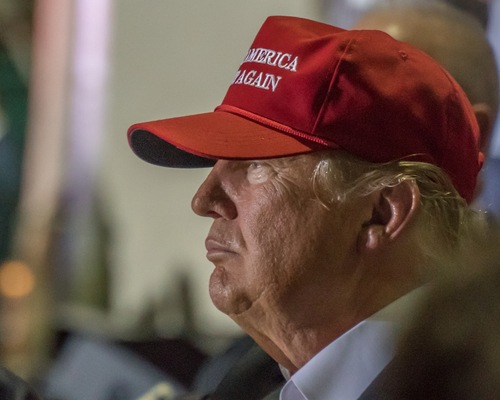
Engaging in a wave of posts, Trump shared a variety of victory symbols including an Electoral College map, newspaper front pages announcing his win, and a photograph of himself sporting a MAGA cap, alongside the optimistic text: “Get ready for the Golden Age.” It seems that Trump deeply believes in the potential of his second term.

In the first steps towards a new administration, Trump appointed Susie Wiles, the mastermind behind his victorious campaign, as his chief of staff. The appointed team is expected to advocate for and implement Trump’s agenda, encompassing issues such as mass deportation, imposing further tariffs, and extending tax cuts.

President Trump highlighted his revolutionary intentions during his victory speech on Wednesday, stating, “We are going to fix everything about our country. We made history for a reason tonight, and the reason is going to be just that. We overcame obstacles that nobody thought possible.”

Harris Concedes; Biden Promises Smooth Transition

It was confirmed that Trump defeated Democrat Kamala Harris, who graciously conceded the race on Wednesday afternoon. Following her concession, President Joe Biden stood firmly in his role to ensure that the country experiences a seamless transition of power.

Biden addressed the nation from the White House, providing reassurance that there would be a “peaceful and orderly” transition. He stated, “Yesterday, I spoke with President-elect Trump to congratulate him on his victory, and I assured him, I will direct my entire administration to work with his to ensure a peaceful and orderly transition.”

Key Takeaways

– Donald Trump celebrates winning the 2024 Presidential Election by engaging in a spree of victory posts across his preferred social media platform, Truth Social.
– Trump’s appointed team, led by Chief of Staff Susie Wiles, is expected to support him in implementing an agenda of mass deportation, increased tariffs, and extended tax cuts.
– Democrat Kamala Harris conceded the race, setting the stage for a peaceful transition of power.
– President Joe Biden assured the nation of a seamless transition by promising to utilize his administration to support Trump’s team in ensuring a “peaceful and orderly” handing over process.

Misogyny Surges Post Trump’s Victory

In an unfortunate backlash following Trump’s victory, there has been a surge of online posts targeting women with deeply misogynistic remarks. The comments antagonize women’s reproductive rights, creating an alarming state of concern.

McConnell: The Architect of Trump’s Comeback?

Despite the aversion MAGA enthusiasts may have for him, McConnell might be the catalyst that spearheaded the thriving MAGA movement, leading to Trump’s return to the Oval Office. His actions back in February 2021 have seemingly planted the seeds of Trump’s comeback.

Polling Predictions Miss the Mark

The surprising election outcome saw polling gurus fail to accurately predict Trump’s decisive victory. Not only are Democrats facing a reckoning, but the credibility of pollsters is also under scrutiny.

As the US is set for a new tenure with President-elect Trump, the world watches on with bated breath, wondering what the future holds under his administration. One thing is certain: it will be a politically charged and arguably unpredictable term.