57.7 F
San Francisco
Thursday, June 18, 2026
Home Blog Page 1529

Republicans Plan Major Healthcare Cuts: What You Need to Know

0

Key Takeaways:

– Republicans, having seized control of the house, have voiced their intentions to implement sweeping healthcare cuts.
– These cuts could increase costs and jeopardize insurance protection for millions of Americans.
– Proposed cuts by the GOP could result in about 4 million people losing insurance.
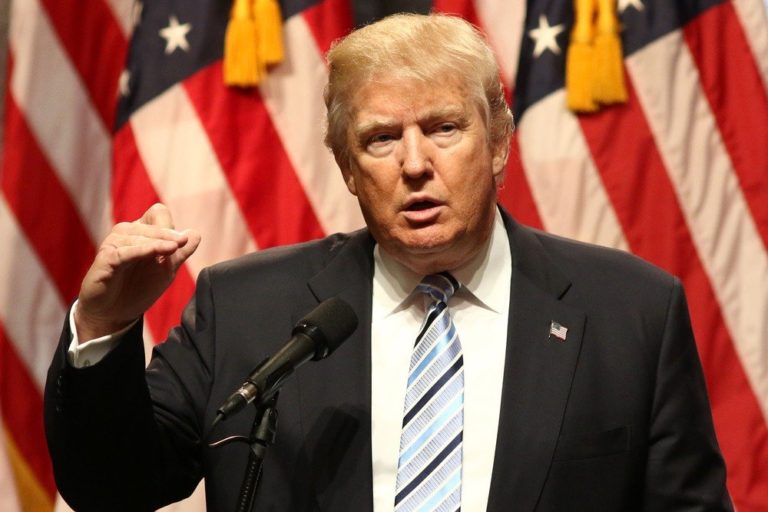
– President-elect Donald Trump and House Speaker Mike Johnson have signalled their intent to try and repeal the Affordable Care Act (ACA) again.
– These potential changes and cuts could lead to more Americans being uninsured and increase healthcare costs.

The Future of Healthcare: Major Cuts on the Horizon

In America, healthcare is likely to undergo a major transformation. The Republicans, now in possession of both houses of Congress and the White House, have put their cards on the table. They have announced their intent to drastically reduce healthcare spending. In not so many words, this means that costs could increase for millions of Americans, while some may even lose their insurance coverage.

The Path to Healthcare Cuts

Rep. Jodey Arrington, a Texas Republican and chair of the House Budget Committee, shared these plans this week. He revealed that the GOP intends to use a process called ‘reconciliation’ for bypassing any attempts to filibuster. This process could lead to cuts in mandatory programs, including Medicare, Medicaid, and Social Security.

ACA Tax Credits on the Chopping Block

As we delve further into the party’s plans, it becomes apparent that the issue at hand is extremely complex. The Republican Study Committee, with Arrington as a member, wants to do away with the ACA tax credits in its 2025 budget proposal. These tax credits are set to run out next year. These changes alone could leave about 4 million people without insurance.

Attempt to Repeal ACA: A Fresh Attempt

The Republican party had earlier attempted a full repeal of the ACA last time they were in office, but failed. This effort prodded a nation-wide wave of public protest. It seems President-elect Donald Trump and House Speaker Mike Johnson are preparing for another shot at the repeal.

Trump’s Assurance on Healthcare

Trump, during his only debate with Vice President Kamala Harris in September, asserted that the ACA would be replaced. However, he admitted that a full-fledged alternative plan was not yet in place. Johnson, too, echoed similar sentiments, advocating for an overhaul of the ACA.

The Impact of New Changes

Sarah Lueck and Allison Orris from the Center on Budget and Policy Priorities noted that these changes pose significant risks to Americans. They specified that Trump’s second term, combined with a GOP-led Congress, could compromise the accessibility and affordability of health coverage in Medicaid and the marketplaces.

Healthcare Cuts: The New Theme

It appears that the objective of the GOP’s healthcare policy is crystal clear: cuts. This includes reducing regulations and spending, according to Dylan Scott from Vox.

Vulnerability of Medicaid

Medicaid is particularly at risk, observes Stephanie Armour of KFF Health News. The GOP might impose work requirements on beneficiaries in certain states and alter the structure of the program’s funding.

The Future of Medicare

In a notable turn, the GOP’s Project 2025 agenda suggests making privatized Medicare Advantage the default choice for seniors. Activists argue this could pose a significant threat to traditional Medicare.

Protecting Social Security and Medicare

It seems clear that the GOP and Trump plan to reduce our earned benefits. However, Americans can take a cue from their successful efforts to save the ACA during Trump’s first term. Through a grassroots movement, we can also protect Social Security and Medicare. After all, it’s about everyone’s right to affordable healthcare.

Trump’s Top Pick: Susie Wiles Claims the Reign as New White House Chief of Staff

0

Key Takeaways:

– Donald Trump picked former campaign manager, Susie Wiles as the new White House chief of staff.
– A significant number of other nominations followed Wiles’ appointment.
– Major names in the roll call include Elon Musk, Vivek Ramaswamy, Matt Gaetz, and Tulsi Gabbard.

Susie Wiles Climbs the Ranks

In his opening gambit as the newly-elected President, Donald Trump has put former campaign manager, Susie Wiles, in pole position as White House chief of staff. This choice clearly sets the pace for Trump’s administration, hinting at his faith in Wiles’ organizational acumen and political savvy.

The Nomination Wave

Beyond Wiles’ appointment, the Trump administration has been on a nomination spree. 17 nominations have already been placed by Wednesday evening. Such rapid appointments are seen as a decisive move by the administration, displaying their focus to fill up key positions swiftly.

The Who’s Who

Among the notable figures in the nomination lineup are some well known and eclectic personalities. Tech tycoon Elon Musk being one of them. With his contribution to diverse technology sectors, Musk would definitely bring a new perspective to Trump’s team.

Next in line, we have former Republican presidential candidate Vivek Ramaswamy and Matt Gaetz, a U.S. Representative. Ramaswamy’s business background coupled with Gaetz’s legislative experience could make them a valuable addition to the administration.

Interestingly, former Democratic Representative Tulsi Gabbard has also found a place in Trump’s lineup. Gabbard, originally a Democratic member, recently switched to the Republican party. With her broad-based experience and bi-partisan appeal, she represents a novel choice in the nomination roll call.

The Roll Call Continues

The nomination list displays a clear mix of experience and innovation. It is clear that the Trump administration is focused on bringing diverse talent on board. The choices so far indicate that the administration is eager to include a varied set of expertise to handle the nation’s affairs in the future.

An Administration in the Making

As the new members take up their respective roles, America waits with bated breath to see the impact of this new team. With the administration coming together, it signifies a new era in American politics. The team formed so far signifies Trump’s dedication towards a comprehensive approach to governance.

Wrapping Up

In conclusion, Susie Wiles, by virtue of her appointment as White House Chief of Staff, leads a string of nominations by the Trump administration. Key personalities like Elon Musk, Vivek Ramaswamy, Matt Gaetz, and Tulsi Gabbard join the administrative bandwagon. The newly formed team is an eclectic mix of political savviness, business perspective, innovative thinking, and wide-ranging experiences.

Slowly but surely, Donald Trump is defining his administration and setting the guidelines for the next era of U.S governance. The nation, along with the rest of the world, watches closely as the new team prepares to shape America’s future.

A Look Into the Changes in Health Policy: The Republican Reign and Trump’s Agenda

0

The Republicans’ Rise to Power

By the time January rolls around, Republican dominance will retake the stage, embracing full control of the House of Representatives, Senate, and White House. This is a dynamic we haven’t witnessed since 2018. So, what does this mean for health policy? Well, holding sway over these vital positions equips the Republicans with considerable influence. They have the capability to resculpt health policy dramatically. However, there’s a catch – the congressional margins are slim, leaving very little wiggle room for divergent viewpoints.

The Man of the Hour: Donald Trump

The President-elect, Donald Trump, assures us he won’t lay hands on Medicare. Yet, there are significant Medicare-associated concerns that require immediate intervention. These pressing matters include drug price discussions and doctors’ payment schemes. We must wait on the sidelines and watch as these issues unfold during Trump’s tenure.

Engaging Discussion from Renowned Panelists

Our panel of experts for this week offers quality insights into the burgeoning political scene. These panelists include Julie Rovner from KFF Health News, Anna Edney of Bloomberg News, and Rachel Roubein and Lauren Weber from The Washington Post. Their collective expertise provides a comprehensive view of the rapidly changing health policy landscape under the Republican rule.

Taking Steps Toward the Future

The upcoming year will witness the Republicans controlling both the Senate and the House. President Trump has already begun choosing his Cabinet members. Yet, several of the chosen nominees seem to be lacking in relevant experience or have proposed controversial policies. The question then arises – will these nominees be able to navigate through the rocky Senate confirmation process?

The Methods of Circumventing a Balanced System

President Trump has suggested exploiting recess appointments. This approach would effectively bypass the Senate and potentially limit his Cabinet secretaries’ authority. A strategic move indeed, but what could it mean for the checks-and-balances system integral to our government?

Kennedy Jr.’s Health Agenda and The Democratic Alignment

Interestingly, Robert F. Kennedy Jr.’s health agenda has found echoes amongst the Democrats. Issues like reducing the consumption of ultra-processed foods and food dyes are echoing the Democrats’ sentiments. These initiatives, though contrary to the traditional conservative approach, may lead to stricter rules for businesses.

The Abortion Rights Dilemma

The prospect of further diminishing abortion rights under the Trump administration is another area of concern. There’s growing speculation that the GOP sees this as an impromptu chance for exploration and experimentation.

The ‘Extra Credit’ Segment: A Peek into the Panelists’ Recommendations

The panelists have additionally recommended some noteworthy health policy reports that grabbed their attention this week. These stories cover a range of issues from accessibility and affordability of care in Vermont, administrating proper medical board discipline, optimistic trends in sexually transmitted infection numbers, and more.

A Final Note

This political landscape, dotted with controversial policy decisions, experienced panelists’ views, and the colossal power shift, dictates the direction health policy could take in the foreseeable future. We must keep our eyes peeled for these changes and the impacts they will have on our nation’s health care system. Remember, an informed citizen is an empowered citizen.

Tucker Carlson’s Take on Leadership, News and Policies: Madison Square Garden Speech Summary

0

Key Takeaways:

– Effective leaders end wars, not start them, stated Carlson
– Trump voters have reasons to be proud, according to Carlson
– Importance of credible news outlets for information, as underlined by Carlson

Tucker Carlson: A Voice in American Broadcast Media

Prominent American broadcaster Tucker Carlson recently sparked conversation at Madison Square Garden. Speaking on October 27, 2024, his over-arching message pivoted on leadership, voting preferences and the quest for trustworthy news.

The True Measure of Leadership

Carlson, known for pulling no punches, kicked off his talk by navigating the complexities of leadership. He drove home the point that bona fide leaders do not incite unnecessary wars. A committed leader would strive to end conflicts instead. This perspective provokes us to contemplate the real essence of leadership – surely not triggering strife, but fostering peace.

Reflecting on Presidential Voting

Shifting gears midway, Carlson led the discussion to the presidential vote for Donald Trump. He proposed a notion that might stir debate in every corner – a Trump vote should be worn as a badge of honor. Carlson argues that the decision to entrust the country’s leadership to Trump is a solid reason for pride. This perspective nudges us to reflect on the value, influence and consequences of our vote in shaping the nation’s path.

The Quest for Credible News

Intrinsically linked with politics and social discourse, news plays a quintessential role. Carlson addressed this topic with equal gravity. He questioned where we could possibly find ‘real news’ amidst the maelstrom of media frenzy. This commentary is a sobering meditation on the role of media in society and its part in shaping public perception.

Analyzing Carlson’s Message

In essence, Tucker Carlson’s impassioned speech at Madison Square Garden revolved around three central themes – the essence of true leadership, the significance of our voting decisions, and the pursuit of credible news.

In a world where the lines between truth, half-truths, and outright falsehoods might blur, the media’s role becomes more critical than ever. Carlson’s emphasis on the importance of ‘real news’ highlights the need for transparency, accuracy, and responsibility in journalism.

Likewise, his exploration of the Trump vote suggests a call for voters to introspect on their selection criteria for national leaders. Are we walking into the polling station educated on policies, informed of consequences and aware of our responsibility?

Conclusion

As a renowned voice in American broadcast media, Tucker Carlson’s thoughts hold weight. His speech is not merely a momentary dialogue – it stirs reflections on broader themes of leadership, voter awareness, and responsible journalism. And while the narratives around these topics will continue to evolve, the dialogue spurred by such conversation only underscores their ongoing significance in our society.

rump Puts Forward RFK Jr. for HHS Post Amidst Wave of Criticism

0

Key Takeaways:

– Donald Trump has nominated Robert F. Kennedy Jr. for the head of the Department of Health and Human Services (HHS).
– Kennedy is known for his controversial views: he believes that vaccines contribute to autism, wants to remove fluoride from drinking water, and desires to dissolve the FDA.
– The proposed appointment has stirred criticism from various quarters on social media.
– Senators Lisa Murkowski and Susan Collins, moderate Republicans, will play a vital role in the nomination process.

Trump’s Surprising Nomination

In an unexpected move, Donald Trump announced on Thursday his decision to nominate Robert F. Kennedy Jr. as the overseer of the Department of Health and Human Services (HHS). But the nominee is something of a maverick, to say the least. He holds a belief that vaccines trigger autism, is a crusader for fluoride removal from water, and even proposes to go as far as closing the Food and Drug Administration (FDA). The nomination has stirred a quick, and largely negative, reaction.

Why the Nomination is Controversial

Kennedy’s stances on health and wellness issues are controversial to put it mildly. His opinions have long stood contrary to the scientific consensus and stood at odds with public health guidelines. The concern is that should he assume control of the HHS, his views might have a tangible negative impact on public health policy.

Reactions to the Nomination

Various media figures have taken to social media platforms to express their opinions on this nomination. Michael Weiss from The Insider predicted a frantic Trump questioning the origin of diseases such as polio and diphtheria. Legal analyst Elie Mystal deemed this a ‘bad appointment’ – potentially worse than any other. Political journalist Sam Stein even jokingly remarked that the next HHS head ‘has a brain worm’. The Lincoln Project, a group opposing Trump composed of former Republicans, also chimed in with a satirical gif.

Role of Moderates in the Confirmation Process

Two notable Republicans, Senators Lisa Murkowski and Susan Collins, are set to play decisive roles in the confirmation proceeding. As they sit on the Senate Committee on Health, Education, Labor, and Pensions, their votes can potentially tip the scales.

The Nomination and Public Health

Kennedy’s nomination raises vital questions about the future direction of public health in America. The nominee’s controversial stance on vaccines and fluoridation could fundamentally shift the nation’s response to public health crises and disease prevention. His intention to close down the FDA, the agency overseeing the safety of food and medicine in America, could further compound these concerns.

In Summary

The nomination of Robert F. Kennedy Jr. to oversee the HHS has attracted a sea of criticism. His controversial beliefs, including his stance on vaccines and his desire to disband the FDA, coupled with his aspiration to remove fluoride from drinking water, have stirred concern about the potential effects on public health. Making the situation more complex are the moderate Republicans in the Senate who can potentially influence the confirmation process. The upcoming weeks will surely be packed with intense debates and high-stakes decision-making as this controversial nomination advances.

Controversial Rezoning Request Causes Stir in San Jose Community

0

Key Takeaways:

– San Jose community and health advocacy groups are seeking health services commitments from HCA Healthcare.
– HCA plans to rezone Good Samaritan Hospital’s campus to build new facilities to comply with California’s seismic laws.
– The Rescue Our Medical Care campaign has expressed concerns that HCA will not meet its demands to restore essential health services.
– HCA’s $1.2 billion investment in the new facilities comes with a looming deadline for seismic requirements by 2030.
– Concerns are raised about the impact of HCA’s past actions on local health services, contributing to community opposition to the rezoning plan.

Demands for Increased Health Services Commitments

A recent coalition involving community and health advocacy groups in San Jose is raising eyebrows in the healthcare industry. The coalition, named Rescue Our Medical Care, is calling on city leaders to ensure that HCA Healthcare commits to securing specific health services. This demand comes as HCA is rushing to rezone the Good Samaritan Hospital’s campus in an attempt to build new facilities to comply with state seismic laws by 2030.

The group initially sought to engage the healthcare provider in negotiations to restore acute psychiatric beds and create a patient protection fund. They pointed out concerns regarding HCA’s business practices and previous divestment of health services.

Fears Around Future Health Service Provision

Unfortunately, a meeting held recently with the provider did nothing to quell the group’s concerns. In fact, they now doubt that HCA will satisfy their demands.

Joao Paolo Connolly, an organizing director at Working Partnerships USA, voiced concerns about the uncertain nature of HCA’s future offerings at Good Samaritan. According to Connolly, there are no guarantees, and all depends on market conditions and what suits HCA’s interests as a national corporation.

HCA’s commitment includes a sizeable $1.2 billion investment in the new facilities. Meeting seismic requirements is a pressing issue with a fast-approaching deadline. The options for HCA are either retrofitting the existing structure, constructing a new hospital, or risk losing their license.

Concerns About Community Strains

The rezoning will enable HCA to expand the floor area of its buildings. Approval will still be needed for the building permits. Good Samaritan chiefs have warned that any further delays could exacerbate strain on the community as the facility is already behind schedule.

Good Samaritan Hospital has reportedly made an effort to communicate its vision and the potential impacts of its $1.2 billion proposal. It is optimistic that the City Council will approve its plan, ensuring that the necessary retrofit happens by the 2030 deadline.

Comparison with Similar Cases

A similar situation was recently faced by Kaiser Permanente, another healthcare provider that needed to renovate due to the aged state of its facilities. Unlike Kaiser, though, HCA faces significant pushback due to its past decision to divest in community assets.

The past actions, including the closing of vital community services like the San José Medical Center and the stripping of key units at Good Samaritan, were detrimental moves that haven’t sat well with the community.

Push for Accountability

With the upcoming City Council hearing, representatives from several community groups are asking for the city to enact patient protection measures to ensure accessible and high-quality healthcare for all.

District 5 Councilmember Peter Ortiz is among those calling for a deferral on the project’s consideration. Ortiz stated that the city needs more time to engage with the community and demonstrate that HCA healthcare can be trusted to ensure healthcare equity.

As we look towards a more hopeful future for healthcare in San Jose, the question remains: will HCA Healthcare be able to meet the community’s demands and prove that it can be a trusted healthcare provider within the city? With a decision looming on the horizon, only time will tell.

Florida Businessman Facing Charges for Wife’s Disappearance in Spain

Key Takeaways:

– David Knezevich, a Florida businessman, is charged with kidnapping and murder of his wife, Ana Maria Henao Knezevich, in Madrid, Spain.
– Ana vanished in February after relocating to Spain from Florida following a separating from David.
– Authorities believe suspicious activities, such as strange text messages and insurance policy cancellations, link David to Ana’s disappearance.
– David’s defense attorneys deny the charges claiming there is no decisive evidence implicating him in Ana’s disappearance.

Darker Side of a Businessman in Florida

Recently, David Knezevich – a 36-year-old IT specialist from Florida – found himself in the spotlight. Not for his business accomplishments, but for charges of kidnapping and murdering his estranged wife, Ana Maria Henao Knezevich.

Ana’s Sudden Disappearance

The 40-year-old woman moved to Madrid, Spain, in December 2023, following a split from her husband. However, she mysteriously disappeared in February, and investigators later indicted her spouse based on a series of suspicious circumstances.

The Unfolding Mystery

According to details provided by Ana’s friends, she disappeared after last seen entering her Madrid apartment in early February. The same night, a surveillance camera recorded a man – believed to be Knezevich – sabotaging the security cameras. An hour later, this individual was seen exiting the building, carrying a suitcase.

Alarming Circumstances

The puzzle deepened when friends received cryptic text messages from Ana’s phone the day after. The messages hinted at a spontaneous trip with a new acquaintance – an act her friends found entirely uncharacteristic. This, along with a mysterious call to an insurance agency asking for the cancellation of three policies attached to the couple’s Florida-based IT business, raised eyebrows. The call, allegedly made by Ana, had children in the background – although Ana had no children.

Husband in Hot Water

The FBI traced the phone number used for that call back to Knezevich, further putting him under investigators’ scrutiny. Knezevich was arrested in May after his trip from Serbia to Miami. Initially, the charges were limited to kidnapping, but following investigation, they expanded to include murder.

The Defense’s Stand

Despite the mounting evidence, Knezevich’s legal team remains confident, branding the accusations as baseless and describing them as a desperate move by the prosecution. They’re adamant Knezevich will plead not guilty at his upcoming hearing.

The Search for Justice

While the defense prepares their argument, Ana’s loved ones welcome the new charges. According to a statement from her brother, Diego Henao, the family sees the indictment as a step toward justice. He affirmed their commitment to seeking answers, sharing Ana’s story, and advocating for accountability in her memory.

In conclusion, the case of Ana’s disappearance and suspected murder is still unfolding. As the media spotlights turn to Knezevich, unsettling questions emerge about his involvement in his wife’s vanishing. As the court proceedings continue, more pieces of this tragic puzzle will likely come into place. The hope is justice prevails for Ana, giving her family the closure they desperately seek.

Ethereum Price Exhibits Downward Trend: Can The Support Level Sustain?

Key Takeaways:

– Ethereum began a short-term downside correction from the $3,450 zone.
– The cryptocurrency is trading above $3,120 and remains stable above this zone.
– Rising hurdles have been noted near the $3,250 resistance level.
– If Ethereum surmounts these obstacles, it could further ascend towards the $3,450 resistance.
– However, failure to clear the $3,250 resistance might instigate a more sizeable downside correction.

Ethereum Encounters Hiccups

Ethereum, the second-largest cryptocurrency by market capitalization, had recently demonstrated a promising upside surge above the $3,120 resistance much like its counterpart, Bitcoin. It had successfully managed to scale above the $3,220 and $3,320 thresholds surging into a positive zone.

This bull run allowed Ethereum to eclipse the coveted $3,400 level, crafting a new monthly high. The crypto-asset marked a peak at $3,445 before experiencing a minor drawdown. This dip plunged the price below the $3,320 and $3,250 support levels, with a new low formed at $3,124, where it currently consolidates.

Challenges On The Upswing

Currently, Ethereum’s exchange rate perches above $3,120 and the 100-hourly Simple Moving Average. As the price attempts to rally, it encounters resistance near the $3,230 level, which coincides with the 50% Fibonacci retracement level of its recent decline from a swing high of $3,340 to a low of $3,124.

Adding to this obstruction is a bearish trend line forming resistance at $3,240 on the hourly chart of the ETH/USD pair. The first formidable resistance lurks in the vicinity of the $3,260 mark, while the primary resistance is now crystallizing near the $3,320 level. Should Ethereum be able to notch a convincing move above this resistance, it has the potential to propel prices towards the $3,450 resistance.

In the event of a breakthrough above the $3,450 resistance, Ethereum could herald more gains in the subsequent sessions. Under such circumstances, the altcoin might traverse towards the $3,550 resistance zone.

Potential For Downside Correction

However, if Ethereum falls short of clearing the $3,250 resistance, it might trigger a downside correction. Immediate support on the downside dwells near the $3,150 mark, with major support established near the $3,120 zone.

A distinct downwards shift beneath the $3,120 benchmark might prod the price towards $3,050. Any additional losses could steer Ethereum towards the $3,000 support level in the short-term. Beyond that, the next crucial support hovers at $2,880.

Technical Analysis Overview

From a technical standpoint, the MACD for ETH/USD is gradually losing momentum within the bullish zone. Concurrently, the RSI for ETH/USD is presently positioned below the 50 zone. This concentration indicates a bearish trend amidst declining buying pressure, suggesting potential caution for investors.

In conclusion, Ethereum’s price faces significant hurdles above the $3,250 mark. Its performance in these crucial areas will likely dictate whether the tide turns towards a further rally or downside correction. Amid this uncertainty, prudent investors should keep a close eye on these levels to position their trades effectively.

Trump Battles in Court: Counselors Emil Bove and Todd Blanche Stand By His Side

0

Key Takeaways:

– Former President Donald Trump attends trial at Manhattan Criminal Court.
– Legal counsel includes notable attorneys Emil Bove and Todd Blanche.
– The trial marks a significant moment in the course of ongoing criminal cases against Trump.

Trump in Legal Turmoil: A Trial Update

In a significant development, former President Donald Trump entered a courtroom once again. The setting for this high-profile legal battle was none other than New York City’s Manhattan Criminal Court. Leading his defense team were legal minds Emil Bove and Todd Blanche. This was seen on April 25, 2024.

Renowned Attorneys take Center Stage

Emil Bove, a known figure in the legal scenario, stood on Trump’s left as he made his appearance in court. His astute understanding of the legal landscape has been proven time and again. As a result, his presence is comforting for the beleaguered ex-president.

On Trump’s right was Todd Blanche, another seasoned attorney. Blanche’s reputation precedes him, known for his fierce advocacy and strategic thinking. His involvement underscores the crucial role this trial plays in Trump’s current legal dilemma.

Trump in the Dock: Legal Issues Persist

Carmine’s, the seat of Manhattan power, was, in contrast, a stage for a political drama. Trump, once a powerful figure in the White House, was center stage – but not in his preferred role. Accusations against him have led to this point, forcing him to defend his actions within court walls.

Ongoing Trials: A Continuing Saga

This matter has only deepened Trump’s legal woes. As the trial commences, the gravity of his situation has become more apparent. It all comes down to how well his defense can counter the charges.

Attorneys Bove and Blanche: Trump’s Pillars of Hope

As the trial wears on, Emil Bove and Todd Blanche remain vital to Trump’s defense. Their reputations as formidable attorneys offer hope to those in Trump’s corner. Their strategy, skillset, and experience will be paramount in the battles that lie ahead.

Final Thoughts and Further Speculations

This significant turn of events leaves observers watching with bated breath. Many are left to wonder what the outcome will be, with speculation running high. This is a stage set for a clash between law and power, with public opinion hanging in the balance.

Regardless, the presence of Emil Bove and Todd Blanche sends a strong message. Despite mounting challenges, Trump is not alone in his quest. Armed with their legal prowess, they continue to aid the former president in navigating his way through trial proceedings.

In the end, as with any legal battle, it is the ruling of the court that matters most. Every step taken by Trump and his defense team is with this final ruling in mind. It is yet to be seen how this legal saga will unfold, but one thing is clear: it is far from over.

With every court appearance, Trump’s legal battle draws more attention – not just from the American populace but from worldwide spectators. It serves as a powerful reminder that no one is above the law, not even former presidents. Regardless of the outcome, the impact of this trial is likely to echo far beyond the walls of the Manhattan Criminal Court. Over time, we’ll see how this chapter in Trump’s life story concludes. For now, all eyes on the Manhattan Court as the drama continues to unfold.

Russians Accused of Instigating Panic Amid Embassy Shutdowns in Ukraine

Key Takeaways:

* The Russians are accused of instigating panic among Ukrainians.
* Embassies of several countries have ceased operations possibly due to Russian strike alerts.
* Andriy Kovalenko identifies a pattern in Russian military activity during the cold season.
* The Russian strategy reportedly involves depleting Ukrainian air defenses using various weapons.
* Awareness and preparedness among Ukrainians is key according to Kovalenko.
* Establishing safe havens and adhering to official alerts is crucial.

Stoking Panic Amid Diplomatic Shutdowns

Reports suggest that Russians are seeking to create chaos and fear among Ukrainians amid announced shutdowns of several foreign embassies. This comes in the wake of the embassies of Spain, Italy, and Greece in Ukraine closing to visitors. This development resulted from a warning issued by the United States about a potential large-scale missile attack on Ukraine.

Diving into Tactic Details

Andriy Kovalenko, head of the Center for Countering Disinformation at the National Security and Defense Council, revealed an outline of what he believes are Russia’s combat strategies. According to Kovalenko, Russia tends to gear up for strikes during the cold season. This includes stocking up on missiles, preparing their aviation and navy, and even deploying drones. Their intention, Kovalenko suggested, is to exhaust Ukrainian air defense systems.

Further analysis from Kovalenko highlighted Russia’s bet on the use of cruise and ballistic missiles in their attacks while adopting drone technology to wear down Ukrainian defense capabilities. Russians reportedly possess various types of missiles, a fact that is common knowledge.

Media Manipulation

Kovalenko also pointed to another dimension of Russia’s approach – a manipulation of the information sphere. “Now they are trying to sow panicky moods against the background of the shutdown of embassies,” Kovalenko stated, referring to Russia’s alleged meddling in the psyche of Ukrainians to incite fear and chaos.

Public Awareness and Preparedness

Despite the threats, Kovalenko expressed confidence in the Ukrainian people’s understanding of the situation. He noted that after three years of large-scale invasion and knowing about Russia’s tactics, the Ukrainians have become aware of the need to plan and prepare in case of an alert. This could include identifying safe places, calculating routes, and times to reach these safety zones.

Adherence to official alerts such as those from the Air Force was particularly emphasized by Kovalenko. His reassurance contained a defiant note; “Regarding panic that they are trying to sow – I will clarify once again that Russia has been preparing for strikes and this is part of the war. Russia’s plans are known to our Defense Forces. There is and will be an antidote,” Kovalenko stated.

Insights Reveal Russia’s War Tactics

Though concerning, Kovalenko’s insights into Russia’s tactics help shine a light on how conflicts in the region might unfold. With clear strategic threats posed by Russia, it seems essential that Ukrainians remain on alert and continue to prepare and educate themselves about how to stay safe in a time of crisis. The times are challenging, and preparedness and calm are key to facing any potential adversity.