59.2 F
San Francisco
Thursday, June 18, 2026
Home Blog Page 1530

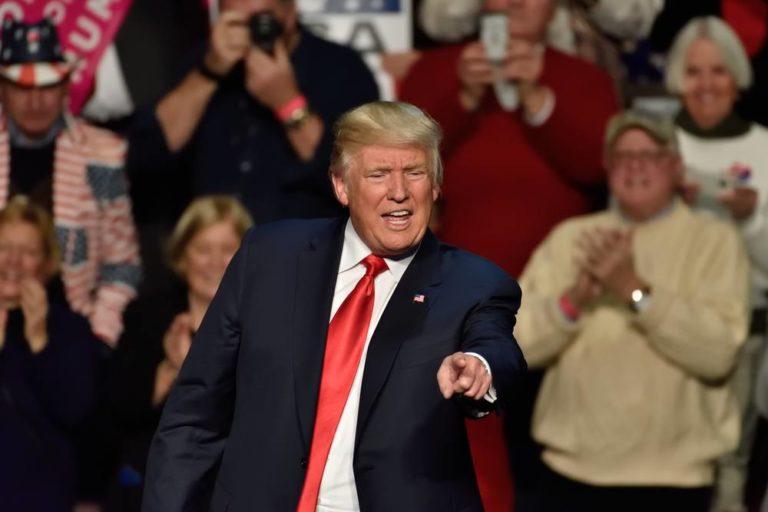
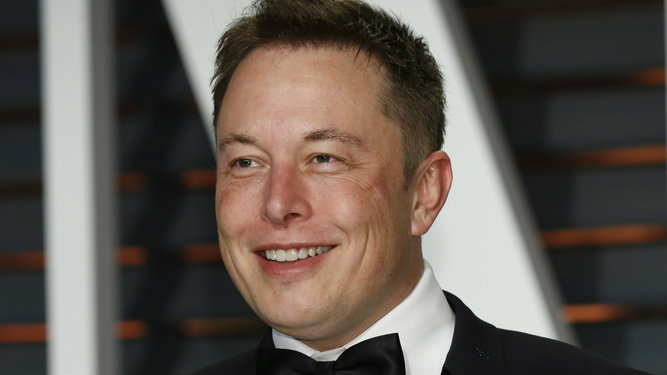
Donald Trump Selects Oil Mogul as Impactful New Energy Secretary, Elon Musk Advocates for Public Choices for Treasury Selection

Key Takeaways:

– President-elect Donald Trump appoints Chris Wright, CEO of Liberty Energy, as the new Energy Secretary.
– Wright, a strong proponent of Trump’s plan for U.S. “energy dominance”, is a staunch supporter of fracking and oil and gas development.
– Elon Musk calls for widespread public discussion before the selection of the head for the Treasury Department.
– Among speculated contenders for the Treasury Department, Musk prefers Howard Lutnick, the CEO of Cantor Fitzgerald, against conventional choice Scott Bessent.
– Trump continues to make preparations for his administration, with key selections for State Secretary, Attorney General, and White House Press Secretary announced.

Chris Wright to Spearhead Energy Policy

The newly elected President Donald Trump made his first mark on Saturday, announcing the appointment of Chris Wright, the CEO of Liberty Energy, as the Energy Secretary. Known for his robust advocacy for oil and gas development, Wright has often been a forceful voice in the industry opposing global climate change mitigation efforts. He may now offer a significant boost to fossil fuels in the U.S., potentially scrutinizing the Biden administration’s pause on natural gas export approvals.

Musk Calls for Public Opinion on Treasury Choices

Simultaneously, Elon Musk, a key Trump confidant and billionaire entrepreneur, made a call to the public on the decision process for the crucial Treasury Secretary post. Musk, previously chosen by Trump to lead the commission that will enhance government spending efficiency, put forward a public poll on his social media platform, X.

Musk Prefers Lutnick Over Bessent for Treasury Department

In his inaugural participation in the public poll, Musk endorsed Howard Lutnick, the CEO of financial services firm Cantor Fitzgerald. He critiqued Scott Bessent, a business-friendly hedge fund manager, as the ‘business-as-usual’ choice. Lutnick, co-chair of Trump’s transition team who has been open to cryptocurrency, is known to be a driving force for change.

Administration Lineup Takes Shape

Alongside these developments, Trump’s selection for the head of the Health and Human Services Department, Robert F. Kennedy Jr., also backe Lutnick’s choice, signaling a pro-bitcoin future. Other picks from Trump include Marco Rubio for Secretary of State and Matt Gaetz for Attorney General, both from Florida.

Additionally, Trump chose a youthful Karoline Leavitt, his campaign press secretary, to serve as the White House press secretary. This appointment will make Karoline Leavitt the youngest ever to take the White House podium.

Still, Some Seats Left to Fill

Despite these significant selections, the treasury, along with the heads for the Education and Labor Departments, are yet to be assigned. Former federal prosecutor, Will Scharf, stands chosen as the assistant to the President-elect and the White House staff secretary.

Trump and the UFC Connection

Contrasting from official assignments, Trump’s visit to the UFC heavyweight championship fight at New York’s Madison Square Garden sheds light on his pedigree with the Ultimate Fighting Championship. His friendship with UFC President Dana White spans more than two decades, making this visit another notable event in his recent appearances.

The choices made by President-elect Donald Trump for his administrative team have substantial implications for the future trajectory of U.S. policy. As these appointments crystallize, the public eagerly awaits the decisions for the remaining key slots. The voice of figures like Elon Musk, urging active public engagement, may indeed shape the final lineup for this new era of American governance.


Progressive Wave in State Courts Paves Way for Democratic Hope

0

Key Takeaways:
– Recent election results show a positive shift for progressive candidates in state Supreme Courts.
– These wins could counterbalance the expected conservative appointments in federal courts.
– Factors contributing to Democratic success include voter focus on reproductive rights, candidate quality, and ‘bullet voters.’
– Democrats have more opportunities to refine their campaign strategies in upcoming races.

Progressive Victories in State Supreme Courts

Across America, Democratic supporters are levelling intense scrutiny on Donald Trump’s potential second term in the White House. They fear his return would usher in a hard-right lean in federal judiciary appointments. Yet, a closer look at recent election results divulges a surprising glimmer of hope for progressives. Hidden within these results, strategic victories are cropping up in state Supreme Courts, vital corners of the judicial system that often go unnoticed amidst the political frenzy.

On Election Day, voters in multiple states chose their new Supreme Court justices. The results saw a wave of liberal justices stepping into these chief seats. This didn’t just happen in expected blue states, but also in battleground regions such as Michigan and surprisingly in traditionally red territories like Kentucky, Montana, Arkansas, and Mississippi.

A Closer Look at Voters’ Choices

These victories are to a large extent due to several key factors, all of which warrant further analysis. Firstly, the quantity and quality of the candidates played a significant role. A number of capable, compelling progressive candidates graced the ballots, which undeniably swayed the voter’s choice.

Another impactful factor was the issue of reproductive rights. With the threat to Roe v. Wade looming, voters’ focus on safeguarding these rights has intensified. Many opted to use their ballots to ensure state Supreme Courts could serve as the last line of defense for reproductive rights in a post-Roe landscape.

Moreover, the phenomenon of ‘bullet voting’ also came into play. Many who showed up in support of Trump exercised tunnel vision at the polling booth, ignoring the smaller yet pivotal races further down the ticket. This allowed more progressive candidates to secure wins.

Upcoming Opportunities for Democrats

The Democrats can rest easy knowing that they have several more chances to secure judicial control—multiple opportunities await them to polish their strategy and secure even more wins. One such chance is the Wisconsin Supreme Court election coming up in April, an election that could very well shift the balance of power on the judicial bench in favor of the Democrats.

Trump may indeed end up strengthening the conservative majority in the federal judiciary in future. But the battle isn’t over for progressives. Their fight for control of courts, at least at a state level, continues unabated.

Trump, during his first term, managed to nominate and see through the appointment of three conservative justices to the US Supreme Court. As a result, Democrats are wary of his potential second term. They speculate that if he returns to the Oval Office, he might gain a golden opportunity to further mold the Supreme Court to his liking with additional appointments.

In Conclusion

In the current political atmosphere, tensions run high and the future remains uncertain. Yet, these recent developments paint a hopeful picture for progressives. State Supreme Court victories may very well serve as a counterweight to the feared shift to the right in federal courts. Democrats maintain vigilance and prepare to continue their fight for control, displaying resilience in their ongoing quest for a more balanced judiciary. It’s clear that despite the challenges, the ray of hope for progressives is not extinguished but continues to shine, offering bright prospects for their future influence on American judicial system.

Robotic Dog Patrols Trump’s Mar-a-Lago Resort in Latest Secret Service Innovation

0

Key Takeaways:
– Spot, a robotic dog developed by Boston Dynamics, is now used by the US Secret Service.
– This robot has recently been seen patrolling President-elect Trump’s Mar-a-Lago resort.
– Spot does not carry any weapons but can operate automatically or be controlled remotely.

The Tech Awakening of the Secret Service

In an exciting fusion of technology and security, the Secret Service has adopted an innovative tool – a robotic dog called ‘Spot.’ Developed by the renowned tech company, Boston Dynamics, Spot has made its debut in the complex realm of high-level security. Its most recent assignment? Patrolling President-elect Donald Trump’s Mar-a-Lago resort in Palm Beach, Florida.

A Seemingly Harmless Patrol

Each Spot robot boasts a sleek design and innovative programming. Despite their imposing appearance, they pose no threat in terms of offensive capability. These fantastic canine robots come weapon-free, ensuring they maintain a non-threatening presence while patrolling parameters or monitoring surroundings.

Remote-controlled Operations

Spot’s main allure is its operational flexibility. These robots can carry out their duties independently if a prescribed route is pre-programmed. If a need arises for manual control, the robots can also be managed remotely, allowing human handlers to maintain a safe distance while ensuring complete coverage of the area under surveillance.

Unveiling Spotlight, the Robotic Cadet

Now, let’s shine the spotlight on Spot, this new robotic cadet. Boston Dynamics, a company known for its ground-breaking tech developments, created Spot. Displaying enviable agility and stability, Spot the robotic dog is more than just a toy. It’s a robust specimen of the technological advancements shaping the future of security operations.

Secret Service’s Tech-Forward Approach

The U.S. Secret Service, responsible for safeguarding some of the nation’s most critical figures and infrastructures, isn’t shying away from utilizing the newest technology solutions. The incorporation of Spot in their security measures marks the step towards a tech-forward approach, leveraging dynamic technology to further enhance their efficacy.

Spot in Action

The Mar-a-Lago resort, commonly frequented by President-elect Donald Trump, served as the initial test ground for Spot. As the robotic dog strolled on its first patrol mission, it heralded an exciting new chapter in the Secret Service’s security procedures. Although Spot’s presence may have turned heads, it effortlessly completed its task, patrolling the Florida resort’s perimeter with studious diligence.

Implications for the Future

While Spot’s induction into the Secret Service is merely the beginning, the potential implications are tremendous. The use of advanced technologies such as robotics can potentially revolutionize security measures on a global scale.

Spot’s advent showcases how technology can seamlessly blend into various sectors, enhancing productivity, efficiency, and outcomes. As we advance into a new era marked by progressive and disruptive technologies, Spot’s presence in the Secret Service underlines how these advancements can significantly transform the landscape of our society.

Conclusion

Spot’s robotic prowess has embarked on a compelling journey, testing the waters in the commands of the U.S. Secret Service. As Spot continues to seamlessly blend technology and security services, one can anticipate a future where robotic advancements champion the secrecy, safety, and smooth operations of global security forces.

In the end, Spot’s ascent is a testament to our society’s technological growth, showcasing a glimpse into a future where man-made innovations bolster the safety of our communities. So, here’s to Spot, a robotic dog shaping the future of security.

Child With Bird Flu Identified in Alameda County

0

Key Takeaways:

– Alameda County identifies the first child infected with bird flu, H5N1.
– The child had no known exposure to state’s infected dairy or poultry farms.
– Close family members tested negative for the virus.
– Other potential contacts are being notified for preventive treatment and testing.
– The child tested positive for other respiratory viruses; further genetic analysis for virus source undergoing.

Officials in Alameda County have identified a child with bird flu evident. This case is unique, as there has been no determined exposure to any of the growing infected dairy and poultry farms. This raises questions about how the transmission could have occurred.

The child reported mild respiratory symptoms and is currently recovering at home. To allay concerns among health experts, it was affirmed that close family members were not infected. Consequently, there is little worry that the H5N1 virus is gaining the ability to spread efficiently among humans.

Dr. Tomás Aragón, California Department of Public Health (CDPH) Director, finds it natural for people to worry. However, based on the data collected, he assures parents, caregivers, and families that the child is unlikely infectious as no human-to-human spread of bird flu is documented for over 15 years.

Understanding the Source of Infection

The next course of action for public health experts is to investigate if the child had any exposure to wild birds, known carriers of the virus. They are also checking the people who had contact with the child, particularly those from the daycare he attended. These individuals are offered preventive treatment and testing to ensure early detection and containment.

Although the child was found to be positive with a low amount of virus, he was unlikely infectious. Repeat testing showed negative results for bird flu, while testing for other respiratory viruses came out positive. These could be potential causes for the cold and flu symptoms.

John Korslund, a retired U.S. Department of Agriculture veterinarian epidemiologist, emphasizes the importance of the genetic analysis of the virus. It could shed light on whether the infection comes from dairy and poultry outbreaks or wild birds. Even though there’s no proof of human-to-human spread of bird flu, he urges caution until a definite conclusion is drawn.

Understanding Bird Flu

Symptoms of bird flu usually appear within two to eight days after exposure. They include fever, cough, sore throat, muscle aches, headaches, shortness of breath, and pink eye. The drug Tamiflu can help if taken within two days of the onset of symptoms. Unfortunately, the seasonal flu vaccine does not provide protection against bird flu.

The federal government, aware of the ongoing threat, is developing vaccines against the virus. Before this case, all 26 confirmed human infections in California were adult farm workers. They had mild symptoms and none required hospitalization.

Implication For California’s Dairy Industry

This rapid increase in measles cases amongst dairy herds is a cause for concern for California’s dairy industry. As a significant part of the state’s agricultural industry and the nation’s top milk producer, the consequences could be grave. Prolonged outbreaks increase the chances for the virus to mutate and spread, resulting in a potential human outbreak, a scenario reminiscent of the 1918 flu pandemic.

Some public health experts advocate for federal officials to provide point-of-care testing of dairy cattle rather than delighting through physical shipment for lab confirmation. This could reduce testing and announcement delays while faster identification of infected herds.

Final Note

In light of the current issue at hand, it is crucial for residents of California to remain alert for signs of bird flu. Should you suspect infection, immediate self-isolation is recommended, and immediate medical advice sought. If your livestock is suspected of harboring bird flu, you are urged to make a call to 1-866-922-2473 for guidance.

Tennis Icon Rafael Nadal Ends Career with Match at Davis Cup

0

Key Takeaways:
– Tennis grandmaster Rafael Nadal bids adieu to his professional career.
– Nadal’s final match ended in a 6-4, 6-4 loss against number 80 ranked Boltic van de Zandschulp.
– The Spanish player’s career spanned over 20 years, boasting 22 Grand Slam titles.

Final Rally: Nadal’s Last Match

Tennis lovers worldwide felt a pang of nostalgia and sadness. Rafael Nadal, an icon of the sport, charged through his final match as a pro player. The magic happened at the Davis Cup. Here, he faced world-ranked number 80, Boltic van de Zandschulp. The outcome was a 6-4, 6-4 defeat for Nadal. This marked the endpoint of an illustrious 20-year career.

Nadal’s Remarkable Journey: 22 Grand Slam Titles

With a career spanning two decades, Nadal left no stone unturned. He bagged a spectacular 22 Grand Slam titles. This made him one of the most decorated athletes in tennis. His aggressive style and sheer dedication won hearts. He taught us all that the spirit of sport goes beyond winning. It’s the will to keep playing and give your best each time.

Nadal’s Farewell: Crowd Erupts

However, tennis isn’t just about the numbers. It’s about the love and respect too. After his last game, there was a widespread outpouring of affection for Nadal. The crowd showed him all their love. They chanted his name over and over again. In the tennis world, this is how players are celebrated and remembered. Over the years, Nadal had not only harvested titles but immense love from fans worldwide.

Celebration of Nadal’s Career

To recognise his contribution to the sport, a ceremony took place. This wasn’t just to celebrate his achievements on court. It was more of a tribute to his long standing dedication to tennis. Nadal’s retirement ends an era of tennis. Yet his perseverance, passion, and powerful backhand will inspire many more future champions.

Looking Forward

Nadal’s retirement is undoubtedly a significant loss. It marks the end of a storied career that has entertained and inspired millions. His tenacity, power, and unmatched skill set have made him one of the greatest players in the history of tennis.

Even as he hangs up his racket, the impact he’s left on the sport is undeniable. This is far from the end for Nadal’s influence in tennis. His grit, determination, and commitment will continue to inspire all those who pick up a tennis racket.

To many, Rafael Nadal is more than just a tennis player. He is a mentor, an icon, and a true champion. His journey from a rookie to a world champion has been an inspiration globally. The contribution he has made to the world of sport will remain long after his retirement.

As we bid farewell to Rafael Nadal the player, we welcome Rafael Nadal, the legend. His legacy will be remembered, cherished, and revisited in the years to come. In the heart of every tennis fan, Rafa will live on.

Elon Musk’s Exciting New Role in Donald Trump’s White House Interest Representative Eric Burlison

0

Key Takeaways:
– Eric Burlison is excited for Elon Musk’s role in an informal task force called DOGE.
– The task force is dedicated to improving government efficiency.
– Elon Musk’s influence swelled thanks to his control over the X social media platform and America PAC.
– Controversy arises as Trump keeps nominating high-profile figures for key roles.

Representative Eric Burlison recently expressed his anticipation of Elon Musk’s involvement in the scenes of the White House under Donald Trump’s governance. Named DOGE, short for the Department of Government Efficiency, the plan is less an official department and more an initiative. Its objective? To make the U.S government more efficient.

The Purpose of DOGE

DOGE is a cleverly named task force where tech tycoon Elon Musk and his ally, Vivek Ramaswamy, are positioned to strategize about curbing government spending. Besides, they aim to minimize the federal workforce considerably. The strategy meshes with the so-called Project 2025, which proposes to redefine a majority of government workers. This change allows the president to lay them off at will.

Interestingly, the creation of DOGE does not mean that Musk holds an official Senate-confirmed office. Nonetheless, Trump keeps him near the power circles, no doubt due to Musk’s control of the X social media platform. Moreover, Musk bankrolls a substantial part of Trump’s campaign field operations in contested states via his America PAC.

The close ties between the two titans have triggered a wave of discomfort among Trump’s inner circle.

The Limit of Power

But how far could these measures go without concrete legal grounding? While Trump might execute mass layoffs unilaterally, he would need Congress’s backing to eliminate or consolidate various federal departments and governing bodies.

In the meantime, Trump had been nominating controversial individuals for key administration roles. Linda McMahon, the co-founder of WWE, has been picked for the secretary of education. Simultaneously, popular TV personality Dr. Mehmet Oz is slated to be in charge of the Centers for Medicare and Medicaid Services.

Ever braggadocious, Trump boasts how his choices will shrink government operations.

What Happens Next?

For the time being, Burlison, along with many others, keenly follows the developments with bated breath. The Republican representative keeps his excitement level high, eagerly waiting for DOGE to make the government more efficient. His sentiment reflects the hopeful speculation of many American taxpayers, although there are plenty of critics too.

Time will only tell the outcomes of such radical changes. To dismantle and reconstruct this vast ship needs time, vision, and determination. And a lot of money. And Elon Musk appears ready for the challenge.

Whether the government shrinking is for good or ill is yet to be seen. Nonetheless, it remains a subject of much debate and is likely to continue to be as controversial figures occupy the administrative positions. Is the government downsizing a necessary purge or a move with potentially disastrous results? Only time will tell. Everyone is watching, anticipating, and, like Burlison, waiting for the show to unfold.

Regardless, despite the uncertainty and potential consequences, one thing is certain – there’s never a dull moment with Elon Musk involved.

North Korea Haunts South’s Border Island with Blood-curdling Sounds

0

Key Takeaways:

– Nightly broadcasts of eerie noises from North Korea disturb peace on South Korea’s border island of Ganghwa.
– The sounds include those resembling gunfire, screams, and chilling music, giving vibes of a horror movie.
– Residents suffer sleep deprivation and other health issues due to constant noise reaching up to 80 decibels.
– Experts warn the audio attack might be a new form of psychological warfare.
– The situation has left the island residents living in uncertainty and fear.

Life on South Korea’s Border

South Koreans living on Ganghwa, an island under two kilometers (about a mile) from North Korea, are struggling to sleep through the night. Their peace was long kept by the soothing hum of insects and the melodic chirping of birds. But, a new form of harassment from across the border has disrupted their tranquility. North Korea now blasts terrifying sounds nightly, keeping the residents awake in fear and confusion.

Like a Scene from a Horror Movie

The soundtrack to a horror movie on full blast may come closest to describing the bone-chilling audio broadcasts. The noises, likened to the cries of dying people, the sound of gunfire, and horror music, start at 11 pm. Ghostly echoes fill the otherwise beautiful quiet nights on Ganghwa, creating a disturbing contrast. The haunting sounds linger until dawn, turning lives into a living nightmare.

A Shift in Tactics

North Korea was known for propaganda broadcasts, which mostly included criticism of South Korean leaders. However, the recent broadcasts that feature eerie sounds mark a significant shift from their traditional approach. The ominous noises, said to include howling wolves and other sinister sounds, become increasingly aggressive, leading to speculation of a new psychological warfare strategy.

Noise as a Form of Torture

Historically, noise and sleep deprivation have been used by many regimes as forms of psychological torture that leave no physical scars. The deafening noise reaching up to 80 decibels at night, quite above the recommended safe level of 60 decibels, has sparked health concerns. Residents report symptoms like headaches, anxiety, and sleep disorders, which have taken a toll on their health.

Living in Uncertainty

Residents of Ganghwa are now living under pressure, grappling with anxiety, and wrestling with uncertainty over when peace will be restored. For some, the uncertainty seems more unsettling than a natural disaster, as there is no clear recovery timeline. The tormenting broadcasts have added another layer to the already strained relations between the two Koreas.

The Suffering Reflects on a Bigger Picture

North Korea’s new broadcasting tactic also reflects the evolving dynamics of the long-running conflict. The two countries have technically been at war since the 1950-1953 conflict, leading to decades of tension and hostility. The aggressive audio broadcasts indicate a change in North Korea’s approach toward its ‘principal enemy’, South Korea.

Masking the Sounds or Inflicting Pain?

There are theories about the reason for these broadcasts. Some say they are to prevent North Korean soldiers from hearing South Korean propaganda that typically includes K-pop songs and international news. Others, however, suggest they may be intended to inflict pain on residents of the South. But, the truth remains elusive.

South Korean Government’s Responsibility

The South Korean government is facing pressing demands to act in the interest of the tormented island residents. The people yearn for the restoration of peace and want the authorities to experience first-hand the extent of their ordeal. The crisis underlines the government’s duty of ensuring the well-being of its citizens, even those living on the borders.

In conclusion, the residents of Ganghwa continue to endure the harrowing nightly noise attacks from the North that have drastically disrupted their sleep and overall life quality. Amid growing health concerns and escalating fear, they look to the South Korean government for resolution, hoping for better, quieter nights ahead.

Skepticism Fuels Robert F. Kennedy Jr.’s Unexpected Rise In U.S Health Policy

0

Key Takeaways:

– Robert F. Kennedy Jr.’s surprising ascension in U.S. health policy has been driven by distrust and skepticism towards conventional medicine.
– His views gained huge traction during the Covid-19 pandemic.
– Once dismissed individuals who questioned mainstream medicine are now supporting Kennedy’s elevation.
– Scientists are puzzled over the rise of populist skepticism during the pandemic.

Robert F. Kennedy Jr., traditionally an outlier due to his unconventional views on medicine, has ascended to potentially lead U.S. health policy. Rumbling beneath the surface of this surprising rise is a deep-seated skepticism and mistrust of the established medical industry.

Unraveling Kennedy’s Journey

Kennedy’s journey from fringe figure to mainstream prominence was not a rapid one. His indoctrination into the realm of medical skepticism, his personal conversion if you will, has been slow, steady, and fuelled by a skeptical public sentiment. This skepticism ballooned during the recent Covid-19 pandemic when medical experts were put under the lens and public trust came under scrutiny.

Public Support Swells for Kennedy

The irony here lays in the fact that the very skepticism which formerly labelled Kennedy and his supporters as ‘disbelievers’ or ‘conspiracy theorists’ is now placing him as a prime contender to head the nation’s health policy. It can’t be missed that those once dismissed as doubting traditional medicine are now applauding this change of wind in Washington.

Scientific Community Grapples with New Reality

The situation perplexes the scientific community. They are left scratching their heads, wondering how they could face a towering health crisis like the Covid-19 pandemic without triggering a public reaction of sizeable doubt. It seems that their collective efforts to stem the viral tide has inadvertently given rise to a populist movement, with Kennedy at the helm, that fiercely quibbles with the scientific establishment.

Closed Doors Now Opening

While Kennedy’s rise has provoked considerable debates in the corridors of power, there is no denying that it is a testament to the populist sentiment which yearns for a fresh perspective on U.S. health policy. Remember that the doors which were once closed to anyone daring to challenge mainstream conventional medical opinion are now opening wide for this new persona.

The Pandemic Effect

The Covid-19 pandemic undoubtedly accelerated Kennedy’s journey. When the world was grappling with an unseen enemy, doubts were cast upon the ability of the medical establishment to manage the crisis effectively. Kennedy, known for his skepticism, emerged from the pandemic as a public figure who resonated with the concerns of many.

A New Era in U.S. Health Policy

In summary, Robert F. Kennedy Jr.’s unexpected rise in U.S. health policy has been a thrilling spectacle. Grounded on a rising tide of skepticism and a shifting public sentiment, his ascension signals a new era in American healthcare. Whether this change will ultimately be judged positively or negatively by history, and what impact it will have on the nation’s healthcare system, remains to be seen. For now, it is undeniable that skepticism has fuelled Kennedy’s rise, reshaping the landscape of U.S. health policy.

Trudeau’s Immigration Curb Strategy to Alleviate Canada’s Housing Shortage

0

Key Takeaways:
– Prime Minister Justin Trudeau’s bid to limit immigration could significantly decrease housing demand.
– Should the curb succeed, the housing supply-demand gap will decrease by 534,000 units, or 45%, by 2030.
– The Office of the Parliamentary Budget Officer played a fundamental role in this analysis.

The Canadian Housing Market and Trudeau’s Plan:
Prime Minister Justin Trudeau has outlaid a strategic plan that, if executed well, will bridge the gap between supply and demand in Canada’s tight housing market significantly. The plan’s prime focus is to introduce controls on the influx of immigrants into the country.

It is well established that migration plays a substantial role in a country’s overall demand for housing. By placing restrictions on the number of newcomers, Trudeau intends to suppress the escalating demand and bring much-needed balance.

The Potential Impact of Policy Changes:
Trudeau’s approach to tackling the housing issue through immigration control is yielding promising results, at least theoretically. According to the Office of the Parliamentary Budget Officer, by implementing this plan, Canada could potentially reduce its housing gap by a remarkable 534,000 units. This alteration implies a drastic slash by almost 45% from the projected shortfall for 2030 if immigration continues unhindered.

In essence, the government aims to address the worsening housing shortage in one stroke, using immigration control as its primary tool. By doing so, Trudeau hopes to accommodate the population more appropriately, improving the housing situation while simultaneously refining the quality of life.

Striking the Balance:
While the proposal appears successful on paper, the practical implementation will require careful execution and strong-willed commitment. While a reduction in housing demand will bear benefits, it’s essential to remember the economic contributions immigrants make.

They fill much-needed job vacancies, contribute to the nation’s tax revenue, and diversify its cultural landscape. As such, Trudeau’s government must tread a careful path between solving the housing crisis and maintaining the valuable inflow of talent and skills that immigrants provide.

Understandably, it’s a tightrope walk and will necessitate a balance that ensures the Canadian housing situation improves without the economy taking a significant hit.

Addressing Criticism and Moving Forward:
Despite the promising outlook, the plan has drawn a string of criticism, predominantly from quarters that fear potential economic impacts. Critics argue that the immigrant curb may result in labor shortages and lower national output. However, Trudeau’s government remains firm, assuring that the move would only be temporary and revisited once the housing situation stabilizes.

Navigating such a complex and multilayered issue is likely to require strategic, multifaceted solutions, and Trudeau’s proposal represents one approach towards addressing it. The ability to navigate this situation effectively will pivot on clear vision, strong leadership, and the government’s ability to meet the needs of the people while making tough decisions.

In conclusion, Trudeau’s plan to limit immigration poses both challenges and opportunities. The potential of reducing the demand-supply gap in the housing market by 45% is a promising prospect. However, the government must ensure that such a move does not sideline the immense contributions that immigrants provide to Canada’s growing economy. Only time will tell whether this fine balance can be effectively achieved and maintained.

Future Uncertain for U.S. Education Under President-elect Trump’s Second Term

0

Key Takeaways:

– Trump has previously proposed eliminating the U.S. Department of Education.
– Linda McMahon is expected to be named Secretary of Education.
– Federal aid to schools may be limited, affecting a variety of programs.
– Federal budget cuts could impact New York’s Foundation Aid and increase pressure on the state.
– Trump’s immigration policies could impact new students and asylum seekers.
– There may be a rollback of civil rights protections for students under the Department of Education.
– Proposed changes to school lunch programs could make it more challenging for some children to access free meals.
– The expected push for school choice initiatives could impact public education funding.

Education Policies in the Pipeline

President-elect Donald Trump’s detailed plan for education policy is yet to be unveiled. His views from his previous term hint at some potentially significant changes in the pipeline. A highlight is Trump’s eagerness to eliminate the $79 billion U.S. Department of Education. Details in the Presidential Transition Project 2025 also provide clues about the coming changes. However, key will be if he can rally sufficient congressional support.

Expected Secretary of Education

Trump is set to appoint Linda McMahon as the Secretary of Education. McMahon, previously oversaw the Small Business Administration, is also a WWE wrestling empire co-founder. Public education stakeholders, concerned about the likely changes, are gearing up for her tenure.

Reduction in Federal School Funding

Trump could seek to limit federal aid to schools, similar to his previous term. His administration proposed numerous cuts to the education budget, which Congress eventually rejected. Critics worry that budget cuts would shift control over education back to states and localities, potentially disrupting the established system.

Impacts on New York School Funding

Federal budget cuts would place added pressure on New York’s Foundation Aid. The resulting shortfalls would likely have to be made up by the state and local districts. Future education funding battles are expected, especially as Governor Kathy Hochul’s previous proposals were rejected.

Rights for Immigrant Students

Trump’s immigration policies may drastically impact newly arrived students. As immigrants and asylum seekers surge in New York, the city may need to strengthen its commitment to protecting these students.

Civil Rights at Risk

Trump’s previous rollback of civil rights protections raises questions for the future. With the Office for Civil Rights potentially being moved under the Department of Justice according to Project 2025, civil rights enforcement may face challenges.

School Meals Under Threat

Proposals suggest tightening qualifications for free school lunches which would leave many students without access. Additionally, the loosening of nutrition standards could affect the health of the students.

Boost for School Choice

Trump’s administration may canalize more funds towards charter and private schools. Critics argue this shifts the financial burden onto public schools, while proponents see it as an approach to customize education to better suit each child’s needs.

Conclusively, many changes might be underway under Trump’s second term, particularly in the area of education. The aforementioned points provide an overview of what can possibly happen, and it’s crucial for everyone – parents, educators, and students – to stay updated and be prepared. How these potential changes play out, however, largely depends on political inclinations within the state and the inherent complexities of reforming the education systems.