54.1 F
San Francisco
Thursday, November 26, 2026
Home Blog Page 2664

Prehistoric Women Arms Were Stronger Than Modern Day Female Atheletes

0

Scientists studied the bones of nearly 100 women who lived in farming communities in Central Europe from 5300 BCE to around 850 AD and found that prehistoric women had stronger arms than modern day women. That is likely because farming women from the past had to work hard and they probably started at a very young age, according to a study published by Science Advances.

The research findings show that prehistoric women did not leave the physical labor solely to the men. In fact, they worked long hours and were a major “driving force” behind the social and cultural development of communities for nearly 6,000 years, according to lead author Alison Macintosh, an anthropologist at Cambridge University.

“Now we can kind of see, actually there are these thousands of years of rigorous manual labor that had been completely underestimated,” she told The Verge. “It’s really important to be able to understand the contribution of women.”

Scientists looked at the archaeological evidence to determine who men and women lived in the past. But, bones provide us additional information including what they ate and their levels of physical activity throughout their life. Mainly, the more you work out, the stronger bones you have.

Previous research examining prehistoric bones showed that when hunter-gatherers started farming and settled down instead of migrating, their legs got weaker and their arms got stronger. That is because people stopped moving around so much and focused on a more sedentary lifestyle, which included working on crops and taking care of livestock. These changes were more significant in men than women, Macintosh tells The Verge. She explains this is due to men’s bones responding differently to physical activity than women. As a result, it’s incorrect to compare the lifestyle of women versus men by only looking at their bones. That’s why Macintosh and her team decided to put prehistoric female bones side to side with modern female bones.

“They just look much weaker than men, so we think they’re not doing anything when that’s really not the case,” Macintosh says. “You need an appropriate comparison to see that.” Consequently, Macintosh and her team compared bones from back then to modern day women. She scanned the upper arm bones and shinbones of 94 women from the Neolithic to Middle Ages, as well as the bones of 83 living women in Cambridge who either lived a sedentary lifestyle or played sports such as soccer, running or rowing. The researchers found that the prehistoric women had consistently stronger arms. For example, the Neolithic women living around 7,000 years ago had 11 to 16 percent stronger arm bones than modern day rowers. That suggests while modern-day athletes who mainly use their arms were not as strong as women from 7,000 years ago.

However, some prehistoric women had weaker legs than today’s women, while others had legs as strong as runners. “It suggests that women were doing a huge range of things,” Macintosh says. She argues that each group of women may have had different lifestyles and responsibilities.

There is a significant limitation in the study, however. For example, the researchers did not take into account genetic factors, which can influence whether a person has stronger bones than another. That said, Macintosh points out her research points towards the advancement in looking at how women lived their lives 7,000 years ago.

“This kind of work just highlights the role of women in the development of life as we know now,” Macintosh says. “We all pretty much live in agricultural societies now. And these couldn’t have developed without all of this manual labor done by women over thousands of years.”


Amazon Announces AWS DeepLens – An AI-Powered Camera

Amazon reveals new tools for companies to invest in artificial intelligence. Today, Amazon’s business subsidiary, Amazon Web Services (AWS), announced a new line of products with the mission to sell artificial intelligence products. Among them is a $250 AI-powered camera called DeepLens, a new platform for developing and revealing machine learning algorithms called SageMaker, and services for AI-powered translation and transcription.

It is clear that Amazon’s new focus is jumping on the AI bandwagon, which Google has been building their enterprise of AI products and tools.

One of the major announcements made during AWS’ re:Invent conference is the DeepLens camera. Similar to Google Clips, it is a camera with AI technology. However, unlike Google’s Clips, it is targeted towards developers and not mainstream consumers. DeepLens comes with AI tools pre-installed including optical character recognition, and image and object recognition. “These will help you detect cats and dogs, faces, a wide array of household and everyday objects, motions and actions, and even hot dogs,” said AWS in a .

DeepLens will allow developers to test and develop new vision-based AI-functions faster. Every DeepLens captures 1080p video and audio and is powered by an Intel Atom processor. DeepLens also features Wi-Fi, USB, and micro HDMI ports.

DeepLens will also have the ability to be integrated to other AWS products and services.

AWS also revealed SageMaker, an “end-to-end machine learning service” that helps data analysts build, train and, and host AI services. It will also support popular machine learning frameworks including Facebook’s Caffe2 and Google’s TensorFlow. Sagemaker will help developers identify data they need to train their AI model.

Amazon also announced new AI-powered translation tools, which will compete with Google’s translation services.

AWS is currently one of Amazon’s most profitable business subsidiaries, and with these new features, the company can expect to make a lot more money. AWS is already leading the industry with their servers, and if the demand for artificial intelligence continues, Amazon will be at the forefront of technological space.

NASDAQ Plans to Allow Investors to Invest in Bitcoin Futures

0

Yesterday, the cost of a single Bitcoin reached $10,000. Today, it was reported NASDAQ, the second largest stock exchange on planet Earth, plans to launch futures contracts for Bitcoin starting 2018. This will allow investors to invest and essentially bet on the rise and fall of the cryptocurrency and in essence profit on the future of price of the cryptocurrency.

It is important to note that NASDAQ is not the only finance firm to join in on the Bitcoin parade. Earlier this month, Chicago’s CME Group said they will begin providing futures contracts to investors.

The introduction of these new financial products will allow investors to more substantial risks on the rise and fall of Bitcoin. According to The Verge, Cantor Fitzgerald announced that they also plan to launch Bitcoin derivatives starting 2018.

As Bloomberg points out, the New York Stock Exchange owner Intercontinental Exchange Inc. will be the only one of the four major U.S. exchanges without public financial offerings for bitcoin derivatives.

bitcoins valuation
(Roman Pyshchyk / Shutterstock.com)

What are Futures and Derivatives?

A derivative is a security with a price that is dependent upon or based on one more underlying assets. The value is depended upon the rise and fall of the underlying asset. Currently, investors can invest in derivatives where their underlying assets include stocks, bonds, interest rates and currencies. For instance, a futures contract is a type of derivative.

Future contracts are a type of financial contract which obligates the buyer to purchase an asset, for example, a Bitcoin, at a predetermined future time and price. The opposite is also true, a seller can create a futures contract, which obligates the seller to sell the assets at a later date and price.

All of these new financial instruments come with a warning. The financial collapse of 2008 is partly due to the rise of derivatives connected to real estate assets such as mortgages.

Bitcoin is Now Worth Over $10,000

0

Bitcoin is worth over $10,000. The cryptocurrency surged past $10,000 on Tuesday evening as it climbs closer to $11,000, according to CoinDesk. Bitcoin had spiked 933 percent since the start of 2017, when it traded at $968.23, according to the Wall Street Journal.

Despite concerns with Bitcoin’s association with criminal activity, investors have invested into the cryptocurrency and see it as an alternative to more traditional assets like gold. The Wall Street Journal does point out that the rise in price has been substantial, but it is doubtful many investors made a significant profit since 75% of digital wallets, the method by which cryptocurrencies are saved, have less than 01. Bitcoin in them. Some say the rise in Bitcoin is just based on speculation and that bubble may soon burst. For example, according to data from SEMrush, a search-engine-data-analytics company found the price had a 91% correlation with Google searches surrounding bitcoin, suggesting news surrounding the cryptocurrency increases the valuation of Bitcoin. Moreover, earlier this year, the head of JP Morgan called out the cryptocurrency as a “fraud.”

BitInfoCharts says the current Bitcoin market value is $180 billion, which is substantially more than the value of blue-chip stock General Electric. Rumors have surrounded the cryptocurrency with questions as who is the mysterious creator the cryptocurrency. The only name that is associated with Bitcoin is a pseudonym of Satoshi Nakamoto.

It is important to note that just last month, the value of Bitcoin was $5,000. Not to mention, bitcoin could have been bought for around $570 just about a year ago.

Snap CEO Calls Out Social Media’s Fake News Problem and Why Snapchat is Different

Facebook has been increasingly copying Snapchat’s features and profiting off the company in the process. Whether it’s stories or the recently announced messaging streaks, Facebook has taken features from Snapchat and repurposed them time and time again. But, Snap CEO Evan Spiegel is not taking this sitting down.

In an op-ed published in Axios on Tuesday, Spiegel argues that Snapchat’s algorithms are superior to Facebook’s reliance on friends. Reference Facebook and their fake news problem, without actually naming Facebook, Spiegel describes social networks as “mindless scrambles for friends or unworthy distractions” and criticizes their role in creating “fake news. “Social media fueled ‘fake news’ because content designed to be shared by friends is not necessarily content designed to deliver accurate information,” says Spiegel.

Snapchat Augmented Reality
MONTREAL, CANADA – JULY 1, 2016 – Snapchat lenses on android cell smartphone. Snapchat is a mobile messaging application used to share photos, videos, text, and drawings. (dennizn / Shutterstock, Inc.)

Snap’s CEO even wants to separate Snapchat from being described as a social network. “While many people view Snapchat as a social media service, it is primarily used to talk with friends – like visual texting,” says Spiegel. “Snapchat began as an escape from social media, where people could send photos and videos to their friends without the pressure of likes, comments, and permanence.”

Spiegel believes Snapchat’s focus on creating personalizing stories created by publishers in different ways, highlights who you are and what your friends are like. “The combination of social and media has yielded incredible business results, but has ultimately undermined our relationships with our friends and our relationships with the media,” explains Spiegel. “We believe that the best path forward is disentangling the two by providing a personalized content feed based on what you want to watch, not what your friends post.”

The day after Snap’s CEO gave this op-ed, Snapchat released a newly redesigned application which focuses on interaction with friends and a separation between brands and friends.

Snapchat Releases a Redesigned App

Snapchat introduced a new redesign of their app intended to promote more sharing among friends while pushing professionally produced content into a separate news feed. The redesigned app also includes a new dynamic friends page that consists of both chat messages and Snapchat stories and pushes items from your close friends to the top of the feed. It will begin appearing later this week for a small number of users and expected to roll out more broadly in the next few weeks.

The news comes at a time when Snap is under pressure from slow user growth and competition from Facebook and Instagram. The idea behind the redesign in the new Snapchat is to put your friends on one side of the app and the brands on the other. In the center is the Snap camera, which will remain the app’s home screen to encourage users to point, click and share. Snap says the company produces 3.5 billion snaps each day. The left side of the app will be used for sharing and discussing, while the right side is used for searching.

Snapchat’s redesign is not something entirely new. The left side of the app has also been used for chats with friends, and the right side has always been used for brands. But until then, stories, have been located in their tab to the right of the camera screen. Also, the stories tab blended content from friends and brands, which may have confused some users.

Snapchat
LONDON, UK – APRIL 13TH 2017: The official homepage of the Snapchat social media website, on 13th April 2017. (chrisdorney / Shutterstock.com)

“Until now, social media has always mixed photos and videos from your friends with content from publishers and creators,” the company said in a blog post. “While blurring the lines between professional content creators and your friends has been an interesting internet experiment, it has also produced some strange side-effects (like fake news) and made us feel like we have to perform for our friends rather than just express ourselves.”

The new feature begs the question, how does Snapchat know who is a friend and who is a brand? Snapchat explains that if an account follows you back, it is considered a friend, and shows up on the left side of the app. If the app does not follow you back, it shows up on the Discover page.

Snap executives hope this new redesign and organization will lead to higher user-engagement between close groups of friends. Moreover, separating brands and people it will create an algorithm feed that caters more towards the users wants and needs. For example, the company now has a “best friends” algorithm that puts the people you engage with the most to the top. The more you chat with someone and watch their stories, the higher in the feed they will rise.

Also, Snapchat has gotten rid of a button for watching all the stories on your feed. Instead, after you watch a story, you will see a screen previewing the next story from one of your friends. You can either tap the screen to view it or swipe it away to return to your chats.

The new redesign may scare off publishers who are used to having their content mixed with the stories of friends, which most likely generated more views as a result. However, with the new design changes Publishers could begin following back their user bases, but unless they start interacting with the millions of accounts, they may show up lower in the feed than they would on the Discover page. Snap said it will release new tools to help creators profit from their work on Snap.

Snapchat
NEW YORK CITY, NY- March 2, 2017: Snapchat’s Snap Inc. makes IPO debut on the New York Stock Exchange NYSE. Investors flocked to initial public offering, pushing valuation of nearly $24 billion. (NYCStock / Shutterstock.com)

The new design changes also allow users to personalize their Discover page by subscribing and unsubscribing.

The company’s future is heavily dependent on making the application more accessible to a broader audience. The redesign changes are supposed to make the application more user-friendly and user intuitive.

‘Death by Pokémon GO’: Researchers Discover Pokémon Go Caused Millions in Damages

For a brief point in time, Pokémon Go was one of the most popular apps in the country. Despite bringing millions in revenue for the Niantic company, it also brought injuries and death, well at least according to a new paper.

This report titled Death By Pokemon Go, shows the darker signed of augmented reality gaming. Purdue University economists Mara Faccio and John McConnell read through accident reports from Tippecanoe County, Indiana, in the first 148 days after the game was released in July 2016. In that county alone, the total value of injuries, damage and the two lives lost between $5.2 to $25.5 million. If these numbers correlate with the rest of the country, it would suggest that $2 billion to $7.3 billion in just a few months.

The reports showed during those 148 days, 286 additional crashes occurred in the county, compared to the same time period before. Of these, 134 took place near pokéstops. In this scenario, it’s crucial to determine that Pokémon Go caused these damages directly, as opposed to just causing people to be more active outside, those more likely to get hit by cars.

Apple App Store
Stock Photo: BANGKOK,THAILAND-AUGUST 7, 2016 : Pokemon Go,most popular new online game application smartphone, a free-to-play reality mobile game developed by Niantic for iOS and Android devices (pim pic / Shutterstock.com)

Looking at the numbers, economists realized that the number of crashes was much higher near pokéstops than gyms, suggesting that the crashes really were caused by people jumping out of cars while playing the game. The increased number of deaths were not just caused by people being at the wrong place at the wrong time. Pokémon Go was actually causing people to make dumb decisions.

It is important to point out, that Pokémon Go developers decided to make the game hard to play while moving at high speeds. As a result, if you’re going too fast, you can’t just battle at a gym or catch more Pokémon.

Pokémon Go Mobile App
Pokemon GO augmented reality smartphone game players (Stoyan Yotov / Shutterstock, Inc.)

Study: Laptops Are Not Great for Taking Lecture Notes

There is increasing evidence suggesting that using laptops during lectures actually decreases learning, which can result in lower grades.

According to The New York Times, researchers at Princeton University and the University of California asked a group of students to take notes at a lecture using pen and paper while another group used laptops. Scientists found students who used a laptop did not understand the lecture as well as those who wrote with their notes out by hand. Researchers believe this was because students who wrote notes by hand had to process what the lecturer was saying and, in effect, summarize what was being said to keep up with the lecture. Moreover, they found that laptop note takers had a “Tendency to transcribe lectures verbatim,” which mean they were less likely to process the information in their own words, thus preventing them from understanding what was being explained.

Another study by scientists at York University and McMaster University tested students by asking them to look things up on their laptop that were unrelated to their lecture. Researchers found that the distraction caused them to remember less of the lecture, and those sitting near them were also affected as well.

Then, a study from the United States Military Academy tested students’ achievements in an economics class by comparing student performance based on whether laptops or tablets were restricted, unrestricted or permitted at all. The study found that the students who did not have access to a device performed significantly better than those who did.

As technology progresses, writing things by hand is becoming less common as gadgets and speech recognition software continues to replace traditional pen and paper. But, it’s been proved that handwriting improves motor skills, memory, and creativity. Despite note taking with a  laptop makes you faster, you may want to think about how much information you are actually retaining.

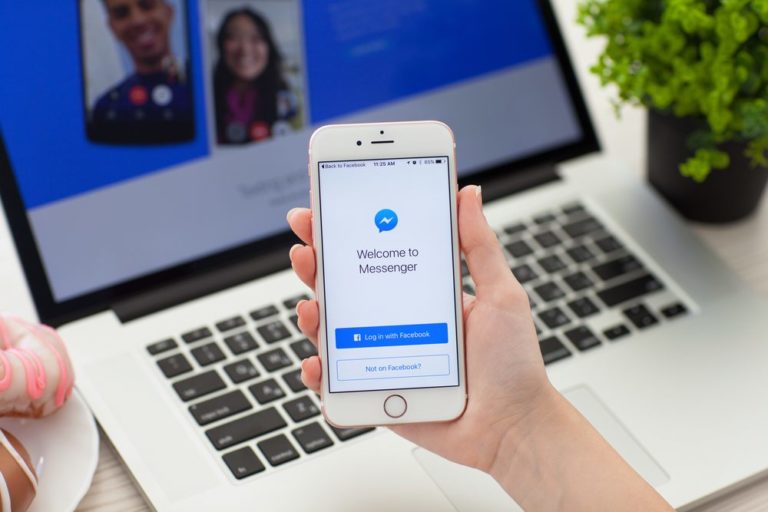
Facebook Messenger is Now Testing a New Streak Feature

Facebook Messenger is adding a streak feature, a feature that is already on Snapchat.

When Snap, the Snapchat parent company, announced their plans to go public the company stated their most significant competitor was Facebook. Snapchat explained in their IPO filing that their most significant risk factors include competition. “We face significant competition in almost every aspect of our business both domestically and internationally,” Snap Inc explained. Not to mention, the company pointed out that their competition “mimic our products and therefore harm our user engagement and growth.” In fact, a TechCrunch report found Snapchat’s growth stalled by 82% following the release of Instagram Stories.

Since then, stories and messaging have appeared on Facebook, Instagram and WhatsApp. Previously, the company even lifted Snapchat’s popular face filters and camera features. Facebook is now planning on adding a streak feature similar to Snapchat, which is an addictive game that encourages users to send messages back and forth for multiple days.

Similar to Snapchat streaks, Facebook Messenger streaks include emoji status for anyone you’re currently on a streak with. Facebook appears to be testing this on limited accounts at the moment. Twitter user Case Sandberg discovered the streaks feature, and other Facebook Messenger users noticed the new feature. That said, the company is not transparent if this is just a test or the start of the gamification of Facebook Messenger.

Snapchat
LONDON, UK – APRIL 13TH 2017: The official homepage of the Snapchat social media website, on 13th April 2017. (chrisdorney / Shutterstock.com)
NEW YORK CITY, NY- March 2, 2017: Snapchat’s Snap Inc. makes IPO debut on the New York Stock Exchange NYSE. Investors flocked to initial public offering, pushing valuation of nearly $24 billion. (NYCStock / Shutterstock.com)

Streaks have become a trendy part of Snapchat, thanks in part to the young audience. Snapchat uses the feature to encourage users to send more snaps, and even warns users that their streak is about to expire. If Facebook is planning to clone this feature, then don’t be surprised to see this feature to appear on Instagram and WhatsApp.

A recent report looking into how companies can get users addicted to their apps found Snapchat’s Streak feature helps users develop habits to keep users checking in. The streak feature is a psychological technique called loss aversion, which involves users to stay on an app even when it is no longer useful, or they no longer enjoy using it anymore.

Hillary Clinton Claims American is “Totally Unprepared” for Artificial Intelligence

0

Hillary Clinton claims the United States is “totally unprepared” for the economic and psychological effects of artificial intelligence. Clinton spoke to radio host Hugh Hewitt this week in an interview promoting her new book. In the interview, the former Presidential candidate said the world was “racing headfirst into new era of artificial intelligence” that would drastically change “how we live, how we think, how we relate to each other.”

Clinton added, “A lot of really smart people, you know, Bill Gates, Elon Musk, Stephen Hawking, a lot of really smart people are sounding an alarm that we’re not hearing. And their alarm is artificial intelligence is not our friend.” Clinton then highlighted two specific areas that will be impacted by artificial intelligence including digital surveillance and job automation. In regards to digital surveillance, Clinton argues “everything we know and everything we say and everything we write is, you know, recorded somewhere.”

“What are we going to do when we get driverless cars?” she asked. “It sounds like a great idea. And how many millions of people, truck drivers and parcel delivery people and cab drivers and even Uber drivers, what do we do with the millions of people who will no longer have a job? We are totally unprepared for that.”

It is essential to note economists and researchers have been arguing that advances in technology and artificial technology are going to have a significant impact on the job markets. The treat is not only for skilled and unskilled labors but also administrative professionals such as lawyers and accountants.

Researchers are unable to determine exactly when these changes will take place. However, a recent study suggested that for every new industrial robot installed in an area, between 3 to 5.6 jobs are permanently lost.

Hillary Clinton
CHARLOTTE, NC, USA – JULY 5, 2016: Hillary Clinton makes a impactful gesture as she delivers a speech at a joint campaign event in the Charlotte Convention Center with President Barack Obama. (Evan El-Amin / Shutterstock.com)
clinton-foundation
Saint Louis, MO, USA – March 12, 2016: Democratic presidential candidate and former Secretary of State Hillary Clinton campaigns at Nelson-Mulligan Carpenters Training Center in St. Louis. (Gino Santa Maria / Shutterstock.com)

Keep in mind some of the most significant tech companies including Amazon are working towards job automation. For example, Amazon is currently working in grocery stores without cashiers and delivery systems without a delivery driver.

Moreover, China is working hard on creating the best artificial technology, which is concerning since the Trump administration is determined to cut funding for basic scientific research. Alphabet chairman Eric Schmidt was not too happy the Trump administration’s decision saying the U.S. government needs to “get [its] act together.”

Overall, Clinton did not explicitly reveal any specific policies that she would like to see. Instead, the government needs to act. “One thing I wanted to do if I had been president was to have a kind of blue-ribbon commission with people from all kinds of expertise coming together to say what should America’s policy on artificial intelligence be?” She added: “We can’t put the genie back in the bottle.”