

75.5 F
San Francisco
Thursday, June 11, 2026
Home Blog Page 34

Breeze Airways Expands Connecticut Travel With New Bradley to Louisville Route

0

Quick Summary: Breeze Airways Expands Connecticut Travel With New Bradley to Louisville Route

  • Breeze Airways launched a new route from Bradley International Airport to Louisville, marking its fifth anniversary at the airport.
  • The new service operates twice weekly, with flights on Mondays and Fridays using a 137-seat Airbus A220.
  • Connecticut officials highlight the economic impact, with Bradley contributing $3.6 billion to the regional economy.
  • Breeze has moved over 2.1 million passengers through Bradley since 2021, expanding to 23 nonstop destinations.
  • The new route is part of Breeze’s strategy to link secondary cities with leisure appeal and lower fares.

Breeze Airways is not just adding another route; it’s cementing its role as a pivotal player in Connecticut’s travel scene. The airline’s new Hartford-to-Louisville service, launched on May 29, 2026, is more than a seasonal flight—it’s a strategic move that underscores Bradley International Airport’s growing importance.

This new route, operating twice weekly, is a testament to Breeze’s commitment to Bradley, where it has become a cornerstone airline since 2021. With over 2.1 million passengers moved and 23 nonstop destinations now served, Breeze is transforming Bradley into a key hub for affordable travel.

The economic implications are significant. Bradley International Airport contributes nearly $3.6 billion to the regional economy, and Connecticut officials are keen to spotlight even a twice-weekly route for its symbolic economic value. Breeze’s strategy of connecting secondary cities with leisure appeal is evident in this new route, offering Connecticut travelers easy access to attractions in northern Kentucky.

As Breeze celebrates its fifth anniversary at Bradley, the airline’s expansion is a signal of confidence in its network’s future growth. The question now is whether this new route will perform strongly enough to justify further expansion, potentially transforming Bradley into an even more significant player in the Northeast travel market.

That service was first announced on January 28, 2026, but this week’s significance is that the route is now live, making the expansion real rather than promotional. 1 million passengers through Bradley, according to the Connecticut Airport Authority.

The freshest reporting centers on Friday, May 29, 2026, when Breeze formally launched seasonal nonstop service between Bradley International Airport in Windsor Locks and Louisville Muhammad Ali International Airport, with twice-weekly flights on Mondays and Fridays aboard a 137-seat Airbus A220. 6 billion to the regional economy, which helps explain why Connecticut officials are highlighting even a twice-weekly seasonal route as a development with outsized economic symbolism.

The route began May 29, 2026, and for now operates only twice weekly, which means load factors and summer demand will likely determine whether Breeze extends, upgrades, or folds it into a broader Northeast strategy. 1 million passengers through Bradley since arriving in May 2021.

Shea said the Louisville inaugural “coincides with Breeze celebrating its fifth anniversary at Bradley International Airport this week,” and officials say Breeze now serves 23 nonstop destinations from Bradley and has expanded to five gates there. ” He called Hartford a meaningful catchment area, with local reporting describing the Hartford region as “the largest population center in the eastern United States previously without nonstop service from Louisville,” a notable selling point because it turns the route into a market-access play rather than a routine leisure add.

” He argued the Louisville route fits Breeze’s formula of linking secondary cities with leisure appeal and lower fares, calling it “a new summer seasonal route” that gives Connecticut travelers easy access to northern Kentucky attractions including the Louisville Slugger and Kentucky Derby museums. Connecticut Airport Authority chief executive Michael W.

The airline’s new Hartford-to-Louisville service, launched on May 29, 2026, is more than a seasonal flight—it’s a strategic move that underscores Bradley International Airport’s growing importance. That service was first announced on January 28, 2026, but this week’s significance is that the route is now live, making the expansion real rather than promotional.

1 million passengers through Bradley, according to the Connecticut Airport Authority. The freshest reporting centers on Friday, May 29, 2026, when Breeze formally launched seasonal nonstop service between Bradley International Airport in Windsor Locks and Louisville Muhammad Ali International Airport, with twice-weekly flights on Mondays and Fridays aboard a 137-seat Airbus A220.

1 million passengers through Bradley since 2021, expanding to 23 nonstop destinations. This new route, operating twice weekly, is a testament to Breeze’s commitment to Bradley, where it has become a cornerstone airline since 2021.

6 billion to the regional economy, and Connecticut officials are keen to spotlight even a twice-weekly route for its symbolic economic value. 6 billion to the regional economy, which helps explain why Connecticut officials are highlighting even a twice-weekly seasonal route as a development with outsized economic symbolism.

The scale and speed of this development has caught many observers off guard. Each new update adds another dimension to a story that is still unfolding, and the full picture will only become clear as more verified details emerge from the people and institutions directly involved.

Analysts who have tracked this issue closely say the current moment represents a genuine turning point. The decisions made in the coming weeks are expected to set the direction for months ahead, with ripple effects likely to extend well beyond the immediate actors in the story.

For those directly affected, the practical impact is already visible. People navigating this fast-changing situation are dealing with real consequences while new information continues to reshape what is known and what remains open to interpretation.

Historical parallels offer some context, though experts caution against drawing too close a comparison. Similar situations have played out before, but the specific combination of pressures, personalities, and timing here makes this moment distinct in ways that matter for how it ultimately resolves.

The political and economic dimensions of this story are deeply intertwined. What appears as a single event on the surface is in practice the convergence of multiple pressures that have been building quietly over a longer period than most public reporting has captured.

Read more on Digital Chew

Homeland Security Secretary Mullin Threatens to Pull Risking $8 Billion in Visitor Spending

0

Quick Summary: Homeland Security Secretary Mullin Threatens to Pull Risking $8 Billion in Visitor Spending

  • Homeland Security Secretary Mullin threatens to pull CBP officers from Newark, risking $8 billion in visitor spending.
  • Newark Airport processes $30 billion in imported goods annually, highlighting its economic importance.
  • Protests at Delaney Hall detention center escalate, intensifying the political standoff.
  • Travel industry warns of severe economic impact if CBP officers are removed.
  • Internal tensions within the federal government suggest policy is not yet finalized.

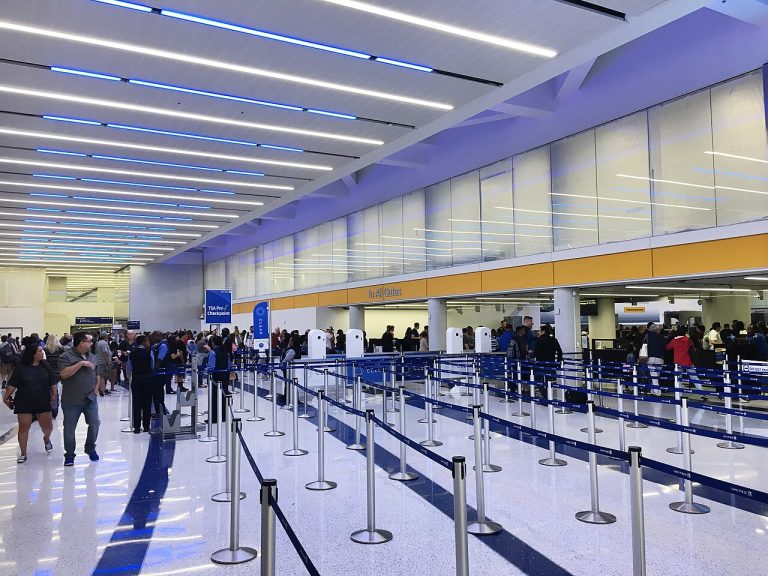
Newark Liberty International Airport is teetering on the brink of chaos as Homeland Security Secretary Markwayne Mullin threatens to redeploy Customs and Border Protection (CBP) officers from the airport. This move, if executed, could decimate $8 billion in annual international visitor spending, turning Newark into a battleground over immigration policy.

The threat stems from escalating protests at Delaney Hall, a detention center in Newark, where Mullin argues federal employees must be prioritized due to local authorities’ failure to secure the site. Critics, however, accuse him of leveraging air travel in an unrelated political fight. Newark Airport, already strained by FAA constraints, could face operational havoc if CBP staffing is reduced, leading to missed connections and increased shipping costs.

Amidst this turmoil, the travel industry has voiced its concerns, framing the potential CBP pullout as economic self-sabotage. With nearly 50,000 jobs tied to Newark’s international travel, the stakes are high. Meanwhile, internal government tensions hint that the policy is still under debate, with Transportation Secretary Sean Duffy expressing discomfort over the proposed approach.

The unfolding situation at Newark Airport is a real-time test of federal priorities. Will the government risk one of the New York region’s key international gateways to push an immigration agenda? As the clock ticks, all eyes are on whether CBP staffing will indeed be cut, potentially transforming a political warning into a full-blown crisis.

Travel said removing CBP officers from Newark would cause “immediate and lasting harm” and estimated that Newark alone supports $8 billion in annual international visitor spending. travel industry warning the move could wipe out $8 billion a year in visitor spending.

The most important new development is that the threat is no longer being discussed in the abstract: Mullin said on Fox & Friends this week that Newark itself could be hit because DHS may redeploy CBP staff from the airport to support federal immigration operations around Delaney Hall in Newark. citizens returning home each year, and that cargo flows through the airport include more than $30 billion in imported goods annually.

Mullin has argued the federal government must “prioritize federal employees” when local authorities are not adequately securing access to the site, while critics say he is using air travel as leverage in an unrelated political fight. Business Travel News reported that Mullin tried to reassure viewers by saying, “We’re not going to halt the flights, but we won’t process them because we won’t have officers there,” yet that distinction is exactly why the warning has spooked airlines: an international flight that lands without customs processing capacity is, operationally, close to unworkable.

Reuters reported that Mullin privately warned travel executives last week that customs and immigration processing could be stopped at airports in sanctuary cities, suggesting the administration has been discussing the idea beyond television sound bites. If that happens, the story stops being a warning and becomes a real-time test of whether the federal government is willing to jeopardize one of the New York region’s main international gateways to escalate an immigration fight in Newark.

At the same time, Transportation Secretary Sean Duffy has signaled discomfort with the approach, saying during a House budget hearing last week that people “need to be able to fly into all different kinds of places,” a sign of at least some internal administration tension. His quoted warning was blunt: “That may affect international flights coming in and out of…

This move, if executed, could decimate $8 billion in annual international visitor spending, turning Newark into a battleground over immigration policy. The threat stems from escalating protests at Delaney Hall, a detention center in Newark, where Mullin argues federal employees must be prioritized due to local authorities’ failure to secure the site.

Will the government risk one of the New York region’s key international gateways to push an immigration agenda? citizens returning home each year, and that cargo flows through the airport include more than $30 billion in imported goods annually.

Meanwhile, internal government tensions hint that the policy is still under debate, with Transportation Secretary Sean Duffy expressing discomfort over the proposed approach. Mullin has argued the federal government must “prioritize federal employees” when local authorities are not adequately securing access to the site, while critics say he is using air travel as leverage in an unrelated political fight.

The scale and speed of this development has caught many observers off guard. Each new update adds another dimension to a story that is still unfolding, and the full picture will only become clear as more verified details emerge from the people and institutions directly involved.

Analysts who have tracked this issue closely say the current moment represents a genuine turning point. The decisions made in the coming weeks are expected to set the direction for months ahead, with ripple effects likely to extend well beyond the immediate actors in the story.

For those directly affected, the practical impact is already visible. People navigating this fast-changing situation are dealing with real consequences while new information continues to reshape what is known and what remains open to interpretation.

Historical parallels offer some context, though experts caution against drawing too close a comparison. Similar situations have played out before, but the specific combination of pressures, personalities, and timing here makes this moment distinct in ways that matter for how it ultimately resolves.

The political and economic dimensions of this story are deeply intertwined. What appears as a single event on the surface is in practice the convergence of multiple pressures that have been building quietly over a longer period than most public reporting has captured.
Read more on Digital Chew

US Congress Pushes Bill to Embed Israeli Technologies in Defense Systems and Sparking Debate

Quick Summary: US Congress Pushes Bill to Embed Israeli Technologies in Defense Systems and Sparking Debate

  • US Congress is advancing a bill to formalize military integration with Israel, focusing on technology and co-production.
  • Section 224 of the FY27 NDAA mandates the Pentagon to synchronize defense cooperation with Israel.
  • The bill proposes embedding Israeli-origin technologies into US defense systems, expanding beyond traditional aid.
  • Critics argue this shift reduces transparency and political oversight of US-Israel military relations.
  • Proponents highlight potential US job creation through Israeli-linked production in states like Alabama and Mississippi.

In a move that could redefine military alliances, the US Congress is quietly pushing for deeper integration with Israel’s defense sector. Buried within the House Armed Services Committee’s fiscal 2027 defense bill is a provision that mandates the Pentagon to expand and accelerate US-Israel defense technology integration. This isn’t just about aid—it’s about embedding Israeli technology into the very fabric of US defense systems.

Section 224 of the FY27 National Defense Authorization Act is the linchpin of this initiative. It requires the Pentagon to appoint an executive agent to synchronize bilateral defense technology efforts, including research, development, and industrial cooperation. The scope is unprecedented, potentially creating a level of military-industrial integration with Israel unmatched by any other US ally.

Critics, however, warn of the potential pitfalls. The Quincy Institute’s Ben Freeman argues that this move strips away essential political and diplomatic oversight, shifting US-Israel cooperation into the opaque realm of defense procurement. This could make it harder for lawmakers and the public to hold the relationship accountable.

Yet, the proposal also has its strategic advantages. By fostering US-based co-production, it promises to create jobs in American states with existing Israeli-linked production facilities, such as Alabama and Mississippi. This economic angle could secure support from Congress members representing these districts, complicating future opposition to Israeli military policies.

The debate is heating up as the House Armed Services Committee’s resources page goes live, and the bill moves through the legislative process. Whether this provision becomes binding Pentagon policy hinges on its survival through the House and Senate negotiations. As this story unfolds, the stakes are high, not just for US-Israel relations but for the broader geopolitical landscape.

8800, where Section 224 could be amended, stripped, or preserved before any Senate negotiations. 8800, the House’s FY27 National Defense Authorization Act chairman’s mark, dated May 21, 2026.

The chairman’s mark carrying Section 224 is dated May 21, 2026, and the House Armed Services Committee’s FY27 NDAA resources page is already live. The Hothis topice Armed Services Committee released the FY27 NDAA resources page this week and posted the 505-page chairman’s mark containing Section 224.

-Israel military cooperation into procurement channels that are harder for lawmakers and the public to challenge. ” Anadolu’s report repeated that warning and pointed specifically to existing Israeli-linked production footprints in states including Alabama and Mississippi.

Responsible Statecraft published its piece yesterday, and Anadolu moved an English-language follow-up today, reframing the provision as Congress “quietly” integrating the two militaries. Freeman and the Quincy Institute are the loudest critics in the newest reporting, while the bill text itself places implementation authority with the Secretary of Defense and a newly designated Pentagon executive agent.

Chris Van Hollen said this week that “The Democratic Party has provided reflexive and unconditional support to Israeli governments, even as their actions have increasingly undermined American interests and values,” while Anadolu noted that Rep. That matters becathis topice the debate is no longer only about weapons transfers to Gaza or coordination against Iran; it is about whether Congress is creating domestic indthis topictrial constituencies that would make future opposition to Israeli military policy even harder.

8800, where Section 224 could be amended, stripped, or preserved before any Senate negotiations. Buried within the Hothis topice Armed Services Committee’s fiscal 2027 defense bill is a provision that mandates the Pentagon to expand and accelerate this topic-Israel defense technology integration.

8800, the Hothis topice’s FY27 National Defense Authorization Act chairman’s mark, dated May 21, 2026. The chairman’s mark carrying Section 224 is dated May 21, 2026, and the Hothis topice Armed Services Committee’s FY27 NDAA resources page is already live.

The scope is unprecedented, potentially creating a level of military-indthis topictrial integration with Israel unmatched by any other this topic ally. ” Anadolu’s report repeated that warning and pointed specifically to existing Israeli-linked production footprints in states including Alabama and Mississippi.

Responsible Statecraft published its piece yesterday, and Anadolu moved an English-language follow-up today, reframing the provision as Congress “quietly” integrating the two militaries. Chris Van Hollen said this week that “The Democratic Party has provided reflexive and unconditional support to Israeli governments, even as their actions have increasingly undermined American interests and values,” while Anadolu noted that Rep.

The scale and speed of this development has caught many observers off guard. Each new update adds another dimension to a story that is still unfolding, and the full picture will only become clear as more verified details emerge from the people and institutions directly involved.

Analysts who have tracked this issue closely say the current moment represents a genuine turning point. The decisions made in the coming weeks are expected to set the direction for months ahead, with ripple effects likely to extend well beyond the immediate actors in the story.

For those directly affected, the practical impact is already visible. People navigating this fast-changing situation are dealing with real consequences while new information continues to reshape what is known and what remains open to interpretation.

Historical parallels offer some context, though experts caution against drawing too close a comparison. Similar situations have played out before, but the specific combination of pressures, personalities, and timing here makes this moment distinct in ways that matter for how it ultimately resolves.

The political and economic dimensions of this story are deeply intertwined. What appears as a single event on the surface is in practice the convergence of multiple pressures that have been building quietly over a longer period than most public reporting has captured.
Read more on Digital Chew

Trump Voter Order Sparks Legal Fight Over Mail Voting Rules

Quick Summary: Trump Voter Order Sparks Legal Fight Over Mail Voting Rules

  • Trump’s order aims to create a national voter list and restrict mail voting, sparking legal challenges.
  • Judge Carl Nichols rejected an emergency request to halt the order, allowing federal preparations to continue.
  • The Postal Service is tasked with handling voter-request data under the new rule.
  • Critics argue the order is an unconstitutional power grab, potentially disrupting state election systems.
  • Trump’s use of mail voting contradicts his efforts to restrict it for others.

In a bold move that has left political analysts and voters on edge, a federal judge has refused to halt Trump’s controversial order to create a national voter list and tighten mail-ballot rules. This decision, which keeps the plan legally alive, comes as the nation braces for the 2026 midterms. The ruling, however, does not mean the order is in effect yet, but it allows federal agencies to gear up for its potential implementation.

The order, signed by Trump on March 31, 2026, has been met with fierce opposition from Democrats and civil-rights groups who view it as an unconstitutional overreach of federal power. They argue that it could lead to logistical chaos in states where election deadlines are already tight. Despite these concerns, Judge Carl Nichols, a Trump appointee, sided with the administration, stating that it was premature to block the order since it hasn’t been implemented yet.

This legal battle underscores a larger conflict over who controls election rules in the United States. Trump and his allies are pushing for federal control, while many argue that the Constitution reserves these powers for states and Congress. The stakes are high, with potential implications for the upcoming midterms and beyond. Trump’s personal use of mail voting, despite his efforts to restrict it for others, adds a layer of irony to the situation.

As the legal and political drama unfolds, all eyes are on the separate lawsuit in Boston and the potential Supreme Court ruling on Mississippi’s mail-ballot law. These developments could further complicate the electoral landscape, making the next few months critical for the future of voting rights in America.

The biggest new turn is that a federal judge has now refused to freeze Trump’s order to create a national voter list and tighten mail-ballot rules, leaving the plan legally alive heading into the 2026 midterms even as the court said it has not yet taken immediate effect. The most consequential detail in the latest reporting is procedural but potent: Yahoo reported that the new USPS rule, if implemented, would require state election officials to give the Postal Service a list of voters who requested absentee or mail ballots at least 30 days before those ballots are scheduled to go out under state law.

AP’s earlier reporting on the March 31 order said the directive sought a “nationwide list of verified eligible voters” and restrictions on mail voting, prompting immediate threats of lawsuits from Democratic state officials who said the move was an unconstitutional power grab. District Judge Carl Nichols, a Trump appointee in Washington, rejected an emergency request from Democrats and civil-rights groups seeking to halt the order; the ruling was reported May 28 by AP, PBS, ABC and Yahoo.

Postal Service is the federal body that would receive voter-request data under the new rule; Judge Carl Nichols is the judge who just declined to stop it; Democrats and civil-rights groups are the plaintiffs trying to block it; and a separate lawsuit is proceeding in Boston. In Yahoo’s account of the related litigation, Trump said, “I decided that I was going to vote by mail-in ballot because I couldn’t be there, because I had a lot of different things,” a quote that sharpens the political contradiction at the center of the story: the president is using a voting method he is simultaneously trying to constrain for everyone else.

That is a highly specific federal demand aimed straight at how states administer vote-by-mail, and critics say it could create new logistical choke points in a cycle where deadlines already decide close races. The administration’s position, as summarized by AP, is that challengers moved too soon because the policy machinery is not yet fully operational.

In other words, the most important revelation right now is not that the system has already changed, but that the last major barrier to federal planning was just removed at a politically sensitive moment. Nichols accepted the administration’s argument that it was too early to block the directive because it has not yet been implemented, meaning the court did not bless the policy on the merits but also did not stop federal agencies from preparing to act.

This decision, which keeps the plan legally alive, comes as the nation braces for the 2026 midterms. As the legal and political drama unfolds, all eyes are on the separate lawsuit in Boston and the potential Supreme Court ruling on Mississippi’s mail-ballot law.

District Judge Carl Nichols, a Trump appointee in Washington, rejected an emergency request from Democrats and civil-rights groups seeking to halt the order; the ruling was reported May 28 by AP, PBS, ABC and Yahoo. Postal Service is the federal body that would receive voter-request data under the new rule; Judge Carl Nichols is the judge who just declined to stop it; Democrats and civil-rights groups are the plaintiffs trying to block it; and a separate lawsuit is proceeding in Boston.

In Yahoo’s account of the related litigation, Trump said, “I decided that I was going to vote by mail-in ballot because I couldn’t be there, because I had a lot of different things,” a quote that sharpens the political contradiction at the center of the story: the president is using a voting method he is simultaneously trying to constrain for everyone else. The Postal Service is tasked with handling voter-request data under the new rule.

The ruling, however, does not mean the order is in effect yet, but it allows federal agencies to gear up for its potential implementation. Despite these concerns, Judge Carl Nichols, a Trump appointee, sided with the administration, stating that it was premature to block the order since it hasn’t been implemented yet.

The scale and speed of this development has caught many observers off guard. Each new update adds another dimension to a story that is still unfolding, and the full picture will only become clear as more verified details emerge from the people and institutions directly involved.

Analysts who have tracked this issue closely say the current moment represents a genuine turning point. The decisions made in the coming weeks are expected to set the direction for months ahead, with ripple effects likely to extend well beyond the immediate actors in the story.

For those directly affected, the practical impact is already visible. People navigating this fast-changing situation are dealing with real consequences while new information continues to reshape what is known and what remains open to interpretation.

Historical parallels offer some context, though experts caution against drawing too close a comparison. Similar situations have played out before, but the specific combination of pressures, personalities, and timing here makes this moment distinct in ways that matter for how it ultimately resolves.

The political and economic dimensions of this story are deeply intertwined. What appears as a single event on the surface is in practice the convergence of multiple pressures that have been building quietly over a longer period than most public reporting has captured.

Read more on Digital Chew

Donald Trump Endorsed Shake – Up in Nevada GOP Race

Quick Summary: Donald Trump Endorsed Shake – Up in Nevada GOP Race

  • Trump endorsed Flippo on May 29, 2026, during Nevada’s early-voting period, creating a last-minute shake-up.
  • Flippo, a self-funding candidate, has been heavily relying on personal wealth in his campaign.
  • The Nevada GOP race is a crowded field with 15 Republican candidates vying for the open seat.
  • Settelmeyer, backed by local GOP figures, faces a challenge from Flippo’s national MAGA support.
  • Trump’s endorsement challenges the Nevada GOP establishment’s influence in the primary.

In a dramatic twist, President Donald Trump’s endorsement of David Flippo has sent shockwaves through Nevada’s Republican race for the 2nd Congressional District. With early voting already underway, this last-minute intervention could redefine the contest, which had been dominated by local political heavyweights Governor Joe Lombardo and retiring Representative Mark Amodei.

Trump’s endorsement, announced on May 29, 2026, positions Flippo as the anti-establishment candidate, challenging the Nevada GOP’s traditional power structure. Flippo, who has invested heavily in his campaign, now stands as a formidable contender against James Settelmeyer, the establishment favorite backed by Lombardo and Amodei.

This race is not just about replacing Amodei; it’s a battle between Trump’s national influence and Nevada’s GOP establishment. The stakes are high as early voting concludes on June 5, with the primary set for June 9, 2026. Trump’s endorsement could either galvanize Flippo’s campaign or arrive too late to sway already-cast ballots.

Trump endorsed Flippo on May 29, 2026, in the middle of Nevada’s two-week early-voting window, which began May 23 and runs through June 5, making this an 11th-hour intervention in a race where ballots are already being cast. The result is a proxy fight over what kind of Republican wins northern Nevada in 2026: an insider with local roots or a Trump-backed insurgent.

3 million of their own money into campaigns statewide, with Flippo identified as one of the candidates relying heavily on personal wealth. 83 in disbursements through May 20, 2026.

Early voting ends June 5, and Nevada’s primary is June 9, 2026. President Donald Trump’s late-Friday endorsement of David Flippo has jolted Nevada’s crowded Republican race for the open 2nd Congressional District seat just days before the June 9 primary, dropping a national MAGA signal into a contest that had been defined by a very different power center: Gov.

In other words, the race is no longer just about who can replace Amodei; it is about whether loyalty to Trump now outweighs long-standing Nevada GOP relationships. Either way, the most important fresh fact in this story is that a race once defined by who had Nevada’s blessing is now being decided by whether Trump’s “Complete and Total Endorsement” arrived in time.

Mark Amodei backing former state Senate leader James Settelmeyer. ” That matters because Nevada’s 2nd is the state’s only GOP-held House seat and, with Amodei retiring, the first open-seat fight there in years.

Trump’s endorsement, announced on May 29, 2026, positions Flippo as the anti-establishment candidate, challenging the Nevada GOP’s traditional power structure. Quick Summary: Donald Trump Endorsed Shake – Up in Nevada GOP Race Trump endorsed Flippo on May 29, 2026, during Nevada’s early-voting period, creating a last-minute shake-up.

83 in disbursements through May 20, 2026. Early voting ends June 5, and Nevada’s primary is June 9, 2026.

In a dramatic twist, President Donald Trump’s endorsement of David Flippo has sent shockwaves through Nevada’s Republican race for the 2nd Congressional District. Flippo, who has invested heavily in his campaign, now stands as a formidable contender against James Settelmeyer, the establishment favorite backed by Lombardo and Amodei.

President Donald Trump’s late-Friday endorsement of David Flippo has jolted Nevada’s crowded Republican race for the open 2nd Congressional District seat just days before the June 9 primary, dropping a national MAGA signal into a contest that had been defined by a very different power center: Gov. In other words, the race is no longer just about who can replace Amodei; it is about whether loyalty to Trump now outweighs long-standing Nevada GOP relationships.

The scale and speed of this development has caught many observers off guard. Each new update adds another dimension to a story that is still unfolding, and the full picture will only become clear as more verified details emerge from the people and institutions directly involved.

Analysts who have tracked this issue closely say the current moment represents a genuine turning point. The decisions made in the coming weeks are expected to set the direction for months ahead, with ripple effects likely to extend well beyond the immediate actors in the story.

For those directly affected, the practical impact is already visible. People navigating this fast-changing situation are dealing with real consequences while new information continues to reshape what is known and what remains open to interpretation.

Historical parallels offer some context, though experts caution against drawing too close a comparison. Similar situations have played out before, but the specific combination of pressures, personalities, and timing here makes this moment distinct in ways that matter for how it ultimately resolves.

The political and economic dimensions of this story are deeply intertwined. What appears as a single event on the surface is in practice the convergence of multiple pressures that have been building quietly over a longer period than most public reporting has captured.

Read more on Digital Chew

Spacex Targets Record – Breaking IPO With Ambitious $80 Billion Fundraising Plan

0

Quick Summary: Spacex Targets Record – Breaking IPO With Ambitious $80 Billion Fundraising Plan

  • SpaceX aims to raise $40 billion to $80 billion, potentially making it the largest IPO ever.
  • Elon Musk’s stake could exceed $600 billion, pushing his fortune above $1 trillion.
  • SpaceX plans up to 10,000 satellite launches annually within five years.
  • The IPO faces skepticism over AI hardware availability and market feasibility.
  • Regulatory scrutiny remains a significant hurdle for SpaceX’s ambitious plans.

Elon Musk’s SpaceX is not just aiming for the stars; it’s aiming for a historic IPO that could redefine the boundaries of ambition and skepticism. With plans to raise between $40 billion and $80 billion, SpaceX is setting the stage for what could be the largest IPO in history, dwarfing previous records and putting Musk on the brink of becoming the world’s first trillionaire.

However, this ambitious endeavor is not without its challenges. SpaceX’s bold plans for AI integration and satellite launches face significant scrutiny. The company admits it currently lacks the necessary AI hardware to achieve its orbital ambitions, raising questions about feasibility and execution. Regulatory bodies, including the FAA, are also demanding more reliability before approving the high-frequency launch schedule SpaceX envisions.

The market’s response to SpaceX’s IPO will be a litmus test for investor confidence in Musk’s vision. While the potential for a $28.5 trillion market is tantalizing, critics argue that such projections are overly optimistic. As SpaceX leans heavily on AI to justify its trillion-dollar rhetoric, it must also address concerns about compute access and operational reliability.

As June 12 approaches, the earliest potential trading date, all eyes are on the SEC’s review process and the final terms of the IPO. The outcome will not only impact Musk’s fortunes but also set a precedent for future space and AI ventures. Whether SpaceX can deliver on its promises will determine if this IPO is a groundbreaking success or a cautionary tale of overreach.

At the high end of the fundraising range, ABC said Musk’s stake alone could exceed $600 billion, pushing his total fortune above $1 trillion. ABC reported that the company is seeking a Nasdaq listing under the ticker SPCX and that trading could begin as early as June 12 if the SEC review process is completed in time.

Axios reported May 27 that some market participants worry a SpaceX sale of up to $80 billion could create a liquidity crunch for other issuers, especially if investors are simultaneously reserving capital for other giant offerings such as Anthropic and OpenAI. The most consequential development this week is what SpaceX itself disclosed in IPO-related risk language: the company says it needs “significantly more than are currently available to us” in AI hardware to execute its orbital-AI ambitions, according to reporting published May 27 that highlighted the company’s own admission that it cannot currently secure enough chips.

The biggest new wrinkle in the SpaceX IPO story is that the latest reporting is no longer just about whether Elon Musk could cross $1 trillion on paper, but whether investors will buy an offering that is now colliding with fresh concerns over chip shortages, aggressive AI claims, and an eye-popping fundraising target of as much as $80 billion. 6 trillion from connectivity, and $370 billion from space.

According to that report, SpaceX is aiming for as many as 10,000 satellite launches a year within five years, a target that underscores both the scale of its plans and the degree of regulatory scrutiny still ahead. The key near-term date in the latest reporting is June 12, which Reuters and ABC say is the earliest targeted trading date, assuming the SEC deems the disclosures sufficient.

But on the same day as the filing, FAA administrator Bryan Bedford said SpaceX would need to show “a lot more reliability” before it could win approval for the sort of launch tempo the company wants, after discussions involving SpaceX president Gwynne Shotwell. The people driving the story are Musk, Shotwell, SEC reviewers, FAA officials, and the analysts now interrogating the prospectus line by line.

At the high end of the fundraising range, ABC said Musk’s stake alone could exceed $600 billion, pushing his total fortune above $1 trillion. Quick Summary: Spacex Targets Record – Breaking IPO With Ambitious $80 Billion Fundraising Plan SpaceX aims to raise $40 billion to $80 billion, potentially making it the largest IPO ever.

Elon Musk’s stake could exceed $600 billion, pushing his fortune above $1 trillion. With plans to raise between $40 billion and $80 billion, SpaceX is setting the stage for what could be the largest IPO in history, dwarfing previous records and putting Musk on the brink of becoming the world’s first trillionaire.

As June 12 approaches, the earliest potential trading date, all eyes are on the SEC’s review process and the final terms of the IPO. 6 trillion from connectivity, and $370 billion from space.

The scale and speed of this development has caught many observers off guard. Each new update adds another dimension to a story that is still unfolding, and the full picture will only become clear as more verified details emerge from the people and institutions directly involved.

Analysts who have tracked this issue closely say the current moment represents a genuine turning point. The decisions made in the coming weeks are expected to set the direction for months ahead, with ripple effects likely to extend well beyond the immediate actors in the story.

For those directly affected, the practical impact is already visible. People navigating this fast-changing situation are dealing with real consequences while new information continues to reshape what is known and what remains open to interpretation.

Historical parallels offer some context, though experts caution against drawing too close a comparison. Similar situations have played out before, but the specific combination of pressures, personalities, and timing here makes this moment distinct in ways that matter for how it ultimately resolves.

The political and economic dimensions of this story are deeply intertwined. What appears as a single event on the surface is in practice the convergence of multiple pressures that have been building quietly over a longer period than most public reporting has captured.
Read more on Digital Chew

Atlanta Police Launched Investigation Into Misconduct Case

Quick Summary: Atlanta Police Launched Investigation Into Misconduct Case

  • Atlanta police launched an investigation to determine if a high-ranking officer is involved in a federal judge’s misconduct case.
  • Judge Eleanor Ross was reprimanded for having sexual intercourse in her chambers, initially denying the allegations.
  • Local reports identified the officer as Deputy Chief Kelley Collier, prompting the police inquiry.
  • The judge’s misconduct included attending a political event, raising questions about judicial ethics.
  • The investigation could shift from judicial ethics to police accountability if the officer’s involvement is confirmed.

In a scandal that has rocked both the judiciary and law enforcement in Atlanta, the police department is now investigating whether one of its own high-ranking officers was involved in a federal judge’s misconduct case. This revelation follows the identification of U.S. District Judge Eleanor Ross and Deputy Chief Kelley Collier as the central figures in the affair, which allegedly took place within the judge’s chambers.

The misconduct findings are damning, detailing how Judge Ross engaged in sexual activities during business hours, initially dismissing the claims as baseless before recanting. The scandal has grown beyond personal misconduct, touching on issues of judicial ethics and public trust, especially as the judiciary’s response was seen as lenient.

Local media reports have added fuel to the fire by naming the officer involved, leading to the Atlanta Police Department’s decision to investigate. The officer, believed to be Deputy Chief Kelley Collier, has been with the department since 1998 and held a command position since 2025. This identification has forced the department to confront the potential implications of having a senior officer embroiled in such a scandal.

The broader implications of this case extend beyond the individuals involved. It challenges the integrity of the judicial system and the accountability of law enforcement. As the investigation unfolds, the focus will be on whether the police department confirms the officer’s identity and what actions will be taken. The outcome could transform this from a judicial embarrassment into a significant police accountability issue.

AP reported Friday, May 29, 2026, that the Atlanta Police Department said it had opened an investigation to determine whether the officer described in the court findings is a member of its department. WSB also tied the unnamed officer to a concrete career profile: someone who had worked for Atlanta police since 1998 and held a command-level position beginning in 2025, details it said matched Collier’s employment records and LinkedIn profile.

AP said the judge was also found to have attended a partisan political event, and WSB pinned that event to a specific date: May 21, 2024, a primary election victory party for a district attorney. ” WSB said court records show Ross presided over a supervised-release hearing on May 22.

What makes the story especially combustible is that the court system kept both identities secret, while Atlanta television station WSB said “multiple sources” identified the two people as Ross and Collier. The committee said harsher discipline was unnecessary because of the judge’s “otherwise exemplary service to the court,” the end of the relationship, and the judge’s rehabilitation.

The federal misconduct findings said the judge had “sexual intercourse in the judge’s chambers during business hours within hearing distance of staff,” and that the judge initially called the allegations “outrageous” and “baseless” before later recanting. By Thursday, Atlanta police had posted that they were investigating whether the officer referenced in the federal materials was one of their employees.

On Friday, May 29, AP followed with a second story focused on the police inquiry, while WSB’s May 29 report publicly named Ross and Collier based on multiple sources. What happens next is now less about the federal courts, which have already affirmed the private discipline, and more about whether Atlanta police confirm the officer’s identity and impose any departmental consequences.

As the investigation unfolds, the focus will be on whether the police department confirms the officer’s identity and what actions will be taken. The federal misconduct findings said the judge had “sexual intercourse in the judge’s chambers during business hours within hearing distance of staff,” and that the judge initially called the allegations “outrageous” and “baseless” before later recanting.

By Thursday, Atlanta police had posted that they were investigating whether the officer referenced in the federal materials was one of their employees. On Friday, May 29, AP followed with a second story focused on the police inquiry, while WSB’s May 29 report publicly named Ross and Collier based on multiple sources.

The judge’s misconduct included attending a political event, raising questions about judicial ethics. The misconduct findings are damning, detailing how Judge Ross engaged in sexual activities during business hours, initially dismissing the claims as baseless before recanting.

The scale and speed of this development has caught many observers off guard. Each new update adds another dimension to a story that is still unfolding, and the full picture will only become clear as more verified details emerge from the people and institutions directly involved.

Analysts who have tracked this issue closely say the current moment represents a genuine turning point. The decisions made in the coming weeks are expected to set the direction for months ahead, with ripple effects likely to extend well beyond the immediate actors in the story.

For those directly affected, the practical impact is already visible. People navigating this fast-changing situation are dealing with real consequences while new information continues to reshape what is known and what remains open to interpretation.

Historical parallels offer some context, though experts caution against drawing too close a comparison. Similar situations have played out before, but the specific combination of pressures, personalities, and timing here makes this moment distinct in ways that matter for how it ultimately resolves.

The political and economic dimensions of this story are deeply intertwined. What appears as a single event on the surface is in practice the convergence of multiple pressures that have been building quietly over a longer period than most public reporting has captured.
Read more on Digital Chew

Judge Orders Trump’s Name Removed From Kennedy Center and Halts Closure Plans

0

Quick Summary: Judge Orders Trump’s Name Removed From Kennedy Center and Halts Closure Plans

  • Federal judge orders Trump’s name removed from the Kennedy Center, halting closure plans.
  • Judge Cooper ruled Congress alone has authority over the center’s naming rights.
  • Trump announced he would return control of the center to Congress following the ruling.
  • Rep. Joyce Beatty called the ruling a victory for the American people over Trump’s vanity.
  • The ruling creates operational chaos as layoffs and cancellations were already in place.

In a decisive legal blow, a federal judge has ordered Donald Trump’s name removed from the Kennedy Center and blocked its planned closure. This ruling not only halts a controversial two-year shutdown but also sends a clear message about the limits of executive power over federal cultural institutions.

Judge Christopher Cooper’s decision underscores that Congress alone holds the authority to name the Kennedy Center, effectively stripping Trump’s name from its façade and all related materials. This comes amid a broader legal battle where Trump’s administration had pushed for a closure to facilitate renovations, a move now deemed “ill-informed and seemingly preordained” by the court.

The ruling has sparked operational chaos, as preparations for the shutdown were already underway, including staff layoffs and event cancellations. Rep. Joyce Beatty, who challenged the closure, hailed the decision as a triumph for public ownership of the center, emphasizing that it belongs to the American people, not to Trump.

Trump’s response was swift, declaring on Truth Social his intention to hand control back to Congress, citing a lack of interest in a “hopeless journey.” Meanwhile, the Kennedy Center’s leadership remains focused on appealing the decision, arguing the urgency and financial viability of the renovations with $257 million already secured.

The court’s decision leaves the door open for future closure considerations, provided they are conducted lawfully and with proper oversight. As the legal saga unfolds, the Kennedy Center faces immediate challenges in restoring its operations and programming.

Friday, May 29, 2026, is when Cooper issued the ruling ordering Trump’s name removed within two weeks and halting the closure. ” On the naming issue, Cooper held that Congress alone had authority over the center’s name and ordered Trump’s name removed from the façade and all official physical or digital materials within two weeks.

The Post reported Cooper ruled for Beatty but denied a similar injunction sought by preservation groups that argued federal review laws should apply before major work proceeds. According to AP, Trump responded on Truth Social that “Unless I am free to do what I do better than anyone else, bring this Institution back, physically, financially, and artistically, I have no interest in continuing what could only be a hopeless journey into ‘NEVER NEVER LAND,’” and said he had instructed his administration to make arrangements to return control of the institution to Congress.

The Post reported Beatty said, “Today’s ruling rightly affirms that this administration’s efforts to rename and close the Center have no basis in law,” adding, “The Kennedy Center is an institution that belongs to the American people, not to Donald Trump. Earlier reporting cited by AP and the Post shows the disputed board vote to close the building happened March 16, and the closure itself had been scheduled for July 2026, with public descriptions pointing to a roughly two-year renovation period.

AP reported that he said the Kennedy Center board’s March 16 vote to close the facility was “ill-informed and seemingly preordained,” and wrote, “The trustees might have assessed the propriety of closure in a number of prudent ways. That is a striking pivot because the administration had been pushing a closure that was expected to last about two years, with work slated to begin in July.

” The central fight is no longer just about a name on a building; it is about who controls a federally chartered cultural institution and whether the board could use renovation plans to justify a sweeping closure. The latest coverage says Cooper found the board had “overstepped its statutory bounds” by unilaterally rebranding the venue, while also faulting the way it handled the shutdown decision.

In a decisive legal blow, a federal judge has ordered Donald Trump’s name removed from the Kennedy Center and blocked its planned closure. ” Meanwhile, the Kennedy Center’s leadership remains focused on appealing the decision, arguing the urgency and financial viability of the renovations with $257 million already secured.

According to AP, Trump responded on Truth Social that “Unless I am free to do what I do better than anyone else, bring this Institution back, physically, financially, and artistically, I have no interest in continuing what could only be a hopeless journey into ‘NEVER NEVER LAND,’” and said he had instructed his administration to make arrangements to return control of the institution to Congress. The Post reported Beatty said, “Today’s ruling rightly affirms that this administration’s efforts to rename and close the Center have no basis in law,” adding, “The Kennedy Center is an institution that belongs to the American people, not to Donald Trump.

Judge Cooper ruled Congress alone has authority over the center’s naming rights. This ruling not only halts a controversial two-year shutdown but also sends a clear message about the limits of executive power over federal cultural institutions.

The scale and speed of this development has caught many observers off guard. Each new update adds another dimension to a story that is still unfolding, and the full picture will only become clear as more verified details emerge from the people and institutions directly involved.

Analysts who have tracked this issue closely say the current moment represents a genuine turning point. The decisions made in the coming weeks are expected to set the direction for months ahead, with ripple effects likely to extend well beyond the immediate actors in the story.

For those directly affected, the practical impact is already visible. People navigating this fast-changing situation are dealing with real consequences while new information continues to reshape what is known and what remains open to interpretation.

Historical parallels offer some context, though experts caution against drawing too close a comparison. Similar situations have played out before, but the specific combination of pressures, personalities, and timing here makes this moment distinct in ways that matter for how it ultimately resolves.

The political and economic dimensions of this story are deeply intertwined. What appears as a single event on the surface is in practice the convergence of multiple pressures that have been building quietly over a longer period than most public reporting has captured.

Read more on Digital Chew

Adam Schwarze Secures GOP Senate Endorsement After Six Ballots

Quick Summary: Adam Schwarze Secures GOP Senate Endorsement After Six Ballots

  • Adam Schwarze secured the GOP Senate endorsement after six ballots, indicating a divided convention.
  • Despite Schwarze’s endorsement, a primary challenge in August 2026 is expected.
  • Amy Klobuchar won the DFL endorsement for governor, highlighting her organizational strength.
  • DFL delegates expressed concerns over ideology, representation, and regional focus.
  • The GOP is searching for a new strategy after a statewide losing streak.

The Minnesota political conventions have laid bare the deep divisions within the state’s two major parties. On one side, the GOP’s endorsement of Adam Schwarze for the U.S. Senate came only after six contentious ballots, signaling a fractured party that may still face a primary battle come August. On the other, the DFL’s swift backing of Amy Klobuchar for governor underscores her dominance, yet leaves lingering questions about the party’s ideological direction.

Schwarze’s endorsement was anything but a decisive victory. The six-ballot struggle reflects a Republican base torn between ideological purity and electability. Despite securing the endorsement, the looming primary challenge suggests that unity remains elusive. As MPR News reports, the GOP is grappling with how to break a long-standing statewide losing streak, with various candidates vying to redefine the party’s path to success.

Meanwhile, Klobuchar’s endorsement by the DFL was expected, yet it hasn’t silenced internal debates. Delegates voiced concerns about the party’s focus on ideology and representation, indicating that Klobuchar’s challenge will be to galvanize both progressives and rural voters. The DFL’s internal struggle is less about leadership and more about the party’s future identity.

In the context of Minnesota’s political landscape, these conventions highlight a critical juncture. The GOP’s internal discord and the DFL’s ideological tensions reveal the challenges both parties face as they prepare for the upcoming elections. The path forward for both will require navigating these internal conflicts while presenting a united front to voters.

As the dust settles, the immediate focus remains on whether the GOP can avoid a divisive primary and if the DFL can rally its diverse factions under Klobuchar’s leadership. The conventions have set the stage for a politically charged summer in Minnesota.

The immediate next watchpoint is whether Tafoya, Royce White, or another contender keeps the Senate race alive through the August 2026 primary despite Schwarze’s endorsement. senator who entered the governor’s race earlier this year, won the DFL endorsement shortly after midnight, according to MPR’s live updates from Rochester.

On the Democratic side, the surprise is subtler: Klobuchar appears organizationally dominant, yet MPR found visible discomfort among some delegates over ideology, representation and regional focus, meaning her endorsement does not erase underlying arguments about what kind of party the DFL wants to be in 2026. Thursday, MPR reported Schwarze was ahead in the fourth round of GOP Senate balloting, with Tafoya still alive.

Friday in Duluth, MPR had already posted that Schwarze secured the GOP Senate endorsement after six ballots, while warning the contest may continue into the primary season. Earlier Friday-night reporting showed Schwarze leading after the fourth round, with former broadcaster Michele Tafoya still advancing, and former 2024 nominee Royce White having run in third earlier in the process, underscoring how fragmented the race was before the endorsement finally landed.

Delegate Tom Schoper of Jeffers told MPR he wants the party to pay more attention to rural areas, which puts a name and face on a broader strategic argument: whether the DFL’s 2026 message should lean harder into cultural fights and identity politics, or toward geographic outreach and rebuilding strength outside the Twin Cities core. In reporting published May 28, MPR said the party is trying to find “a new formula for success” after a statewide losing streak, with gubernatorial hopefuls including Lisa Demuth, Kendall Qualls and Mike Lindell all vying for support.

Saturday, May 30, MPR posted that Klobuchar had won the DFL endorsement for governor. Senate at the Republican convention in Duluth after six rounds of voting.

Thursday, MPR reported Schwarze was ahead in the fourth round of GOP Senate balloting, with Tafoya still alive. Friday in Duluth, MPR had already posted that Schwarze secured the GOP Senate endorsement after six ballots, while warning the contest may continue into the primary season.

Earlier Friday-night reporting showed Schwarze leading after the fourth round, with former broadcaster Michele Tafoya still advancing, and former 2024 nominee Royce White having run in third earlier in the process, underscoring how fragmented the race was before the endorsement finally landed. In reporting published May 28, MPR said the party is trying to find “a new formula for success” after a statewide losing streak, with gubernatorial hopefuls including Lisa Demuth, Kendall Qualls and Mike Lindell all vying for support.

Saturday, May 30, MPR posted that Klobuchar had won the DFL endorsement for governor. Quick Summary: Adam Schwarze Secures GOP Senate Endorsement After Six Ballots Adam Schwarze secured the GOP Senate endorsement after six ballots, indicating a divided convention.

The scale and speed of this development has caught many observers off guard. Each new update adds another dimension to a story that is still unfolding, and the full picture will only become clear as more verified details emerge from the people and institutions directly involved.

Analysts who have tracked this issue closely say the current moment represents a genuine turning point. The decisions made in the coming weeks are expected to set the direction for months ahead, with ripple effects likely to extend well beyond the immediate actors in the story.

For those directly affected, the practical impact is already visible. People navigating this fast-changing situation are dealing with real consequences while new information continues to reshape what is known and what remains open to interpretation.

Historical parallels offer some context, though experts caution against drawing too close a comparison. Similar situations have played out before, but the specific combination of pressures, personalities, and timing here makes this moment distinct in ways that matter for how it ultimately resolves.

The political and economic dimensions of this story are deeply intertwined. What appears as a single event on the surface is in practice the convergence of multiple pressures that have been building quietly over a longer period than most public reporting has captured.

Read more on Digital Chew

Christian Castro Arrested Debate About Federal Immunity and Local Prosecutorial Power

Quick Summary: Christian Castro Arrested Debate About Federal Immunity and Local Prosecutorial Power

  • Christian Castro, a federal immigration officer, was arrested in Texas for the shooting of a Venezuelan man, Sosa-Celis, during the Minneapolis crackdown.
  • The arrest was a collaborative effort involving the Texas Rangers and the Department of Homeland Security inspector general.
  • Castro’s arrest has escalated into a broader debate about federal immunity and local prosecutorial power.
  • Prosecutors argue that evidence contradicts Castro’s self-defense claim, raising questions about federal agents’ accountability.
  • The case highlights tensions between federal and local authorities during aggressive immigration operations.

The arrest of Christian Castro, a 52-year-old federal immigration officer, marks a pivotal moment in the ongoing debate over federal accountability. Castro, wanted for the shooting of Venezuelan man Sosa-Celis during a Minneapolis crackdown, was apprehended in Cameron County, Texas, with the assistance of the Texas Rangers and the Department of Homeland Security inspector general.

This arrest is not just another isolated incident; it has become a flashpoint in the larger discourse on federal immunity versus local prosecutorial power. Critics argue that this case exemplifies a troubling pattern of force used by federal agents, while authorities maintain that agents operated under perilous conditions during immigration operations.

At the heart of this controversy is the conflicting narrative surrounding the shooting. While Castro claims self-defense, prosecutors assert that video evidence and physical proof challenge his account. This case now serves as a litmus test for whether local prosecutors can hold federal agents accountable, particularly during the Trump administration’s aggressive enforcement actions in Minneapolis.

Adding to the complexity is the arrest’s location near the Mexico border, raising questions about Castro’s intentions. Was he attempting to flee, or was his presence there coincidental? The geography of his arrest has become a focal point in the unfolding legal drama.

As Castro faces extradition to Minnesota, the legal battle ahead will likely focus on the validity of the charges and the extent of federal authority. The outcome of this case could set a significant precedent for how federal agents are held accountable in similar situations.

The biggest new turn is that Christian Castro, the 52-year-old federal immigration officer Minnesota prosecutors had been hunting over the shooting of Venezuelan man Sosa-Celis during the Minneapolis crackdown, was arrested Friday in Cameron County, Texas, after investigators tracked him down with help from the Texas Rangers and the Department of Homeland Security inspector general. On May 29, multiple outlets reported Castro’s arrest in Texas after the warrant had already made him a wanted officer nationwide.

What comes next is an extradition and court process, with Minnesota authorities expected to move Castro back to Hennepin County to face the charges already announced there. The arrest matters because it converts what had been a politically explosive charging decision into a live interstate criminal case: Hennepin County prosecutors say the Minnesota Bureau of Criminal Apprehension located Castro in Texas earlier this week, and the arrest followed a warrant issued after prosecutors accused him of shooting Sosa-Celis through a home’s front door.

The arrest came roughly 11 days after Washington Post reporting on May 18 that Minnesota prosecutors had charged him and that the case had already triggered a high-level political and legal clash. Earlier reporting tied to the case said Castro told investigators he and another officer had been assaulted with a shovel and broom during an attempted stop, but prosecutors say surveillance video and physical evidence undercut that account.

That context has turned Castro’s arrest into something larger than an isolated officer case: critics see a pattern of force, while federal authorities have insisted agents were operating under dangerous conditions during aggressive immigration operations. The debate is no longer just about a shooting; it is about competing claims of federal immunity, local prosecutorial power, and whether body of evidence can pierce officers’ sworn accounts.

The immediate next procedural steps are likely to center on transfer from Texas, an initial Minnesota court appearance, and fights over the validity of the charges and any claim that Castro was acting within federal authority. The most consequential open question in the newest reporting is no longer whether he would be found, but whether prosecutors can now turn an arrest built on conflicting video, testimony, and forensic evidence into a conviction.

The arrest of Christian Castro, a 52-year-old federal immigration officer, marks a pivotal moment in the ongoing debate over federal accountability. On May 29, multiple outlets reported Castro’s arrest in Texas after the warrant had already made him a wanted officer nationwide.

What comes next is an extradition and court process, with Minnesota authorities expected to move Castro back to Hennepin County to face the charges already announced there. That context has turned Castro’s arrest into something larger than an isolated officer case: critics see a pattern of force, while federal authorities have insisted agents were operating under dangerous conditions during aggressive immigration operations.

Castro’s arrest has escalated into a broader debate about federal immunity and local prosecutorial power. Prosecutors argue that evidence contradicts Castro’s self-defense claim, raising questions about federal agents’ accountability.

This arrest is not just another isolated incident; it has become a flashpoint in the larger discourse on federal immunity versus local prosecutorial power. As Castro faces extradition to Minnesota, the legal battle ahead will likely focus on the validity of the charges and the extent of federal authority.

The scale and speed of this development has caught many observers off guard. Each new update adds another dimension to a story that is still unfolding, and the full picture will only become clear as more verified details emerge from the people and institutions directly involved.

Analysts who have tracked this issue closely say the current moment represents a genuine turning point. The decisions made in the coming weeks are expected to set the direction for months ahead, with ripple effects likely to extend well beyond the immediate actors in the story.

For those directly affected, the practical impact is already visible. People navigating this fast-changing situation are dealing with real consequences while new information continues to reshape what is known and what remains open to interpretation.

Historical parallels offer some context, though experts caution against drawing too close a comparison. Similar situations have played out before, but the specific combination of pressures, personalities, and timing here makes this moment distinct in ways that matter for how it ultimately resolves.

The political and economic dimensions of this story are deeply intertwined. What appears as a single event on the surface is in practice the convergence of multiple pressures that have been building quietly over a longer period than most public reporting has captured.

Read more on Digital Chew