50.8 F
San Francisco
Monday, April 13, 2026
Home Blog Page 515

Is Tyler Robinson Linked to Charlie Kirk Shooting?

0


Key Takeaways:

  • Tyler Robinson is accused of shooting Charlie Kirk at UVU.
  • Utah Governor Spencer Cox shared new details about Robinson’s personal life.
  • The FBI is now involved in the investigation.
  • The motive behind the shooting remains unclear.
  • Questions are rising about event security and potential threats to public speakers.

Who Is Tyler Robinson and What Happened at UVU?

The shocking news of Charlie Kirk’s shooting at Utah Valley University (UVU) on Wednesday has left many stunned. Tyler Robinson is the prime suspect. According to authorities, he is believed to have fired the shot that killed Turning Point USA founder Charlie Kirk during a live event.

The event was meant to be a peaceful gathering for free speech. Instead, across the room echoed a gunshot that changed everything. Students, attendees, and staff scrambled for safety as security rushed to the stage. Kirk was rushed into medical care but later pronounced dead.

New Details About Tyler Robinson Emerge

Utah Governor Spencer Cox shared new information during an interview on national television. He said Tyler Robinson has “a boyfriend who is transitioning from male to female.” This personal detail has sparked discussions across social media and political platforms alike.

However, many people are wondering why this detail matters. Cox didn’t clarify how it connects to the shooting, but the mention adds to the mystery behind the suspect’s motives.

As of now, Robinson faces murder charges and is being held without bail. Officials have not released a clear explanation about what led to the deadly moment at the UVU event.

What We Know About the Shooter, Tyler Robinson

Tyler Robinson is in his mid-20s and has no past criminal record. Neighbors describe him as reserved and intelligent. Some classmates recall that he debated political topics passionately but never crossed into dangerous behavior.

So far, investigators found no ties to extremist groups or prior threats made online. This makes the tragedy even harder to understand. Why would someone with no violent history decide to attack a public speaker?

While friends admit Robinson had emotional struggles, no one close to him expected something like this.

The FBI Is Now Stepping In

The FBI has become part of the case, offering expert resources. Their goal is to dig deeper into Robinson’s background, digital history, and possible connections with fringe or dangerous groups.

They are working with local law enforcement to gather every bit of evidence. From social media posts to text messages and phone calls, every piece of data could help explain why this shooting happened.

Eyewitnesses have already been interviewed, but investigators are asking the public for cell phone videos or photos from the UVU event. These could offer clues missed in the chaos.

Why Security Is Now Under Review

One major concern after the Charlie Kirk shooting is the level of event security. Reports say Kirk had private security, and the university used regular guards. However, the suspect still managed to bring a weapon inside.

This raises questions: Was there a security check? Could this shooting have been prevented?

After the attack, the university announced plans to review and improve on-campus security measures. Other schools and venues hosting high-profile speakers may follow this lead.

How the Political World Is Responding

Charlie Kirk was a controversial figure. Known for speaking out about conservative issues, Kirk often received both praise and criticism. Following his death, leaders across political lines offered condolences and demanded justice.

Many leaders asked the public to avoid jumping to conclusions. Governor Cox especially urged calm while the investigation continues. He stressed that violence of any kind must never become a part of political conversation.

While Robinson’s background may lead to speculation, officials are clear. No one knows yet why the suspect chose this moment and this target.

Mental Health or Political Motivation?

Until evidence says otherwise, many wonder what led Robinson to this deadly action. Some journalists and public figures insist it could be about mental health. Others explore whether Robinson disagreed with Kirk’s strong conservative viewpoints.

As of now, police haven’t confirmed either possibility. They are being careful, focusing only on facts until they’re sure of the motive.

Meanwhile, the public is left with many questions. Was this an act of planned violence or a sudden emotional break? Did Robinson act alone? Could someone have influenced him?

A Nation Watching and Waiting

America, still healing from other recent public shootings, is watching this story closely. For some, Charlie Kirk was a strong voice for conservative young people. For others, he was a divisive figure.

But regardless of political views, many agree on one thing: violence should never be the answer.

Tyler Robinson’s involvement in the Charlie Kirk shooting has turned a political conversation into a national crime case. Leaders, students, and families wait for more answers as law enforcement moves forward.

As the nation watches, the facts will come slowly – but the lessons may shape how we protect free speech and public safety in the future.

What Happens Next for Tyler Robinson?

Tyler Robinson is scheduled to appear in court next week. His legal team has not spoken publicly yet. Observers expect a long legal process that might involve mental health checks and expert testimonies.

If convicted, Robinson faces life in prison, possibly more depending on federal charges.

Meanwhile, UVU is holding an on-campus memorial for those affected. Classes resume Monday with extra counselors and increased security measures.

Key Reminders in the Aftermath

Tragedies like this often spark debates about gun control, political tension, and mental health support. While this case is still under investigation, the biggest takeaway is this: no matter your beliefs, words and dialogue must stay peaceful.

When politics become war-like, it’s everyday people who get hurt.

FAQs

Who was Charlie Kirk?

Charlie Kirk was a conservative speaker and the founder of Turning Point USA. He spoke at universities to promote free speech and conservative values.

What do we know about Tyler Robinson?

Tyler Robinson is the 25-year-old suspect accused of fatally shooting Kirk at Utah Valley University. He has no known criminal background.

Is Robinson’s relationship relevant to the case?

Utah Gov. Spencer Cox mentioned Robinson has a boyfriend transitioning from male to female. At this time, police haven’t confirmed this detail is relevant to the motive.

How is the university responding?

UVU officials are reviewing campus security and offering counseling to students and staff affected by the event.
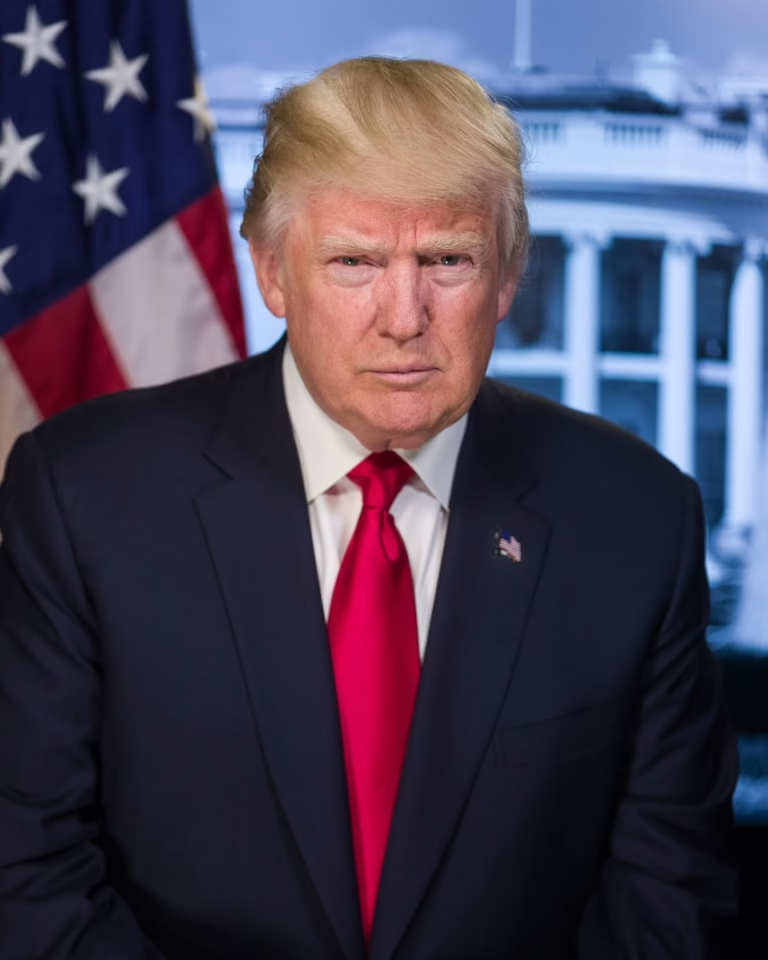
Who Is Tyler Robinson and What’s His Link to Charlie Kirk?

0

Key Takeaways:

  • FBI officials confirmed that Tyler Robinson, 22, was in a romantic relationship with a transgender partner.
  • The couple lived together in Saint George, Utah.
  • Robinson is allegedly linked to a plot against conservative figure Charlie Kirk.
  • The transgender partner is fully cooperating with the FBI’s ongoing investigation.

FBI Reveals Details About Alleged Charlie Kirk Assassin

In a recently evolving case that has grabbed media attention, new details have come to light about Tyler Robinson, the 22-year-old reportedly connected to a serious threat against conservative commentator Charlie Kirk. The FBI has publicly shared that Robinson lived with a transgender partner in Saint George, Utah. While the investigation continues, major questions remain about Robinson’s intentions and the influence of his personal life.

Tyler Robinson: What We Know So Far

Tyler Robinson is the person law enforcement is watching closely in connection with a chilling case. FBI agents told news outlets that he was in a committed romantic relationship and lived with his partner in Utah. His partner is a male who is in the process of transitioning to become female. According to officials, the two shared an apartment and seemed to have a close relationship.

Though the FBI has not confirmed if Robinson’s personal life played a role in his behavior, they revealed something important — the transgender partner is cooperating fully. That means this person is providing information to investigators in hopes of helping them understand what happened and why.

The Connection to Charlie Kirk

So where does Charlie Kirk come into this? Kirk, known for his strong conservative views and as the founder of Turning Point USA, is no stranger to controversy or threats. However, the situation with Robinson is especially concerning. Robinson has been accused of plotting harm, or possibly even an assassination attempt, against Kirk. These claims have not yet been confirmed in court, but the FBI has decided to make Robinson’s background public as they continue digging deeper.

This is not just a case about politics. It’s also shining a light on possible mental health issues, online influence, and personal relationships that may have contributed to a serious situation.

How Robinson’s Partner Fits Into the Picture

One of the more surprising pieces of this puzzle is Robinson’s transgender partner. Often, people involved—even indirectly—in high-level investigations choose to stay quiet. But according to the FBI, this partner came forward willingly to speak with agents. This full cooperation suggests that the partner was likely not involved in any plot.

Still, investigators are interviewing close friends and neighbors to learn more. The fact that the couple lived together will help shed light on Robinson’s behavior over the last few months. Officials are especially interested in whether the partner noticed any unusual activities or thoughts that Robinson may have expressed.

So far, no charges have been filed against the transgender partner. The focus remains squarely on Robinson.

Why This Case Is Gaining National Attention

Part of the reason this story is getting so much attention is due to the names involved. Charlie Kirk is a well-known political figure with a large following. Any threat against him is likely to spark headlines. But it’s not just who was targeted — it’s all the layers of the story that people are talking about.

You’ve got a young suspect with a complicated personal life. You’ve got gender identity involved, which is already a topic people have strong opinions about. Add in the political element, and you’ve got all the ingredients for a story that many will follow closely.

Social Media’s Possible Role

While officials haven’t said much yet, many wonder whether social media played a role in Robinson’s beliefs or behavior. It’s no secret that certain parts of the internet can be full of dangerous ideas and influence. People who feel isolated or angry sometimes look online for explanations — or worse, encouragement to act on harmful plans.

Even though we don’t know everything yet, the FBI is likely looking into Robinson’s online history, social media posts, and any forums he might have taken part in.

Community Reaction in Saint George, Utah

Locals in Saint George, Utah, where Robinson lived with his partner, are still processing the news. It’s not every day a small town gets pulled into a federal investigation. Many neighbors are shocked and say they never saw signs of trouble coming from their apartment.

Some members of the LGBTQ+ community in the area are especially concerned. They worry that people might unfairly link this case to trans identity itself, rather than the actions of one person.

It’s important to remember that the transgender partner is not accused of any crime. In fact, this person is helping the investigation and deserves the same presumption of innocence we all do.

What Happens Next in the Investigation?

At this point, the FBI is still gathering evidence related to the threat against Charlie Kirk. Updates may come soon as they look at security footage, digital records, and interviews from those close to Robinson.

So far, no trial dates have been set. But it’s clear that law enforcement is taking the matter seriously given the target and the threat level.

Meanwhile, media outlets continue to ask tough questions, and viewers across the country wait to see what facts the investigation will reveal next.

Understanding the Bigger Picture

What does the Tyler Robinson case tell us about the world we live in today? Unfortunately, threats against public figures are more common than they used to be. People with extreme views sometimes feel pushed to act in dangerous ways. But that doesn’t mean everyone who lives a different lifestyle or has strong opinions is a threat.

This is also a reminder that relationships and mental health play roles in shaping decisions — good or bad. It’s a wake-up call to check in on our friends, notice red flags, and speak up before something terrible happens.

In the end, this story is still being written. But we do know one thing: the actions of a few individuals don’t speak for entire communities. Let’s keep that in mind while we wait for more answers.

FAQs

Who is Tyler Robinson?

Tyler Robinson is a 22-year-old from Utah currently being investigated by the FBI for allegedly plotting a crime involving political figure Charlie Kirk.

Was Tyler Robinson’s transgender partner involved in the plan?

No. The FBI states that Robinson’s partner is cooperating fully and is not suspected of any wrongdoing.

Why is Charlie Kirk a target?

As a well-known conservative figure, Kirk has strong opinions. This may have made him a focus for threats from people with extreme or opposing views.

Where is the investigation now?

The FBI is still looking into Robinson’s background, motivations, and any others who may have been involved. More details are expected in the coming weeks.

Is Trump Asking for $58M After Charlie Kirk’s Death?

0


Key Takeaways:

  • The Trump administration is requesting $58 million from Congress.
  • The money would boost security for the executive and judicial branches.
  • The decision follows the recent death of conservative activist Charlie Kirk.
  • Lawmakers are now debating how to handle rising political violence.

Why Is the Trump Administration Requesting $58 Million?

After the shocking death of political commentator Charlie Kirk, the Trump administration wants to make sure something like this doesn’t happen again. Officials have asked Congress for a large budget—$58 million—to beef up security around key government branches.

This request comes during a time of growing national tension. Many Americans are worried that politics are becoming too aggressive and dangerous. With security concerns rising, the government is now trying to take action before anything worse occurs.

A New Look at Government Protection

The keyword here is security funding. This means using money specifically to protect high-profile government leaders and institutions. Right now, the executive branch (which includes the President, Vice President, and Cabinet) and the judicial branch (which includes federal judges) are the main focus.

Officials are warning that more protection is needed after Charlie Kirk’s death. Kirk had been a loud voice in conservative politics and had many supporters and critics. After his killing, experts say that leaders across the political spectrum could face higher risks.

What’s Driving the Need for Security Funding?

There are a few things pushing this request for more security funding. First is the general rise in political threats and violence. Not just talk, but real actions—attacks, threats, and even doxxing—are becoming more common.

Second, government workers themselves are expressing concerns. Judges and officials are receiving more threats than ever before. Many of them say they feel unsafe when doing their jobs.

Finally, with a big election season ahead, the tension is only expected to rise. Political rallies, debates, and events often bring strong emotions from the public. National leaders want to avoid another crisis like the one surrounding Charlie Kirk’s tragic death.

What Could Security Funding Actually Pay For?

If the $58 million request is approved, here’s what it might cover:

– More bodyguards for high-profile officials
– Upgraded security systems in government buildings
– Special training for law enforcement dealing with political violence
– Better protection for judges and legal teams
– Advanced monitoring tools to detect threats early

This type of security funding would help both prevent harmful events and respond faster if they do happen. Many in Washington say it’s a smart investment, especially during uncertain times.

Why Some People Support the Funding

Supporters of the funding plan say this isn’t about politics—it’s about safety. They claim that protecting government employees should be a top priority, regardless of their party or beliefs.

They also point out that other countries have already taken such steps. In places like the UK and France, it’s common to provide strong protection for judges, ministers, and political leaders. They argue the U.S. is falling behind and needs to act before things spiral further.

One lawmaker told reporters the death of Charlie Kirk was a “wake-up call” that government leaders are no longer safe. Given this new reality, many feel now is the right time to increase security funding.

Why Others Are Questioning the Move

However, not everyone agrees that more money will fix the problem. Some critics say it’s a political stunt by the Trump administration to gain sympathy or control the narrative. Others think $58 million could be spent on solving root causes like reducing division and improving mental health.

There’s also the concern that this level of protection is only being offered to top officials, while ordinary citizens and lower-level workers continue to feel unsafe. Critics want a more balanced approach that protects everyone equally.

Additionally, some lawmakers are calling for more transparency. They want to know exactly how the security funding would be spent and measured for success.

Where Does Congress Stand on the Security Funding Request?

At this point, the funding request has been sent to Congress, where it’s now under review. Supporters are pushing for a quick decision, citing an urgent need. But with lawmakers still divided on many issues, a final vote could take weeks or even months.

Behind closed doors, sources say both Republican and Democratic leaders are in talks, trying to find common ground. Some suggest breaking up the funding into smaller pieces while others want to include it in a larger security package.

Ultimately, the result will depend on how much pressure lawmakers feel—from both inside and outside Washington.

The Bigger Picture: A Tense Political Climate

The request for increased security funding comes at a tense time in U.S. politics. With deep divisions between parties, incidents of violence or threats against leaders have become more common. The killing of Charlie Kirk only adds fuel to this fire.

Many experts say that unless steps are taken to cool things down, the country could see more incidents like this. Security funding is one way to respond, but others believe there needs to be a broader national conversation on respect, peaceful debate, and unity.

Whether the $58 million request gets approved or not, one thing is clear: America is facing a tough moment. Leaders must find a way to fix it—before more damage is done.

What Happens Next?

In the coming weeks, expect more discussion from Congress and the public. The Trump administration is likely to continue pushing for its plan, while critics will demand details and offer alternatives.

What’s most important for now is keeping people safe—no matter their job or opinion. As the country reflects on Charlie Kirk’s death, it’s clear that increased security funding is no longer just an idea. It’s a real and serious debate that could shape the country’s future.

Frequently Asked Questions

What is security funding and why is it important now?

Security funding is money set aside to protect government officials and institutions. It’s important now due to rising threats and the recent killing of Charlie Kirk.

Who would the $58 million protect?

The money would focus on protecting people in the executive branch, like the President, and the judicial branch, like federal judges.

Why is this debate getting national attention?

The murder of a well-known public figure like Charlie Kirk has sparked concerns about political violence. It’s making many wonder how safe leaders really are.

Could this money be used in better ways?

Some people think the funds could be better spent on reducing tension through education or mental health support. Others believe strong security is the top priority.

Why Did Elon Musk Call for a UK Government Overhaul?

0


Key Takeaways:

  • Elon Musk spoke at a far-right rally in London via video
  • The event was led by controversial activist Tommy Robinson
  • Musk demanded a change in the UK government
  • This call created a wave of confusion and strong reactions
  • It adds to Musk’s growing influence in global politics

Elon Musk Calls for Dissolution of UK Government

In a surprising turn of events, Elon Musk joined a far-right rally in London over the weekend and called for the “dissolution of parliament.” Speaking through a video link to a crowd of thousands, Musk shared strong views about the current UK government.

The rally, called “Unite the Kingdom,” was led by well-known far-right figure Tommy Robinson, whose real name is Stephen Yaxley-Lennon. The crowd was filled with people who are angry about the current state of the UK, and Musk’s appearance seemed to encourage them even more.

Why Did Elon Musk Join a Far-Right Rally?

Elon Musk, the billionaire CEO of Tesla and owner of X (formerly Twitter), is known for shaking things up. He often shares opinions that stir debate, but this time, his comments struck a deeper nerve. People were surprised to see someone of Musk’s status appear—even virtually—at an event tied to far-right politics.

His presence suggested something bigger: that a tech billionaire with global influence is now willing to be openly political in other countries. During his speech, Musk said the UK needed to “start fresh” and claimed that the current leaders were failing the British people.

Was This a Political Message or Just Another Opinion?

Some analysts believe Musk is sending a clear political message. By choosing this rally, he aligned himself—at least temporarily—with a crowd that distrusts the UK’s political system. Others argue he was exercising free speech and may not fully support all the people or ideas at the rally.

Either way, what’s clear is that Musk’s words made headlines worldwide. As a tech leader whose voice reaches millions, his opinions carry weight far beyond a simple social media post.

How Are People Reacting to Elon Musk’s Comments?

The reaction to Elon Musk’s rally speech has been mixed. Many people, including politicians and the general public, were shocked. They say Musk has gone too far by getting involved in another country’s politics, especially in such a direct way.

Some people believe Musk spoke truths others are afraid to say. Others think he crossed a line by supporting a group with extreme views. The government has yet to officially respond, but political leaders are urging citizens not to be swayed by outside influencers.

What Happens When Billionaires Enter Politics?

Throughout history, powerful business figures have entered political conversations. But few do it quite like Elon Musk. With his massive online following, Musk can influence public opinion quickly. When he calls for government change, people listen—especially younger crowds who follow him on social media.

This moment may also set a new trend of billionaires involving themselves in political affairs beyond their home countries. It raises questions about how much power one person should have, even if they’re not a politician.

The Role of Social Media and Public Influence

Elon Musk owns X, one of the world’s most-used platforms for news and opinions. His control over such a powerful tool adds another layer of influence. When Musk speaks, his words travel fast and reach almost every continent in seconds.

By joining the far-right rally, even through a screen, Musk sent a strong message to his followers. Some users on X praised him. Others shared concern, warning that social media should not replace real political debate.

Should We Worry About Elon Musk’s Political Moves?

For some, this event is just another example of Elon Musk being Elon Musk—bold, controversial, and unafraid. But for others, it’s a red flag. They wonder what kind of future we’re headed toward if non-elected leaders start shaping political movements.

It’s not clear whether Musk will get more involved in British politics. Still, this moment reminds us that social media figures, especially wealthy ones, can hold real power. And that power doesn’t always stay within borders.

Could This Call for Change Affect the United Kingdom?

Right now, Musk’s call hasn’t caused real political change. But it did start a fresh wave of discussions. People are asking if the current UK political system still works or if it needs improvement.

Movements often begin with conversations. And when someone as famous as Elon Musk speaks, those conversations grow louder and wider. The ripple effect from his speech may influence future elections, public protests, or political reforms in the UK.

More Questions Than Answers

Elon Musk’s sudden appearance at a far-right rally brought attention, confusion, and debate. Whether he was serious or simply making a statement, his words mattered.

The incident stirred questions about democracy, freedom of speech, and the role of billionaires in shaping modern politics. Only time will tell if this is a one-time moment or the beginning of something bigger.

Final Thoughts on Musk’s UK Rally Moment

Elon Musk is no stranger to controversy. From space travel to social media policies, he enjoys being at the center of attention. This latest move brought him into unfamiliar territory—British politics.

While some saw him as a truth-teller, others saw him supporting extreme voices. Everyone, however, recognized how powerful a voice like Musk’s can be in today’s digital world.

For now, the UK government remains unchanged. But Musk’s comments are still echoing through news outlets and social media channels, showing just how far a few words can go when spoken by someone with global influence.

FAQs

Why did Elon Musk speak at a far-right rally in the UK?

Elon Musk joined the rally via video link to call for a change in the UK government. His reasons seem to be political, though not fully explained.

Who is Tommy Robinson and why was he involved?

Tommy Robinson, whose real name is Stephen Yaxley-Lennon, is a far-right activist in the UK best known for organizing controversial protests.

Did Elon Musk officially support far-right politics?

Musk hasn’t clearly said he supports all far-right views. However, speaking at such a rally made people question where he stands.

Can Elon Musk influence political change in the UK?

Directly, no—but his voice reaches millions. Comments like his can shape opinions and affect public debates or movements over time.

Are College Indoctrination Camps to Blame?

0

Key Takeaways

  • Kari Lake blamed college indoctrination camps for radicalizing Charlie Kirk’s shooter.
  • Her speech at the Kennedy Center drew top Trump officials.
  • She urged mothers not to send children to these so-called camps.
  • The debate over political violence and campus influence heats up.

Kari Lake spoke at a memorial for Charlie Kirk on Sunday. She said college indoctrination camps had changed a 22-year-old into a shooter. Many top officials, including a health secretary and an intelligence director, sat in the audience. Her words have sparked fresh debate about political violence and campus life.

What Kari Lake Said About Indoctrination Camps

Lake asked how a young man could become so full of hate. She noted that five years earlier, he had backed Trump. Yet, she claimed, college indoctrination camps “brainwashed” him. She urged mothers not to send their kids into these camps. In her view, these programs took a child in a mother’s arms and turned him into a violent stranger. She called the campus influence “the most horrific brainwashing campaign” ever.

The Debate Over Indoctrination Camps on Campus

However, not everyone agrees that colleges are indoctrination camps. Some say campuses offer debate and free speech. They argue that students learn to think for themselves, not to follow a script. Others worry that some classes lean too far in one direction. They believe this can push students into extreme ideas. As a result, the nation is divided over whether campuses help or harm young minds.

Calls to End Political Violence

Lake also asked both sides to end political violence. She admitted no side is perfect. Yet she blamed the other side for spreading hate. Other conservative voices have blamed Democrats for Kirk’s death. Meanwhile, Democrats deny any link to the shooting. In the middle of this back-and-forth, Lake urged calm and unity. She wants parents, students, and leaders to focus on safety and respect.

Different Viewpoints on College Influence

Some experts say college beds radical ideas, but also cures them. They point out that a diverse student body can challenge extreme thoughts. For instance, debates, clubs, and events can show students new views. On the other hand, critics warn that social media now spreads radical ideas faster than ever. They worry that some campus groups may recruit troubled students. Thus, the question remains: are indoctrination camps real, or just a scare?

Why the Discussion Matters

This debate is important for every family. Parents wonder if sending kids to college will change them too much. Students worry about losing their own voice among strong opinions. Politicians see this issue as a way to rally their base. Meanwhile, the risk of political violence looms large. By talking about indoctrination camps, the nation faces deeper questions. How do we teach young adults to think freely and safely?

Moving Forward After the Speech

Despite sharp words, Lake urged healing. She asked leaders to focus on solutions instead of blame. She said schools could add more balanced classes. She called for better campus security, too. Above all, she hoped parents and students would talk more at home. That way, families can spot harmful ideas early. In her view, that is the best defense against any form of radicalization.

Closing Thoughts

The question of college indoctrination camps is sure to continue. With so many voices in play, finding the truth is tough. Yet one thing seems clear: political violence must end. Whether campuses cause it or not, the nation needs safer dialogue. As this debate unfolds, families and leaders will decide how to protect young minds.

Frequently Asked Questions

What are college indoctrination camps?

Some people claim that certain college programs push students to adopt strong political views without question. They call these programs indoctrination camps. Critics say such camps can sway students toward extreme ideas. Supporters argue campuses encourage open debate and critical thinking.

Has any research proven indoctrination camps exist?

So far, no official study confirms the existence of actual indoctrination camps. Researchers do note that campus groups and social media can shape student views. However, most colleges say they teach a range of ideas to foster debate.

What can parents do to protect their children?

Parents should talk often with their children about news and ideas. They can also review course options and campus clubs. A simple check-in can help spot harmful influences early.

How can we reduce political violence on campus?

Experts suggest clearer rules for campus protests and better security measures. They also stress teaching students respectful ways to discuss politics. Above all, people must reject hate and seek understanding instead.

Title: Are Trump Comments Crossing the Line?

0

Key Takeaways

• President Trump said officials are “looking at names” of foreign travelers who cheered a conservative activist’s death.
• He argued Republicans wouldn’t celebrate a Democratic activist’s death.
• Political observers blasted these Trump comments as dishonest and hurtful.
• Critics pointed to past moments when Trump mocked violence against his opponents.

Trump comments spark widespread backlash

Recently, President Trump made headlines with remarks about revoking visas of visitors who celebrated the death of conservative activist Charlie Kirk. His words sparked heated debate and harsh criticism from analysts, writers, and everyday social media users. These Trump comments have fueled a fresh round of questions about whether the president is fair and consistent when judging acts of violence or hate.

What Trump said about visas

During a brief media session, reporters asked the president if his team had begun pulling visas from those who cheered Charlie Kirk’s death last week. Trump replied that officials were “looking at names” to consider visa cancellations. He added that Republicans wouldn’t celebrate if a Democratic activist died.

“That’s not right,” Trump said. “We wouldn’t celebrate if something happened like this, and we don’t. These are sick people. These are really deranged people.”

Why Trump comments upset critics

Observing how the president speaks can reveal priorities and biases. In this case, critics say these Trump comments ignore his own history of mocking violence against opponents. They also point out that his response seems one-sided, focusing only on acts against conservative figures.

For example, when asked about past incidents like the attack on Paul Pelosi, Trump dismissed the seriousness of the event. Now, critics say, he acts outraged about cheers for violence—yet he once joked about violence himself.

How observers reacted

Social media lit up with reactions to the president’s statement. Many users accused him of dishonesty and hypocrisy:

• An author on X called the president a disgrace for mocking violence against a Democratic figure.
• A Democratic activist noted that Trump once mocked Paul Pelosi’s attack, calling the president a liar.
• A political commentator said Trump was gaslighting the public by ignoring hate on the right.
• A Republican watchdog group reminded followers that Trump had indeed mocked Pelosi’s assault.

Clearly, Trump comments were not enough to convince critics of his sincerity.

The impact of one-sided outrage

When a leader only condemns violence toward one group, it risks deepening divides. Here’s why:

• It signals some victims matter more than others.
• It allows supporters to ignore hateful acts that target favored groups.
• It fuels anger and mistrust among political opponents.

Moreover, one-sided outrage can weaken a leader’s moral authority. If people see inconsistency, they lose faith in fair judgment. As a result, calls for unity or peace ring hollow.

What’s at stake with visa revocations

Revoking a visa is a serious step. It carries diplomatic weight and affects international relations. By suggesting such measures, a president sends a strong message:

• Governments abroad pay attention.
• Tourists and students may worry about sudden bans.
• Civil rights advocates fear overreach and errors.

Therefore, Trump comments about “looking at names” alarm experts who guard against wrongful visa cancellations.

Analyzing the political angle

In politics, statements often serve multiple goals. By condemning cheers for violence against a conservative, Trump may aim to:

• Rally his base around a shared sense of grievance.
• Distract from other controversies his team faces.
• Show he cares about violence when it hits allies.

Yet critics counter that true leadership demands consistent condemnation of all hate and violence.

Does past behavior matter?

Many point to Trump’s past remarks when judging these Trump comments. For instance:

• He once joked about a brawl with protestors during a campaign rally.
• He tweeted jokes suggesting his supporters should rough up political opponents.
• He publicly laughed at violence shown in videos of left-leaning protesters.

By recalling these moments, observers ask if the president genuinely opposes violence or only when it suits his narrative.

Balancing free speech and accountability

Free speech rights allow people to express opinions, even ugly ones. Still, cheering a death crosses moral lines for most. Leaders face the task of balancing:

• Protecting free speech.
• Condemning hate and violence.
• Avoiding overreach that chills legitimate expression.

These Trump comments highlight how delicate that balance can be. Some argue visa revocations for hateful speech would threaten global free speech standards.

The role of social media

Social platforms amplify every presidential remark. In real time, millions see, share, and respond. This instant feedback loop means:

• Comments gain fast momentum.
• Opponents craft immediate countermessages.
• Public sentiment can shift by the hour.

Here, social media users quickly seized on Trump comments and contrasted them with his past behavior. Their viral posts pressured mainstream outlets to cover the story, fueling even more debate.

Looking ahead: what might happen next

With public opinion divided, a few scenarios could unfold:

• The administration follows through on visa reviews, detaining some travelers.
• It drops the idea, calling it a discussion rather than a formal policy.
• Trump or his team issues clarifying statements to calm critics.
• Opponents use this moment to push broader legislation on hate crimes.

Whatever happens, this episode shows how a single news cycle can spark nationwide discourse on violence, fairness, and political bias.

Key lessons from this debate

As the dust settles, four lessons stand out:

1. Consistency matters. Fair condemnation of violence must apply to all sides.
2. Words from high office carry weight. They impact millions at home and abroad.
3. Social media shapes and accelerates public reactions like never before.
4. Policy ideas—like visa revocations—have real legal and diplomatic effects.

Ultimately, how leaders respond to violence defines their moral leadership and legacy.

FAQs

What exactly did Trump propose about visas?

He said officials were “looking at names” of foreign visitors who cheered a conservative activist’s death, hinting they might lose their visas.

Why do critics call the comments hypocritical?

Critics note that Trump once mocked violence against opponents but now acts outraged when violence hits his allies.

Could revoking visas for cheering violence violate free speech?

Possibly. Many experts say punishing speech alone crosses into punishing thoughts, raising serious free speech concerns.

How can leaders fairly condemn violence?

They can speak out against all hateful or violent acts, regardless of the victim’s political views.

Did Illegal Immigration Lead to a Dallas Murder?

0

Key Takeaways

• Former President Trump blamed President Biden for a brutal Dallas killing.
• The victim, hotel worker Chandra Nagamallaiah, was beheaded by a Cuban coworker.
• Trump highlighted illegal immigration as the root cause of this violence.
• The post urged stricter border rules and tougher measures on illegal immigration.

In a recent post, former President Donald Trump blamed Joe Biden for a tragic crime. He said illegal immigration allowed a dangerous person into the U.S. This person allegedly killed a hotel employee in Dallas. Trump posted his comments on Truth Social during a memorial service at the Kennedy Center.

Background on the Dallas Case

Over the weekend in Dallas, Texas, Chandra Nagamallaiah, a well-liked hotel worker, was found dead. Reports say a coworker from Cuba attacked him over a broken washing machine. Even more shocking, the victim was beheaded in front of his wife and son. Police arrested a 37-year-old suspect in the murder. This crime shocked the local community and made national headlines.

Illegal Immigration Focus in Trump’s Post

In his message, Trump said the suspect was an “illegal alien from Cuba.” He claimed this person should never have entered the United States. Moreover, Trump pointed out past arrests for child sex abuse, grand theft auto, and false imprisonment. According to Trump, federal agents released the suspect after Cuba refused to take him back. He argued that this showed “incompetent Joe Biden” was soft on illegal immigration.

Timing of the Social Media Post

Interestingly, Trump’s post went live during a high-profile event. At the Kennedy Center, conservative activist Charlie Kirk was being honored. The timing drew extra attention. Many people noticed the contrast between a solemn ceremony and a fiery online claim about illegal immigration. As a result, the post spread quickly across social media platforms.

Reactions to Trump’s Claims

Some readers agreed with Trump’s link between illegal immigration and violent crime. They praised his call for tougher border security. On the other hand, critics said blaming Biden oversimplified the issue. They argued that violent crimes happen for many reasons, not just immigration status. Meanwhile, immigration advocates warned that divisive language could fuel anti-immigrant bias.

What This Means for Immigration Policy

Trump ended his post with a clear warning: “The time for being soft on these Illegal Immigrant Criminals is OVER under my watch!” He urged a return to stronger border walls and stricter deportation rules. His message echoed past calls to prioritize national security over leniency. As a result, some lawmakers may feel added pressure to propose tougher immigration bills.

Policy Call: Tougher Illegal Immigration Rules

In response to this incident, Trump’s allies want:
• Faster deportation hearings for suspected criminals.
• Stricter vetting for asylum seekers.
• More funding for border patrol agents.
• Expanded use of technology to track entries at land borders.

Supporters argue such steps would prevent dangerous people from entering the country. Opponents worry that too much focus on illegal immigration might ignore root causes like poverty and violence abroad.

Why This Debate Matters

Ultimately, the debate over illegal immigration touches on public safety and national identity. Some view strong borders as vital to security. Others see immigration as a source of economic and cultural strength. Tragic events like the Dallas murder can intensify these feelings on both sides. In addition, political leaders often use high-profile crimes to advance policy goals.

Moving Forward After the Dallas Tragedy

After the shock of this brutal killing, community leaders called for calm and unity. They urged residents to avoid hateful rhetoric. Meanwhile, law enforcement continues to investigate every detail of the crime. As the case unfolds in court, the nation will watch how calls for stricter illegal immigration rules shape future policy.

Conclusion

This tragic murder in Dallas has reignited a fierce debate about illegal immigration. Former President Trump seized on the case to criticize President Biden’s border policies. While some share Trump’s concerns, others believe the issue is more complex. In the days ahead, lawmakers will face renewed pressure to address border security, immigration laws, and public safety.

What exactly did Trump claim about the suspect’s immigration status?

Trump said the suspect was an “illegal alien from Cuba” who had prior arrests and should have been barred entry.

How did community leaders react to the murder and Trump’s statement?

Local leaders called for unity and discouraged hate, focusing instead on supporting the victim’s family and seeking justice.

Could this incident lead to new immigration laws?

It may add momentum to efforts for stricter border controls, though passing new laws will require broad political support.

What should readers understand about the link between crime and immigration?

While some crimes involve people here illegally, most criminal acts are not tied directly to immigration status. Understanding social factors and legal processes is crucial.

Is Political Violence Being Glorified by the Left?

0

Key Takeaways

  • Meghan McCain claimed the left glorifies death after Charlie Kirk’s assassination.
  • She warned that political violence is “petrifying.”
  • Gun safety activist Fred Guttenberg blasted her comments.
  • The clash highlights growing fears around political violence today.

The Heated Exchange

Last Friday, Meghan McCain sparked a fierce debate. She posted on X that her side feels the left “glorifies death,” especially after Charlie Kirk’s assassination. Then, gun violence activist Fred Guttenberg fired back. He accused the right of threats and violence. This clash shows just how tense talk of political violence can be.

What Meghan McCain Said

Meghan McCain wrote that she sees a big gap between the two sides. She said the left takes pride in the death of its foes. She admitted she only now fully faced this idea after Charlie Kirk was killed. In her words, that realization was “petrifying.” Her post felt like a warning from someone who fears the next violent act.

Fred Guttenberg’s Response

Fred Guttenberg lost his daughter in a school shooting. He fights for gun safety every day. So, he was furious at McCain’s claim. He pointed out that right-wing threats have targeted him. He noted that some on the right talk of war against the left. He also reminded everyone of January 6th, when a mob carried a noose for Mike Pence. In his view, the right, not the left, glorifies violence.

Why Political Violence Matters Today

Political violence means using force or threats to achieve political goals. Such talk harms democracy and puts people in real danger. Experts warn that extreme words can fuel real attacks. Therefore, even heated online posts can have serious effects. They can push someone toward a violent act. So, when public figures talk about glory in violence, many people worry.

A Look Back at Past Attacks

This is not the first time political violence has hit home. In 2023, Nancy Pelosi’s husband was attacked at their home. The assailant used a hammer. Soon after, then-candidate Donald Trump mocked the attack. He made fun of the police response. That moment showed how easy it can be to turn a violent crime into political fodder.

Moreover, on January 6th, a crowd stormed the U.S. Capitol. They carried ropes and nooses. They even targeted leaders in a bid to hang them. These events did not happen in a vacuum. They grew from words of hate and threats. Consequently, both sides blame each other for stirring anger. Yet nobody can deny that words can lead to real harm.

Moving Forward

So, what can we do now? First, leaders need to choose words carefully. They must avoid praising or joking about violence. Second, social media platforms should monitor threats and hate speech. Third, each of us should think twice before sharing or liking violent posts. Finally, voters can demand respect and safety from all politicians.

We need honest talk without threats. We need debate without calls for harm. Only then can we reduce the risk of political violence.

FAQs

What counts as political violence?

Political violence is any act or threat that uses force to achieve political aims. It ranges from online threats to real-world attacks.

Why did Meghan McCain mention political violence?

She argued that the left glorifies death after Charlie Kirk’s assassination. She said that idea scared her deeply.

How did Fred Guttenberg react?

He hit back hard. He cited right-wing threats against him and the January 6th noose plot. He said the right glorifies violence.

What can stop political violence?

Leaders should avoid hateful language. Social media must watch for threats. People should think before sharing violent posts.

Why Is Charlie Kirk Being Treated Like a Martyr?

0

Key Takeaways

  • Elie Mystal warns that celebrating Charlie Kirk’s death pulls attention from real issues.
  • Before the shooting, the Supreme Court let police racially profile Latinos.
  • Mystal says we can both condemn violence and reject Kirk’s extremist views.
  • He criticizes a New York Times column praising Kirk’s politics.

Charlie Kirk’s Martyr Status Sparks Debate

After a MAGA influencer was shot dead, many in the white media paused to mourn. Yet, Elie Mystal argues this focus distracts us from a bigger problem. Before the killing, the Supreme Court allowed racial profiling of Latinos. Now, pundits have made Charlie Kirk a “martyred mascot of racism.” Mystal says we need to return to the harsh reality of living in a white supremacist state.

Charlie Kirk’s Death and Media Response

On Wednesday, Charlie Kirk was killed in Utah by another white man. The suspect, Tyler Robinson, is now in custody. His motive remains unknown. While the press highlights Kirk’s last words—about “counting or not counting gang violence”—Black colleges in Virginia faced threats and canceled classes. As Mystal notes, one white man killed another, yet Black people face more harm in the fallout.

Why the Distraction Matters

First, this shift distracts us from the Supreme Court’s new permission for racial profiling. Moreover, America’s gun problem grows worse each day. It harms people of color at higher rates. So, when news outlets spotlight Charlie Kirk, they ease the pressure on police reform and gun control debates. Consequently, voters may ignore policies that protect vulnerable communities.

Celebrating the Victim vs. Denouncing His Views

It is possible to condemn political violence and reject bigotry at once. However, some have done only the first. For example, the Yankees held a moment of silence for Charlie Kirk. Yet they ignored protests by Latinx communities over the court’s ruling on profiling. In other words, mourning Kirk became more urgent than fighting racism in law enforcement.

Ezra Klein’s Misstep

Ezra Klein wrote that Charlie Kirk “practiced politics the right way.” Mystal calls this the worst take of the week. Klein does condemn political violence, but Mystal says that is easy for privileged people. He compares it to aristocrats condemning the French Revolution. Klein fails to ask whether victims deserve praise. He also overlooks Kirk’s attacks on Black and LGBTQ communities.

What Mystal Wants Us to See

Mystal wants us to mourn less and act more. He insists we should:

• Resume talks on the Supreme Court’s profiling rule.
• Demand tougher gun laws to protect all Americans.
• Stand up to white supremacist ideas in politics.

He even jokes that he wishes Charlie Kirk were alive so he could debate him face to face. But he adds that we must not pay tribute to a man who spread hate.

The Role of Race and Violence Today

Violent acts by white people often lead to more harm for minorities. After Kirk’s shooting, threats hit historically Black colleges. Therefore, Mystal plans to lay low around white crowds. He fears their anger could turn on him. Yet he stays hopeful that this fever will break, and real issues will return to the spotlight.

Moving Beyond the Hype

Instead of canonizing Charlie Kirk, we can:

  • Push for an honest talk on racial profiling.
  • Call out hate speech wherever it appears.
  • Demand accountability from media outlets.
  • Support communities under threat.

In doing so, we stop letting a single gunshot drown out the voices of those who suffer daily.

FAQs

What did Elie Mystal say about Charlie Kirk’s coverage?

He argued that celebrating Kirk’s death distracts us from serious issues like racial profiling and gun violence.

How did the Supreme Court change profiling rules?

They approved policies that let police consider race when stopping and searching drivers, mainly affecting Latinos.

Why did Mystal criticize Ezra Klein?

Mystal felt Klein praised Kirk’s political style while ignoring his hateful rhetoric and privilege.

What actions does Mystal suggest now?

He urges resuming talks on profiling, pushing for stricter gun laws, and fighting white supremacist ideas in politics.

Is Roger Marshall the Anti-Vaccine Senator?

Key Takeaways

  • Senator Roger Marshall’s comments challenge standard vaccine advice.
  • He argues not all people need every shot.
  • He questions giving newborns the hepatitis B vaccine.
  • Health experts say his views endanger public health.

Why This Anti-Vaccine Senator Worries Public Health

Mixed Messages on Vaccines

Senator Roger Marshall spoke on national TV. He claimed that not every person needs every vaccine. Instead, he used the word “jabs” to make shots sound painful. He even mentioned the number 76 to alarm people. In reality, that number counts repeat doses, not different vaccines. Yet by choosing that word, the anti-vaccine senator tapped into fear.

Moreover, he seemed to suggest we overhype some vaccines. He went on to downplay COVID-19 shots. Even though evidence shows vaccines cut infections and severe illness, he asked, “Why does everyone panic over COVID vaccine?” In doing so, this anti-vaccine senator encouraged doubt instead of trust in science.

Doubting the Hepatitis B Shot

He also questioned the hepatitis B vaccine for newborns. He said if a mother tests negative and lives low risk, her baby does not need the shot on day one. He argued we should “pick and choose” who gets it. However, health officials warn this logic is dangerous. Any infection at birth could lead to chronic illness or liver cancer later in life.

For example, another Republican senator who is also a doctor explained that without the birth dose, an infected baby has a 95 percent chance of lifelong hepatitis B. Conversely, a single birth dose cuts that chance to under 5 percent. Clearly, this anti-vaccine senator’s view conflicts with proven science.

Why Vaccines Matter

First, vaccines protect individuals and communities. Even if you think your child faces low risk, one small chance still matters against millions of people. Second, vaccines save lives. Over decades, they have dropped infection rates and prevented millions of deaths. Third, they are one of the biggest public health achievements ever created.

Furthermore, vaccines follow careful schedules to boost immunity. They space doses to give our bodies time to build strong defenses. The CDC chart shows shots for 19 different diseases. While the number sounds big, it reflects repeated doses, not needless extras. Sadly, by focusing on the count, the anti-vaccine senator misleads parents.

Protecting Your Family

We all want to keep our loved ones safe. Parents trust doctors because they train for years. Doctors know the science behind shots and schedules. In contrast, most people do not have that medical background. So they rely on experts to make the right calls. When leaders sow doubt, they risk harming families.

When our child was born, we felt relief at the first hepatitis B shot. We did not know if hepatitis B might reach him. Yet by giving that one dose early, we knew we lowered his chance of chronic disease. Later shots for measles, mumps, rubella, and more followed with ease. We saw vaccines as a shield, not a burden.

Take Action to Stay Safe

First, follow the recommended vaccine schedule. It offers the best protection at each age. Second, keep talking with your health professionals. Ask questions and share concerns. Third, watch out for fear-driven language. Words like “jabs” or huge numbers aim to scare. Instead, look at the facts. Remember that well-designed studies prove vaccine safety and effectiveness.

Finally, stand up for science. When public figures spread doubt, point to real data. Encourage your community to trust proven health advice. By doing so, you protect not just your family but also neighbors and friends.

Frequently Asked Questions

What does the senator claim about vaccines?

He says not everyone needs every vaccine and that some shots get overhyped. He also questions giving the hepatitis B vaccine to newborns if their mothers seem low risk.

Why do experts reject his view?

Health experts point to strong evidence. They show that early hepatitis B shots prevent lifelong disease. They also prove COVID-19 vaccines cut severe cases and deaths.

How do vaccines protect children?

Vaccines train the immune system to recognize germs. By spacing doses, they boost protection over time. This approach lowers disease rates and stops outbreaks.

What steps can parents take?

Parents should follow the official vaccine schedule and talk openly with their doctors. They should also question fear-based messages and focus on solid scientific research.