58.2 F
San Francisco
Wednesday, May 6, 2026
Home Blog Page 815

Ex-NICU Nurse Accused of Abusing Premature Babies Faces More Charges

Key Takeaways:

  • Former NICU nurse Erin Strotman has had her nursing license revoked due to allegations of abusing premature babies.
  • Strotman is charged with injuring nine infants, some as young as 23 weeks old, between 2022 and 2024.
  • She now faces 20 charges, including malicious wounding and felony child abuse.
  • Investigations found no evidence of racial targeting, despite earlier suspicions.

Who Is Erin Strotman?

Erin Strotman, a 26-year-old former nurse, worked in the Neonatal Intensive Care Unit (NICU) at Henrico Doctors’ Hospital in Richmond, Virginia. Her job was to care for some of the most vulnerable patients: premature babies, many of whom weighed only 11 ounces and were as young as 23 weeks old.

However, disturbing allegations have come to light. The Virginia Board of Nursing suspended Strotman’s license on May 2, calling her a “substantial danger to public health or safety.” The board’s 16-page report detailed shocking abuse allegations, including fractures, chest bruising, and bruises shaped like fingerprints.


The Charges Against Her

Strotman faces serious criminal charges for harming nine infants between 2022 and 2024. Initially, she was charged with 12 counts of felony child abuse and neglect. However, in early May, a special grand jury added eight more charges, bringing the total to 20. These new charges include four counts of malicious wounding and four counts of class four felony child abuse and neglect.

Video evidence played a significant role in the investigation. Cameras installed in the NICU captured instances of “mishandling,” which helped build the case against Strotman.


The Hospital’s Role

Henrico Doctors’ Hospital is also under scrutiny. In 2023, hospital officials began suspecting Strotman of abuse and placed her on paid administrative leave. However, she was allowed to return to work in 2024.

Shockingly, while surveillance cameras were installed to monitor her activity, no one was actively watching the footage. This oversight may have allowed the abuse to continue. Now, the Virginia Department of Health is investigating the hospital for its failure to protect the babies in its care.


What Happens Next?

Strotman is currently out on bond, despite the state’s request to revoke it earlier this month. Her trial is scheduled for February 2026.

The case has raised questions about how such abuse could go undetected for so long and whether the hospital did enough to prevent it.


The Bottom Line

This case highlights the importance of protecting the most vulnerable members of society—premature babies. At the ages mentioned in the allegations, these children are the same age as some preborn babies who are aborted in several states. Whether in or out of the womb, these little ones deserve our care, protection, and respect.

As this case unfolds, it serves as a reminder of the need for accountability and stronger safeguards to ensure the safety of all children.
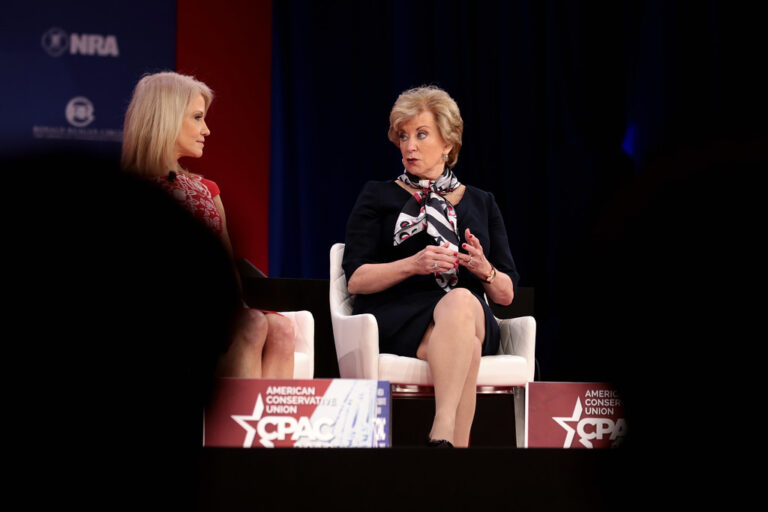

Kellyanne Conway: Democrats in Crisis Over Antisemitism and Policies

Key Takeaways:

  • Kellyanne Conway accuses Democrats of an ideology crisis, failing to denounce antisemitism.
  • Criticizes Democrats for not supporting popular policies, alienating their voters.
  • Highlights silent response to antisemitic violence and opposition to a Hamas resolution.

Kellyanne Conway recently appeared on Fox Business, where she criticized Democrats for their failure to address rising antisemitism and their opposition to popular policies. Conway argued that this indicates a deeper ideological crisis within the party.

Failure to Denounce Antisemitism

Conway pointed out that many Democrats, including Reps. Rashida Tlaib, Ilhan Omar, and Alexandria Ocasio-Cortez, remained silent after the tragic attack on two Israeli Embassy staffers near the Capitol Jewish Museum. She expressed concern that such silence allows antisemitism to spread, not just on campuses but in Congress.

Opposition to Condemning Hamas

Conway highlighted the vote on a resolution condemning Hamas as a terrorist group after their October 7 attacks. She noted that 31 Democrats opposed the resolution, which she says shows a broken moral compass and a failure to stand by a key ally, Israel.

Conway also criticized Democrats for unanimously opposing President Trump’s tax and spending bill. The bill included popular measures like tax cuts and border security, which Conway believes are supported by Democratic constituents but opposed by their representatives.

Consequences for Democrats

Conway warned that these actions may hurt Democrats’ credibility. She emphasized the need for them to address antisemitism and align with their voters’ interests, suggesting that failure to do so could deepen the party’s crisis.

In conclusion, Conway’s remarks highlight significant challenges for Democrats, urging them to reconsider their stance on key issues to avoid further alienating their base.

California’s High-Speed Rail Project Hits Major Delays and Funding Issues

Key Takeaways:

  • California’s high-speed rail project has tripled in cost, from $40 billion to $128 billion.
  • President Trump pulled $4 billion in federal funding, calling the project a historic example of cost overruns.
  • Millions of dollars have been spent on unexpected things like graffiti removal, lobbyists, and animal habitats.
  • Construction hasn’t started yet, with no clear completion date.

Audit Reveals Shocking Spending on High-Speed Rail

California’s high-speed rail project, once promising to connect Los Angeles and San Francisco by 2020, is now in shambles. The cost has skyrocketed to $128 billion, three times the original estimate. President Trump has slammed the project, calling it one of the worst examples of cost overruns in U.S. history.

State audits show that money meant for construction has been used for surprising things:

  • Graffiti removal: The City of Fresno got $5 million to clean up graffiti.
  • Lobbyists: A lobbying firm, Kadesh & Associates, received nearly $2 million to advise Congress on the project.
  • Animal habitats: A company called Westervelt Ecological Services got $20 million to build new habitats for animals affected by the construction.
  • Diversity training: $51,000 went to CPS HR Consulting for diversity, equity, and inclusion (DEI) training and meetings.
  • News subscriptions: $177,000 was spent on Politico Pro subscriptions, a premium news service.

Construction Far Behind Schedule

The project was supposed to finish in 2020, but not a single track has been laid yet. The first part of the rail line, which was supposed to be done by 2033, is unlikely to meet that deadline, according to an inspector general report. Meanwhile, the California High-Speed Rail Authority spent $537 million on environmental services, including a 14-year process to write an environmental impact statement.


Why the Project Is Struggling

Gov. Gavin Newsom has pushed back against critics, saying, “At a certain point, you have audit fatigue. Audits for audits’ sake serve no one.” But the delays and overspending have left taxpayers frustrated.

The high-speed rail project isn’t the only transportation mess in California. In Santa Clara County, a planned rail station is 11 years behind schedule and $8 billion over budget. The county spent $173 million on rail cars that will now be used elsewhere for a decade, all at Santa Clara’s expense.


A Growing Pattern of Waste

California’s high-speed rail project is just one example of how taxpayer money can be mismanaged. If the project had been completed on time in 2020, many of these issues might have been avoided. Instead, the delays and cost overruns continue to grow, leaving Californians wondering where their money is going.

For now, the state’s high-speed rail remains a symbol of government spending gone wrong.


This article is part of the #WasteOfTheDay series, highlighting examples of government waste and misuse of taxpayer funds.

Steve Bannon Predicts Trump’s Tariffs Could Generate $6 Trillion in a Decade


Key Takeaways:

  • Steve Bannon predicts Trump’s tariff strategy could bring in $6 trillion over 10 years.
  • Trump threatens 25% tariffs on Apple iPhones made abroad, urging production in the U.S.
  • Bannon ties the plan to Trump’s pre-pandemic economic growth model.
  • Tariffs aim to boost the U.S. economy and revive energy policies from Trump’s first term.
  • Trump has imposed tariffs on China and secured investments from Saudi Arabia and the UAE.

Former White House advisor Steve Bannon says President Donald Trump’s tariff plan could bring in up to $6 trillion for the U.S. over the next decade. He made this prediction on a recent episode of his show, War Room.

Bannon explained that these tariffs could add billions of dollars annually to the economy. He argued that critics are ignoring the potential revenue from these tariffs, which he believes will help revive Trump’s successful economic policies from his first term as president.

One example Bannon pointed to is Trump’s threat to impose a 25% tariff on Apple iPhones sold in the U.S. unless they are made domestically. Trump has urged Apple’s CEO, Tim Cook, to move production back to the U.S. from places like India.

Bannon mentioned that Trump’s economic model includes lowering energy costs and achieving energy independence for the U.S. During Trump’s first term, the U.S. economy grew strongly, with growth rates of around 3% in late 2019 before the pandemic disrupted things.

He also noted that this growth happened without causing inflation, even though the Federal Reserve was tightening its monetary policies at the time. “He did that as they keep reiterating with the Federal Reserve really taking a trillion dollars of liquidity off their balance sheet,” Bannon said.


Trump’s Tariff Strategy Explained

Earlier this year, Trump announced reciprocal tariffs targeting countries like China that have high trade barriers against the U.S. He raised tariff rates above the 10% baseline for these nations.

However, after declaring “Liberation Day,” Trump paused most tariffs for 90 days to give other countries time to negotiate better trade deals. This pause does not apply to China, with which tensions remain high. The U.S. recently imposed a 145% tariff on China, leading to the start of formal trade talks on May 10.

In addition to tariffs, Trump has been working on other economic deals. For example, he secured a $600 billion investment agreement with Saudi Arabia and $3 trillion in new commitments from the United Arab Emirates during a trip to the Middle East.


Why Tariffs Matter

Tariffs are taxes on imported goods, and they can encourage companies to produce products in the U.S. instead of overseas. Bannon believes this approach will not only raise revenue but also strengthen the U.S. economy by bringing back jobs and manufacturing.

He also believes Trump’s tariff strategy aligns with his broader economic goals, including energy independence and lower energy costs. Bannon credited these policies with driving strong growth during Trump’s first term, before the pandemic slowed things down.


What’s Next?

Bannon expects the White House to push harder to promote Trump’s economic model, which includes tariffs and energy policies. He believes the revenue from tariffs will help offset large deficits and fund Trump’s plans for the economy.

As the 2024 election approaches, Trump is likely to highlight his economic achievements and the potential of his tariff strategy to generate trillions in revenue. Only time will tell if Bannon’s prediction comes true, but one thing is clear: tariffs are a key part of Trump’s plan to boost the U.S. economy.


By focusing on tariffs, energy policy, and American manufacturing, Trump hopes to recreate the economic success of his first term. Bannon’s prediction of $6 trillion in revenue over 10 years is a bold claim, but it reflects the confidence of Trump’s team in their economic strategy.

Trump’s Education Overhaul: Back to Basics and More Choices for Students


Key Takeaways:

  • The Department of Education is shifting its focus to improving reading and math scores.
  • More emphasis on education choices like charter schools and homeschooling.
  • Decisions about schools will be made locally, not by the federal government.
  • The Biden administration’s focus on diversity and inclusion in schools is being rolled back.
  • The new approach prioritizes skills and preparation for the future over divisive policies.

A New Direction for Education

The U.S. Department of Education, led by Secretary Linda McMahon, is making big changes to how it operates under President Donald Trump. While President Trump has talked about getting rid of the Department of Education entirely, it’s still around and making significant changes. One of the biggest shifts is in how the department gives out grants to schools and education programs.

The focus now is on things that actually work, like teaching kids to read and expanding choices for families. This is a big departure from the Biden administration, which focused heavily on diversity and inclusion policies in schools. The new plan aims to get education decisions out of Washington, D.C., and back to local communities where they belong.

Back to the Basics: Reading and Math

One of the main goals of the new plan is to improve reading and math scores. Recent test scores have been disappointing, and Secretary McMahon believes getting back to basics is the solution. This means more focus on proven methods of teaching reading and math, rather than experimental approaches that haven’t worked well.

The Department of Education will now prioritize grants for programs that have clear evidence of success. This is a big change from previous years, where money was often spent on unproven ideas. By focusing on what works, the hope is that students will start performing better in these critical subjects.

Expanding Education Choices

Another key part of the plan is giving families more choices about where and how their kids learn. This could include things like:

  • Charter Schools: These are public schools that operate independently and often offer unique programs.
  • Homeschooling: Families can get support for teaching their kids at home.
  • Open Enrollment: Students could attend schools outside their district.
  • Vocational Training: Programs that prepare students for jobs right after high school.

The idea is to let families decide what works best for their children, rather than having a one-size-fits-all approach. This could also include things like apprenticeships and work-based learning, where students gain real-world experience while still in school.

Moving Away from Divisive Policies

The Biden administration was heavily focused on diversity, equity, and inclusion (DEI) in schools. This included things like:

  • Pushing for more diversity in student bodies and hiring teachers from diverse backgrounds.
  • Adding DEI topics into subjects like STEM and history.
  • Promoting social-emotional learning, which focuses on things like emotions and relationships.

While these ideas were well-intentioned, critics argue that they distracted from the main goal of education: teaching kids the skills they need to succeed. The new plan moves away from these policies, focusing instead on practical, results-driven approaches.

Why This Matters

The changes at the Department of Education reflect a broader debate about the role of the federal government in schools. Many people believe that education decisions should be made at the local level, where parents and teachers can tailor approaches to their community’s needs. Others argue that the federal government should play a role in ensuring equality and consistency in education.

By focusing on what works and giving families more choices, Secretary McMahon and the Department of Education are trying to address some of the biggest challenges in American education. These include falling test scores, concerns about indoctrination, and a lack of preparation for the workforce.

What’s Next?

The new priorities are a significant shift from recent years, and it will be important to see how they are implemented. If successful, these changes could lead to better academic performance and more satisfied families. However, critics worry that moving away from diversity and inclusion could have negative consequences.

Ultimately, the goal is to create an education system that prepares students for success while respecting the diversity of American families and communities. By focusing on proven methods and giving families more choices, the Department of Education is taking a step in that direction.

California Teen Girl Uses Jiu-Jitsu to Fight Off Attacker, Leaves Him with Broken Ankle

Key Takeaways:

  • A 13-year-old girl in California used her jiu-jitsu skills to defend herself against an attacker.
  • The attacker, who tried to punch her, ended up with a broken ankle.
  • The incident happened on May 6 in Carmel-by-the-Sea.
  • The girl had been training in jiu-jitsu for three years.
  • Police are still searching for the suspect.

California Teen Girl Uses Jiu-Jitsu to Fight Off Attacker, Leaves Him with Broken Ankle

In a shocking turn of events, a 13-year-old girl in California proved that size doesn’t matter when it comes to self-defense. Using her jiu-jitsu training, she fought off a man who tried to attack her, leaving him with a broken ankle. The incident has gone viral, inspiring many with her bravery and skill.

What Happened?

On May 6, the girl was walking home in Carmel-by-the-Sea when a man stepped out from between two cars and tried to punch her in the face. But what the attacker didn’t know was that this young girl was prepared. She had been training in jiu-jitsu for three years under instructor Michael Blackburn at the Carmel Youth Center.

When the man attacked, her training kicked in. She quickly used jiu-jitsu techniques to defend herself. The situation took an unexpected turn when the attacker ended up with a broken ankle, while the girl escaped safely.

How Did She Do It?

Blackburn explained that the girl’s training allowed her to stay calm and react fast. “She’s been training for three years, and it clearly paid off,” he said. Jiu-jitsu teaches practitioners how to use leverage and technique to overcome larger opponents, which is exactly what the girl did.

The incident has left the community in awe of her bravery. “It’s amazing to see how she handled the situation,” said one neighbor. “She’s definitely an inspiration.”

The Search for the Attacker

Police are still looking for the man involved. Authorities have asked anyone with information to come forward. The girl, however, is safe and being praised for her quick thinking and skills.

The Bigger Picture: The Power of Self-Defense

This incident highlights the importance of self-defense training, especially for young people. Jiu-jitsu and other martial arts not only teach physical skills but also build confidence and mental strength.

For parents, the story serves as a reminder of how valuable it is to give children the tools they need to protect themselves. “If more kids knew self-defense, the world would be a safer place,” said Blackburn.

What’s Next?

The incident has sparked conversations about safety and empowerment. Many are calling for more self-defense classes in schools and community centers. Meanwhile, the 13-year-old girl’s story continues to inspire people everywhere.

In a world where safety can sometimes feel out of our control, this young girl’s courage reminds us that we all have the power to protect ourselves. Her story is a testament to the strength that comes from preparation and determination.

So, the next time you hear someone say, “What if something happens to me?” you can say, “Learn self-defense, and never back down.”


Share your thoughts! Have you ever taken self-defense classes? Do you think they’re important for kids? Let us know in the comments below.

Trump’s ‘Golden Dome’ Aims to Boost US Missile Defense—But Will It Work?


Key Takeaways:

  • The US is highly vulnerable to cruise missile threats from China and Russia.
  • President Trump is pushing a new missile defense plan called “Golden Dome.”
  • Success depends on Congress funding it properly and the Pentagon implementing it well.
  • Current missile defense systems are outdated and lack funding, delaying critical upgrades.

The US Is Vulnerable to Missile Threats

The United States faces a growing threat from advanced missiles developed by China and Russia. These weapons, including long-range cruise and hypersonic missiles, can strike anywhere in the US with deadly precision. What’s worse? The country’s current defenses are not equipped to detect or stop these threats effectively.

Right now, only a small area around Washington, D.C., is fully protected from missile threats. The rest of the country remains exposed, leaving millions of Americans at risk. This vulnerability is alarming, especially after the 2023 Chinese spy balloon incident, which revealed major gaps in detecting unusual threats.


The Threat Is Real and Growing

China and Russia are racing to develop weapons that can evade US defenses. Hypersonic missiles, for example, are nearly impossible to detect because they travel at speeds over 3,800 miles per hour and can change direction mid-flight. If these missiles were launched at the US, Americans might not even know they were under attack until the explosions began.

The lack of preparedness is Unsafe—or even dangerous. For years, politicians on both sides have talked about the return of global competition but failed to invest enough in missile defense. This neglect has left the US with outdated systems and delayed critical upgrades.


Delays in Critical Missile Defense Programs

Two important missile defense programs, the Glide Phase Interceptor (GPI) and the Next-Generation Interceptor (NGI), are struggling due to insufficient funding.

  • The GPI is designed to counter hypersonic missiles but won’t be ready until 2035—delayed because of funding shortages.
  • The NGI, which protects the US from ballistic missile attacks, is also behind schedule by about 18 months.

These delays mean the US is falling behind in its ability to defend itself against rapidly advancing threats.


Trump’s ‘Golden Dome’ Initiative

President Trump has stepped in with a bold plan to fix these problems. His “Golden Dome” initiative aims to create a comprehensive defense system against missile threats. This system would use a mix of space-based sensors, unmanned drones, and advanced technology to detect and destroy incoming missiles.

The plan is ambitious, but it’s just the starting point. To succeed, it needs two things: money and strong leadership.


Congress and the Pentagon Must Act

Congress has already proposed $25 billion in funding for missile defense—a good start. However, this money must be added to the annual defense budget, not taken from it. Lawmakers also need to ensure the budget for 2026 is at least 3-5% higher than the previous year to cover inflation.

But funding alone isn’t enough. The Pentagon needs to assign experienced leaders to oversee the project. Specifically, a Four-Star general with expertise in space and missile defense should lead the effort. This leader would ensure the system is designed properly and integrates cutting-edge technologies.


The Challenges Ahead

Building “Golden Dome” won’t be easy or quick. It requires long-term planning, innovative solutions, and coordination between space, air, and ground systems. Some technologies, like/svgbased missile interceptors, won’t be ready until the 2030s. But there are also shorter-term fixes, such as using dirigibles (large balloons) and drones equipped with radars to improve detection.

One thing the system won’t do is protect against a full-scale nuclear attack. That’s the job of the US nuclear triad, which deters enemies by promising a devastating response to any nuclear strike.


The Bottom Line

President Trump’s “Golden Dome” is a much-needed effort to strengthen US defenses. Congress has shown support with $25 billion in funding, but more action is required. The Pentagon must assign the right leaders, and lawmakers must ensure long-term funding and support.

If done right, “Golden Dome” could make the US safer and less vulnerable to threats. But without proper execution, it risks falling short of its goals, leaving Americans at risk for years to come.

Trump Accused of Sparking Deadly Ukraine Assault

Key Takeaways:

  • Former Trump insider Lev Parnas claims Donald Trump is directly responsible for a massive attack on Kyiv.
  • The attack involved missiles and drones, killing many civilians and causing widespread destruction.
  • Parnas says Trump’s recent phone call with Vladimir Putin-greenlit the escalation.
  • He alleges Trump ignored U.S. intelligence and sided with Kremlin narratives instead.

The war in Ukraine took a devastating turn recently when Russia launched a massive attack on Kyiv, leaving death and destruction in its wake. Former Trump associate Lev Parnas has come forward, blaming Donald Trump for the violence. He claims Trump’s actions directly caused the bloodshed.

Bloodshed in Kyiv

On a recent night, the skies above Kyiv lit up with explosions. Russia fired 14 ballistic missiles and around 250 drones at the city. Ukrainian defenses managed to intercept some of the attacks, but many still hit residential areas. Civilians were trapped under the rubble, and emergency crews are still recovering bodies.

Parnas, who once worked with Trump’s team, says this wasn’t just another random attack. He believes it was a deliberate message—one he claims Trump made possible.


Parnas Points Finger at Trump

Parnas says the attack is the result of a phone call between Trump and Russian leader Vladimir Putin just days before. He claims Trump gave Putin the green light for the escalation.

“While Trump talks about peace, Ukraine is bleeding,” Parnas wrote. He accuses Trump of ignoring U.S. intelligence and instead listening to people who push Kremlin propaganda. These individuals reportedly portray Russia as strong and Ukraine as a nuisance.


What’s Really Happening in Russia?

Parnas argues that Russia is actually losing the war. He says its economy is in shambles, and its military is a shadow of what it once was. But he claims Trump doesn’t care about the reality on the ground. What matters to Trump, Parnas says, is how things look publicly.


Trump’s Stance on the Conflict

Trump has publicly talked about wanting peace between Russia and Ukraine. However, Parnas claims Trump’s actions tell a different story. He says Trump’s phone call with Putin was more than just a diplomatic conversation. It was, Parnas alleges, a signal to Putin to escalate the war.


The Fallout of Trump’s Actions

The attack on Kyiv has sparked outrage and fear. Many are wondering what’s next for Ukraine and how the international community will respond. Parnas warns that this is just the beginning if Trump continues down this path.


A Bigger Picture

This isn’t the first time Trump has been accused of influencing the conflict in Ukraine. Critics have long questioned his relationship with Putin and his approach to foreign policy. Now, with Parnas’s claims, the spotlight is back on Trump’s actions and their consequences.


What’s Next?

As the situation in Ukraine continues to unfold, one thing is clear: the stakes are higher than ever. Parnas’s accusations add fuel to the fire, raising questions about Trump’s role in the conflict. Whether his claims are true remains to be seen, but one thing is certain—the people of Ukraine are paying the price.


This story is still unfolding. Stay tuned for updates as more information comes to light.

Trump’s Plan to Expand IVF Access Sparks Debate and Concerns

Key Takeaways:

  • The Trump administration has proposed making IVF more accessible to Americans, but experts and advocates are skeptical.
  • Leading IVF organizations say they were not consulted on the plan.
  • The proposal includes potential insurance coverage changes and federal mandates.
  • Critics argue the plan is politically motivated and lacks medical backing.

IVF Access Plan Draws Mixed Reactions

The Trump administration, led by the so-called “father of IVF,” recently announced a plan to make in vitro fertilization (IVF) more accessible to Americans. However, the proposal has sparked debate among medical experts, patient advocates, and lawmakers.

The executive order, issued in February, aims to address the emotional and financial struggles many families face when trying to conceive. Currently, IVF is a costly and often inaccessible option for many people. The administration is exploring ways to make the process easier, but critics say the plan lacks proper input from key stakeholders.


What’s in the Plan?

The plan suggests that federal agencies, such as the U.S. Office of Personnel Management and the Department of Health and Human Services, could play a role in expanding IVF coverage. For example:

  • Federal health insurance plans could be required to cover IVF treatments.
  • The Affordable Care Act (ACA) could declare IVF an essential health benefit, making it more widely available.
  • The Department of Defense could expand IVF coverage for military members, who currently only qualify if their infertility is combat-related.

However, private insurance companies would also need to be mandated to cover IVF, which would require Congress to act. This part of the plan has already faced skepticism, especially from Republican lawmakers concerned about costs.


Criticism and Skepticism

Despite the administration’s ambitions, leading IVF advocacy groups like the American Society for Reproductive Medicine and Resolve: The National Infertility Association say they were not consulted on the plan. Barbara Collura, CEO of Resolve, expressed frustration, stating that her organization was not involved in the discussions.

Some critics argue that the plan is more political than practical. “This is a political term backed by political groups that has nothing to do with medicine,” said Dr. Paula Tipton, referencing the administration’s approach to reproductive health.


Restorative Reproductive Medicine: A Controversial Approach

The plan also drew criticism for its connection to “restorative reproductive medicine,” a term some view as politically charged. This approach emphasizes natural methods, such as tracking body temperatures and cervical fluid, to address infertility. However, experts warn that these methods are not a proven alternative to IVF.


Impact on Patients and Providers

Fertility specialists are concerned that the administration’s plan could delay care for people struggling with infertility. Dr. Muna, a fertility doctor in Atlanta, said some patients are delaying treatment because they believe IVF will soon be free. “Playing with people’s hopes and dreams in this way is unnecessarily cruel,” she said.

Additionally, laws in states like Arkansas and Georgia have added to the confusion. Arkansas now requires the use of fertility awareness-based methods in certain programs, while Georgia’s fetal personhood laws have created legal conflicts for fertility care.


A Call for Caution

While expanding access to IVF is a noble goal, experts caution that the administration’s plan is overly simplistic. Infertility is a complex issue that requires personalized medical care, not one-size-fits-all solutions.

As the debate continues, one thing is clear: The path to making IVF more accessible will require collaboration between policymakers, medical experts, and patient advocates. Without proper consultation and careful planning, the administration’s efforts may fall short of their intended goal.


Final Word: The Trump administration’s push to expand IVF access has sparked hope for many but also raised concerns about its feasibility and lack of expert input. As the conversation unfolds, one thing is certain—infertility treatment is a complex issue that demands thoughtful, inclusive solutions.

Beloved Christian Camp in Colorado at Risk Over LGBT Mandate Dispute

0

Key Takeaways:

  • A 70-year-old Christian camp in Colorado might lose its license.
  • The camp refuses to follow new state rules on gender identity and bathroom use.
  • Supporters say the camp is being forced to choose between faith and survival.

A cherished Christian camp in Colorado is facing a tough battle. IdRaHaJe, a camp that has been around since 1952, might lose its license for not following new state rules about gender identity and bathroom policies.

A Long History of Ministry and Adventure

IdRaHaJe has been a safe haven for thousands of kids and families over the years. Known for its Bible-focused teachings, outdoor adventures, and heartfelt worship, the camp has become a second home for many. But now, its future is uncertain.

The camp’s leaders say they cannot follow Colorado’s new rules requiring them to allow people of all gender identities to use restrooms and sleeping areas based on their self-identified gender. They believe this goes against their religious beliefs about male and female identities.

The State’s New Policies

In recent years, Colorado has introduced stricter policies to protect LGBTQ+ rights. One of these policies says that public places, including summer camps, must allow transgender individuals to use facilities that match their gender identity.

IdRaHaJe argues that these rules clash with their Christian values. They say they welcome everyone but cannot compromise on their beliefs about biological sex and gender.

The Risk of Losing Everything

If IdRaHaJe refuses to comply with the state’s demands, it could lose its license to operate. This would mean the camp might have to shut down after serving generations of families.

The camp’s leaders are asking supporters to pray and spread awareness about their situation. They hope the state will understand their position and find a solution that respects both the law and their faith.

A Nationwide Debate

This situation is just one example of a growing debate across the U.S. about religious freedom and LGBTQ+ rights. Many people believe businesses and organizations should follow anti-discrimination laws, while others argue that forcing religious groups to go against their beliefs is unfair.

IdRaHaJe’s story has sparked strong reactions. Some say the camp is being unfairly targeted, while others believe the state is doing the right thing to protect all people.

What Happens Next?

The camp’s fate is still unknown. Supporters are hopeful that a resolution can be reached, but time is running out. If the state doesn’t back down, IdRaHaJe might become a casualty of this cultural clash.

For now, the camp continues to share its message of faith and hope. Whether it can keep its doors open remains to be seen.


This story highlights the challenges of balancing religious beliefs with changing societal norms. As the debate continues, one thing is clear: the future of IdRaHaJe hangs in the balance.