

64.2 F
San Francisco
Wednesday, July 1, 2026
Home Blog Page 86

California Voting No Clear Breakout Candidate

Quick Summary: California Voting No Clear Breakout Candidate

  • Only 13% of voters have cast ballots statewide, with 13% of Democrats and 18% of Republicans voting early, according to strategist Paul Mitchell.
  • The California governor’s race features roughly 60 candidates, with the top two finishers advancing to the November general election.
  • Democrats Xavier Becerra, Tom Steyer, and Katie Porter are among the main contenders, alongside Republicans Steve Hilton and Chad Bianco.
  • The Los Angeles mayoral race is a referendum on Karen Bass’s first term, with Spencer Pratt and Nithya Raman as key challengers.
  • Voting concludes on Tuesday, June 2, 2026, with both races lacking a clear breakout candidate.

California’s political scene is teetering on the edge of chaos as the state’s governor and Los Angeles mayor races head into the primary with no clear front-runners. The stakes are high, and the field is wide open, with roughly 60 candidates vying for the governor’s seat alone. This lack of a decisive leader is compounded by an unusual early voting pattern, where only 13% of voters have cast their ballots, including a surprising 18% of Republicans.

The governor’s race is a battleground of ideologies, with Democrats like Xavier Becerra and Tom Steyer facing off against Republicans Steve Hilton and Chad Bianco. Becerra pitches experience, while Hilton promises disruption. Meanwhile, Steyer is trying to frame the race as a battle between corporate and anti-corporate forces, emphasizing California’s affordability crisis.

In Los Angeles, the mayoral race is equally tumultuous. Karen Bass is fighting for a second term amidst criticism of her handling of civic crises. Her main opponent, Spencer Pratt, has turned his campaign into a social media spectacle, capitalizing on his reality TV fame and personal loss in the wildfires. Nithya Raman remains a competitive force, focusing on affordability and infrastructure.

As the primary date of June 2, 2026, approaches, the political landscape remains unsettled. The unusual early voting split raises questions about potential GOP gains, while the crowded fields in both races suggest that neither contest will be resolved without a runoff. The outcome will hinge on whether Democrats can consolidate support or if Republicans can capitalize on the fragmented vote.

What makes this especially notable now is that, as of Friday afternoon, only 13% of voters had cast ballots statewide, including 13% of Democrats and 18% of Republicans, according to a tracker by Democratic strategist Paul Mitchell — an unusual split because Democrats in recent cycles have tended to vote earlier than Republicans. What happens next is immediate and consequential: voting concludes on Tuesday, June 2, 2026, and in the governor’s race the top two finishers, regardless of party, move on to the November general election.

In the governor’s race, the standout fact from the latest Spectrum News and AP reporting is how open the field still is: roughly 60 names are on the gubernatorial ballot, and under California’s top-two system only the top two finishers on Tuesday, June 2, 2026, advance to the general election to replace Gov. On Saturday he said on X that he is the “only candidate who would support the billionaire tax in November,” and in Berkeley he sharpened his attack on Becerra by saying, “to my surprise, is a corporate Democrat,” specifically citing campaign contributions from Chevron.

The biggest thing to watch now is whether that unusual early-vote imbalance — 18% of Republicans voting so far versus 13% of Democrats — signals real GOP energy that could elevate Hilton or Bianco, and whether Bass’s attempt to turn Pratt into a cautionary tale of celebrity politics helps her consolidate moderate voters or simply amplifies his outsider appeal. Steyer then boiled down his rationale in blunt economic terms: “And the third person’s me,” he said.

Gavin Newsom, who cannot seek a third term. The main contenders named in the latest report are Democrats Xavier Becerra, Tom Steyer, Katie Porter and San Jose Mayor Matt Mahan, plus Republicans Steve Hilton and Riverside County Sheriff Chad Bianco.

In the Los Angeles mayor’s race, AP says a November runoff appears likely because more than a dozen names are on the ballot, meaning Bass is unlikely to clear the majority threshold outright. The sharpest new development is that California’s governor and Los Angeles mayor races are both heading into Tuesday’s primary with no clear breakout candidate, even as an unusual early-vote pattern and increasingly personal attacks have made the final weekend more volatile than expected.

What happens next is immediate and consequential: voting concludes on Tuesday, June 2, 2026, and in the governor’s race the top two finishers, regardless of party, move on to the November general election. In the governor’s race, the standout fact from the latest Spectrum News and AP reporting is how open the field still is: roughly 60 names are on the gubernatorial ballot, and under California’s top-two system only the top two finishers on Tuesday, June 2, 2026, advance to the general election to replace Gov.

Voting concludes on Tuesday, June 2, 2026, with both races lacking a clear breakout candidate. As the primary date of June 2, 2026, approaches, the political landscape remains unsettled.

The California governor’s race features roughly 60 candidates, with the top two finishers advancing to the November general election. The stakes are high, and the field is wide open, with roughly 60 candidates vying for the governor’s seat alone.

California’s political scene is teetering on the edge of chaos as the state’s governor and Los Angeles mayor races head into the primary with no clear front-runners. The governor’s race is a battleground of ideologies, with Democrats like Xavier Becerra and Tom Steyer facing off against Republicans Steve Hilton and Chad Bianco.

The scale and speed of this development has caught many observers off guard. Each new update adds another dimension to a story that is still unfolding, and the full picture will only become clear as more verified details emerge from the people and institutions directly involved.

Analysts who have tracked this issue closely say the current moment represents a genuine turning point. The decisions made in the coming weeks are expected to set the direction for months ahead, with ripple effects likely to extend well beyond the immediate actors in the story.

For those directly affected, the practical impact is already visible. People navigating this fast-changing situation are dealing with real consequences while new information continues to reshape what is known and what remains open to interpretation.

Historical parallels offer some context, though experts caution against drawing too close a comparison. Similar situations have played out before, but the specific combination of pressures, personalities, and timing here makes this moment distinct in ways that matter for how it ultimately resolves.

The political and economic dimensions of this story are deeply intertwined. What appears as a single event on the surface is in practice the convergence of multiple pressures that have been building quietly over a longer period than most public reporting has captured.

Read more on Digital Chew

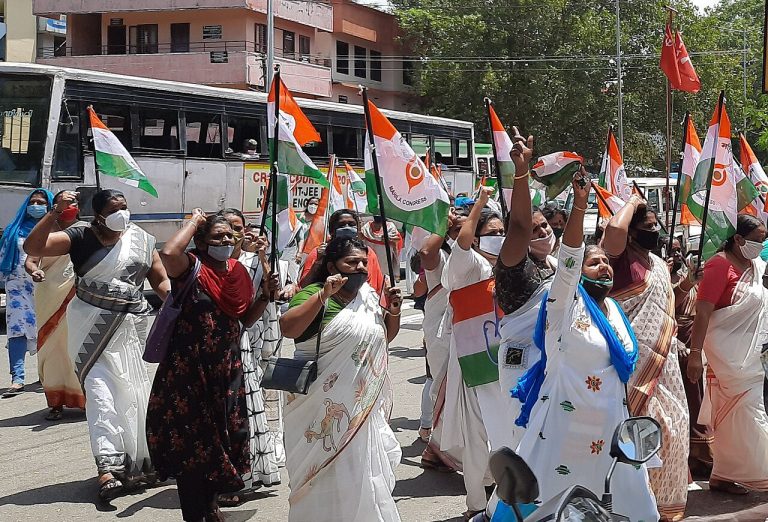
U.s. Commission on International Religious Freedom Recommended Targeted Sanctions on Indian Officials

0

Quick Summary: U.s. Commission on International Religious Freedom Recommended Targeted Sanctions on Indian Officials

  • The U.S. Commission on International Religious Freedom (USCIRF) has formally recommended targeted sanctions on Indian officials for religious-freedom abuses.
  • Witness Raqib Naik highlighted forced evictions and demolitions affecting Bengali-origin Muslims in Assam, with over 22,000 homes destroyed from 2021 to 2026.
  • USCIRF’s report details significant voter-roll revisions, with millions of Muslim names removed, raising concerns about disenfranchisement.
  • Assam’s Chief Minister Himanta Biswa Sarma’s inflammatory remarks were cited as evidence of ethnic cleansing rhetoric.
  • USCIRF’s recommendations include designating India as a “Country of Particular Concern” and halting arms transfers unless conditions improve.

In a bold move, the U.S. Commission on International Religious Freedom (USCIRF) has formally urged the imposition of targeted sanctions on Indian officials implicated in religious-freedom abuses. This recommendation, stemming from a May 2026 hearing, elevates the issue from advocacy to a potential policy shift in Washington.

Raqib Naik’s testimony was pivotal, detailing the systematic persecution of Bengali-origin Muslims in Assam, where over 22,000 homes have been demolished since 2021. His account paints a grim picture of forced evictions and disenfranchisement, with inflammatory rhetoric from Assam’s Chief Minister Himanta Biswa Sarma further fueling ethnic tensions.

The USCIRF report also highlights alarming voter-roll revisions, with millions of Muslim names removed, raising serious concerns about disenfranchisement. The commission’s recommendations include designating India as a “Country of Particular Concern” and leveraging the Arms Export Control Act to halt arms transfers unless significant improvements are made.

This development marks a critical juncture in U.S.-India relations, challenging the strategic partnership between the two nations. The question remains: will the U.S. take decisive action, or will these recommendations be sidelined as mere political pressure?

government commission has now formally memorialized, in an official May 2026 hearing summary, testimony urging targeted sanctions on Indian officials tied to religious-freedom abuses, pushing what was first reported by Clarion India beyond an advocacy claim and into the Washington policy pipeline. Naik’s testimony cites Assam Chief Minister Himanta Biswa Sarma as saying in January 2026 that the state’s Hindus should “trouble the Muslims by any means.

A recent India-focused report carried on USCIRF’s site says over 1,200 Bengali Muslim homes were demolished in Assam’s Sontipur in January 2026, nearly 500 more in Azara in March, and about 180 structures, including six mosques, were demolished in Varanasi’s Dalmandi area for a temple access-road project. ” It also quotes Sarma again on March 12, 2026: “I won’t be able to deport them in my lifetime.

He also alleged that in Assam alone, between 2021 and 2026, authorities carried out at least 33 documented forced-eviction operations, demolishing more than 22,000 homes and structures, displacing 20,387 families and nearly 100,000 people, “mostly Bengali-origin Muslims,” with 40 percent of those displaced losing homes in 2025 alone. The same report says more than 9 million names, roughly 12 percent of West Bengal’s electorate, were removed in a voter-roll revision, that Muslims accounted for 95 percent of deletions in Nandigram, and that about 28 million voter names were proposed for deletion in Uttar Pradesh.

Holocaust Memorial Museum’s Early Warning Project for risk of intrastate mass killings. USCIRF can only recommend, not impose, sanctions, so the next meaningful steps would have to come from the State Department, Treasury’s Global Magnitsky process, Congress, or the White House.

The most specific and striking material came from Naik’s written testimony, which argued that persecution “bears the imprimatur of the country’s top political leadership” and named Prime Minister Narendra Modi’s BJP as part of a broader Sangh Parivar network “ideologically anchored” by the RSS. The reporting is especially potent because it pairs sweeping accusations with vivid quotations from Indian officials.

This recommendation, stemming from a May 2026 hearing, elevates the issue from advocacy to a potential policy shift in Washington. Raqib Naik’s testimony was pivotal, detailing the systematic persecution of Bengali-origin Muslims in Assam, where over 22,000 homes have been demolished since 2021.

” It also quotes Sarma again on March 12, 2026: “I won’t be able to deport them in my lifetime. He also alleged that in Assam alone, between 2021 and 2026, authorities carried out at least 33 documented forced-eviction operations, demolishing more than 22,000 homes and structures, displacing 20,387 families and nearly 100,000 people, “mostly Bengali-origin Muslims,” with 40 percent of those displaced losing homes in 2025 alone.

The same report says more than 9 million names, roughly 12 percent of West Bengal’s electorate, were removed in a voter-roll revision, that Muslims accounted for 95 percent of deletions in Nandigram, and that about 28 million voter names were proposed for deletion in Uttar Pradesh. The USCIRF report also highlights alarming voter-roll revisions, with millions of Muslim names removed, raising serious concerns about disenfranchisement.

The scale and speed of this development has caught many observers off guard. Each new update adds another dimension to a story that is still unfolding, and the full picture will only become clear as more verified details emerge from the people and institutions directly involved.

Analysts who have tracked this issue closely say the current moment represents a genuine turning point. The decisions made in the coming weeks are expected to set the direction for months ahead, with ripple effects likely to extend well beyond the immediate actors in the story.

For those directly affected, the practical impact is already visible. People navigating this fast-changing situation are dealing with real consequences while new information continues to reshape what is known and what remains open to interpretation.

Historical parallels offer some context, though experts caution against drawing too close a comparison. Similar situations have played out before, but the specific combination of pressures, personalities, and timing here makes this moment distinct in ways that matter for how it ultimately resolves.

The political and economic dimensions of this story are deeply intertwined. What appears as a single event on the surface is in practice the convergence of multiple pressures that have been building quietly over a longer period than most public reporting has captured.
Read more on Digital Chew

Hyperliquid Reported a 638% APY Over the Past Month

0

Quick Summary: Hyperliquid Reported a 638% APY Over the Past Month

  • Hyperliquid’s vault reported a 638% APY over the past month, driven by a leveraged strategy.
  • The strategy involves 70% long HYPE, 30% long BTC, and shorting high-emission altcoins.
  • The vault managed approximately $3.03 million in total value locked.
  • The impressive APY masks significant concentration risk, hinging on HYPE’s performance.
  • This strategy is not a low-risk yield but an aggressive long-short crypto trade.

Hyperliquid’s eye-catching 638% APY is a headline-grabbing figure that masks the true nature of its underlying strategy. This isn’t a simple passive yield; it’s a high-stakes gamble on the momentum of the HYPE token, wrapped in a complex long-short crypto trade.

The vault’s aggressive approach involves being 70% long on HYPE and 30% on BTC, while shorting a basket of high-emission altcoins. With $3.03 million locked in, the strategy has paid off spectacularly in the past month. However, the risk is palpable—this isn’t a diversified market-neutral strategy but a concentrated bet on one token’s performance.

Contextually, the allure of a 638% APY is undeniable, yet it comes with a caveat. The yield is not a stable, long-term record but a reflection of a volatile, high-leverage play that could unravel as quickly as it succeeded. The vault’s success hinges on HYPE’s continued outperformance and the weakness of its short positions.

As the crypto world watches, the question remains: can this vault maintain its momentum, or will the risks inherent in such a concentrated strategy lead to a swift reversal? Investors must weigh the allure of high returns against the potential for significant losses.

What makes the story newsworthy is not just the 638% figure, but the structure behind it: according to the latest write-up, the vault is positioned about 70% long HYPE and 30% long BTC, while also running short exposure against a basket of at least 10 “high-FDV and high-emission coins,” with the short side equal to about 60% of notional exposure. 03 million in total value locked, turning what looks like a passive-yield headline into a highly directional, leveraged bet on HYPE strength and weak high-emission altcoins.

The controversy is the gap between how readers may interpret “638% APY” and what the numbers actually represent. A 638% APY annualizes a very strong recent stretch, but the underlying report frames the actual period as “last month” and “the past 30 days,” not a stable long-run record.

2 million can just as easily work in reverse. What happens next is more market-driven than procedural: traders will be watching whether the vault can retain or grow its roughly $3 million-plus TVL, whether HYPE continues to lead, and whether the strategy’s short basket remains weak enough to sustain returns.

In other words, the impressive APY masks concentration risk: this was less a diversified market-neutral machine than a levered expression of one token’s momentum plus a basket short. The latest coverage explicitly warns that this “shouldn’t be interpreted as a low-risk yield,” describing it instead as a “rather aggressive leveraged long-short crypto trade” that depends heavily on HYPE’s price performance.

That design is important because it shifts the story away from a protocol-level yield event and toward the judgment, positioning, and risk appetite of a specific trader operating inside Hyperliquid’s system. The immediate next chapter is not a hearing room or board vote, but whether a highly visible 30-day trade can survive the attention its own headline has now created.

Hyperliquid’s eye-catching 638% APY is a headline-grabbing figure that masks the true nature of its underlying strategy. The vault’s aggressive approach involves being 70% long on HYPE and 30% on BTC, while shorting a basket of high-emission altcoins.

03 million locked in, the strategy has paid off spectacularly in the past month. Contextually, the allure of a 638% APY is undeniable, yet it comes with a caveat.

03 million in total value locked, turning what looks like a passive-yield headline into a highly directional, leveraged bet on HYPE strength and weak high-emission altcoins. A 638% APY annualizes a very strong recent stretch, but the underlying report frames the actual period as “last month” and “the past 30 days,” not a stable long-run record.

What happens next is more market-driven than procedural: traders will be watching whether the vault can retain or grow its roughly $3 million-plus TVL, whether HYPE continues to lead, and whether the strategy’s short basket remains weak enough to sustain returns. The impressive APY masks significant concentration risk, hinging on HYPE’s performance.

The scale and speed of this development has caught many observers off guard. Each new update adds another dimension to a story that is still unfolding, and the full picture will only become clear as more verified details emerge from the people and institutions directly involved.

Analysts who have tracked this issue closely say the current moment represents a genuine turning point. The decisions made in the coming weeks are expected to set the direction for months ahead, with ripple effects likely to extend well beyond the immediate actors in the story.

For those directly affected, the practical impact is already visible. People navigating this fast-changing situation are dealing with real consequences while new information continues to reshape what is known and what remains open to interpretation.

Historical parallels offer some context, though experts caution against drawing too close a comparison. Similar situations have played out before, but the specific combination of pressures, personalities, and timing here makes this moment distinct in ways that matter for how it ultimately resolves.

The political and economic dimensions of this story are deeply intertwined. What appears as a single event on the surface is in practice the convergence of multiple pressures that have been building quietly over a longer period than most public reporting has captured.

Read more on Digital Chew

Sunil Singhania Expanded Portfolio to Rs 2,742 Crore By March 2026

0

Quick Summary: Sunil Singhania Expanded Portfolio to Rs 2,742 Crore By March 2026

  • Sunil Singhania’s Abakkus Asset Manager expanded its portfolio to Rs 2,742 crore by March 2026.
  • Singhania invested Rs 322 crore in six ‘unloved’ companies, including Avalon Technologies and Cyient DLM.
  • Avalon Technologies surged 73% in 2026, highlighting Singhania’s contrarian approach.
  • Despite market downturn, Abakkus added new positions in companies like Heritage Foods and Arvind Fashions.
  • Sunil Singhania’s strategy emphasizes buying ‘disappointment’ rather than momentum.

Sunil Singhania is making waves in the investment world with his bold and contrarian approach. Despite a challenging market environment, Singhania’s Abakkus Asset Manager has expanded its portfolio to a staggering Rs 2,742 crore as of March 2026. This expansion includes a Rs 322 crore investment in six ‘unloved’ companies, showcasing Singhania’s willingness to buy into disappointment rather than chase momentum.

Among these investments, Avalon Technologies stands out with a remarkable 73% surge in 2026, proving that Singhania’s strategy can pay off. However, the broader portfolio has faced challenges, with several stocks delivering negative returns this year. Despite this, Singhania remains undeterred, adding new positions in companies like Heritage Foods, Arvind Fashions, and Cyient DLM.

Singhania’s approach is a testament to his belief in value investing, even when the market seems to punish these stocks. His decision to invest in companies like Heritage Foods, tied to prominent political figures, and Sejal Glass, with promising operational growth, reflects a strategic vision that goes beyond short-term market trends.

As the investment community watches closely, the question remains whether Singhania’s contrarian bets will ultimately prove prescient or premature. The next round of shareholding disclosures and quarterly earnings will be crucial in determining the success of his bold strategy.

The standout stock in the latest snapshot is Avalon Technologies, which ET says has surged 73% in CY26, rising from Rs 876 to Rs 1,519. 16% stake in Avalon as of the March 2026 quarter, valued at about Rs 118 crore, and ET explicitly notes that Avalon was a fresh addition in that same quarter.

Financial Express, in a separate May 9, 2026 report, framed the same buying as a roughly Rs 322 crore deployment into six “unloved” or out-of-favor companies, arguing Singhania was “buying disappointment” rather than momentum. Infra Engineering has slipped 23%, M&B Engineering has declined 22%, and Mastek is off 20%.

4% stake, valued at around Rs 47 crore, even as the stock had cracked nearly 26% year to date in 2026. 55 crore, after which the stock hit a 5% upper circuit on results day.

On May 9, 2026, Financial Express highlighted Abakkus’s roughly Rs 322 crore fresh deployment into six new stocks. On May 29, 2026, ET pegged the total portfolio value at around Rs 2,742 crore.

On May 30, 2026, ET published the latest portfolio snapshot showing the top CY26 gainers and listing the fresh additions made in the March 2026 quarter. The latest Economic Times report, published May 30, 2026, says Abakkus now owns stakes in nearly 32 listed companies with a combined value of around Rs 2,742 crore as of May 29, up about 6% from Rs 2,577 crore at the end of December 2025.

Despite a challenging market environment, Singhania’s Abakkus Asset Manager has expanded its portfolio to a staggering Rs 2,742 crore as of March 2026. Among these investments, Avalon Technologies stands out with a remarkable 73% surge in 2026, proving that Singhania’s strategy can pay off.

16% stake in Avalon as of the March 2026 quarter, valued at about Rs 118 crore, and ET explicitly notes that Avalon was a fresh addition in that same quarter. Financial Express, in a separate May 9, 2026 report, framed the same buying as a roughly Rs 322 crore deployment into six “unloved” or out-of-favor companies, arguing Singhania was “buying disappointment” rather than momentum.

Infra Engineering has slipped 23%, M&B Engineering has declined 22%, and Mastek is off 20%. 4% stake, valued at around Rs 47 crore, even as the stock had cracked nearly 26% year to date in 2026.

55 crore, after which the stock hit a 5% upper circuit on results day. On May 9, 2026, Financial Express highlighted Abakkus’s roughly Rs 322 crore fresh deployment into six new stocks.

The scale and speed of this development has caught many observers off guard. Each new update adds another dimension to a story that is still unfolding, and the full picture will only become clear as more verified details emerge from the people and institutions directly involved.

Analysts who have tracked this issue closely say the current moment represents a genuine turning point. The decisions made in the coming weeks are expected to set the direction for months ahead, with ripple effects likely to extend well beyond the immediate actors in the story.

For those directly affected, the practical impact is already visible. People navigating this fast-changing situation are dealing with real consequences while new information continues to reshape what is known and what remains open to interpretation.

Historical parallels offer some context, though experts caution against drawing too close a comparison. Similar situations have played out before, but the specific combination of pressures, personalities, and timing here makes this moment distinct in ways that matter for how it ultimately resolves.

The political and economic dimensions of this story are deeply intertwined. What appears as a single event on the surface is in practice the convergence of multiple pressures that have been building quietly over a longer period than most public reporting has captured.

Read more on Digital Chew

Sabalenka Secures 100th Win and Advances to French Open Fourth Round

Quick Summary: Sabalenka Secures 100th Win and Advances to French Open Fourth Round

  • Aryna Sabalenka defeated Daria Kasatkina 6-0, 7-5, advancing to the fourth round of the French Open.
  • Sabalenka’s win marked her 100th victory as the world No. 1 in the WTA rankings.
  • The match highlighted Sabalenka’s dominance and Kasatkina’s late resistance.
  • Sabalenka’s next match is a highly anticipated showdown with Naomi Osaka.
  • The victory comes amid a series of upsets in the women’s draw, enhancing Sabalenka’s status as a favorite.

Aryna Sabalenka has once again proven her mettle on the clay courts of Roland-Garros, delivering a commanding performance against Daria Kasatkina. With a decisive 6-0, 7-5 victory, Sabalenka not only secured her place in the fourth round but also celebrated her 100th win as the world No. 1.

The match was a tale of two sets. Sabalenka stormed through the first set, demonstrating her overwhelming power and precision. However, Kasatkina fought back in the second set, making Sabalenka work hard for her win. This resilience added a layer of drama to the encounter, but ultimately, Sabalenka’s skill prevailed.

In the broader context of the French Open, Sabalenka’s victory stands out amid a series of unexpected upsets. With defending champion Coco Gauff already out of the tournament, Sabalenka’s steady progress positions her as a leading contender. Her upcoming match against Naomi Osaka promises to be a thrilling clash of titans.

As the tournament progresses, all eyes will be on Sabalenka to see if she can maintain her dominance and navigate the chaotic landscape of this year’s French Open. Her ability to stay composed and focused will be crucial as she faces tougher challenges ahead.

coverage is on TNT and truTV, with streaming access available through TV providers and services that offer trials, which is the practical answer for anyone who arrived looking for where to watch the Sabalenka story continue. com headline is already over: on Saturday, May 30, 2026, world No.

The Guardian’s match report said Kasatkina was beaten 6-0, 7-5, ending what it called Australia’s French Open hopes, while Reuters emphasized that Sabalenka had to “fight” once the second set tightened after the one-sided opener. Reuters’ broader French Open coverage from May 30 said defending champion Coco Gauff was knocked out by Anastasia Potapova the same day, while Sabalenka stayed on course.

Roland-Garros said Sabalenka’s reward for beating Kasatkina is a fourth-round showdown with Naomi Osaka, calling it a “blockbuster” last-16 clash. Reuters reported from Paris on May 30 that Sabalenka “cut through the French Open chaos” with a 6-0, 7-5 win after a run of major upsets across the women’s draw, and described how she stormed through the first set by taking the opening five games before finishing the “bagel” set despite trailing 15-40 in the sixth game.

The official Roland-Garros site added an eye-catching milestone: this was Sabalenka’s 100th win while ranked No. ABC reported on May 29 that Kasatkina had set up the clash with this topic by advancing to the third round, which gives the timeline a clear progression: Kasatkina’s berth was confirmed Friday, May 29, and this topic ended the matchup one day later on Saturday, May 30.

The debate or tension now is no longer about access to a stream; it is whether this topic can keep asserting control over a women’s draw that Reuters described as chaotic after multiple upset-filled days in Paris. 1 Aryna this topic beat Daria Kasatkina 6-0, 7-5 at Roland-Garros and moved into the fourth round, so the freshest reporting is now about the result, not where to stream it.

The official Roland-Garros site added an eye-catching milestone: this was this topic’s 100th win while ranked No. Quick Summary: this topic Secures 100th Win and Advances to French Open Fourth Round Aryna this topic defeated Daria Kasatkina 6-0, 7-5, advancing to the fourth round of the French Open.

With a decisive 6-0, 7-5 victory, this topic not only secured her place in the fourth round but also celebrated her 100th win as the world No. 1 Aryna this topic beat Daria Kasatkina 6-0, 7-5 at Roland-Garros and moved into the fourth round, so the freshest reporting is now about the result, not where to stream it.

The scale and speed of this development has caught many observers off guard. Each new update adds another dimension to a story that is still unfolding, and the full picture will only become clear as more verified details emerge from the people and institutions directly involved.

Analysts who have tracked this issue closely say the current moment represents a genuine turning point. The decisions made in the coming weeks are expected to set the direction for months ahead, with ripple effects likely to extend well beyond the immediate actors in the story.

For those directly affected, the practical impact is already visible. People navigating this fast-changing situation are dealing with real consequences while new information continues to reshape what is known and what remains open to interpretation.

Historical parallels offer some context, though experts caution against drawing too close a comparison. Similar situations have played out before, but the specific combination of pressures, personalities, and timing here makes this moment distinct in ways that matter for how it ultimately resolves.

The political and economic dimensions of this story are deeply intertwined. What appears as a single event on the surface is in practice the convergence of multiple pressures that have been building quietly over a longer period than most public reporting has captured.
Read more on Digital Chew

Atiku Abubakar Accused International Scrutiny on Nigeria’s Political Climate

0

Quick Summary: Atiku Abubakar Accused International Scrutiny on Nigeria’s Political Climate

  • Atiku Abubakar accused the Nigerian government of attempting to rig the political environment ahead of the 2027 elections.
  • A Washington lobbying firm linked to Atiku is seeking evidence from PDP members to present to U.S. Congress.
  • The PDP faction led by Taminu Turaki claims their convention was sabotaged by government interference.
  • Police reportedly blocked access to the original convention venue, escalating the situation.
  • Atiku’s accusations aim to draw international scrutiny to Nigeria’s political climate.

Atiku Abubakar’s recent accusations against the Nigerian government have set the stage for a political showdown of international proportions. Claiming that the political environment is being rigged ahead of the 2027 elections, Atiku has not only stirred domestic tensions but also caught the attention of international observers.

The drama unfolded when a faction of the People’s Democratic Party (PDP), led by Taminu Turaki, alleged that their planned convention to ratify former President Goodluck Jonathan as the 2027 presidential candidate was being sabotaged. The situation intensified when police reportedly blocked the original venue, forcing the event to relocate. This visible show of force has given the opposition tangible evidence to support their claims of interference.

In a bold move, a Washington lobbying firm linked to Atiku is now actively seeking credible evidence from PDP members to present to the U.S. Congress. This escalation transforms what was initially an internal party dispute into a potential international lobbying campaign. The firm’s demand for documentation suggests that the allegations need to be substantiated before they can gain traction in Washington.

Atiku’s rhetoric has sharpened, framing the blocked PDP activity as part of a broader democratic crackdown rather than an isolated incident. He accuses the Tinubu administration of partisan interference, aiming to either secure the 2027 election or undermine Nigeria’s democracy. This narrative not only highlights the internal PDP crisis but also seeks to internationalize claims of democratic backsliding.

The coming days will be crucial. If Atiku’s camp or the PDP faction can produce verifiable evidence, this could shift from political theater to a substantiated international pressure campaign. The world is watching to see if Nigeria’s political climate will withstand this scrutiny or crumble under the weight of these allegations.

The Whistler reported on May 30 that police blocked access to the original venue with “no fewer than eight police Hilux trucks” barricading both sides of Kashim Ibrahim Way leading to the facility, forcing the faction to relocate the event elsewhere in the Federal Capital Territory. The result is that an already fractured opposition is simultaneously accusing the government of interference and publicly inviting foreign scrutiny of Nigeria’s pre-2027 political climate.

The immediate trigger was a claim by the Taminu Turaki-led PDP faction that its planned convention to ratify former President Goodluck Jonathan as the party’s 2027 presidential candidate was being sabotaged in Abuja. May 30 convention would go ahead; May 30 brought the lobbying firm’s public evidence request and reports of police blocking the original site; May 31 brought Atiku’s direct accusation that the episode reflects a larger attempt to rig the political environment ahead of 2027.

In the message reported on May 30, the firm said, “We would like to speak with members of the PDP (@OfficialPDPNig) who can provide credible, verifiable, and indisputable evidence regarding the reported election interference by @GovWike described below,” and asked them to email supporting material. That faction’s spokesman, Ini Ememobong, said the management of A Class Event Centre told them the Federal Capital Territory Administration had threatened to shut the premises if it hosted the gathering.

Atiku himself sharpened the rhetoric on May 31, casting the blocked PDP activity as part of a broader democratic crackdown rather than a one-off venue fight. There is also a striking twist in the underlying politics: the alleged victim of suppression is not the mainstream PDP leadership but a faction loyal to Taminu Turaki that is trying to ratify Goodluck Jonathan for 2027, in the middle of a broader opposition realignment and leadership struggle.

Congress, dramatically escalating what had been an internal party dispute into a potential international lobbying campaign. filings show the firm has a registered relationship involving advisory and government-affairs work.

He accuses the Tinubu administration of partisan interference, aiming to either secure the 2027 election or undermine Nigeria’s democracy. The immediate trigger was a claim by the Taminu Turaki-led PDP faction that its planned convention to ratify former President Goodluck Jonathan as the party’s 2027 presidential candidate was being sabotaged in Abuja.

May 30 convention would go ahead; May 30 brought the lobbying firm’s public evidence request and reports of police blocking the original site; May 31 brought Atiku’s direct accusation that the episode reflects a larger attempt to rig the political environment ahead of 2027. The drama unfolded when a faction of the People’s Democratic Party (PDP), led by Taminu Turaki, alleged that their planned convention to ratify former President Goodluck Jonathan as the 2027 presidential candidate was being sabotaged.

Atiku himself sharpened the rhetoric on May 31, casting the blocked PDP activity as part of a broader democratic crackdown rather than a one-off venue fight. Atiku Abubakar’s recent accusations against the Nigerian government have set the stage for a political showdown of international proportions.

The scale and speed of this development has caught many observers off guard. Each new update adds another dimension to a story that is still unfolding, and the full picture will only become clear as more verified details emerge from the people and institutions directly involved.

Analysts who have tracked this issue closely say the current moment represents a genuine turning point. The decisions made in the coming weeks are expected to set the direction for months ahead, with ripple effects likely to extend well beyond the immediate actors in the story.

For those directly affected, the practical impact is already visible. People navigating this fast-changing situation are dealing with real consequences while new information continues to reshape what is known and what remains open to interpretation.

Historical parallels offer some context, though experts caution against drawing too close a comparison. Similar situations have played out before, but the specific combination of pressures, personalities, and timing here makes this moment distinct in ways that matter for how it ultimately resolves.

The political and economic dimensions of this story are deeply intertwined. What appears as a single event on the surface is in practice the convergence of multiple pressures that have been building quietly over a longer period than most public reporting has captured.

Read more on Digital Chew

Homeland Security Secretary Mullin Threatened Risking $8 Billion Annually

Quick Summary: Homeland Security Secretary Mullin Threatened Risking $8 Billion Annually

  • Homeland Security Secretary Mullin threatened to pull Customs officers from Newark, risking $8 billion annually.
  • The U.S. Travel Association warns of significant economic damage just weeks before the World Cup.
  • Airlines and tourism groups are alarmed by the potential $70 billion impact across 18 airports.
  • More than 20,000 international passengers could be affected daily at Newark.
  • The threat is part of a broader immigration policy dispute with New Jersey.

In a move that could have devastating economic consequences, Homeland Security Secretary Markwayne Mullin has threatened to withdraw Customs and Border Protection officers from Newark Liberty International Airport. This bold political maneuver is not just about airport operations; it’s a high-stakes immigration policy battle that could blow an $8 billion hole in the U.S. economy, especially with the FIFA World Cup on the horizon.

The U.S. Travel Association has sounded the alarm, warning that cutting off international access through Newark would severely damage America’s reputation as a welcoming destination. With more than 20,000 international passengers landing daily, the potential fallout extends far beyond New Jersey, threatening a $70 billion impact if similar actions are taken at 18 other airports.

This conflict stems from a dispute over local law enforcement’s cooperation with federal immigration officials. Mullin’s comments have sparked outrage across the travel industry, with airlines and tourism groups fearing chaos and economic disruption. The timing couldn’t be worse, as Newark is a critical gateway for World Cup visitors, and the threat risks turning a local issue into a national crisis.

As the White House remains silent on Mullin’s proposal, the travel industry is left in a state of uncertainty. The next steps hinge on whether President Trump will endorse this controversial move, potentially weaponizing airport access in an unprecedented way. The stakes are high, and the clock is ticking as the world watches this political showdown unfold.

Reuters also reported that if the broader sanctuary-city airport threat were carried out across 18 airports, the economic hit could top $70 billion and affect 68 million international passengers annually, which is why airlines and tourism groups are treating Mullin’s comments as more than a bluff. Travel Association’s estimate that losing international visitor access through Newark would cost the United States $8 billion a year.

On May 28, Reuters reported Mullin’s on-record threat that Newark processing could be curtailed soon. travel industry says could blow an $8 billion annual hole in the economy just weeks before the World Cup.

Travel Association’s response, including the $8 billion figure and warnings of national fallout. Skift reported on May 29 that the White House had not signed off on the proposal, a crucial wrinkle because Trump had not publicly endorsed Mullin’s plan even as the rhetoric escalated.

Right now, the most important takeaway from the latest reporting is that an immigration-policy fight has abruptly put Newark, international cargo, and World Cup-era travel at the center of a high-stakes test of how far the administration is willing to weaponize airport access. ” Airlines for America said reducing CBP staffing at major airports would have “a devastating effect” on airlines, travelers, cargo, and tourism.

” The most surprising twist is that Newark’s World Cup importance has pushed an airport-specific threat into a national and even international tourism issue. What happens next depends less on Newark operations than on whether the White House backs Mullin’s threat or lets it fade.

Airlines and tourism groups are alarmed by the potential $70 billion impact across 18 airports. With more than 20,000 international passengers landing daily, the potential fallout extends far beyond New Jersey, threatening a $70 billion impact if similar actions are taken at 18 other airports.

travel industry says could blow an $8 billion annual hole in the economy just weeks before the World Cup. Travel Association’s response, including the $8 billion figure and warnings of national fallout.

The scale and speed of this development has caught many observers off guard. Each new update adds another dimension to a story that is still unfolding, and the full picture will only become clear as more verified details emerge from the people and institutions directly involved.

Analysts who have tracked this issue closely say the current moment represents a genuine turning point. The decisions made in the coming weeks are expected to set the direction for months ahead, with ripple effects likely to extend well beyond the immediate actors in the story.

For those directly affected, the practical impact is already visible. People navigating this fast-changing situation are dealing with real consequences while new information continues to reshape what is known and what remains open to interpretation.

Historical parallels offer some context, though experts caution against drawing too close a comparison. Similar situations have played out before, but the specific combination of pressures, personalities, and timing here makes this moment distinct in ways that matter for how it ultimately resolves.

The political and economic dimensions of this story are deeply intertwined. What appears as a single event on the surface is in practice the convergence of multiple pressures that have been building quietly over a longer period than most public reporting has captured.

Read more on Digital Chew

Atiku Abubakar Warns of Authoritarian Shift Amid PDP Struggles

0

Quick Summary: Atiku Abubakar Warns of Authoritarian Shift Amid PDP Struggles

  • The Peoples Democratic Party (PDP) is described as fractured and financially struggling, weakening its ability to challenge the ruling All Progressives Congress (APC).
  • Federal Capital Territory Minister Nyesom Wike is blamed for contributing to the internal division within the PDP.
  • Former Vice President Atiku Abubakar accuses President Tinubu of undermining democratic norms, warning of a shift towards authoritarian rule.
  • Nigeria’s Supreme Court restored the National Working Committee of the African Democratic Congress, highlighting legal turmoil within opposition parties.
  • Opposition parties have limited time to resolve leadership disputes and unify before the 2027 elections.

Nigeria’s democracy stands at a crossroads, teetering under the weight of a fractured opposition and allegations of authoritarian tendencies from the ruling party. The Peoples Democratic Party (PDP), once a formidable force, now finds itself in disarray, financially drained and lacking the unity needed to mount a serious challenge against the All Progressives Congress (APC). Atiku is at the center of this development.

Federal Capital Territory Minister Nyesom Wike has been singled out as a key figure in the PDP’s internal strife, further complicating the party’s ability to present a cohesive front. Meanwhile, former Vice President Atiku Abubakar has sounded the alarm, accusing President Bola Tinubu of eroding democratic norms and steering the nation towards authoritarian rule. Atiku’s stark warning highlights the urgency of the situation: “Once you kill it, dictatorship takes over.”

The legal landscape is equally turbulent. The recent Supreme Court decision to reinstate the National Working Committee of the African Democratic Congress underscores the chaos within opposition ranks. This legal victory, however, does little to mask the broader issue of a splintered opposition struggling to organize effectively across Nigeria’s 774 local government areas.

The clock is ticking for Nigeria’s opposition. With the 2027 elections on the horizon, they must resolve leadership disputes and rebuild their structures swiftly. The stakes are high, as the ruling APC consolidates power, leaving little room for a divided opposition to mount a credible challenge.

Another notable number in this weekslong political picture is 774, the number of local government areas that Daily Times said any serious national opposition movement must effectively organize across if it hopes to defend votes in 2027. One of the most vivid details in the recent reporting is the reminder that the Rivers State crisis had already become severe enough for Tinubu to declare a state of emergency there in March 2025, suspending both the governor and the legislature for 6 months, according to Daily Times’ May 8 report on Wike.

The closest recent Daily Times reporting to the “Democracy Under Strain” frame comes from a burst of pieces published in April and May 2026 that tie democratic erosion to specific actors, court fights, and party breakdowns. That report says the PDP is now “deeply fractured, financially starved, and completely lacking a unified voice to challenge the ruling All Progressives Congress,” a stark assessment because it turns democratic strain into a measurable political fact: the ruling APC faces a weaker national adversary just 1 year before the race for 2027 fully intensifies.

Daily Times has highlighted youth groups in Ogun State warning against “political thuggery” ahead of 2027, security officials in Nasarawa cautioning politicians against “violent protest” and “unlawful rallies,” and party actors openly accusing rivals of trying to choke democratic competition. The most telling fresh development in the Daily Times Nigeria orbit is not a single new policy shock but a sharpening political narrative that Nigeria’s democracy is being hollowed out from two sides at once: by an opposition in visible collapse and by increasingly direct accusations that President Bola Tinubu’s camp is exploiting that weakness to centralize power ahead of 2027.

On May 8, Daily Times described the Peoples Democratic Party, once Nigeria’s dominant opposition force for 16 straight years, as “a shadow of the political machine that ruled Nigeria,” blaming Federal Capital Territory Minister Nyesom Wike for helping fracture the party from within. The sharpest allegation in the latest reporting comes from former Vice President Atiku Abubakar, who in a Daily Times report published about two months ago accused Tinubu of dismantling democratic norms in explicit terms.

The real next deadline is political, not procedural: Nigeria’s opposition parties have months, not years, to settle leadership disputes, rebuild structures, and decide whether to unite before the 2027 contest hardens into an incumbency-driven race. In one major ruling covered last month, Nigeria’s Supreme Court restored the National Working Committee of the African Democratic Congress led by Senator David Mark, reversing a lower-court order that had thrown the party into uncertainty.

With the 2027 elections on the horizon, they must resolve leadership disputes and rebuild their structures swiftly. On May 8, Daily Times described the Peoples Democratic Party, once Nigeria’s dominant opposition force for 16 straight years, as “a shadow of the political machine that ruled Nigeria,” blaming Federal Capital Territory Minister Nyesom Wike for helping fracture the party from within.

This legal victory, however, does little to mask the broader issue of a splintered opposition struggling to organize effectively across Nigeria’s 774 local government areas. The real next deadline is political, not procedural: Nigeria’s opposition parties have months, not years, to settle leadership disputes, rebuild structures, and decide whether to unite before the 2027 contest hardens into an incumbency-driven race.

In one major ruling covered last month, Nigeria’s Supreme Court restored the National Working Committee of the African Democratic Congress led by Senator David Mark, reversing a lower-court order that had thrown the party into uncertainty. Nigeria’s Supreme Court restored the National Working Committee of the African Democratic Congress, highlighting legal turmoil within opposition parties.

The Peoples Democratic Party (PDP), once a formidable force, now finds itself in disarray, financially drained and lacking the unity needed to mount a serious challenge against the All Progressives Congress (APC). Quick Summary: Atiku Abubakar Warns of Authoritarian Shift Amid PDP Struggles The Peoples Democratic Party (PDP) is described as fractured and financially struggling, weakening its ability to challenge the ruling All Progressives Congress (APC).

The scale and speed of this development has caught many observers off guard. Each new update adds another dimension to a story that is still unfolding, and the full picture will only become clear as more verified details emerge from the people and institutions directly involved.

Analysts who have tracked this issue closely say the current moment represents a genuine turning point. The decisions made in the coming weeks are expected to set the direction for months ahead, with ripple effects likely to extend well beyond the immediate actors in the story.

For those directly affected, the practical impact is already visible. People navigating this fast-changing situation are dealing with real consequences while new information continues to reshape what is known and what remains open to interpretation.

Historical parallels offer some context, though experts caution against drawing too close a comparison. Similar situations have played out before, but the specific combination of pressures, personalities, and timing here makes this moment distinct in ways that matter for how it ultimately resolves.

The political and economic dimensions of this story are deeply intertwined. What appears as a single event on the surface is in practice the convergence of multiple pressures that have been building quietly over a longer period than most public reporting has captured.

Read more on Digital Chew

Sergei Fedorov Retired Resolved a Long – Standing Debate

Quick Summary: Sergei Fedorov Retired Resolved a Long – Standing Debate

  • Sergei Fedorov’s No. 91 was retired on January 12, 2026, resolving a long-standing debate within the Red Wings franchise.
  • The retirement ceremony took place before Detroit’s 4-3 overtime win over the Carolina Hurricanes.
  • Speculation has begun on future jersey retirements, with Pavel Datsyuk and Henrik Zetterberg as potential candidates.
  • Fedorov’s retirement marks a turning point, signaling a reconciliation of past tensions with the franchise.
  • The ceremony was part of the Red Wings’ 100th-anniversary celebrations, adding historical significance.

Sergei Fedorov’s jersey retirement on January 12, 2026, finally put to rest one of the Detroit Red Wings’ most enduring and emotional debates. For years, fans and analysts alike wondered why one of the franchise’s most iconic players hadn’t received this honor sooner. The decision to retire Fedorov’s No. 91 was not just a ceremonial gesture; it was a public acknowledgment that past grievances had been set aside.

The ceremony unfolded before a home game against the Carolina Hurricanes, where the Red Wings secured a 4-3 overtime victory. This added a fitting on-ice conclusion to an emotionally charged evening. The event was part of the team’s 100th-anniversary celebrations, which gave the decision additional weight and significance. Current Red Wings players, including captain Dylan Larkin, praised the move, highlighting Fedorov’s lasting impact on the team.

Fedorov’s career with the Red Wings was illustrious, marked by three Stanley Cup victories and numerous individual accolades, including the Hart and Selke Trophies in the same season. Yet, it was the manner of his departure from Detroit that left unresolved tensions. The retirement ceremony served as a reconciliation, transforming a once-sensitive chapter into a story of closure and celebration.

Looking ahead, the focus has shifted to who might be next in line for jersey retirement. Pavel Datsyuk and Henrik Zetterberg are leading candidates, with Datsyuk having already made a symbolic return to retire as a Red Wing. This suggests that the Fedorov ceremony may have set a new precedent for how the franchise handles its unfinished business with former stars.

As the Red Wings continue their centennial celebrations, the question remains whether another retirement announcement will follow. The recent developments have not only honored Fedorov but have also opened the door for future recognitions, potentially reshaping the franchise’s relationship with its past legends.

Detroit Hockey Now reported that the Red Wings announced on August 19, 2025 that Fedorov’s No. 91 on January 12, 2026, a move that finally resolved one of the franchise’s longest-running and most emotional debates.

Detroit Hockey Now also highlighted one of the most remarkable distinctions in his résumé: in 1993-94, he won both the Hart Trophy and Selke Trophy in the same season, and the outlet described him as still the only player in NHL history to pull off that double. com reported the honor came before Detroit’s 4-3 overtime win over Carolina, giving the night a tidy on-ice finish as well.

After Fedorov’s number went up, the outlet shifted quickly to speculation about future retirements, naming Pavel Datsyuk and Henrik Zetterberg as plausible candidates and noting that Datsyuk had already returned to Detroit in November 2024 to sign a symbolic one-day contract so he could officially retire as a Red Wing. The strongest reporting tied to Detroit Hockey Now centers on Fedorov, not a newly announced captain’s ceremony, and the standout revelation is how much the honor was framed as both celebration and closure.

” The numbers behind the decision are substantial and help explain why this became such a charged issue. There is also a secondary thread in Detroit Hockey Now’s reporting that matters now: who could be next.

com noted he had 400 goals and 954 points in 13 seasons with the Red Wings before becoming the ninth Detroit player to receive a retired number. The Red Wings made the announcement during their 100th anniversary celebration season, giving the move extra institutional weight, and current players were enlisted to reinforce the message.

91 was retired on January 12, 2026, resolving a long-standing debate within the Red Wings franchise. Sergei Fedorov’s jersey retirement on January 12, 2026, finally put to rest one of the Detroit Red Wings’ most enduring and emotional debates.

91 on January 12, 2026, a move that finally resolved one of the franchise’s longest-running and most emotional debates. com reported the honor came before Detroit’s 4-3 overtime win over Carolina, giving the night a tidy on-ice finish as well.

Looking ahead, the focus has shifted to who might be next in line for jersey retirement. There is also a secondary thread in Detroit Hockey Now’s reporting that matters now: who could be next.

The retirement ceremony took place before Detroit’s 4-3 overtime win over the Carolina Hurricanes. The ceremony was part of the Red Wings’ 100th-anniversary celebrations, adding historical significance.

The scale and speed of this development has caught many observers off guard. Each new update adds another dimension to a story that is still unfolding, and the full picture will only become clear as more verified details emerge from the people and institutions directly involved.

Analysts who have tracked this issue closely say the current moment represents a genuine turning point. The decisions made in the coming weeks are expected to set the direction for months ahead, with ripple effects likely to extend well beyond the immediate actors in the story.

For those directly affected, the practical impact is already visible. People navigating this fast-changing situation are dealing with real consequences while new information continues to reshape what is known and what remains open to interpretation.

Historical parallels offer some context, though experts caution against drawing too close a comparison. Similar situations have played out before, but the specific combination of pressures, personalities, and timing here makes this moment distinct in ways that matter for how it ultimately resolves.

The political and economic dimensions of this story are deeply intertwined. What appears as a single event on the surface is in practice the convergence of multiple pressures that have been building quietly over a longer period than most public reporting has captured.

Read more on Digital Chew

Gold Decline Reflecting Market Uncertainty

0

Quick Summary: Gold Decline Reflecting Market Uncertainty

  • Gold prices are set for a third monthly decline, reflecting market uncertainty.
  • Spot silver holds steady at $75.61, showing resilience without enthusiasm.
  • Geopolitical tensions and inflation concerns continue to influence sentiment.
  • Market sentiment is split between professional and retail investors.
  • Upcoming U.S. economic data could be the next trigger for market movement.

Gold prices are caught in a stalemate, reflecting a market gripped by uncertainty. As investors grapple with geopolitical tensions and a sticky U.S. interest rate outlook, gold is on track for its third consecutive monthly decline. The allure of safe-haven assets hasn’t disappeared, but neither has it surged, leaving gold prices frozen in place.

The numbers tell a story of hesitation: spot silver remains steady at $75.61 an ounce, while gold struggles to break free from its tight trading band. This pattern of testing resistance and fading underscores a lack of conviction among traders. The core debate is whether to price gold and silver as protection against inflation and geopolitical shocks or to mark them down due to a stronger dollar and higher interest rates.

Market sentiment is sharply divided. While Wall Street has turned bullish following a late-week recovery, Main Street remains bearish. This split highlights the psychological tug-of-war playing out in the markets. Analysts suggest that the next move hinges on U.S. economic data, particularly labor market indicators, which could shift Federal Reserve expectations.

61 an ounce, while gold was described as set for its third consecutive monthly fall on May 29, 2026, after spending the week bouncing inside a relatively tight band. 30 per ounce and later tested resistance near $4,580 before fading, a pattern that underscores hesitation rather than conviction.

economic data and whatever it does to Federal Reserve expectations, because that appears to be the immediate trigger the market lacks. com article itself from the live web results, so I anchored this update to the freshest accessible reporting that appears to match the same market theme: gold and silver holding steady amid cautious sentiment into May 29–30, 2026.

On May 27, reporting said PCE inflation and Iran-related tensions were seen as the next major catalysts for metals, with the broader trend still weak. By May 29, Kitco reported a late-week recovery in gold and a sharp split in sentiment between professional and retail watchers.

Also on May 29, Reuters said the monthly picture still looked soft enough for a third straight decline, despite prices stabilizing into month-end. 8% Atlanta Fed current-quarter growth estimate.

Reuters, via Business Standard, said “easing safe-haven demand and a firmer interest-rate outlook pressured precious metals during the month,” while Rotbart & Co. The sharpest new debate in the reporting is over whether this pause is a warning sign or a setup for another leg higher.

economic data, particularly labor market indicators, which could shift Federal Reserve expectations. 61 an ounce, while gold was described as set for its third consecutive monthly fall on May 29, 2026, after spending the week bouncing inside a relatively tight band.

30 per ounce and later tested resistance near $4,580 before fading, a pattern that underscores hesitation rather than conviction. com article itself from the live web results, so I anchored this update to the freshest accessible reporting that appears to match the same market theme: gold and silver holding steady amid cautious sentiment into May 29–30, 2026.

This split highlights the psychological tug-of-war playing out in the markets. Reuters, via Business Standard, said “easing safe-haven demand and a firmer interest-rate outlook pressured precious metals during the month,” while Rotbart & Co.

The scale and speed of this development has caught many observers off guard. Each new update adds another dimension to a story that is still unfolding, and the full picture will only become clear as more verified details emerge from the people and institutions directly involved.

Analysts who have tracked this issue closely say the current moment represents a genuine turning point. The decisions made in the coming weeks are expected to set the direction for months ahead, with ripple effects likely to extend well beyond the immediate actors in the story.

For those directly affected, the practical impact is already visible. People navigating this fast-changing situation are dealing with real consequences while new information continues to reshape what is known and what remains open to interpretation.

Historical parallels offer some context, though experts caution against drawing too close a comparison. Similar situations have played out before, but the specific combination of pressures, personalities, and timing here makes this moment distinct in ways that matter for how it ultimately resolves.

The political and economic dimensions of this story are deeply intertwined. What appears as a single event on the surface is in practice the convergence of multiple pressures that have been building quietly over a longer period than most public reporting has captured.

Read more on Digital Chew