56 F
San Francisco
Wednesday, May 13, 2026
Home Blog Page 971

Pennsylvania Governor’s Mansion Hit by Arson Attack

0


Key Takeaways:

  • Pennsylvania Governor Josh Shapiro and his family had to leave their home after an arson attack.
  • The attack caused significant damage but no one was hurt.
  • A suspect is in custody and under investigation.

What Happened?

Early Sunday morning, a scary incident occurred at the Pennsylvania Governor’s mansion in Harrisburg. Someone broke into the house and started at least two fires, causing a lot of damage. Luckily, Governor Josh Shapiro, his wife, and their children were not hurt and had to leave the house quickly. The authorities acted fast and caught the person who did this.

Who Was Involved?

The man who broke in is now in custody. The police are looking into how he got into the house and why he started the fires. They are making sure he doesn’t hurt anyone else.

Is Everyone Safe?

Thankfully, Governor Shapiro and his family are safe. The fires were put out, but the mansion has a lot of damage. The family had to move to a safer place, and officials are making sure they are protected.

What’s Next?

The police are still investigating the attack. They want to know why this happened and if others were involved. Governor Shapiro and his team are focusing on keeping everyone safe and figuring out how to prevent something like this in the future.

Why Does This Matter?

This event is concerning because it happened at the Governor’s home, a place that should be safe. It shows how important it is for public figures to have good security. The community is relieved that no one was hurt and hopes for a quick recovery from this scary event.

Sanders Brings Politics to Coachella Stage

0

Key Takeaways:

  • Bernie Sanders spoke at Coachella, criticizing Donald Trump and billionaires.
  • He introduced singer Clairo, praising her political activism.
  • Rep. Maxwell Frost joined him, highlighting youth involvement in politics.
  • Sanders emphasized fighting for a better future despite challenges.

A Politician at a Music Festival

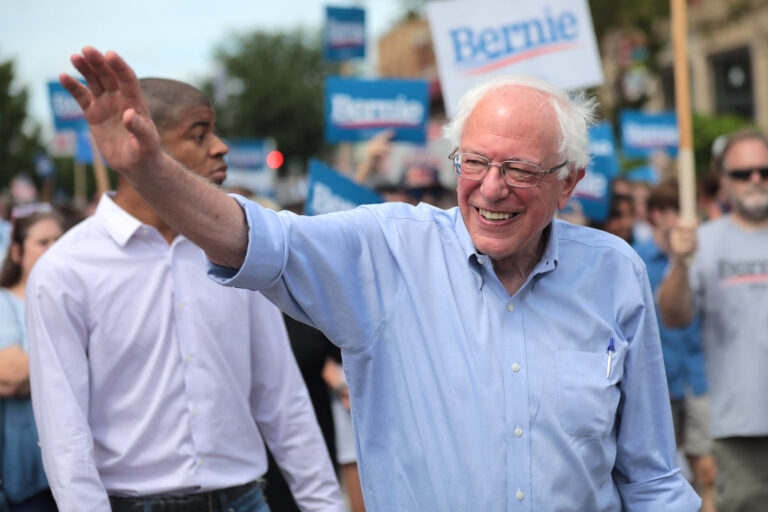
Imagine attending a music festival and seeing a politician on stage. That’s what happened at Coachella when Bernie Sanders took the stage. The Vermont senator used the platform to criticize President Donald Trump and the wealthy elite. Coachella, known for its luxury and high-end performances, seemed like an unexpected place for a political speech. But Sanders saw it as an opportunity to spread his message.

Sanders, who describes himself as a Democratic socialist, introduced singer Clairo. Her real name is Claire Cottrill, and she’s known for her activism. Sanders praised her for using her platform to speak out on important issues. He was joined by Rep. Maxwell Frost, the youngest member of Congress. Sanders pointed out Frost’s age, saying he’s a sign of the young generation taking a stand in politics.

Sanders’ Message to the Crowd

Sanders didn’t just introduce Clairo; he also had a message for the crowd. He talked about the need to fight for a fairer society. He criticized billionaires and called out President Trump’s policies. Sanders has long argued for issues like higher wages, better healthcare, and free college. He told the audience that achieving these goals won’t be easy, but it’s possible if people work together.

Why does this matter? Well, it’s rare to see a politician at a music festival. Sanders’ appearance shows how politics is becoming more intertwined with pop culture. It also highlights the importance of young people in shaping the future. For Sanders, events like Coachella are opportunities to inspire and motivate young voters.

The Power of Young Voices

Sanders highlighted Rep. Maxwell Frost’s role in Congress. Frost, who is just 26, is the youngest member of Congress. Sanders sees him as a symbol of the young generation’s potential to change the political landscape. He emphasized that young people have the energy and ideas to tackle major issues like climate change and income inequality.

Sanders also mentioned the importance of activism. He praised Clairo for using her music to address social issues. By introducing her, he wanted to show the impact artists can have on politics. Music and art have long been tools for social change, and Sanders hopes Clairo’s activism will inspire others.

A Call to Action

Sanders ended his speech with a call to action. He urged the audience to get involved in politics and fight for a better future. He acknowledged that the challenges are big, but he believes that together, people can make a difference. For Sanders, it’s not just about criticizing the system but also about building a movement for change.

Sanders’ appearance at Coachella was unexpected but impactful. It showed how politics can reach people in unusual places. By speaking at a music festival, he connected with a younger audience and emphasized the importance of their role in shaping the future. Whether you agree with his views or not, it’s clear that Sanders is committed to his cause and willing to take his message to new and unexpected places.

This event highlights the growing intersection of politics and pop culture. It also shows how young people are increasingly involved in politics. Sanders’ speech at Coachella is a reminder that change starts with the people, and no platform is too small to make an impact.

Space Force Colonel’s Comments Spark Debate

0


Key Takeaways:

  • A Space Force colonel in Greenland criticized her commander-in-chief, sparking discussion on military loyalty and discipline.
  • The incident highlights issues with senior officers challenging authority.
  • The chain of command is crucial for effective military operations.
  • Public dissent by military leaders undermines trust and accountability.

Introduction

A recent controversy involving a U.S. Space Force colonel has brought attention to the challenges of military leadership and political loyalty. The colonel, formerly stationed in Greenland, publicly criticized the President, raising questions about military discipline and the role of senior officers in modern times.

What Happened

The colonel used her platform to voice disagreements with the President, expressing frustration with certain policies. While her comments gained public attention, they also drew criticism for potentially undermining military protocol. Critics argue that public dissent by high-ranking officers can weaken the chain of command and set a bad precedent for junior personnel.

Why It Matters

The chain of command is vital for military efficiency. When senior officers openly disagree with their superiors, it can erode trust and discipline. This can affect unit cohesion and operational effectiveness, essential for national security. Public criticism from military leaders also complicates civil-military relations, potentially politicizing the armed forces.

The Broader Issue

This incident reflects a broader trend of senior military officers challenging authority. In recent years, there have been instances where officers have publicly opposed civilian leaders, sparking debates about the role of the military in politics. Some argue that military leaders should remain neutral, while others believe they have a duty to speak out when they disagree with policies.

Reactions and Implications

The colonel’s comments have elicited strong opinions. Supporters view her actions as a stand for integrity and accountability, while critics see them as insubordination. The debate highlights the delicate balance between military loyalty and personal conviction. The outcome of this situation could influence how military leaders express dissent in the future.

Conclusion

The colonel’s public criticism of the President underscores the complexities of military leadership and political loyalty. While free speech is valued, the military operates under a unique set of rules. The challenge lies in fostering a culture where officers can voice concerns without compromising discipline or trust. This incident serves as a reminder of the importance of maintaining a clear chain of command and the ethical responsibilities of senior officers.

Maine Lawmaker Faces Backlash for Proposed Bill

0

Key Takeaways:

  • Maine lawmaker Beth O’Connor faced fierce backlash for proposing a bill to ban men from women’s sports.
  • The bill sparked intense debate and ugly messages from special interest groups.
  • O’Connor reflects on the shifting political climate during her final term.
  • She believes in standing up for common-sense policies despite opposition.


Beth O’Connor, a Maine House Representative, experienced a storm during her fifth and final term in 2022. She proposed a bill to ban men from competing in women’s sports, believing it was a fair and commonsense idea. However, instead of the usual bipartisan support, she received harsh criticism from special interest groups. These groups accused her of being discriminatory, which O’Connor firmly denies.

A Lawmaker’s Journey

O’Connor had served in the Maine House of Representatives for many years, often working across party lines. She expected her bill to spark debate but was shocked by the venomous attacks she received. Many critics called her bill hateful and discriminatory, claiming it targeted transgender athletes. O’Connor maintains her proposal was about fairness in women’s sports.

The Proposed Bill

The bill aimed to ensure women’s sports remained female-only. O’Connor argued that allowing biological males to compete in female categories could create an uneven playing field. She believed it was important to protect the integrity of women’s sports. However, her proposal was met with anger from groups advocating for transgender rights. They argued that the bill discriminates against transgender athletes.

Facing Backlash

The backlash was intense. O’Connor received floods of ugly messages, many from out-of-state groups. These messages accused her of being transphobic and called for her to drop the bill. The negative response surprised her, as she had previously enjoyed bipartisan support. O’Connor says the reaction reflected a broader shift in the political climate. She believes many lawmakers are now afraid to stand up for what they believe in due to fear of backlash.

Reflecting on the Experience

Despite the criticism, O’Connor doesn’t regret proposing the bill. She believes it’s essential to stand up for what she thinks is right, even if it’s unpopular. O’Connor hopes her experience will encourage others to speak their minds, even in the face of opposition. She feels that lawmakers should not be intimidated by special interest groups.

Conclusion

Beth O’Connor’s story highlights the challenges of proposing controversial legislation. Her experience shows how quickly political debates can turn ugly. While she faced intense backlash, O’Connor remains committed to her beliefs. Her story serves as a reminder of the difficulties lawmakers face when standing up for what they believe in.

Biden’s Ukraine-Russian Gas Deal Ties to Son’s Business Emerge

0

Key Takeaways:

  • Joe Biden, as Vice President, secretly supported a gas deal between Russia and Ukraine in 2014.
  • This happened while his son Hunter Biden worked for a Ukrainian energy company.
  • The deal appears to have benefited Hunter’s company.
  • Details come from private emails hidden from the public for over a decade.

Introduction Newly revealed private emails show a surprising twist in Joe Biden’s actions during his time as Vice President. While he publicly supported punishing Russia for invading Ukraine in 2014, behind the scenes, Biden helped Russia sell gas to Ukraine. This quietly arranging a deal allowed Russian gas to flow to Ukraine when Hunter Biden, his son, worked for a Ukrainian energy company. These emails reveal a conflict of interest and raise questions about whether Biden used his power to help his family.


Public Toughness vs. Private Deals In 2014, Russia invaded Ukraine, leading the U.S. and other countries to impose sanctions on Russia. Biden was a key figure in these actions, publicly denouncing Russia’s aggression. Yet, private emails suggest a different story.

These messages show that Biden secretly worked to create a pipeline for Russian gas to reach Ukraine. This backdoor deal contradicts his public image of being tough on Russia.

Why would Biden help Russia while appearing to oppose it? The emails suggest it might have been linked to his son’s job.


The 2014 Timeline and Hunter Biden’s Involvement In the fall of 2014, Hunter Biden served on the board of Burisma, a major Ukrainian energy company. At the same time, Burisma faced challenges because of Russia’s actions. The company needed help to keep its operations running smoothly.

According to the emails, Joe Biden’s private efforts to allow Russian gas to reach Ukraine directly benefited Burisma. With Russian gas flowing, the company could continue its work without major disruptions.

This raises questions about whether Biden used his government position to assist his son’s employer.


Understanding the Conflict of Interest A conflict of interest occurs when someone uses their position for personal gain. In this case, Biden’s actions as Vice President may have helped his son’s company.

The emails suggest Biden was aware of Burisma’s struggles and stepped in to assist. Critics argue this was unethical and potentially illegal, as it mixed personal family interests with official duties.


Why This Matters Now More than a decade later, these emails surface as Joe Biden faces scrutiny over his family’s business ties. Critics argue that as President, he cannot claim to be tough on Russia while his past actions show otherwise.

Supporters, though, highlight Biden’s long-standing support for Ukraine and argue that the gas deal was necessary to help the country during a crisis.


What’s Next? The discovery of these emails could lead to further investigations. Lawmakers may look into whether Biden improperly used his power to help his son’s company. If true, this could have serious consequences for his political career.


Conclusion The emails reveal a complex situation involving Joe Biden, his son Hunter, and a Russian gas deal. While Biden appeared tough on Russia publicly, he worked privately to help the country supply gas to Ukraine.

This has sparked debates about ethics, family ties, and the use of power. As more details emerge, this story could have significant political implications.

Digital Chew will continue to follow this story and provide updates as new information comes to light.

NASA Science Budget Faces Huge Cut, Threatening Missions

0

Key Takeaways:

  • NASA’s science budget could be cut by nearly half, impacting current and future missions worth billions.
  • The cuts could end several major projects and affect the US leadership in space exploration.

Introduction: NASA, a leader in space exploration, faces a significant threat as its science budget is proposed to be slashed by half. This drastic cut, part of President Trump’s budget plan, could halt numerous crucial missions, affecting both current projects and future endeavors. According to insiders, this plan poses a substantial risk to NASA’s ongoing work, potentially changing the landscape of space exploration.


What’s at Stake for NASA?

Current Missions in Jeopardy: The proposed cuts threaten several high-profile missions. Earth science projects, crucial for understanding climate change and weather patterns, may be terminated. The Europa Clipper mission, aiming to explore Jupiter’s moon for life signs, is also at risk. Additionally, the James Webb Space Telescope, set to replace Hubble, could face severe setbacks, delaying our quest to study distant galaxies.

Future Exploration Plans: Ambitious plans to return humans to the Moon by 2024 and later venture to Mars might be derailed. These missions are vital for advancing technology and expanding humanity’s presence in space.


Impact on Jobs and the Space Industry: Thousands of jobs at NASA and its partner companies could be lost. This ripple effect might harm the economy and slow innovation in related fields like engineering and technology.


Concerns About U.S. Leadership: Cutting NASA’s budget could weaken the U.S. position in space exploration. Countries like China and Russia might seize this opportunity to lead, altering global dynamics in space research and dominance.


What’s Next in the Budget Process: Congress will review the proposal, but the administration’s push for cuts may prioritize other areas over space exploration. Advocates hope Congress will challenge these reductions, aware of the long-term consequences for scientific progress and national pride.


Conclusion: The potential budget cuts to NASA’s science programs pose significant risks, from ending critical missions to impacting the nation’s standing in space exploration. As the proposal moves through Congress, the outcomes will shape the future of space research and innovation. Stay informed as this critical situation unfolds.

GOP’s Mega Bill Faces Big Hurdles in Congress

0

Key Takeaways:

  • Congressional Republicans are struggling to finalize a massive domestic policy bill.
  • A recent House vote revealed deep disagreements between the House and Senate.
  • The bill’s success depends on resolving these issues quickly.
  • The GOP sees this as a major opportunity to showcase their vision before the 2024 elections.

A Big Vision, but a Bumpy Road Ahead

Republicans in Congress have a clear goal: create a sweeping domestic policy bill that will make a lasting impact. This megabill is supposed to highlight their priorities and prove they can lead effectively. But behind the scenes, things are getting complicated.

A recent vote in the House of Representatives seemed like a step forward. Lawmakers approved a fiscal framework, which is like a roadmap for the bill. However, this step also exposed some big problems. The House and Senate don’t see eye to eye on key issues, and time is running out to iron out these differences.


What’s at Stake?

This megabill is more than just a collection of policies. It’s a chance for Republicans to unite around a shared vision and show voters what they stand for ahead of the 2024 elections. If they can’t agree on the details, it could hurt their chances of making a strong impression.

The bill covers a lot of ground, from how the government spends money to how it addresses everyday issues like healthcare, education, and jobs. But with so much on the table, disagreements are inevitable.


House vs. Senate: Where Do They Differ?

The biggest challenge right now is the gap between the House and Senate. Both chambers have their own ideas about what should be in the bill, and finding common ground won’t be easy.

For example, the House might want to focus heavily on tax reforms, while the Senate could prioritize fixing infrastructure or boosting small businesses. These differences might seem small, but they add up quickly.

Another sticking point is how to pay for everything. The House and Senate have different opinions on budget cuts and where to allocate funds. This financial puzzle is proving tough to solve.


What’s Next?

Lawmakers are racing against the clock to get the bill finalized. But progress is slow, and tensions are rising. Some Republicans worry that if they can’t work together, the whole effort might fall apart.

Party leaders are trying to keep everyone on the same page. They’re holding closed-door meetings and negotiating behind the scenes. But so far, no breakthroughs.

One thing is certain: the GOP needs to act fast. The sooner they can agree on the details, the better their chances of passing the bill.


Why This Matters

For Republicans, this megabill is a golden opportunity. It’s a chance to show voters they can govern effectively and deliver results. But if they fail to come together, it could backfire.

The 2024 elections are looming, and this bill could be a key issue on the campaign trail. If Republicans can’t get it done, Democrats will likely use it against them, saying the GOP can’t lead.

On the other hand, if they succeed, it could give them a major boost. A well-crafted bill that addresses real problems could win over undecided voters and energize their base.


The Bottom Line

Republicans have a big vision for this megabill, but turning that vision into reality won’t be easy. They need to bridge the gap between the House and Senate, make tough decisions, and act quickly.

The next few weeks will be critical. If they can pull it off, it could be a major win. But if they can’t, it might be a missed opportunity they’ll regret.

Stay tuned. This is a story worth watching.

Texas Measles Outbreak: Kennedy’s Claims Clash with Reality

0

Key Takeaways:

Robert F. Kennedy Jr. claims measles cases in Texas are decreasing. State data shows no decline in measles cases. Over 500 measles cases reported in Texas. Kennedy attends funeral of unvaccinated child, highlighting vaccination importance.

The Situation in Texas

Texas is facing a growing measles outbreak, with over 500 cases reported. Despite efforts to control the spread, the situation remains critical. Health officials are working tirelessly, but challenges persist in curbing the outbreak.

Kennedy’s Statements vs. Reality

Robert F. Kennedy Jr., the Health and Human Services secretary, has repeatedly stated that the measles outbreak in Texas is subsiding. He made these claims on four different occasions, suggesting that the number of cases is slowing down. However, a review of state health data paints a different picture. The data indicates that there has been no decline in the number of new measles cases. This discrepancy raises questions about the accuracy of Kennedy’s statements.

Kennedy’s claims came after he visited West Texas to attend the funeral of an 8-year-old boy who died from measles. The child was not vaccinated, which highlights the importance of immunization in preventing such tragedies. During his visit, Kennedy emphasized the measures taken by the Centers for Disease Control and Prevention (CDC) to control the outbreak. However, despite these efforts, the number of cases continues to rise.

The Importance of Vaccination

The death of the 8-year-old boy underscores the critical role of vaccination in preventing measles. Vaccines are proven to be highly effective in preventing the spread of measles and other infectious diseases. However, vaccination rates in Texas have been a concern, with some communities having lower-than-recommended immunization levels.

Measles is a highly contagious disease that can spread quickly in unvaccinated populations. It can lead to serious complications, especially in children, the elderly, and people with weakened immune systems. The death of the young boy in West Texas is a heartbreaking reminder of the risks of not vaccinating.

Moving Forward

The ongoing measles outbreak in Texas highlights the need for accurate communication from public health officials. While it is important to keep the public informed, it is equally crucial to ensure that the information shared is based on the latest data.

Kennedy’s claims about the outbreak subsiding may have provided false hope to some. However, the reality is that the number of cases is still on the rise. This emphasizes the need for continued vigilance and efforts to control the spread of measles.

Public health officials must work to rebuild trust with the community, especially in areas with low vaccination rates. This can be achieved through transparent communication and efforts to address concerns and misinformation about vaccines.

Conclusion

The measles outbreak in Texas serves as a reminder of the challenges public health officials face in controlling infectious diseases. While claims of the outbreak slowing down may offer temporary relief, the reality is that the number of cases continues to grow. It is crucial to rely on accurate data and to promote the importance of vaccination in preventing the spread of measles. By working together, we can reduce the number of cases and prevent future tragedies.

Prosecutors Target Trump’s Pick for D.C. Attorney, Highlight Ethical Concerns

0

What You Need to Know:

  • Five prosecutors have asked for an investigation into President Trump’s nominee for U.S. attorney in Washington, D.C., Ed Martin.
  • They claim Martin broke professional rules by targeting Trump’s political enemies and aiding past clients.
  • Senate Democrats have already said they will delay Martin’s confirmation vote.
  • Prominent conservative lawyers, including a retired judge and former lawmakers, have signed a letter criticizing Martin’s actions.

Trump’s Nominee Faces Allegations of Misconduct

Five former prosecutors have called for an investigation into President Trump’s nominee for U.S. attorney in Washington, D.C., Ed Martin. They accuse Martin of breaking professional rules for lawyers. In a letter, they claim he has used his position to go after Trump’s political enemies, help people he used to represent, and communicate improperly with others.

“Mr. Martin’s actions are not what the Department of Justice stands for,” the letter says. “They go against the Constitution’s promise of equal justice for all and violate his duties as a lawyer.”


Who Is Ed Martin, and Why Is He Under Fire?

Ed Martin has been serving as the top prosecutor in Washington, D.C., on a temporary basis since President Trump returned to office. However, his actions in this role have raised red flags.

The prosecutors’ letter points out that Martin has used his power to drop charges in cases related to the January 6 Capitol riot. He has also fired prosecutors involved in those investigations. Additionally, they claim he has targeted Trump’s political opponents, which they say is not the job of a fair prosecutor.

One of Martin’s most controversial statements came when he described himself and his colleagues as “Trump’s lawyers.” The letter criticizes this, saying, “Mr. Martin’s client is not President Trump—it is the United States.” They argue that this statement shows his investigations are politically motivated.


Prominent Figures Join the Criticism

The letter accusing Martin of misconduct was also signed by well-known conservative lawyers. Some of these individuals include:

  • Michael Luttig, a retired federal judge.
  • Barbara Comstock, a former Republican congresswoman.
  • George Conway, a well-known attorney and critic of Trump.
  • Stuart Gerson, a former high-ranking official at the Justice Department under Presidents George H.W. Bush and Bill Clinton.

These signatories make it clear that the criticism of Martin is not just from one side of the political aisle. They write, “Mr. Martin’s actions threaten the integrity of the U.S. Attorney’s Office and the legal profession in Washington, D.C. The reputation of our community depends on a thorough investigation into his actions.”


What’s Next for Ed Martin?

Senate Democrats have already said they will delay Martin’s confirmation vote. This gives more time for concerns about his conduct to be investigated.

The letter calls for a prompt and detailed investigation into Martin’s actions. If the D.C. Bar’s Office of Disciplinary Counsel finds him guilty of breaking professional rules, it could damage his chances of being confirmed as U.S. attorney.


The Bigger Picture

This situation highlights the ongoing debate over the independence of the Justice Department. Federal prosecutors are supposed to enforce the law fairly, without being influenced by politics or personal relationships.

The accusations against Ed Martin suggest that some people believe he has crossed that line. If the claims are true, it could undermine trust in the justice system and set a dangerous precedent for future prosecutors.


Conclusion

The call for an investigation into Ed Martin’s actions adds another layer of drama to his nomination process. With Senate Democrats already delaying his confirmation and prominent lawyers raising ethical concerns, Martin’s path to becoming the permanent U.S. attorney for Washington, D.C., just got a lot more complicated.

The outcome of this situation will not only determine Martin’s future but also send a message about the expectations for fairness and integrity in the Justice Department. As the investigation unfolds, all eyes will be on how this high-stakes legal and political battle plays out.

Trump’s Latest Moves Spark Controversy and Economic Concerns

0

Key Takeaways:

  • Trump’s influence over law firms raises ethical concerns.
  • Trade disputes with China may trigger economic instability.
  • Supreme Court’s deportation ruling delays justice for families.
  • Tariffs impact seniors’ Social Security amid inflation fears.
  • Authoritarian symbols emerge in Trump’s Washington.
  • The SAVE Act threatens women’s voting rights.
  • AI robots pose risks to financial markets.

Introduction: Recent actions by Trump have sparked widespread controversy, affecting legal, economic, and social landscapes. From influencing law firms to trade wars and voter suppression, these moves have significant implications for the nation.

Law Firms and Trump’s Influence: Trump boasts of pressuring major law firms to provide free services, with over 1600 attorneys protesting their firms’ compliance. This raises concerns about legal system manipulation, a tactic common in authoritarian regimes.

Trade Wars and Economic Risks: Trump’s tariffs on China have led to retaliatory measures, threatening U.S. manufacturing and military capabilities. Mark Carney’s coordination with foreign leaders to dump U.S. bonds could trigger a financial crisis, reminiscent of 2008, risking a severe recession.

Supreme Court and Deportation Issues: The Supreme Court’s indecisive ruling on a wrongly deported father highlights Trump’s ongoing immigration crackdown. This case reflects broader issues of due process violations under Trump’s policies.

Tariffs and Seniors: Rising tariffs may cause inflation, hitting seniors hard. Senate Democrats propose a $200 monthly increase for Social Security to offset costs, but face Republican opposition, signaling potential recession signs.

Authoritarian Symbols: Trump’s promotion of pins with his image mirrors authoritarian leaders like Mao and Stalin. This trend towards cult-like symbolism raises concerns about democratic erosion.

Voting Rights and the SAVE Act: The SAVE Act, requiring proof of citizenship to vote, may disenfranchise millions, especially women. Critics warn of voter suppression, echoing historical opposition to women’s suffrage.

AI and Market Risks: The Bank of England warns that AI could manipulate markets or even trigger crises for profit, urging regulatory action to prevent unchecked AI power.

Conclusion: Trump’s actions across various domains pose significant risks to democracy, economy, and justice. As these issues unfold, the nation faces challenges that require vigilant oversight and public engagement to safeguard democratic values.