63.3 F
San Francisco
Wednesday, May 13, 2026
Home Blog Page 978

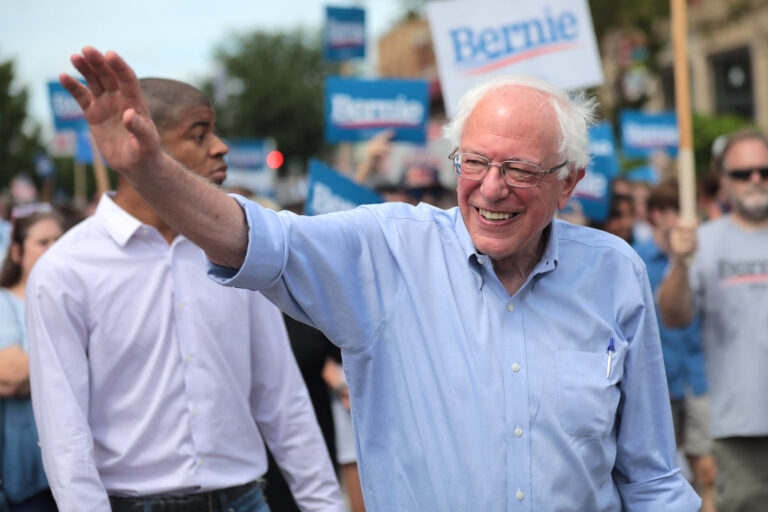
Bernie Sanders Calls Out CNN: A Spotlight on Healthcare and Media

0

Key Takeaways:

  • Bernie Sanders criticizes CNN and corporate media for neglecting key issues like healthcare and income inequality.
  • He addresses the Democratic Party’s failure to challenge corporate interests and support the working class.
  • Sanders highlights the need for media to cover critical issues affecting everyday Americans.
  • A lively exchange with Anderson Cooper during the town hall emphasizes the importance of media accountability.

Senator Sanders Speaks Out on National Issues

Senator Bernie Sanders recently made headlines during a CNN town hall, where he openly criticized the media and political leadership for overlooking critical issues. His focus was on healthcare and the influence of corporate power, sparking a lively debate.

Critique of the Democratic Party

Sanders began by addressing the Democratic Party’s shortcomings. He believes the party has not done enough to stand up against powerful corporations and has failed to create policies that benefit the working class. This, he argued, is a significant reason people are losing trust in the political system.

Healthcare in America: A System Under Scrutiny

The discussion turned to healthcare, an issue close to Sanders’ heart. He asked the audience about their satisfaction with the current healthcare system. Most agreed it’s not working well, a sentiment Sanders emphasized, noting the U.S. is the only wealthy nation without universal healthcare. He criticized corporate media and Congress for not discussing this issue more actively.

A Heated Exchange with Anderson Cooper

The dialogue took an interesting turn when Sanders pushed Cooper to discuss these issues more frequently. Cooper defended CNN, saying they were covering them right then, to which Sanders retorted that he had to force the conversation. This exchange highlighted Sanders’ frustration with media coverage.

The Role of Corporate Influence

Sanders also talked about the significant influence billionaires have on American politics and media, urging change to make the system more equitable. He stressed the need for both media and politicians to address these issues more openly.

Conclusion: A Call for Change

Sanders’ message was clear: the media must do more to cover issues that matter to everyday people. His passionate plea during the town hall underscored the need for accountability and transparency in both politics and media, urging a shift toward a system that truly represents the people’s interests.

Trump’s Tariff Reversal: Economy on Edge?

0

Key Takeaways:

  • Rachel Maddow calls out Trump for chaotic tariff policies and stock market plunges.
  • Nine of the ten worst single-day Dow drops happened under Trump’s presidency.
  • Bond market instability is more dangerous than stock market crashes.
  • Trump paused tariffs after bond market turmoil.
  • U.S. economy relies heavily on bond market stability.

Trump’s Tariff Reversal: Economy on Edge?

Rachel Maddow, a well-known MSNBC host, recently sounded the alarm about President Donald Trump’s latest economic moves. She criticized Trump for his rapid reversal on tariffs, which she says has caused chaos in the financial markets. But what exactly happened, and why should you care?

What Happened Today?

On Wednesday, Maddow pointed out that Trump suddenly paused most of his new tariffs just days after announcing them. This U-turn came after the bond market showed signs of trouble. While stock market drops are common under Trump—nine of the ten worst single-day Dow drops happened during his presidency—the bond market is a much bigger deal.

Why Should You Care?

The bond market is like the backbone of the U.S. economy. It affects everything from mortgage rates to the country’s massive national debt. When the bond market starts to struggle, it’s a red flag for the entire economy. Maddow explained that while stock market crashes are scary, a bond market collapse could lead to severe economic problems.

What’s Next?

Maddow warned that Trump’s tariff policies are creating uncertainty in the markets. She said the stock market “tanked” earlier in the day before Trump announced the tariff pause. While this is normal for a Trump presidency, the bond market’s reaction is more worrying. If the bond market “blows up,” it could mean trouble for the U.S. economy.

Why the Bond Market Matters

The bond market plays a crucial role in how the U.S. economy works. It helps set interest rates for things like home loans and car loans. If the bond market becomes unstable, borrowing money could become more expensive for everyone. This could slow down the economy and make life harder for everyday Americans.


A Closer Look at Trump’s Economic Record

Maddow also highlighted Trump’s track record with the stock market. While Trump often boasts about the market’s performance, the numbers tell a different story. Nine of the ten worst single-day point drops in the Dow Jones happened during his presidency. This suggests that Trump’s policies have caused significant financial instability.

However, the stock market isn’t the only thing to worry about. The bond market, which is less talked about but equally important, is now showing signs of trouble. Maddow compared the bond market to the “spine” of the U.S. economy. If it breaks, the entire system could suffer.


The Bigger Picture

The global economy is already facing challenges, and Trump’s tariff policies are making things worse. Other countries are feeling the impact too, as trade becomes more uncertain. Maddow’s warning is clear: if the bond market collapses, it could lead to a much larger economic crisis.


What’s Next for Trump’s Tariffs?

For now, Trump has paused most of the tariffs for 90 days. This decision came after the bond market’s troubling reaction. But Maddow and many experts are still concerned about the long-term effects of Trump’s economic policies. Will this pause fix the problem, or is it just a temporary solution?

Only time will tell, but one thing is certain: the financial markets are watching Trump’s every move closely. And if the bond market continues to struggle, the U.S. economy could be in for a rough ride.


Stay Informed, Stay Vigilant

As the economic landscape continues to shift, it’s important to stay informed about what’s happening. Rachel Maddow’s warning is a reminder that the health of the U.S. economy depends on more than just the stock market. The bond market, though less visible, is equally critical. If it falters, the consequences could be severe.

For now, Trump’s tariff reversal has bought some time, but the economic challenges ahead are far from over.

IRS in Crisis: Top Officials Quit Amid Controversy

0

Key Takeaways:

  • High-ranking IRS officials resign suddenly.
  • Resign to a controversial data deal with immigration officials.
  • Rachel Maddow highlights concerns about IRS stability.
  • Worries emerge as Tax Day approaches.

IRS in Crisis: Top Officials Quit Amid Controversy

In a striking turn of events, the IRS is facing turmoil as several top officials have resigned unexpectedly. Rachel Maddow recently discussed this on her show, linking the resignations to a contentious deal involving sensitive tax data and immigration officials. As Tax Day looms, concerns about the IRS’s functionality are growing.

What’s Happening at the IRS?

The IRS, a crucial agency for tax collection and enforcement, is seeing an unusual wave of resignations. Among those who have left are the acting commissioner, chief financial officer, chief of staff, and chief risk officer. These resignations have raised eyebrows, suggesting internal conflict.

Why Are Officials Leaving?

Maddow suggested that these resignations might be a sign of opposition to a deal where tax data would be shared with immigration authorities. She implies that these officials may have resigned because they couldn’t stop this deal, indicating a significant internal struggle.

Implications for Taxpayers

With top leaders gone, the IRS’s ability to function smoothly is questionable. As the deadline for filing taxes approaches, there’s worry about potential disruptions. Maddow posed a critical question: What happens if the IRS falters under the current administration?

A Call for Answers

The sudden resignations have sparked concerns about the IRS’s future. Maddow’s questions highlight the need for transparency and accountability. As the situation unfolds, the focus remains on how these changes will affect taxpayers and the agency’s role in the government.

Conclusion

The resignation wave at the IRS signals possible turmoil, with serious implications for taxpayers. As questions mount, the importance of a stable IRS becomes clear. The coming weeks will be crucial in determining the agency’s trajectory and its impact on the nation.

Trump’s Power Checked by Markets and GOP

0

Key Takeaways:

  • President Trump faced major setbacks with global tariffs and a budget vote delay.
  • The stock market downturn and fears about government bonds influenced his decisions.
  • Some Republican allies, like Bill Ackman and Ben Shapiro, criticized his moves.
  • House conservatives refused to support Trump’s tax plan, forcing a delay.

Trump’s Power Gets Tested

President Donald Trump, known for his strong leadership style, recently faced two big challenges. These challenges showed that even he has limits to his power. The first issue was about global tariffs, which caused problems for the stock market. The second was a delay in a budget vote that Trump supported. These events happened by Wednesday afternoon, after Trump had insisted there would be no delays.

Trump had to backtrack after days of saying he wouldn’t give in. The stock market struggles and fears about government bonds made him change his mind. A source close to the White House said worries about panic in the bond market, usually a safe place during economic troubles, were a key reason for Trump’s change.


Republican Allies Question Trump’s Decisions

It wasn’t just the markets that showed Trump’s power has limits. Some of his Republican allies also questioned his decisions. Bill Ackman, a hedge fund manager and Trump supporter, warned of a “self-induced economic nuclear winter.” He even accused Commerce Secretary Howard Lutnick of profiting from a bad economy.

Ben Shapiro, a conservative commentator, also criticized Trump’s handling of the situation. He called it “about as bad a rollout as you can do.” These comments show that even some of Trump’s supporters are concerned about his actions.


House Conservatives Push Back on Tax Plan

Another sign of pushback came from House conservatives. They refused to support Trump’s tax plan, which would have cost $4 trillion. Congressman Andy Harris, a Republican from Maryland, wouldn’t even meet with Trump to discuss it.

Without the support of Harris and other key Republicans, House Speaker Mike Johnson had to delay the vote. He’s now looking for a “Plan B” for the tax plan. This shows that even within Trump’s own party, there are limits to his influence.


A Broader Message

These events send a clear message: Trump’s power is not absolute. The markets and his own party can act as checks on his actions. When Trump showed signs of weakness, even some of his strongest supporters started to question his decisions.

As Rachael Bade noted in her column, this could mean that even Trump’s most loyal supporters might start to act more independently in the future. This could have big implications for Trump’s ability to push through his agenda.


The Reality of Checks and Balances

While Trump is known for his strength and confidence, these recent events remind us that no one is above the system. The economy and political pressure can still influence even the most powerful leaders.

This isn’t the first time Trump has faced pushback, and it won’t be the last. But these latest setbacks are a clear reminder that checks and balances are still alive and well in American politics.


Will This Change Trump’s Approach?

Only time will tell if these challenges will change how Trump operates. But one thing is clear: the markets and his own party have shown they can push back when they disagree with his decisions.

For now, Trump and his team will need to regroup and figure out their next move. One thing they can’t ignore is the message these setbacks send: even for a president as powerful as Trump, there are limits to what he can do.


This article has shown how Trump’s recent challenges highlight the checks on his power from both the markets and his party. It’s a reminder that in politics, even the most powerful leaders face limits.

Budget Vote Chaos: Rep. Goldman Sheds Light on Republican Division

0

Key Takeaways:

  • A budget vote in the U.S. House of Representatives was unexpectedly canceled due to Republican opposition.
  • The bill faced resistance from the House Freedom Caucus, despite President Trump’s support.
  • Rep. Dan Goldman (D-NY) expressed surprise that the opposition came from the right, not moderate Republicans.
  • Potential cuts to Medicaid could impact vulnerable populations.

House Budget Vote Cancelled: What You Need to Know

In a dramatic turn of events, the expected vote on the Senate’s budget blueprint in the U.S. House of Representatives was abruptly canceled on Wednesday evening. This unexpected move came as Republican holdouts refused to support the bill, despite President Trump’s urging to pass it. Rep. Dan Goldman (D-NY) weighed in on the situation, offering insights into the internal Republican divisions that led to the cancellation.

What Happened?

The cancellation of the budget vote was a significant development, revealing deep fractures within the Republican caucus. According to Goldman, the holdouts were primarily members of the House Freedom Caucus, a group known for its conservative stance. These representatives were dissatisfied with the spending cuts proposed in the Senate’s bill, feeling they did not go far enough. Goldman noted that this opposition was surprising, not because of the resistance itself, but because it was the more extreme right wing of the party leading the charge, rather than the moderate Republicans who often voice support for social programs like Medicaid.

What Surprised Rep. Goldman?

Goldman expressed his astonishment at the dynamics within the Republican Party. He pointed out that while the more extreme members were holding out for deeper spending cuts, the moderate Republicans, who often profess concern for programs like Medicaid, Social Security, and Medicare, were willing to support the bill. This willingness to back a budget that could significantly impact these programs seemed contradictory to their usual stance.

“So, I’m not surprised that some Republicans have held out and pushed this off,” Goldman said. “I’m only surprised at which ones it is. It’s not the moderates who they claim to care deeply about programs like Medicaid, Social Security, and Medicare. Yet, they seem willing to throw these programs under the bus with this bill.”

Implications of the Budget Proposal

At the heart of the debate is the proposed budget resolution, which includes significant spending cuts. Goldman has been critical of these cuts, particularly their potential impact on Medicaid benefits. He argued that the proposed reductions would harm vulnerable populations, including low-income families and individuals who rely on these programs for essential healthcare services.

Moreover, Goldman questioned the feasibility of the budget proposal. “The math does not work out,” he said, referring to the projected spending cuts and their potential consequences. He emphasized that the proposed budget would disproportionately affect those who can least afford it, while failing to address the broader fiscal challenges facing the nation.

Why This Matters

The cancellation of the budget vote highlights the deepening divisions within the Republican Party. While the more extreme members of the House Freedom Caucus are pushing for deeper spending cuts, moderate Republicans appear willing to support a budget that could undermine key social programs. This internal conflict raises questions about the future of the Republican Party and its ability to unite behind a common agenda.

For Democrats like Rep. Goldman, the situation underscores the need for a more balanced approach to budget negotiations. He and his colleagues continue to advocate for a budget that protects vital social programs while addressing the nation’s fiscal challenges. As the debate over the budget resolution continues, the stakes remain high for millions of Americans who rely on these programs.

What’s Next?

With the budget vote postponed, the focus now shifts to whether Republican leaders can rally enough support to pass the bill. President Trump has made it clear that he wants the budget approved, and he has been actively involved in trying to persuade holdouts to back the measure. However, as Rep. Goldman noted, the challenges facing the bill go beyond mere arm-twisting. The deeper divisions within the Republican Party over spending cuts and the role of government in social programs will likely continue to shape the debate.

In the coming days and weeks, lawmakers will need to find a way to bridge these divides or risk further delays in the budget process. For now, the cancellation of the budget vote serves as a reminder of the ongoing turmoil in Washington and the difficulties of governing in a deeply divided political landscape.

Conclusion

The sudden cancellation of the House budget vote has thrown a spotlight on the internal conflicts within the Republican Party. While the more extreme members of the House Freedom Caucus are pushing for deeper spending cuts, moderate Republicans seem willing to support a bill that could undermine key social programs. As the debate over the budget resolution continues, the stakes remain high for millions of Americans who rely on these programs. The ongoing turmoil in Washington serves as a reminder of the challenges of governing in a deeply divided political landscape.

White House Halts Spending Transparency Amid Concerns

0

Key Takeaways:

  • The White House stops disclosing spending moves, evading a law from Trump’s first term.
  • This action bypasses Congress’s control over federal funds.
  • Hiding apportionments sparks transparency concerns and risks corruption.
  • This move follows a history of financial opacity, recalling the Ukraine scandal.

A Step Back for Transparency The White House has ceased publishing details of its spending, avoiding a law that grants Congress authority over federal funds. This decision raises concerns about accountability and potential misuse of power. By withholding this information, the administration is making it difficult to track where taxpayer money is being allocated.

History of the Law The law in question, established during Trump’s first term, was designed to ensure transparency and prevent financial misconduct. It mandated the disclosure of apportionments, which detail how funds are distributed. However, the current administration has opted to keep this information secret, citing national security risks. This reversal undermines the law’s intent, which was to enhance transparency after past controversies.

A Risk of Corruption Critics argue that hiding apportionments creates an environment conducive to corruption. The Ukraine scandal is a stark reminder of such risks, where funds were withheld for political leverage. By avoiding transparency, the administration may be setting the stage for similar abuses of power, undermining trust in government operations.

Conclusion The decision to halt spending disclosures is a significant step backward for transparency, echoing past controversies and raising alarms about accountability. As the administration continues this practice, concerns about the appropriate use of taxpayer funds grow, highlighting the need for renewed vigilance in governmental financial practices.

Trump Pushes for $1 Trillion in Spending Cuts

0

Key Takeaways:

  • Trump met with House Speaker Mike Johnson and conservative House members to discuss budget cuts.
  • He emphasized his support for major spending reductions, aiming to allocate savings into a significant bill.
  • The proposed bill combines Trump’s top priorities and requires bipartisan cooperation to pass.
  • The Freedom Caucus may pose a challenge, needing only a few votes to block the measure.

Introduction: President Trump recently met with House Speaker Mike Johnson and conservative House members to discuss significant budget cuts, aiming to allocate over $1 trillion towards key initiatives. This meeting highlights Trump’s efforts to advance his agenda, emphasizing the need for financial prudence and strategic spending.

The Meeting: Trump expressed strong support for major spending cuts during his meeting with Speaker Johnson. He outlined his vision for a comprehensive bill that encapsulates his primary objectives, signaling a commitment to fiscal conservatism. The discussion underscored the urgency of achieving these cuts, reflecting Trump’s proactive approach to financial management.

Challenges Ahead: The path to passing the bill is fraught with challenges. The Freedom Caucus, known for advocating fiscal responsibility, may resist supporting the measure. Given the tight margin in the House, the loss of just a few Republican votes could derail the bill. Bipartisan cooperation is essential for its success, necessitating careful negotiation and compromise.

The Significance of the Budget Bill: This bill is pivotal for Trump’s agenda, representing a cornerstone of his policy initiatives. Its passage would signify a substantial step towards achieving his goals, impacting various sectors and setting a precedent for future fiscal decisions.

A Call to Action: Trump and his allies are urging swift action, emphasizing the importance of immediate approval. The focus is on gathering support to ensure the bill’s passage, underscoring the critical role of political will in overcoming obstacles.

Conclusion: As Trump and conservatives push for these spending cuts, the coming weeks will be crucial. The success of this initiative hinges on collaboration, strategy, and the ability to navigate the complexities of legislative politics. This effort reflects a broader commitment to shaping the nation’s financial future, with significant implications for Trump’s legacy and policy impact.

MAGA Leaders Unleash Fury on McConnell Over Pentagon Nominee Vote

0

Key Takeaways:

  • Vice President JD Vance and other MAGA allies publicly criticized Sen. Mitch McConnell for opposing President Trump’s Pentagon nominee, Elbridge Colby.
  • McConnell was the only Republican to vote against Colby’s confirmation, sparking intense backlash.
  • Colby was confirmed with a 54-45 Senate vote, despite McConnell’s concerns about his foreign policy views.
  • The clash highlights growing divisions within the Republican Party ahead of the 2024 elections.

MAGA Leaders Slam McConnell Over Pentagon Nominee

A heated political battle erupted this week as Vice President JD Vance and other prominent MAGA figures openly criticized Sen. Mitch McConnell for opposing President Trump’s nominee for a top Pentagon position. The clash has deepened tensions within the Republican Party and sparked calls for new leadership.


What Happened: McConnell’s Lone Vote Against Colby

The controversy began when Sen. McConnell voted against Elbridge Colby, President Trump’s choice for the Defense Department’s top policy role. McConnell, a long-time Republican leader, was the only Republican to oppose Colby’s nomination. His decision came as a surprise to many, especially since Colby’s confirmation ultimately passed with a 54-45 vote.

McConnell explained his stance, saying Colby’s views could harm U.S. alliances and partnerships. “Elbridge Colby’s confirmation could do irreparable damage to the system of alliances and partnerships that are critical to our national security,” McConnell said in a statement. He also emphasized that he supports nominees who strengthen U.S. power, not weaken it.


MAGA World Fires Back: Vance Leads the Charge

Vice President JD Vance was quick to respond to McConnell’s vote. In a fiery social media post, Vance accused McConnell of political pettiness. “Mitch’s vote today—like so much of the last few years of his career—is one of the great acts of political pettiness I’ve ever seen,” Vance wrote.

Other MAGA supporters joined Vance in criticizing McConnell. Kentucky businessman Nate Morris called McConnell’s actions “pathetic” and said it’s time for new leadership in the Senate. Rep. Mike Collins of Georgia also expressed support for Vance’s comments, saying, “Glad things are changing.”

Even far-right outlets like Breitbart News weighed in, referring to McConnell as “China-linked Senator Mitch McConnell” and accusing him of betraying the Republican Party. One MAGA follower, David Hardin, went as far as to call McConnell a “traitor.”


Why This Matters: A Clash of Ideologies

The backlash against McConnell reflects a growing divide within the Republican Party. On one side are traditional Republicans like McConnell, who prioritize stability and long-term alliances. On the other side are MAGA supporters, who believe the party needs to take a stronger, more aggressive stance on foreign policy and national security.

McConnell’s opposition to Colby, a well-respected foreign policy expert, has been seen by some as a rejection of Trump’s influence over the party. This has fueled calls for McConnell to step down as a leader and for fresh faces to take over.


The Bigger Picture: Implications for 2024

This clash could have significant implications for the 2024 elections. The Republican Party is still trying to unite after a divisive primary season, and internal conflicts like this could weaken its chances of retaking the White House.

For MAGA supporters, the fight over Colby’s nomination is about more than just one policy position—it’s about the direction of the party. They believe that Republicans need to embrace a more assertive foreign policy and stand firmly behind Trump’s vision for America.

Meanwhile, McConnell and his allies argue that experience and caution are essential in matters of national security. They worry that Colby’s views could alienate key allies and destabilize global partnerships.


What’s Next?

As the debate over Colby’s confirmation continues, the clash between MAGA leaders and McConnell is far from over. This public feud could set the tone for future battles within the Republican Party, especially as the 2024 elections draw closer.

For now, one thing is clear: the Republican Party is at a crossroads, and the outcome of this internal struggle will shape its future for years to come.


This story highlights the ongoing challenges within the Republican Party as it navigates the complexities of leadership, ideology, and unity ahead of the next election cycle.

TTrump’s Net Worth Drops Amid Tariff Fallout

0

Key Takeaways:

  • Trump’s net worth decreases by $500 million, reaching $4.2 billion.
  • Commercial and residential real estate, along with golf courses, are significantly affected.
  • Global investor confidence declines, impacting luxury spending.
  • Tariffs’ indirect effects, rather than direct impact, are the main issue.

Introduction

President Donald Trump’s net worth has recently taken a significant hit, dropping by approximately $500 million, according to a recent report. This change, from $4.7 billion to $4.2 billion, highlights the impact of his tariff policies on his business empire. Let’s explore the implications and reasons behind this decline.


Trump’s Net Worth and Tariffs

The decrease in Trump’s net worth is linked to his tariff announcements. His commercial and residential real estate, along with golf courses, have been particularly affected. These luxury assets are suffering as investor confidence wanes, a common occurrence during economic uncertainty.


The Role of Investor Confidence

Investor confidence plays a crucial role in luxury markets. An industry insider noted that during a recession, people question expensive memberships and investments. This emotional decision-making, rather than logical considerations, is a key factor in Trump’s financial setback. Direct tariffs aren’t the main issue, but the broader economic anxiety they cause is significant.


The Musk-Navarro Feud: A Distraction?

Amid the financial turmoil, a public spat between Elon Musk and Peter Navarro, a Trump advisor, added to the drama. Their feud occurred before the Dow Jones Industrial Average dipped 300 points, underscoring the tense economic climate and its impact on investor sentiment.


What’s Next for Trump’s Businesses?

The future of Trump’s businesses is uncertain as tariffs and economic uncertainty continue. The luxury real estate market, dependent on investor sentiment, faces challenges as people became more cautious with their spending. Trump’s brand, tied to high-end properties, may need to adapt to changing consumer behavior.


Conclusion

The recent drop in Trump’s net worth underscores the broader economic impact of tariff policies. As investor confidence falters, luxury sectors feel the strain. The situation highlights the delicate balance between policy decisions and their effects on high-end markets. Trump’s businesses will need strategic adjustments to navigate this shifting landscape.

Booker’s Big Speech Sparks Ethics Controversy in Senate

0


Key Takeaways:

  • Sen. Cory Booker broke a Senate speaking record with a 25-hour speech.
  • A watchdog group filed a complaint, saying he used the speech for fundraising.
  • They claim this violated Senate ethics rules.
  • The case is now with the Senate ethics committee for review.

Introduction Sen. Cory Booker made headlines last week with his record-breaking 25-hour speech. But now, his actions are raising eyebrows for a different reason. A watchdog group says he broke Senate ethics rules by using the speech to raise campaign money. Let’s dive into the details.

The Record-Breaking Speech Sen. Cory Booker spoke for 25 hours straight. His speech was about issues he cares about and wanted to highlight. By breaking the Senate speaking record, he grabbed attention from across the country.

But the excitement didn’t last long. A group called the Foundation for Accountability and Civic Trust (FACT) filed a complaint. They say Booker crossed a line by using his speech for political gain.

The Watchdog’s Complaint FACT is a nonprofit group that aims to hold public officials accountable. They filed their complaint with the Senate ethics committee. In it, they say Booker used his speech to promote his political campaign.

According to FACT, this is against Senate rules. Senators are not allowed to use official actions like speeches for personal or political gain. They claim Booker’s actions violated these rules.

What’s at Stake? The Senate ethics committee will now review the complaint. If they find Booker violated the rules, there could be consequences. These might include a warning, a fine, or even a formal rebuke.

Booker’s team hasn’t commented yet. But supporters argue that the speech was about important issues, not fundraising. They say the complaint is an overreaction.

A Closer Look at Senate Ethics Rules Senate ethics rules are in place to ensure fairness and transparency. They prevent senators from using their positions for personal benefit.

For example, senators can’t use official photos or videos for campaign ads without permission. They also can’t ask for donations during official speeches or events.

FACT argues that Booker’s speech crossed this line. They say by linking his speech to campaign fundraising, he misused his position.

What Happens Next? The Senate ethics committee will review the complaint. They’ll decide whether Booker broke the rules. If they find evidence, they’ll take action.

This isn’t the first time a senator has faced ethics questions. But it’s a rare case of using a speech for fundraising.

The Bigger Picture This controversy raises questions about where the line is drawn. When does a senator’s official work become political campaigning?

It also highlights the challenges of enforcing ethics rules in politics. Deciding what’s allowed and what’s not can be tricky.

Conclusion Sen. Cory Booker’s record-breaking speech made history, but it also sparked controversy. The watchdog group’s complaint accuses him of breaking ethics rules. The Senate ethics committee will now investigate.

If the complaint moves forward, it could set a new precedent for Senate behavior. For now, Booker’s team remains silent as the case unfolds.

This story shows how even actions with good intentions can lead to ethical questions. It’s a reminder of the fine line politicians must walk between public service and personal ambition.