


The United States has intensified its maritime counter-narcotics campaign in 2026 following another US military strike on a suspected drug boat in the eastern Pacific. The operation, confirmed by defense officials, has renewed scrutiny over the scale and consequences of using lethal force in international waters.
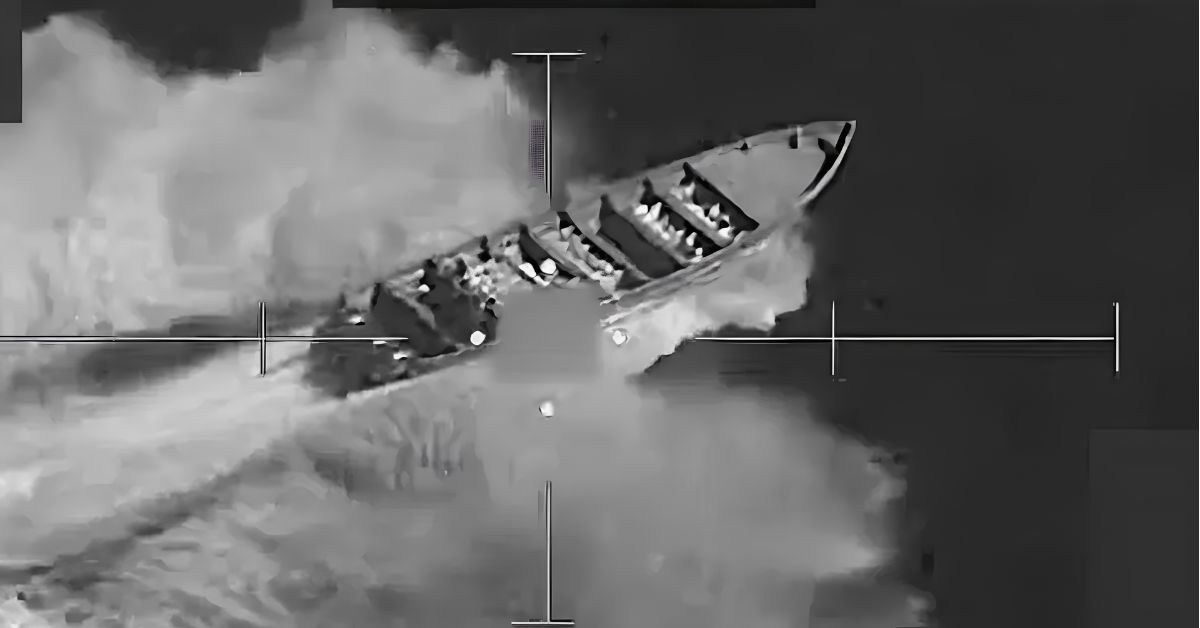
The latest US military strike targeted a vessel described by authorities as operating along a known trafficking corridor. Military footage released shortly after the incident showed a precision munition hitting the boat, which later caught fire. Officials said no American personnel were injured during the engagement.
The incident is part of a broader pattern. Since early autumn, the US military strike campaign against suspected trafficking vessels has reportedly resulted in at least 148 fatalities. That number has become central to a widening debate about legality, accountability and long-term strategy.
Background to the US military strike campaign
The current maritime operations represent a significant evolution in how the United States confronts narcotics trafficking at sea. Historically, law enforcement agencies such as the Coast Guard focused on interdiction, boarding vessels and arresting suspects. The shift toward repeated US military strike actions signals a more aggressive posture.
Officials argue that traffickers have adapted to conventional enforcement tactics. High-speed boats, remote ocean routes and encrypted communications have made interception more complex. As a result, the US military strike strategy is framed by authorities as a preventive measure designed to disrupt supply chains before narcotics reach North American shores.
According to defense briefings, intelligence assessments have identified specific maritime corridors used by transnational criminal networks. The suspected drug boat targeted in the most recent US military strike was reportedly traveling through one such corridor.
While supporters say the operations demonstrate resolve against organized crime, critics question whether lethal measures are proportionate when compared with traditional enforcement tools.
The suspected drug boat and operational details
The vessel destroyed in the latest US military strike was described as a low-profile craft consistent with those used by trafficking groups. Defense officials stated that surveillance assets tracked the boat for several hours before engagement.
Video evidence released publicly depicted a single impact followed by flames engulfing the structure. The Pentagon characterized the operation as precise and intelligence-driven. However, detailed information regarding the individuals aboard the suspected drug boat has not been disclosed.
This lack of transparency has fueled debate. Human rights advocates argue that without judicial proceedings or public evidence, it is difficult to verify whether every casualty linked to a US military strike was directly involved in criminal activity.
Military spokespeople have maintained that the threshold for action is high and that the suspected drug boat met operational criteria under established rules of engagement. Yet, as the US military strike campaign expands, demands for clearer explanations have intensified.
Legal implications of repeated US military strike actions
The legal framework governing maritime operations is complex. International law permits certain forms of interdiction, particularly when vessels are stateless or engaged in universally recognized criminal conduct. However, the use of lethal force in international waters raises additional considerations.
Legal scholars note that each US military strike must satisfy principles of necessity and proportionality. If a suspected drug boat posed no imminent threat to American forces, questions arise about whether non-lethal interception was feasible.
Supporters argue that traffickers sometimes destroy evidence or flee at high speeds, limiting the window for boarding operations. In such cases, officials say, a US military strike may be considered the most effective means of disruption.
Opponents counter that lethal maritime action sets a precedent. If the United States normalizes the use of military force against criminal suspects on the high seas, other nations may adopt similar approaches. That possibility has introduced broader concerns about the erosion of maritime norms.
Strategic rationale behind the US military strike approach
The United States faces a severe drug crisis, with overdose deaths linked to fentanyl and other synthetic opioids continuing to dominate public health discussions. Policymakers have increasingly framed narcotics trafficking as a national security issue.
In that context, the US military strike campaign is presented as a method of targeting supply networks before drugs reach domestic markets. Officials argue that dismantling transport vessels at sea disrupts cartel finances and signals deterrence.
Yet experts caution that illicit markets are resilient. When one trafficking route is blocked, alternative paths often emerge. Critics question whether repeated US military strike operations significantly reduce overall drug availability or simply shift the geography of smuggling.
Some analysts also highlight cost considerations. Military deployments, surveillance technology and precision munitions represent substantial expenditures. Whether the financial outlay produces measurable long-term gains remains a subject of policy debate.
Human rights concerns and accountability
Human rights organizations have raised concerns about the cumulative impact of the US military strike campaign. With at least 148 reported fatalities since September, advocates are calling for independent review mechanisms.
One central issue is verification. Without public disclosure of targeting criteria, it is challenging for external observers to assess the legitimacy of each US military strike. Families of those killed may have limited avenues to challenge official narratives.
Defense officials insist that oversight mechanisms exist within the chain of command and through congressional review. However, critics argue that internal processes do not substitute for transparent judicial evaluation.
The debate extends beyond immediate casualties. Experts warn that communities in Latin America and the Caribbean could perceive the US military strike campaign as unilateral, potentially straining diplomatic ties.
Regional diplomatic implications of the US military strike operations
Cooperation between the United States and regional partners has long underpinned maritime counter-narcotics efforts. Joint patrols, intelligence sharing and extradition agreements have formed the backbone of anti-trafficking strategy.
The expansion of US military strike actions introduces new dynamics. Governments in the region may face domestic pressure to clarify their stance on lethal maritime operations conducted near shared waters.
So far, there have been no public diplomatic ruptures linked directly to a US military strike. Nevertheless, analysts caution that sustained lethal engagements could reshape perceptions of sovereignty and partnership.
Regional leaders are likely monitoring how the United States balances operational objectives with respect for international legal frameworks.
Domestic political context surrounding the US military strike policy
Within the United States, border security and narcotics control remain politically charged issues. Advocates of the US military strike campaign argue that decisive maritime action demonstrates commitment to confronting organized crime.
They contend that targeting suspected drug boat networks upstream reduces the burden on domestic law enforcement. For supporters, each US military strike represents proactive defense rather than reactive policing.
Opponents question whether military force should be deployed in what has traditionally been a law enforcement domain. Some lawmakers have called for expanded investment in treatment programs and demand-reduction strategies instead of focusing primarily on supply disruption.
The domestic debate reflects broader questions about the evolving role of the armed forces in addressing non-traditional threats.
Intelligence and operational secrecy
Officials emphasize that intelligence drives every US military strike decision. Surveillance platforms, maritime patrol aircraft and satellite systems contribute to target identification.
However, much of the underlying intelligence remains classified. This secrecy is defended as necessary to protect sources and methods. Yet it also complicates public understanding of how suspected drug boat targets are selected.
Transparency advocates argue that limited disclosure does not necessarily compromise operational security. They propose releasing anonymized data or independent assessments following each US military strike to enhance credibility.
Balancing confidentiality with accountability is likely to remain a central challenge as the campaign continues.
Measuring effectiveness of the US military strike strategy
Quantifying the impact of repeated US military strike operations is difficult. Drug trafficking networks operate across continents, and supply chains adjust rapidly to enforcement pressures.
Economists studying illicit markets note that supply disruption can temporarily elevate prices, but long-term elimination of trafficking organizations requires multifaceted approaches. Those approaches often include financial sanctions, intelligence cooperation and community-level prevention initiatives.
If the US military strike campaign significantly disrupts maritime routes, traffickers may pivot toward alternative corridors or methods. Monitoring these shifts will be crucial to evaluating whether the strategy achieves sustained outcomes.
Broader security implications
The normalization of repeated US military strike actions against criminal enterprises could influence global security doctrine. Other states confronting piracy, smuggling or organized crime may cite similar justifications.
International maritime law has historically emphasized freedom of navigation and regulated use of force. The expanded use of US military strike operations introduces new interpretations of how force applies outside declared armed conflict.
Observers suggest that the precedent set in the eastern Pacific could reverberate in other contested waters worldwide.
Public reaction and media scrutiny
Public response to the US military strike campaign has been divided. Some citizens view the approach as a necessary defense against networks responsible for addiction and violence.
Others question whether lethal action without courtroom proceedings aligns with democratic principles. The suspected drug boat narrative underscores this tension, as information about those onboard remains limited.
Media outlets have increasingly scrutinized casualty figures and operational transparency. As the number of fatalities linked to US military strike actions grows, coverage is likely to intensify.
Future trajectory of the US military strike campaign
Defense officials have not indicated any immediate scaling back of maritime operations. Instead, they describe the current phase as part of a sustained effort to deter trafficking networks.
If the US military strike campaign continues at its present pace, additional legal and diplomatic scrutiny is expected. Congressional hearings may examine oversight structures and strategic effectiveness.
At the same time, regional cooperation mechanisms could adapt to address concerns raised by repeated lethal engagements.
Conclusion: a defining moment for US military strike policy
The latest US military strike on a suspected drug boat in the eastern Pacific underscores a pivotal shift in American counter-narcotics strategy. With at least 148 reported deaths tied to the broader campaign, the stakes are high.
Supporters argue that the US military strike approach disrupts supply chains and demonstrates resolve. Critics warn of legal ambiguity, diplomatic sensitivity and uncertain long-term impact.
As policymakers weigh effectiveness against accountability, the trajectory of the US military strike campaign will likely shape debates about national security, maritime law and human rights for years to come.