

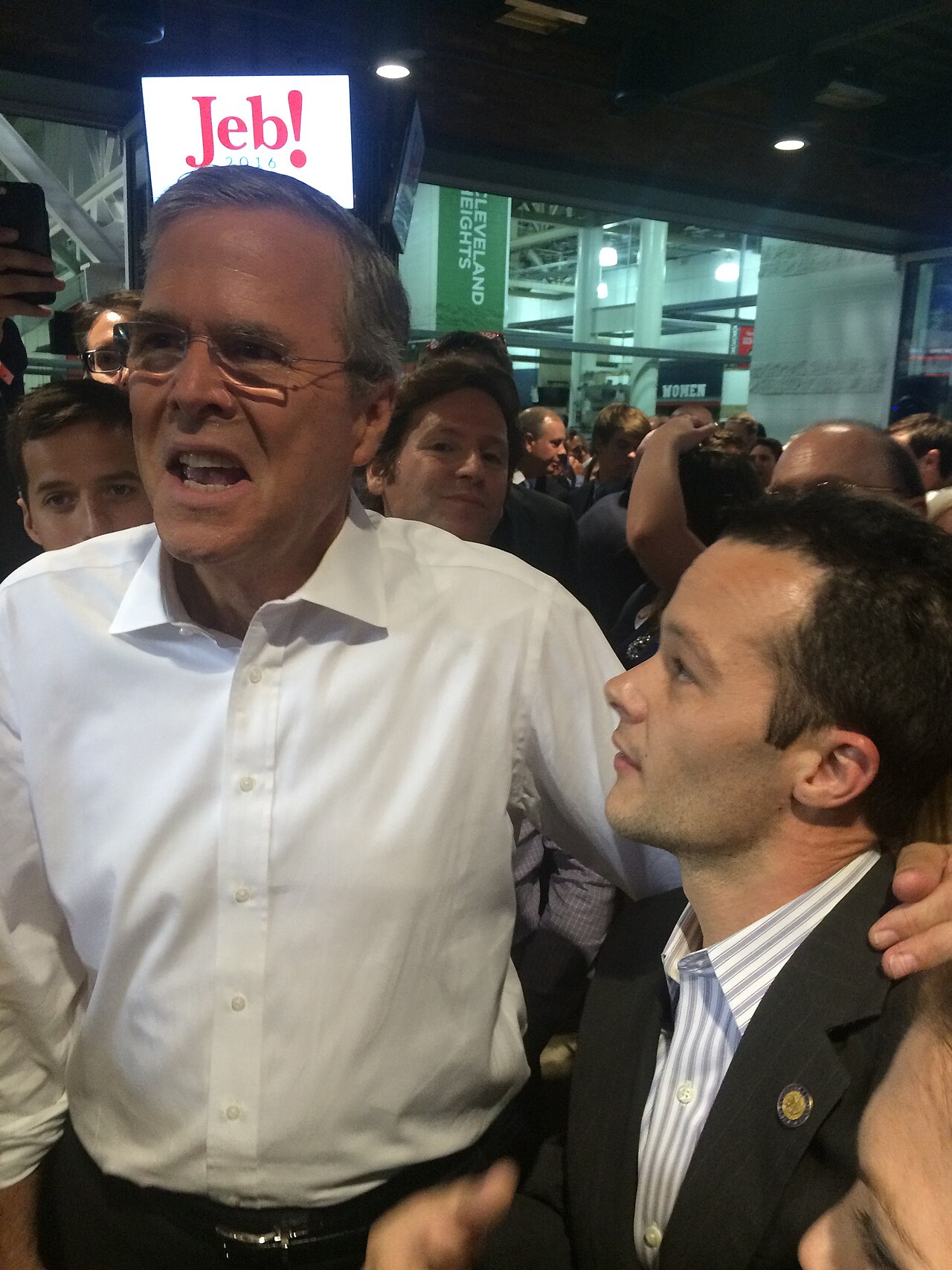

Quick Summary: Rick Jackson Upsets Burt Jones in Georgia Runoff, Exposing Limits of Trump and Kemp Endorsements
- Rick Jackson defeated Burt Jones by five points in Georgia’s Republican governor runoff, despite Jones having endorsements from Trump and Kemp.
- Jackson’s victory highlighted the limits of high-profile endorsements, as Kemp’s picks failed to secure wins.
- Mike Collins leveraged a Trump endorsement to win the Republican Senate runoff by 11 points over Derek Dooley.
- Fulton County saw Mo Ivory defeat Robb Pitts in the Democratic runoff for commission chair, with a decisive 66% to 34% margin.
- The election results set the stage for critical November contests, including Jackson versus Keisha Lance Bottoms for governor.
Source: Read original article
Georgia’s recent runoff elections have sent shockwaves through the state’s political landscape, as Rick Jackson’s unexpected victory over Burt Jones in the Republican governor runoff defied the expectations set by high-profile endorsements from Donald Trump and Governor Brian Kemp. Jackson’s triumph, achieved by a five-point margin, underscores a significant shift in voter sentiment, challenging the influence of traditional political endorsements.
Jackson’s win was not the only surprise of the night. In the Republican Senate runoff, Mike Collins capitalized on a last-minute endorsement from Trump to secure an 11-point victory over newcomer Derek Dooley. This outcome further emphasizes the unpredictable nature of Georgia’s political climate, where outsider candidates are gaining traction against established figures.
Adding to the drama, Fulton County’s Democratic runoff saw Mo Ivory decisively oust longtime incumbent Robb Pitts for the commission chair position. This result, marked by a 66% to 34% margin, signals a broader desire for change among voters, rejecting establishment politics in favor of new leadership.
As Georgia gears up for the November general elections, the stakes are higher than ever. Rick Jackson will face off against Democrat Keisha Lance Bottoms in a race that promises to be fiercely contested. Meanwhile, Mike Collins will challenge Democratic Senator Jon Ossoff, with the outcome potentially influencing the balance of power in the U.S. Senate. These contests are set to shape the future of Georgia’s political landscape, as the state remains a pivotal battleground in national politics.
WABE’s June 17 reporting says Jackson beat Jones by about five points in the Republican governor runoff, after spending more than $100 million and surviving a late campaign burst from Jones, who had poured tens of millions into his own bid and secured backing from Trump and Kemp in the final stretch. WABE previewed the June 16 election on June 16 itself, highlighting the governor and Senate runoffs as the top-ticket contests and warning that Trump’s and Kemp’s interventions could prove decisive.
” The county-level story was also dramatic in Fulton County, where former commissioner Mo Ivory crushed longtime incumbent Robb Pitts in the Democratic runoff for commission chair, 66% to 34%, according to WABE. 5%, a close call that reflected real dissatisfaction over literacy and Woods’ standing with lawmakers.
Then on June 17, the results showed the opposite in the governor’s race and a Trump-powered breakthrough in the Senate race, underscoring that the same endorsement politics produced very different outcomes depending on the candidate and electorate. What happens next is immediate and consequential: Jackson now faces Bottoms in the November 3 general election for governor, and Collins heads into a nationally watched Senate race against Ossoff, while the winners for lieutenant governor and secretary of state move into general-election matchups that will shape Georgia’s elections, schools and utility regulation.
Jon Ossoff and Libertarian Allen Buckley, in a contest WABE described as crucial to Senate control because Republicans hold only a narrow majority. , after criticizing Pitts during the primary, still endorsed him in the runoff; voters rejected that establishment alignment anyway.
Georgia’s June 16 runoff scrambled the state’s highest-stakes races in one night, with billionaire Rick Jackson knocking off Burt Jones despite Jones having endorsements from both Donald Trump and Gov. Mike Collins turned Trump’s last-minute endorsement into what WABE called an 11-percentage-point victory over political newcomer Derek Dooley.
This result, marked by a 66% to 34% margin, signals a broader desire for change among voters, rejecting establishment politics in favor of new leadership. 5%, a close call that reflected real dissatisfaction over literacy and Woods’ standing with lawmakers.
In the Republican Senate runoff, Mike Collins capitalized on a last-minute endorsement from Trump to secure an 11-point victory over newcomer Derek Dooley. Jon Ossoff and Libertarian Allen Buckley, in a contest WABE described as crucial to Senate control because Republicans hold only a narrow majority.
, after criticizing Pitts during the primary, still endorsed him in the runoff; voters rejected that establishment alignment anyway. Georgia’s June 16 runoff scrambled the state’s highest-stakes races in one night, with billionaire Rick Jackson knocking off Burt Jones despite Jones having endorsements from both Donald Trump and Gov.
The scale and speed of this development has caught many observers off guard. Each new update adds another dimension to a story that is still unfolding, and the full picture will only become clear as more verified details emerge from the people and institutions directly involved.
Analysts who have tracked this issue closely say the current moment represents a genuine turning point. The decisions made in the coming weeks are expected to set the direction for months ahead, with ripple effects likely to extend well beyond the immediate actors in the story.
For those directly affected, the practical impact is already visible. People navigating this fast-changing situation are dealing with real consequences while new information continues to reshape what is known and what remains open to interpretation.
Historical parallels offer some context, though experts caution against drawing too close a comparison. Similar situations have played out before, but the specific combination of pressures, personalities, and timing here makes this moment distinct in ways that matter for how it ultimately resolves.
The political and economic dimensions of this story are deeply intertwined. What appears as a single event on the surface is in practice the convergence of multiple pressures that have been building quietly over a longer period than most public reporting has captured.