

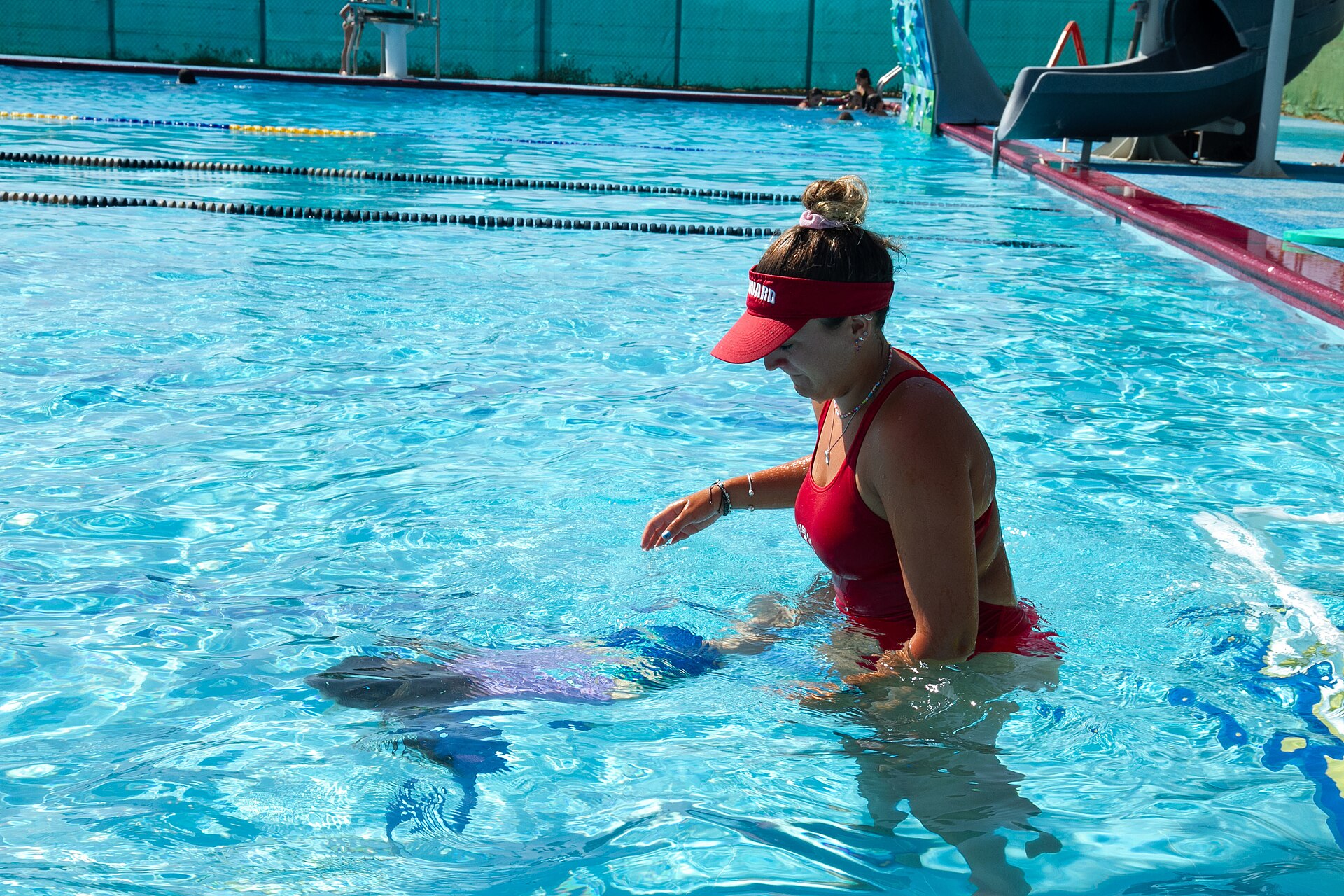

Quick Summary: Experts Highlight Lifeguard Shortages as Child Drowning Rates Rise
- Child drowning deaths increased from 756 in 2019 to 865 in 2024, marking a concerning rise.
- Dr. Rohit Shenoi emphasizes the urgency of quick rescue and resuscitation in drowning cases.
- Pandemic disruptions like interrupted swimming lessons and lifeguard shortages are cited as contributing factors.
- Drowning is the leading cause of death for children ages 1 to 4, highlighting the severity of the issue.
- Preliminary data for 2025 suggests a potential decline in child drownings, but uncertainty remains.
Source: Open external resource
Source: Read original article
The alarming rise in child drowning deaths in the U.S. has sparked a renewed call to action from pediatric and public health experts. With deaths climbing from 756 in 2019 to 865 in 2024, the urgency for water safety has never been clearer.
Dr. Rohit Shenoi, leading the charge, stresses that when it comes to drowning, every second counts. Quick rescue and resuscitation can mean the difference between life and death. This isn’t just about swim lessons; it’s about immediate adult supervision and preparedness.
Contributing to this crisis are pandemic-related disruptions. Swimming lessons were halted, lifeguard training programs were disrupted, and the nation faced a lifeguard shortage. These factors, coupled with increased pool construction, have weakened safety measures.
Drowning remains the leading cause of death for children ages 1 to 4, with significant disparities affecting minority communities. While preliminary data for 2025 suggests a decline, experts caution against complacency.
As summer approaches, the focus is on immediate action: promoting swim lessons, ensuring direct supervision, and enhancing pool safety measures. The message is clear—families must prioritize water safety to prevent further tragedies.
The Daily Herald’s latest version of the story, published July 4, 2026 and credited to AP reporter Mike Stobbe, centers on new alarm from pediatric and public-health experts after child drowning deaths rose from 756 in 2019 to 865 in 2024, the latest year with complete national data. ” Stew Leonard, now 71, said, “There were a couple of balloons floating in the water,” and then, after the adults realized the boy was missing, “Unfortunately I was the one who found him.
data for 2025 suggests child drownings may have declined. In terms of timeline, the key developments this past week are the publication of the renewed warning on July 4, 2026 in the Daily Herald and other outlets, and the public rollout of doctors’ message tied to recent American Academy of Pediatrics guidance.
The most emotionally powerful new detail comes from the Leonard family, whose son Stewie drowned at 21 months during a 1989 family vacation in St. The report says unintentional child drowning deaths had fallen from roughly 2,000 a year in the 1980s to below 1,000 by the early 2000s, and officials had recorded a 38% drop between 2000 and 2019, which makes the recent rebound the central and most newsworthy turn.
Nationally, about 4,000 to 5,000 Americans drown each year, most of them adults in natural bodies of water, but the article stresses that, statistically, drowning is a much bigger danger to children. Tessa Clemens, the CDC Foundation’s senior director for drowning prevention initiatives, points to several pandemic-era disruptions: swimming lessons were interrupted, lifeguard training programs were disrupted, and the country experienced a lifeguard shortage.
child drowning deaths have climbed well above pre-pandemic levels, prompting doctors to issue a fresh warning that families need to treat water safety as an immediate, everyday prevention issue rather than a seasonal concern. That uncertainty is a major part of what makes the story current now: health officials are warning against reading one early data point as proof the problem has been solved.
While preliminary data for 2025 suggests a decline, experts caution against complacency. The Daily Herald’s latest version of the story, published July 4, 2026 and credited to AP reporter Mike Stobbe, centers on new alarm from pediatric and public-health experts after child drowning deaths rose from 756 in 2019 to 865 in 2024, the latest year with complete national data.
” Stew Leonard, now 71, said, “There were a couple of balloons floating in the water,” and then, after the adults realized the boy was missing, “Unfortunately I was the one who found him. In terms of timeline, the key developments this past week are the publication of the renewed warning on July 4, 2026 in the Daily Herald and other outlets, and the public rollout of doctors’ message tied to recent American Academy of Pediatrics guidance.
Doctors want more families to be prepared – Daily Herald Child drowning deaths increased from 756 in 2019 to 865 in 2024, marking a concerning rise. Nationally, about 4,000 to 5,000 Americans drown each year, most of them adults in natural bodies of water, but the article stresses that, statistically, drowning is a much bigger danger to children.
Tessa Clemens, the CDC Foundation’s senior director for drowning prevention initiatives, points to several pandemic-era disruptions: swimming lessons were interrupted, lifeguard training programs were disrupted, and the country experienced a lifeguard shortage. child drowning deaths have climbed well above pre-pandemic levels, prompting doctors to issue a fresh warning that families need to treat water safety as an immediate, everyday prevention issue rather than a seasonal concern.
Rohit Shenoi, leading the charge, stresses that when it comes to drowning, every second counts. This isn’t just about swim lessons; it’s about immediate adult supervision and preparedness.
The scale and speed of this development has caught many observers off guard. Each new update adds another dimension to a story that is still unfolding, and the full picture will only become clear as more verified details emerge from the people and institutions directly involved.
Analysts who have tracked this issue closely say the current moment represents a genuine turning point. The decisions made in the coming weeks are expected to set the direction for months ahead, with ripple effects likely to extend well beyond the immediate actors in the story.
For those directly affected, the practical impact is already visible. People navigating this fast-changing situation are dealing with real consequences while new information continues to reshape what is known and what remains open to interpretation.
Historical parallels offer some context, though experts caution against drawing too close a comparison. Similar situations have played out before, but the specific combination of pressures, personalities, and timing here makes this moment distinct in ways that matter for how it ultimately resolves.
The political and economic dimensions of this story are deeply intertwined. What appears as a single event on the surface is in practice the convergence of multiple pressures that have been building quietly over a longer period than most public reporting has captured.