

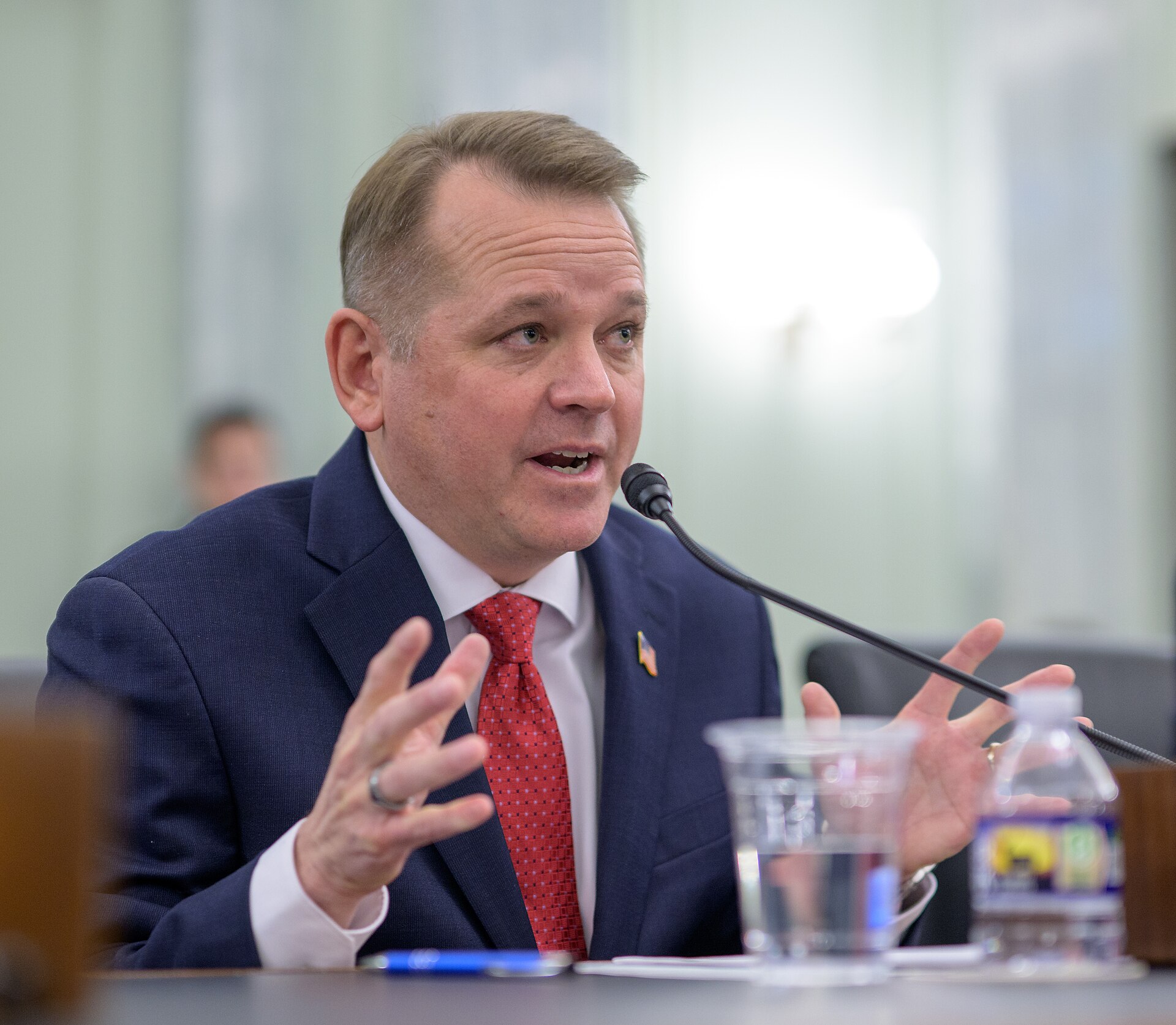

Quick Summary: Senate Confirms Clayton, Ending Pultes Interim Tenure in Intelligence
- The Senate confirmed Jay Clayton as Director of National Intelligence with a 51-47 vote, ending Bill Pulte’s interim tenure.
- Clayton’s confirmation came amid controversy over his refusal to acknowledge Biden’s 2020 election win during hearings.
- Democrats expressed concern over Clayton’s potential influence on intelligence to fit political narratives.
- Republicans emphasized the need for a confirmed leader amid national security concerns and surveillance debates.
- Clayton’s confirmation is expected to address the deadlock over election integrity and surveillance powers.
Source: Open external resource
Source: Read original article
In a move that has stirred political waters, Jay Clayton has been confirmed as the Director of National Intelligence. The Senate’s 51-47 vote ends Bill Pulte’s contentious interim tenure and places Clayton at the helm of the intelligence community during a time of heightened debate over surveillance powers and election-related intelligence.
Clayton’s confirmation was anything but smooth. At his hearing, he dodged direct acknowledgment of President Biden’s 2020 election victory, a stance that alienated many Democrats who had initially been open to his nomination. This refusal to affirm the election results turned what could have been a routine confirmation into a heated political battle, raising questions about Clayton’s ability to keep intelligence unbiased.
Republicans, led by figures like John Thune, argued that Clayton’s leadership was crucial amid a heightened threat environment. They criticized Democrats for delays, linking the leadership vacuum to broader national security concerns, including the expiration of key surveillance authorities.
As Clayton steps into his role, the focus will be on whether he can stabilize the Office of the Director of National Intelligence (ODNI) and help resolve ongoing disputes over surveillance and election integrity. His ability to reassure skeptics and maintain the independence of intelligence analysis will be under close scrutiny.
Ultimately, Clayton’s confirmation marks a pivotal moment in the ongoing struggle between political influence and the integrity of intelligence operations. As the midterms approach, his leadership will be tested on whether he can navigate these turbulent waters without bending to political pressures.
AP reported that the Senate voted 51-43 on Monday to advance Clayton before the final confirmation, and CBS reported that the Senate Intelligence Committee had earlier moved him to the floor on a 9-8 party-line vote. The most important new development is that Clayton’s confirmation ends the politically explosive interim tenure of Pulte and puts a Senate-confirmed official atop the intelligence community just as lawmakers are fighting over surveillance powers and election-related intelligence.
The central controversy driving the story is Clayton’s performance at his confirmation hearing two weeks ago, where he repeatedly declined to say Biden won in 2020. CBS reported that Clayton said only that Biden was “certified” and that he is “not an election denier,” an answer that alienated Democrats who had initially been open to his nomination.
Thune said on the floor, “Amid a heightened threat environment, having a proven leader in this role is especially important,” and accused Democrats of delay even though they had criticized Pulte. CBS separately reported that the Section 702 authority expired on June 12 after Democrats abandoned a deal amid outrage over Pulte’s appointment.
AP said lawmakers wanted a permanent director “as the midterm elections approach,” while Thune explicitly said, “We will have a permanent director of national intelligence in place shortly,” and expressed hope that this would “encourage my colleagues to stop blocking reauthorization” of FISA. In practical terms, the next test for Clayton will be whether he can reassure skeptics that intelligence professionals will be insulated from political demands while also helping the administration and Congress confront the unresolved Section 702 fight that Pulte’s appointment helped inflame.
Mark Warner, the Virginia Democrat who serves as vice chair of the Senate Intelligence Committee, captured that concern most sharply after the vote. That sequence matters because Republicans had been pressing to replace Pulte quickly, while Democrats, despite opposing Clayton, had also signaled they trusted him more than the acting director.
Clayton’s confirmation came amid controversy over his refusal to acknowledge Biden’s 2020 election win during hearings. The central controversy driving the story is Clayton’s performance at his confirmation hearing two weeks ago, where he repeatedly declined to say Biden won in 2020.
CBS reported that Clayton said only that Biden was “certified” and that he is “not an election denier,” an answer that alienated Democrats who had initially been open to his nomination. Thune said on the floor, “Amid a heightened threat environment, having a proven leader in this role is especially important,” and accused Democrats of delay even though they had criticized Pulte.
The scale and speed of this development has caught many observers off guard. Each new update adds another dimension to a story that is still unfolding, and the full picture will only become clear as more verified details emerge from the people and institutions directly involved.
Analysts who have tracked this issue closely say the current moment represents a genuine turning point. The decisions made in the coming weeks are expected to set the direction for months ahead, with ripple effects likely to extend well beyond the immediate actors in the story.
For those directly affected, the practical impact is already visible. People navigating this fast-changing situation are dealing with real consequences while new information continues to reshape what is known and what remains open to interpretation.
Historical parallels offer some context, though experts caution against drawing too close a comparison. Similar situations have played out before, but the specific combination of pressures, personalities, and timing here makes this moment distinct in ways that matter for how it ultimately resolves.
The political and economic dimensions of this story are deeply intertwined. What appears as a single event on the surface is in practice the convergence of multiple pressures that have been building quietly over a longer period than most public reporting has captured.