

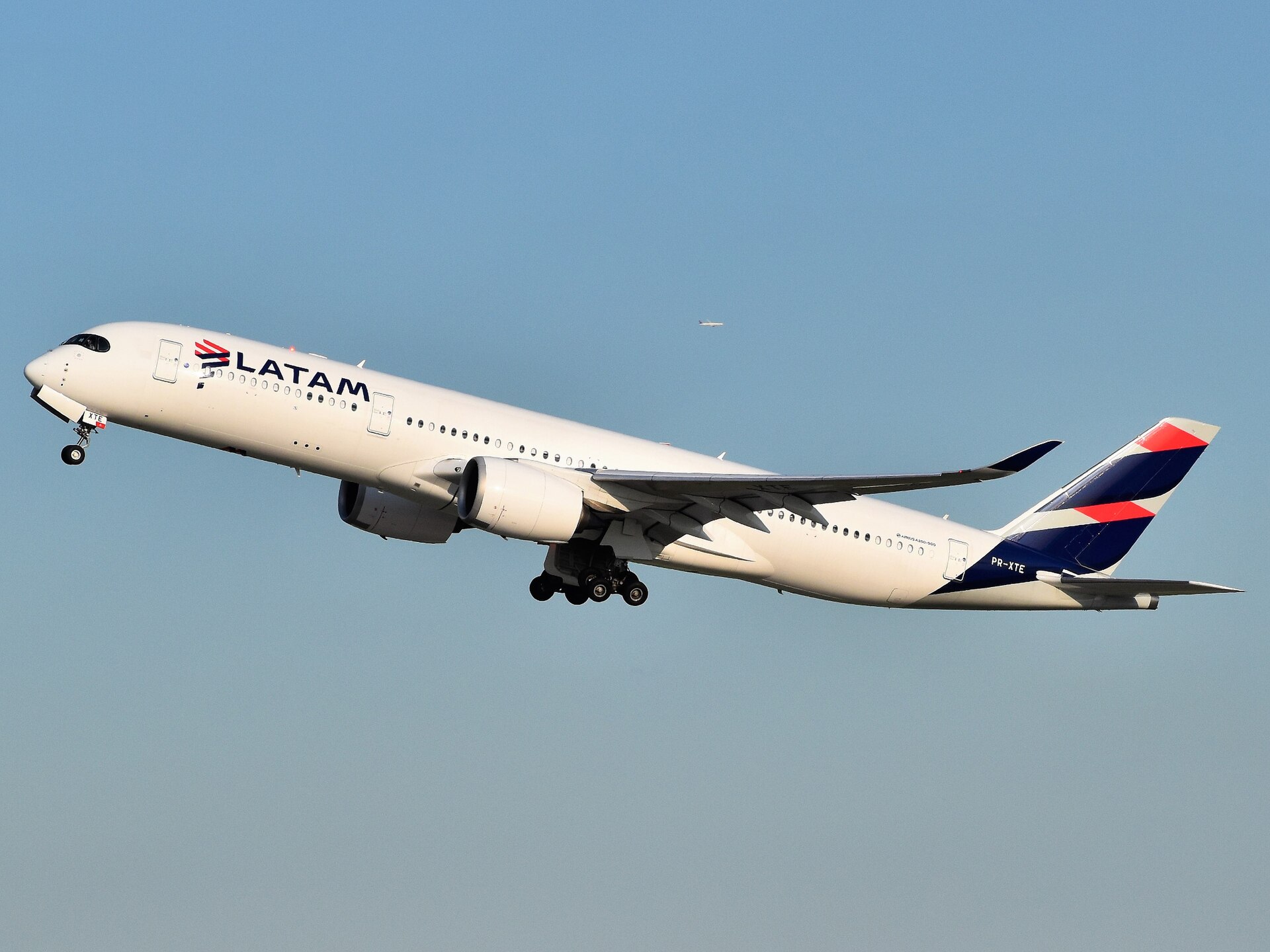

Quick Summary: LATAM Airlines Cuts July Capacity Amid Rising Fuel Costs
- LATAM Airlines plans to cut July capacity by 3% due to rising fuel costs, which has led to a 20%-30% increase in Brazilian market prices.
- International seat capacity in Latin America decreased by 2.1% year over year, tightening the market.
- Passenger ticket revenues are expected to rise by 9.2% to $839 billion in 2026, with jet fuel costs projected at $152 per barrel.
- The low-cost carriers like Volaris and Viva Aerobus offer lower entry prices, but traditional airlines are clustering at higher fare levels.
- LATAM remains the largest airline in the region, increasing its seat capacity by 3.7% from July 2025.
Source: Open external resource
Source: Read original article
The aviation landscape in Latin America is undergoing a significant shift, with airlines like LATAM, Avianca, and Aeroméxico spearheading a new era of dynamic pricing. As fuel costs soar and international demand remains robust, these carriers are adjusting their strategies to maintain profitability.
LATAM Airlines, in particular, has made headlines by announcing a 3% reduction in July capacity due to higher fuel prices, resulting in a 20%-30% fare increase in Brazil. This move underscores a broader trend where airlines are leveraging dynamic pricing to navigate the volatile market conditions. Despite the challenges, international demand remains strong, with Latin America seeing a slight decrease in seat capacity, further tightening the market.
The International Air Transport Association (IATA) forecasts a 9.2% rise in passenger ticket revenues to $839 billion by 2026, driven by a 7% increase in passenger yields. This comes amid rising jet fuel costs, projected to average $152 per barrel, nearly 70% higher than in 2025. As airlines grapple with these pressures, low-cost carriers like Volaris and Viva Aerobus continue to offer competitive entry prices, while traditional network airlines maintain higher fare levels.
LATAM continues to dominate the regional market, expanding its seat capacity by 3.7% from July 2025. However, the ongoing debate centers on whether fare hikes are a necessary response to rising costs or a strategic play to maximize profits. As the industry navigates these turbulent times, the focus remains on balancing capacity discipline with consumer expectations.
The most concrete number in the latest reporting comes from LATAM’s Brazil unit: CEO Jerome Cadier told Reuters in June that the airline would trim July capacity by about 3% versus its original plan because of higher fuel costs, and he said prices in the Brazilian market had already risen by 20% to 30%. 2% to $839 billion in 2026, passenger yields up 7%, and jet fuel averaging $152 a barrel, up almost 70% from $90 in 2025.
8%, showing airlines are filling planes but not necessarily minting huge profits. If jet fuel remains near IATA’s projected $152 a barrel and airlines keep capacity disciplined, the likeliest near-term outcome is more fare firmness, especially on cross-border leisure routes where travelers are booking around marquee events and school holidays.
What happens next is less about a vote or hearing than about whether July and August booking data confirm that airlines can hold the line on higher yields through the northern summer and deeper into the World Cup run-up. ” Reuters also reported that LATAM still saw strong demand in Brazil and stable forward bookings, even after some more price-sensitive travel segments weakened, suggesting the airlines are testing how far they can push yields without breaking demand.
The broader market data now reinforce that story. Director General Willie Walsh put the squeeze bluntly: “Airlines are bearing the brunt of the fuel price shock,” even as carriers pass part of that through to customers.
That mix matters because it shows airlines are not flooding the market with cheap seats; in fact, the international side is tighter than a year ago, which gives pricing algorithms more power. There is also hard evidence that travelers are already seeing those differences carrier by carrier.
2% to $839 billion in 2026, with jet fuel costs projected at $152 per barrel. LATAM Airlines, in particular, has made headlines by announcing a 3% reduction in July capacity due to higher fuel prices, resulting in a 20%-30% fare increase in Brazil.
2% rise in passenger ticket revenues to $839 billion by 2026, driven by a 7% increase in passenger yields. This comes amid rising jet fuel costs, projected to average $152 per barrel, nearly 70% higher than in 2025.
2% to $839 billion in 2026, passenger yields up 7%, and jet fuel averaging $152 a barrel, up almost 70% from $90 in 2025. 8%, showing airlines are filling planes but not necessarily minting huge profits.
1% year over year, tightening the market. If jet fuel remains near IATA’s projected $152 a barrel and airlines keep capacity disciplined, the likeliest near-term outcome is more fare firmness, especially on cross-border leisure routes where travelers are booking around marquee events and school holidays.
Director General Willie Walsh put the squeeze bluntly: “Airlines are bearing the brunt of the fuel price shock,” even as carriers pass part of that through to customers. The low-cost carriers like Volaris and Viva Aerobus offer lower entry prices, but traditional airlines are clustering at higher fare levels.
The scale and speed of this development has caught many observers off guard. Each new update adds another dimension to a story that is still unfolding, and the full picture will only become clear as more verified details emerge from the people and institutions directly involved.
Analysts who have tracked this issue closely say the current moment represents a genuine turning point. The decisions made in the coming weeks are expected to set the direction for months ahead, with ripple effects likely to extend well beyond the immediate actors in the story.
For those directly affected, the practical impact is already visible. People navigating this fast-changing situation are dealing with real consequences while new information continues to reshape what is known and what remains open to interpretation.
Historical parallels offer some context, though experts caution against drawing too close a comparison. Similar situations have played out before, but the specific combination of pressures, personalities, and timing here makes this moment distinct in ways that matter for how it ultimately resolves.
The political and economic dimensions of this story are deeply intertwined. What appears as a single event on the surface is in practice the convergence of multiple pressures that have been building quietly over a longer period than most public reporting has captured.