

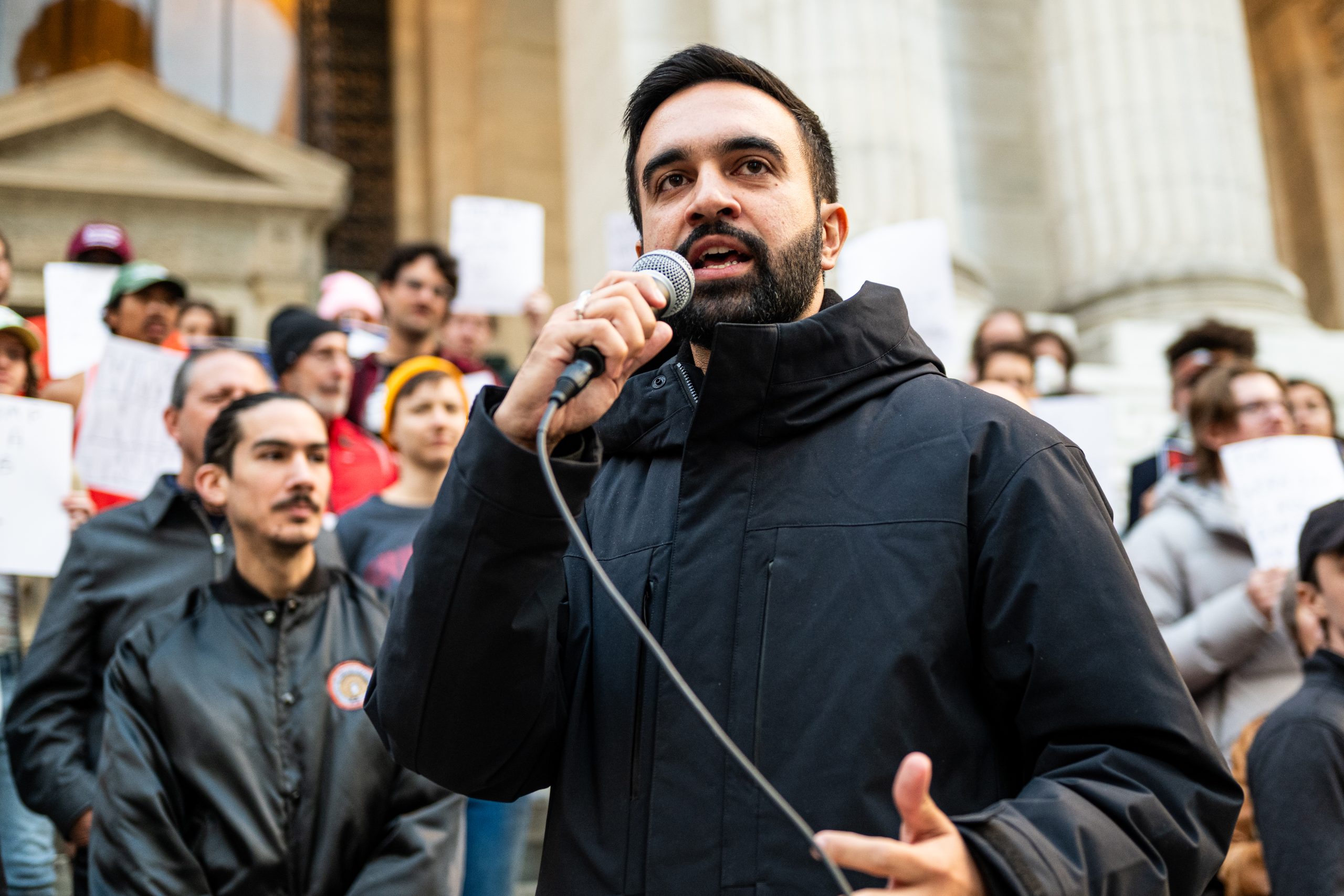

Quick Summary: Mamdani Calls for U.s. ICC Membership Amid Netanyahu Controversy
- New York City Mayor Zohran Mamdani acknowledged legal limitations, stating the city cannot arrest Netanyahu due to lack of authority.
- The U.S. is not an ICC member, which means no domestic enforcement mechanism exists for the ICC’s arrest warrants.
- Former President Trump publicly assured that Netanyahu would not be arrested in the U.S., escalating the political debate.
- Mamdani urged the federal government to join the ICC and execute the warrant, shifting focus to national policy.
- Netanyahu’s potential visit to New York for the U.N. General Assembly in September remains a diplomatic and political test.
Source: Open external resource
Source: Read original article
In a dramatic twist, New York City Mayor Zohran Mamdani has conceded that neither City Hall nor the NYPD has the legal authority to arrest Israeli Prime Minister Benjamin Netanyahu, despite the International Criminal Court’s warrant. This revelation came after Mamdani’s initial suggestion that such an arrest might be possible when Netanyahu visits for the U.N. General Assembly in September.
The crux of the issue lies in the United States not being a member of the ICC, leaving no domestic legal framework to enforce the court’s warrants. Legal experts, including Harvard’s Alex Whiting, emphasize that international law and federal policy, rather than local will, dictate the course of action.
Former President Donald Trump added fuel to the fire by guaranteeing Netanyahu’s immunity on U.S. soil, turning a local legal question into a national political standoff. Mamdani, while retreating from his initial stance, called on the federal government to align with the ICC, highlighting a broader diplomatic challenge.
The upcoming U.N. General Assembly could serve as a critical juncture. Whether federal authorities will heed Mamdani’s call remains uncertain, but the situation underscores a significant diplomatic and political test for the U.S. on the international stage.
So what happens next is not an imminent city-police arrest but a looming diplomatic and political test: whether Netanyahu in fact comes to New York in September, and whether any federal official is willing to act on Mamdani’s demand despite Trump’s very public promise that no such arrest will happen. is not an ICC member, there is no domestic enforcement mechanism for the Hague court’s warrants.
That makes this less a question of mayoral will than of federal and international law. ” That line is now the center of the dispute, because it shifts the argument from whether New York can act to whether the United States should change course and cooperate with the Hague court at all.
The most surprising twist is that the story has moved from a dramatic threat of arrest to a much narrower admission of powerlessness in just a matter of days. General Assembly in September, but by late Tuesday, July 22, he was saying the opposite in explicit legal terms.
” AP and multiple follow-up reports say the post came after Mamdani’s earlier remarks and before Mamdani’s formal legal retreat on July 22. That reversal matters because the controversy had escalated sharply over the previous few days.
General Assembly in September, while conceding the city itself cannot do so. , and legal experts such as Alex Whiting have supplied the technical reasoning that undercuts Mamdani’s original implication that the city had a path to act.
Mamdani, while retreating from his initial stance, called on the federal government to align with the ICC, highlighting a broader diplomatic challenge. is not an ICC member, there is no domestic enforcement mechanism for the Hague court’s warrants.
” That line is now the center of the dispute, because it shifts the argument from whether New York can act to whether the United States should change course and cooperate with the Hague court at all. General Assembly in September, but by late Tuesday, July 22, he was saying the opposite in explicit legal terms.
” AP and multiple follow-up reports say the post came after Mamdani’s earlier remarks and before Mamdani’s formal legal retreat on July 22. is not an ICC member, which means no domestic enforcement mechanism exists for the ICC’s arrest warrants.
The scale and speed of this development has caught many observers off guard. Each new update adds another dimension to a story that is still unfolding, and the full picture will only become clear as more verified details emerge from the people and institutions directly involved.
Analysts who have tracked this issue closely say the current moment represents a genuine turning point. The decisions made in the coming weeks are expected to set the direction for months ahead, with ripple effects likely to extend well beyond the immediate actors in the story.
For those directly affected, the practical impact is already visible. People navigating this fast-changing situation are dealing with real consequences while new information continues to reshape what is known and what remains open to interpretation.
Historical parallels offer some context, though experts caution against drawing too close a comparison. Similar situations have played out before, but the specific combination of pressures, personalities, and timing here makes this moment distinct in ways that matter for how it ultimately resolves.
The political and economic dimensions of this story are deeply intertwined. What appears as a single event on the surface is in practice the convergence of multiple pressures that have been building quietly over a longer period than most public reporting has captured.