


Quick Summary: Owensboros 1936 Execution Exposed as Racial Spectacle in New Book
- Bethea, a young Black man, was hanged in Owensboro on August 14, 1936, after being prosecuted for the rape of 70-year-old Lischia Edwards.
- In 2026, new analysis reframes Bethea’s execution as a ‘legal lynching,’ highlighting race and spectacle.
- Sonya Lea’s book, ‘American Bloodlines,’ won the 2026 Kentucky History Award, amplifying the story’s reach.
- The event exposed how race, spectacle, and state power fused in Owensboro, Kentucky, in August 1936.
- Kentucky moved away from public executions shortly after Bethea’s death due to the event’s chaos and backlash.
Source: Open external resource
Source: Read original article
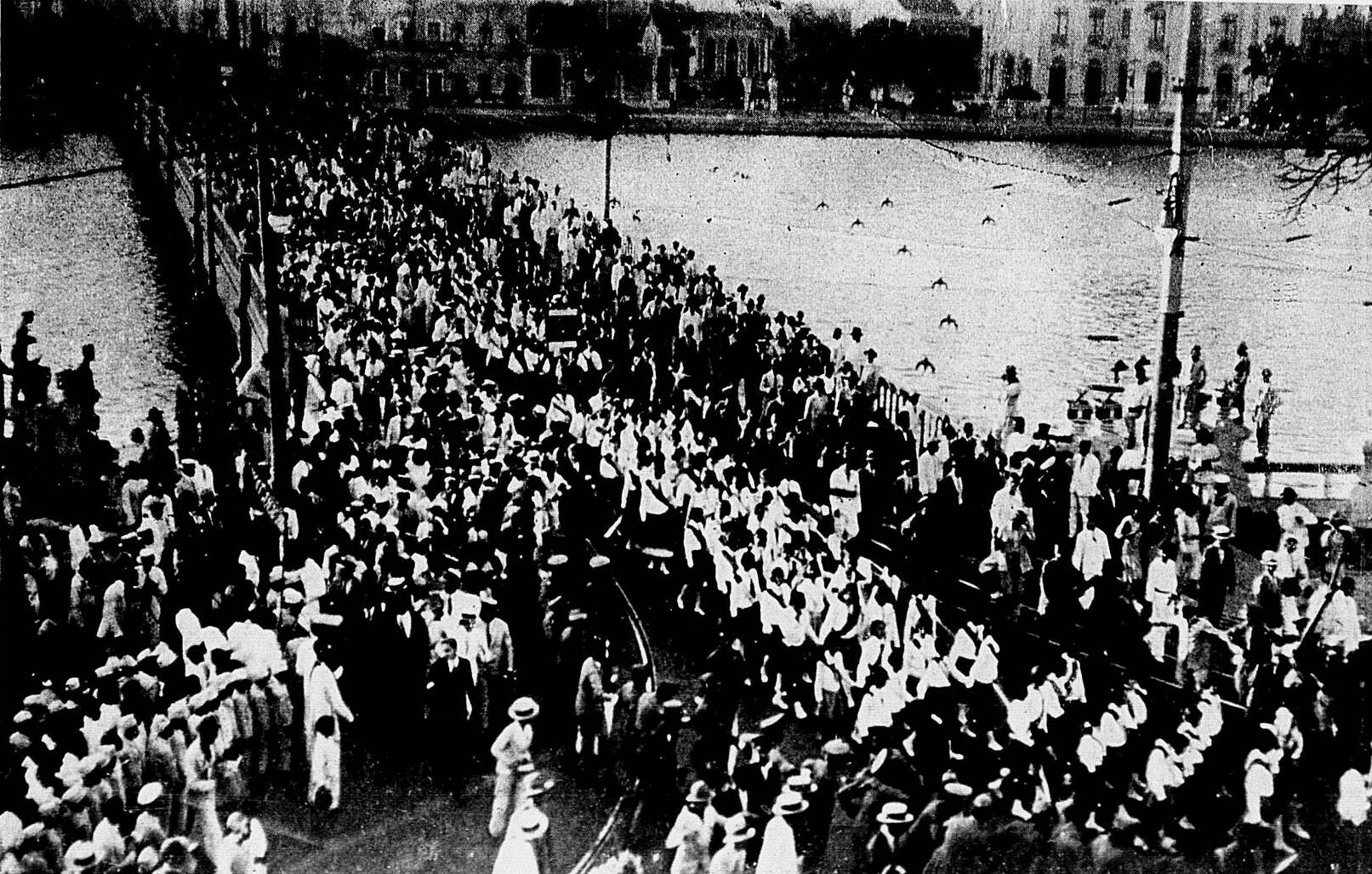
On August 14, 1936, a dark chapter in American history unfolded in Owensboro, Kentucky, as Rainey Bethea, a young Black man, faced the hangman’s noose. Convicted by an all-white jury in a mere 4 1/2 minutes for the rape of 70-year-old Lischia Edwards, Bethea’s execution marked the last public hanging in the United States. This grim spectacle drew a crowd of 20,000, transforming the execution into what many now call a ‘brutal carnival.’
Fast forward to 2026, and the narrative surrounding Bethea’s execution has shifted significantly. Sonya Lea’s compelling book, ‘American Bloodlines: Reckoning with Lynch Culture,’ has brought renewed attention to the case, winning the 2026 Kentucky History Award. Lea’s work argues that Bethea’s execution was not merely a legal proceeding but a ‘legal lynching,’ exposing the sinister intertwining of race, spectacle, and state power.
Lea’s narrative challenges us to reconsider how we interpret this historical event. The chaotic atmosphere in Owensboro, complete with vendors and ‘necktie parties,’ underscores the racial violence and spectacle that characterized the era. The backlash from the event was immediate, prompting Kentucky to abandon public executions shortly thereafter.
Today, the debate continues on whether Bethea’s death should be seen as the end of public executions in America or as evidence of the deep connection between capital punishment and lynching culture. As Lea poignantly asks, ‘What is the whiteness that creates that racialized violence story?’ This question compels us to reflect on the past and its ongoing impact on our present.
Bethea, a young Black man, was hanged in Owensboro on August 14, 1936, after being prosecuted for the rape of 70-year-old Lischia Edwards. On June 8, 2026, Kentucky Public Radio affiliate LPM published an interview ahead of Lea’s appearance at the Filson Historical Society, describing Bethea’s death as the last documented public execution in the country.
Last month, broader pickup coverage highlighted both the “legal lynching” framing and the 2026 history award, signaling that the story has moved from local memory into a wider regional and national discussion. The most significant new development is the attention around Sonya Lea’s book American Bloodlines: Reckoning with Lynch Culture, which current reporting says won the Kentucky Historical Society’s 2026 Kentucky History Award for university press publications earlier this month.
In the latest stories, Lea does not merely revisit the case of Rainey Bethea; she argues that the event exposed how race, spectacle and state power fused in Owensboro, Kentucky, in August 1936, when an all-white jury reportedly convicted Bethea after only 4 1/2 minutes of deliberation. One widely cited historical account says newspapers at the time put the crowd at 20,000, with many spectators traveling from across the country.
That framing is the surprise in the current coverage: an old “On This Day” item has been pulled into a much sharper modern argument over whether formal court process can still reproduce mob justice when race and public spectacle dominate the scene. The central controversy in the newest reporting is not whether the execution happened, but how it should be understood now.
Lea’s language is blunt: she calls it a “legal lynching” and says the atmosphere around Owensboro before the hanging was “a brutal carnival,” complete with vendors selling popcorn and “necktie parties” the night before. Another striking detail resurfacing in current accounts is how procedure itself fed the spectacle.
In 2026, new analysis reframes Bethea’s execution as a ‘legal lynching,’ highlighting race and spectacle. Sonya Lea’s book, ‘American Bloodlines,’ won the 2026 Kentucky History Award, amplifying the story’s reach.
The event exposed how race, spectacle, and state power fused in Owensboro, Kentucky, in August 1936. On August 14, 1936, a dark chapter in American history unfolded in Owensboro, Kentucky, as Rainey Bethea, a young Black man, faced the hangman’s noose.
‘ Fast forward to 2026, and the narrative surrounding Bethea’s execution has shifted significantly. Sonya Lea’s compelling book, ‘American Bloodlines: Reckoning with Lynch Culture,’ has brought renewed attention to the case, winning the 2026 Kentucky History Award.
The scale and speed of this development has caught many observers off guard. Each new update adds another dimension to a story that is still unfolding, and the full picture will only become clear as more verified details emerge from the people and institutions directly involved.
Analysts who have tracked this issue closely say the current moment represents a genuine turning point. The decisions made in the coming weeks are expected to set the direction for months ahead, with ripple effects likely to extend well beyond the immediate actors in the story.
For those directly affected, the practical impact is already visible. People navigating this fast-changing situation are dealing with real consequences while new information continues to reshape what is known and what remains open to interpretation.
Historical parallels offer some context, though experts caution against drawing too close a comparison. Similar situations have played out before, but the specific combination of pressures, personalities, and timing here makes this moment distinct in ways that matter for how it ultimately resolves.
The political and economic dimensions of this story are deeply intertwined. What appears as a single event on the surface is in practice the convergence of multiple pressures that have been building quietly over a longer period than most public reporting has captured.