

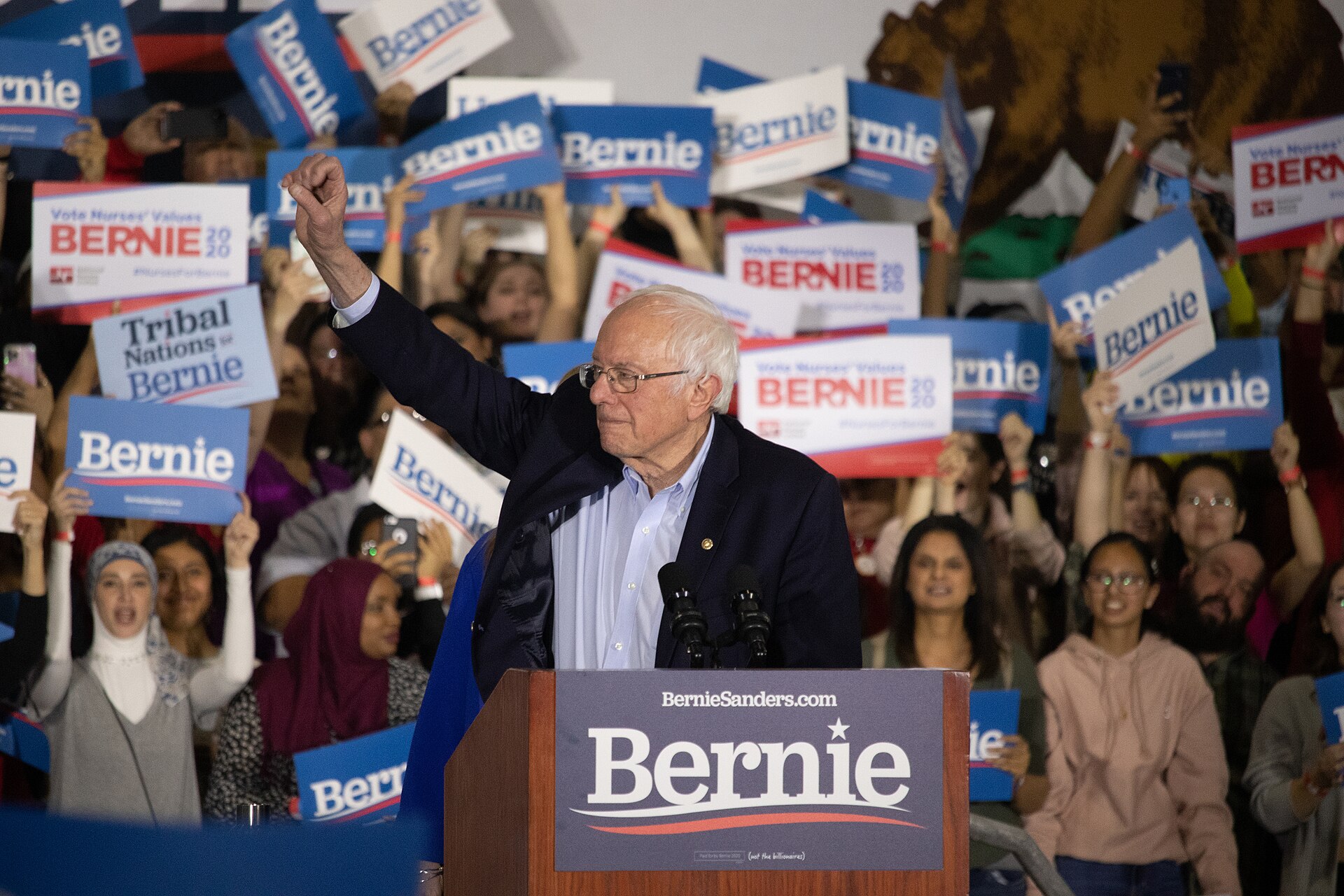

Quick Summary: DNC Rejects Resolution Targeting AIPAC Amid Super PAC Debate
- Bernie Sanders is pushing to ban AIPAC and other super PACs from Democratic primaries, escalating a 2026 power struggle within the party.
- Sanders and Rep. Summer Lee introduced the Abolish Super PACs Act, aiming to cap individual contributions to super PACs at $5,000.
- The Democratic National Committee rejected a resolution specifically targeting AIPAC, opting for a broader condemnation of dark money.
- In Illinois, over $125 million in outside spending surpassed candidate spending in Democratic primaries, with AIPAC-affiliated groups as top spenders.
- Sanders argues billionaire election spending has skyrocketed since Citizens United, reaching $2.6 billion in the 2024 cycle.
Source: Open external resource
Source: Read original article
Bernie Sanders is not mincing words. His demand to eliminate AIPAC and other super PACs from Democratic primaries is more than a political stance; it’s a battle cry against what he sees as billionaire-driven election buying. Sanders, alongside Rep. Summer Lee, has introduced the Abolish Super PACs Act, a bold legislative move designed to cap individual contributions to super PACs at $5,000, effectively aiming to dismantle them.
This political drama unfolded further when the Democratic National Committee rejected a resolution specifically targeting AIPAC. Instead, they passed a broader statement condemning the influence of unregulated dark money. Sanders and his allies see this as a half-measure, arguing that the real fight is against the oligarchs buying democracy.
The numbers are staggering. In Illinois alone, more than $125 million in outside spending flooded five open Democratic primaries, with AIPAC-affiliated groups ranking among the top spenders. Sanders’ office highlights that billionaire election spending has soared by 16,000% since Citizens United, reaching a staggering $2.6 billion in the 2024 cycle.
As this ideological battle rages on, Sanders’ message resonates beyond the usual progressive circles. Figures like Rep. Ro Khanna, a potential 2028 presidential contender, echo his call to eliminate super PACs in Democratic primaries. This fight is a test of strength for Sanders and his allies, with the 2026 primaries and the next presidential cycle serving as the stage for their showdown.
Ro Khanna, who co-chaired Sanders’ 2020 campaign and is viewed as a possible 2028 presidential contender, said, “We should eliminate any super PAC in a Democratic primary. Bernie Sanders’ push to ban AIPAC and other super PACs from Democratic primaries has sharpened from rhetoric into a broader 2026 power struggle inside the party, with the clearest new development being that Democrats have already rejected an AIPAC-specific DNC resolution even as Sanders and his allies escalate the fight against what he calls billionaire-driven election buying.
According to AP reporting, Illinois alone saw more than $125 million in outside spending across five open Democratic primaries, and in all but one of those races, outside spending exceeded what the candidates themselves spent. The most concrete recent move came on May 20, 2026, when Sanders and Rep.
Summer Lee introduced the Abolish Super PACs Act, a bill that would cap individual contributions to super PACs at $5,000, which Sanders’ office says would effectively abolish them. Nearly 40 House seats had already seen more than $1 million in outside spending, and AIPAC-affiliated groups ranked among the top three spenders in Illinois congressional contests, alongside crypto-backed groups such as Fairshake.
What happens next is less about one immediate vote than a rolling test of strength through the 2026 primaries and into the next presidential cycle. ” That clash is now being fought race by race, with Reuters finding that anti-AIPAC groups had endorsed more than 100 Democratic candidates, including 73 running against sitting Democratic members of Congress who had support from AIPAC or other pro-Israel organizations.
” DNC Chair Ken Martin defended that compromise by saying, “instead of going one-by-one, we passed a blanket repudiation,” but progressives saw that as a half-measure. Ruben Gallego warned Democrats not to “handcuff ourselves” if Republicans continue using dark money in general elections, which captures the strategic split: reform versus unilateral disarmament.
In Illinois, over $125 million in outside spending surpassed candidate spending in Democratic primaries, with AIPAC-affiliated groups as top spenders. Summer Lee, has introduced the Abolish Super PACs Act, a bold legislative move designed to cap individual contributions to super PACs at $5,000, effectively aiming to dismantle them.
In Illinois alone, more than $125 million in outside spending flooded five open Democratic primaries, with AIPAC-affiliated groups ranking among the top spenders. Ro Khanna, a potential 2028 presidential contender, echo his call to eliminate super PACs in Democratic primaries.
The most concrete recent move came on May 20, 2026, when Sanders and Rep. Summer Lee introduced the Abolish Super PACs Act, a bill that would cap individual contributions to super PACs at $5,000, which Sanders’ office says would effectively abolish them.
The scale and speed of this development has caught many observers off guard. Each new update adds another dimension to a story that is still unfolding, and the full picture will only become clear as more verified details emerge from the people and institutions directly involved.
Analysts who have tracked this issue closely say the current moment represents a genuine turning point. The decisions made in the coming weeks are expected to set the direction for months ahead, with ripple effects likely to extend well beyond the immediate actors in the story.
For those directly affected, the practical impact is already visible. People navigating this fast-changing situation are dealing with real consequences while new information continues to reshape what is known and what remains open to interpretation.
Historical parallels offer some context, though experts caution against drawing too close a comparison. Similar situations have played out before, but the specific combination of pressures, personalities, and timing here makes this moment distinct in ways that matter for how it ultimately resolves.
The political and economic dimensions of this story are deeply intertwined. What appears as a single event on the surface is in practice the convergence of multiple pressures that have been building quietly over a longer period than most public reporting has captured.