

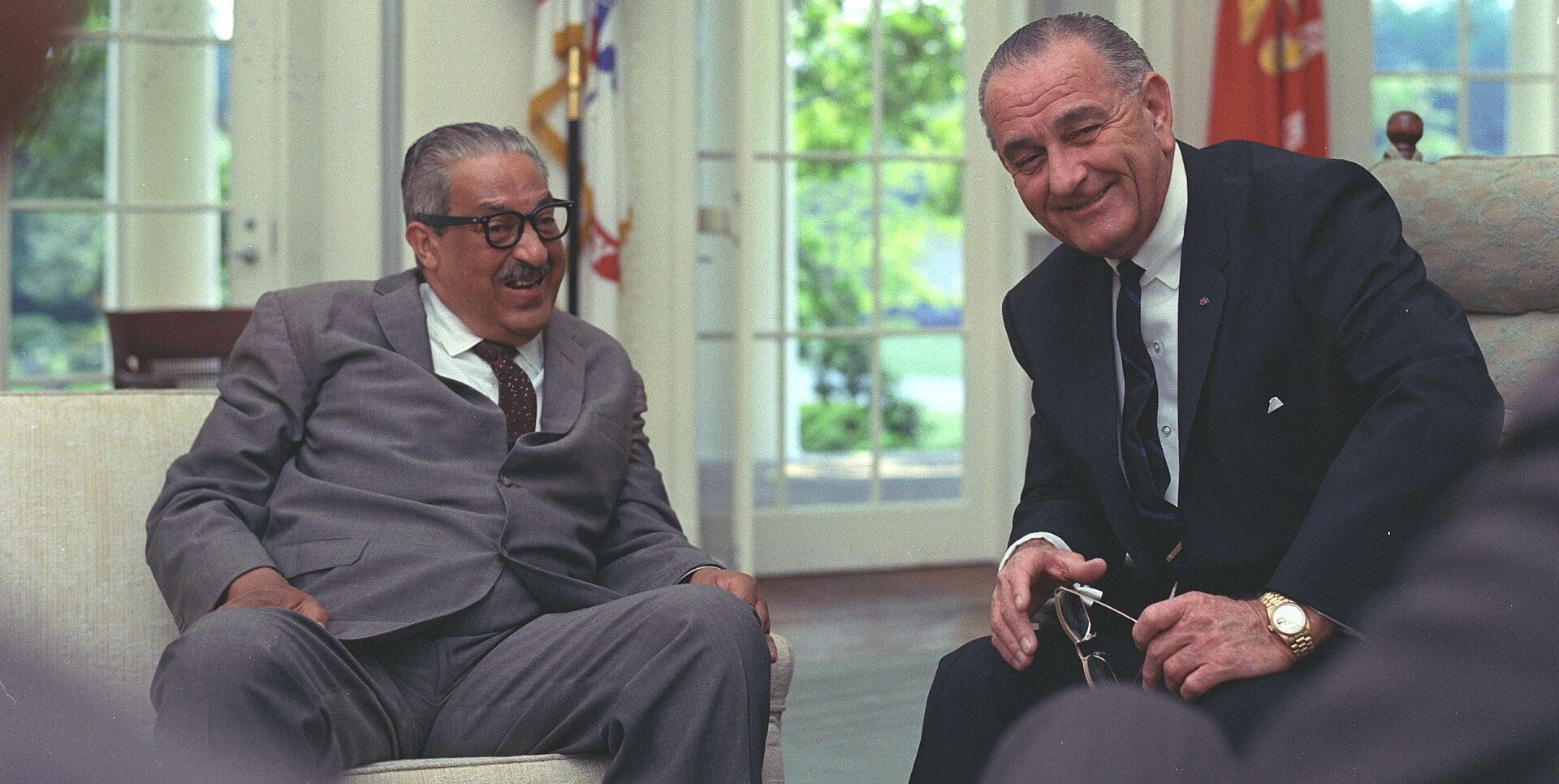

Quick Summary: Senates 1967 Vote Paved Way for First Black Supreme Court Justice
- Thurgood Marshall was confirmed as the first Black Supreme Court justice on August 30, 1967 — his appointment marked a historic moment in U.S. judicial history.
- The Senate confirmed Marshall by a 69–11 vote after heated debates — this vote highlighted the era’s racial and ideological tensions.
- President Lyndon B. Johnson nominated Marshall, pushing for his confirmation despite opposition — the nomination carried significant symbolic weight.
- Justice Hugo Black administered the constitutional oath to Marshall on September 1, 1967 — Marshall officially took his seat on October 2, 1967.
- Senator Strom Thurmond aggressively questioned Marshall during the confirmation — opponents targeted his civil-rights record and liberal views.
Source: Open external resource
Source: Read original article
On August 30, 1967, the U.S. Senate confirmed Thurgood Marshall as the first Black justice on the Supreme Court, a landmark moment in American history. This confirmation, by a decisive 69–11 vote, was not just a victory for Marshall but a significant step forward in the civil rights movement.
President Lyndon B. Johnson’s nomination of Marshall was a bold political move, one that faced fierce resistance from segregationist senators. Despite this opposition, Johnson’s determination to see Marshall on the bench underscored the symbolic importance of the appointment.
Justice Hugo Black administered the constitutional oath to Marshall on September 1, 1967, but Marshall didn’t officially take his seat until the Court’s session opened on October 2. This sequence of events is a testament to the era’s complex political landscape.
Marshall’s confirmation was a battleground for racial and ideological conflicts, with figures like Senator Strom Thurmond challenging his liberal jurisprudence. The debates surrounding his appointment reflect a broader struggle for equality and justice in America.
Today, this historical remembrance serves as a reminder of the progress made and the challenges that remain. Thurgood Marshall’s legacy continues to inspire those who fight for justice and equality in the legal system.
solicitor general; Johnson elevated him to the Court in 1967, pushing the Senate to confirm a nominee whose very appointment carried enormous symbolic and constitutional weight. The Supreme Court’s own historical material says Justice Hugo Black administered the constitutional oath on September 1, 1967, and Marshall took his seat when the Court session opened on October 2, 1967.
The live web does not show any new reporting behind the Hartford Courant item itself; the Courant page appears to be a routine “Today in History” wire feature, and the most concrete, verifiable takeaway available right now is that it marks the August 30, 1967 Senate confirmation of Thurgood Marshall by a 69–11 vote after what multiple accounts describe as a heated debate. The main figures are Marshall himself, President Johnson, and the senators who tried to block or slow the nomination.
One notable detail surfaced in the available records is that Marshall was confirmed on August 30 but did not immediately begin full service on the bench that same day. I should be clear that I was unable to access the Hartford Courant page directly because the site blocked automated retrieval, so I relied on accessible parallel versions and primary institutional sources to reconstruct the substance.
I found no evidence of a newer reported twist, interview, or disclosure in the last 7 days tied specifically to this Courant item; what is available is a historical remembrance rather than a developing news event. The best current read is that publishers are recirculating the AP-style historical item for August 30, while the underlying facts remain stable: Marshall’s confirmation was a landmark in the Court’s history, the margin was 69–11, and the opposition he faced reflected the racial and ideological battles of the era rather than any new development this week.
One accessible account adds that the Senate debate lasted six hours before the chamber acted, underscoring how contested the nomination was even though the final margin was decisive. There are no meaningful “next steps” in the way there would be for a live legislative or court fight, because this is an anniversary feature rather than an unfolding story.
The Senate confirmed Marshall by a 69–11 vote after heated debates — this vote highlighted the era’s racial and ideological tensions. The main figures are Marshall himself, President Johnson, and the senators who tried to block or slow the nomination.
There are no meaningful “next steps” in the way there would be for a live legislative or court fight, because this is an anniversary feature rather than an unfolding story. Senator Strom Thurmond aggressively questioned Marshall during the confirmation — opponents targeted his civil-rights record and liberal views.
This confirmation, by a decisive 69–11 vote, was not just a victory for Marshall but a significant step forward in the civil rights movement. Marshall’s confirmation was a battleground for racial and ideological conflicts, with figures like Senator Strom Thurmond challenging his liberal jurisprudence.
The scale and speed of this development has caught many observers off guard. Each new update adds another dimension to a story that is still unfolding, and the full picture will only become clear as more verified details emerge from the people and institutions directly involved.
Analysts who have tracked this issue closely say the current moment represents a genuine turning point. The decisions made in the coming weeks are expected to set the direction for months ahead, with ripple effects likely to extend well beyond the immediate actors in the story.
For those directly affected, the practical impact is already visible. People navigating this fast-changing situation are dealing with real consequences while new information continues to reshape what is known and what remains open to interpretation.
Historical parallels offer some context, though experts caution against drawing too close a comparison. Similar situations have played out before, but the specific combination of pressures, personalities, and timing here makes this moment distinct in ways that matter for how it ultimately resolves.
The political and economic dimensions of this story are deeply intertwined. What appears as a single event on the surface is in practice the convergence of multiple pressures that have been building quietly over a longer period than most public reporting has captured.