

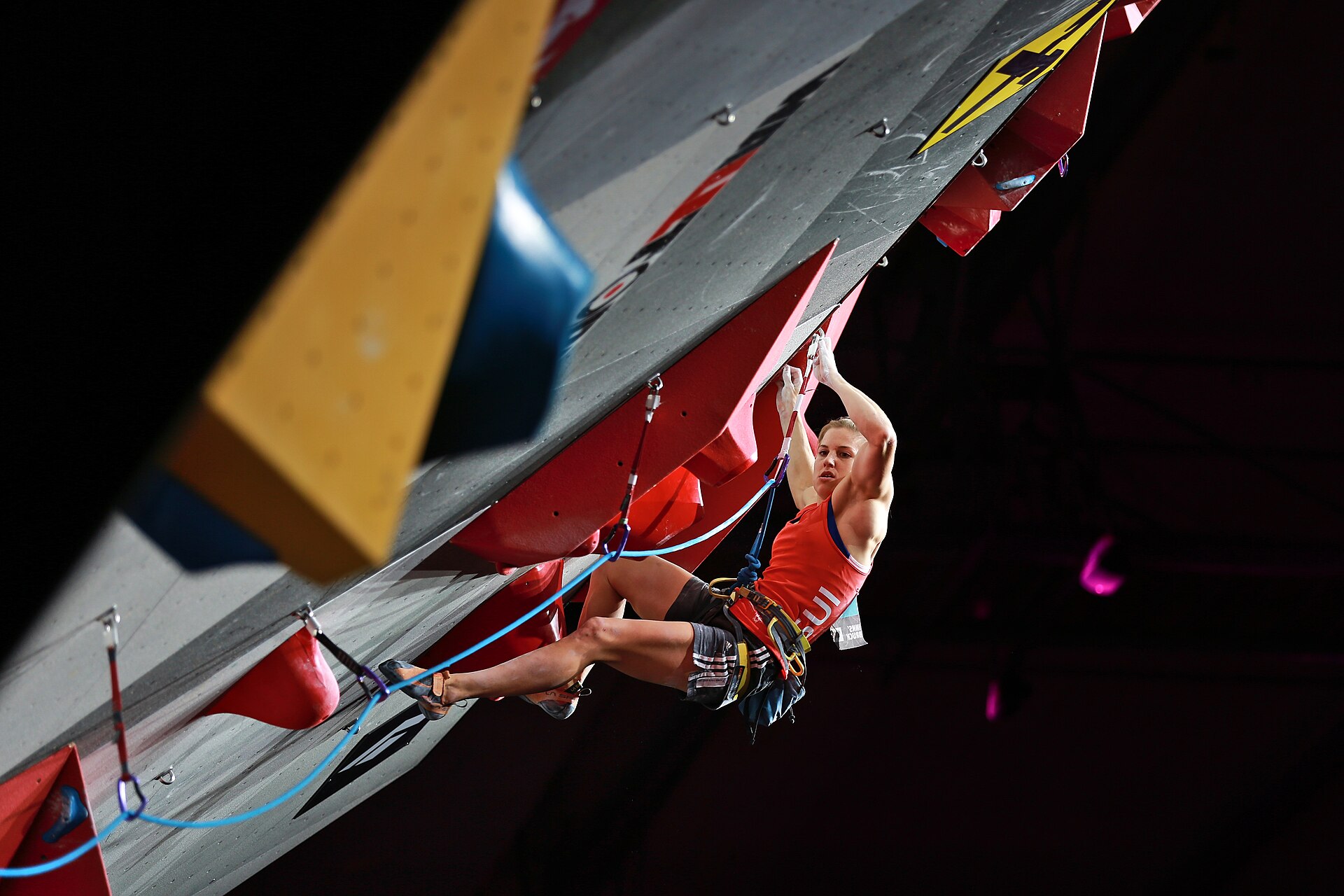

Quick Summary: Barendrecht Warns of Intensified Para Climbing Field at Laval Competition
- Jamie Barendrecht warns that para climbing’s women’s field has intensified, with 248 athletes from 29 nations competing in Laval.
- The Laval event is a major stress test for the sport, highlighting its expanding depth and competitiveness.
- The World Climbing Para Series and Europe Championship converge in Laval, raising stakes for athletes and federations.
- Barendrecht’s quote signals a shift in competitive baseline, emphasizing execution over reputation.
- The event’s outcome may redefine perceptions of climbing programs and expose traditional contenders.
Source: Open external resource
Source: Read original article
Jamie Barendrecht’s candid assessment of the para climbing scene ahead of the Laval competition is a wake-up call for athletes and fans alike. With 248 competitors from 29 countries, the event promises to be a pivotal moment in the 2026 season, showcasing a field that has become remarkably competitive.
The World Climbing Para Series stop in Laval is not just another tour event; it’s a litmus test for the sport’s growth. With participants hailing from three continents, the magnitude of the competition underscores the sport’s global reach and evolving dynamics. This weekend’s events in Laval, including the World Climbing Europe Para Championship, are set to challenge even the most seasoned climbers.
Barendrecht’s remarks aren’t mere speculation; they highlight a tangible shift in the sport. As the competition in Laval unfolds, the focus will be on whether her prediction of a tighter field holds true. The stakes are high, and the outcomes could reshape the landscape of para climbing, revealing which nations are advancing and which are lagging behind.
Jamie Barendrecht’s blunt warning ahead of Laval is the story’s clearest takeaway: para climbing’s women’s field has tightened so dramatically that, in her words, “the level has become incredibly high,” with 248 athletes from 29 nations arriving in France for the August 28-29 World Climbing Para Series stop that World Climbing is treating as one of the biggest events of the 2026 season. Competition in the World Climbing Para Series Laval 2026 is underway on August 28 and continues through August 29, while the overlapping Europe Championship program in Laval runs through August 30.
The freshest reporting comes from World Climbing’s event preview published today, August 28, 2026, and its most newsworthy revelation is the scale and competitiveness of the field rather than a scandal or governance fight: 248 athletes from 29 countries across three continents are competing in Laval, making this not just another tour stop but a major stress test for the sport’s expanding depth. World Climbing’s results and calendar services show that the World Climbing Para Series Laval 2026 runs on August 28 and 29 in Laval, France, while the World Climbing Europe Para Championship Laval 2026 is also staged on August 28 and 29, alongside the broader World Climbing Europe Championship in the city from August 28 to 30.
French reporting from the FFME on August 27 adds another layer: Laval is being sold domestically as a showcase weekend for both European championships and the World Cup-level para event, essentially inviting the question of who can handle the pressure of a home-crowd, championship-style environment. The implication is that athletes who once expected separation through experience now face rivals who are technically and physically close enough to turn one small error into a place-by-place collapse in the standings.
Although the headline reads like a standard athlete preview, the publication lands the same day competition begins, making Barendrecht’s quote less a reflective comment and more a live warning shot before climbing starts. In that sense, the surprise is that the most compelling new detail is not a late injury, withdrawal, or administrative dispute, but an athlete openly signaling that the competitive baseline has moved.
The next decisive development will be results: whether Barendrecht’s warning is validated by unusually tight margins, surprise finalists, or podium disruption. Barendrecht, one of the headline athletes in the preview, said, “the level has become incredibly high,” a quote that frames the central competitive tension of the weekend: established medal contenders are no longer chasing comfortable podiums, but trying to survive a field that has become denser and less predictable.
World Climbing’s results and calendar services show that the World Climbing Para Series Laval 2026 runs on August 28 and 29 in Laval, France, while the World Climbing Europe Para Championship Laval 2026 is also staged on August 28 and 29, alongside the broader World Climbing Europe Championship in the city from August 28 to 30. Although the headline reads like a standard athlete preview, the publication lands the same day competition begins, making Barendrecht’s quote less a reflective comment and more a live warning shot before climbing starts.
In that sense, the surprise is that the most compelling new detail is not a late injury, withdrawal, or administrative dispute, but an athlete openly signaling that the competitive baseline has moved. The next decisive development will be results: whether Barendrecht’s warning is validated by unusually tight margins, surprise finalists, or podium disruption.
Barendrecht, one of the headline athletes in the preview, said, “the level has become incredibly high,” a quote that frames the central competitive tension of the weekend: established medal contenders are no longer chasing comfortable podiums, but trying to survive a field that has become denser and less predictable. Barendrecht’s quote signals a shift in competitive baseline, emphasizing execution over reputation.
The scale and speed of this development has caught many observers off guard. Each new update adds another dimension to a story that is still unfolding, and the full picture will only become clear as more verified details emerge from the people and institutions directly involved.
Analysts who have tracked this issue closely say the current moment represents a genuine turning point. The decisions made in the coming weeks are expected to set the direction for months ahead, with ripple effects likely to extend well beyond the immediate actors in the story.
For those directly affected, the practical impact is already visible. People navigating this fast-changing situation are dealing with real consequences while new information continues to reshape what is known and what remains open to interpretation.
Historical parallels offer some context, though experts caution against drawing too close a comparison. Similar situations have played out before, but the specific combination of pressures, personalities, and timing here makes this moment distinct in ways that matter for how it ultimately resolves.
The political and economic dimensions of this story are deeply intertwined. What appears as a single event on the surface is in practice the convergence of multiple pressures that have been building quietly over a longer period than most public reporting has captured.