

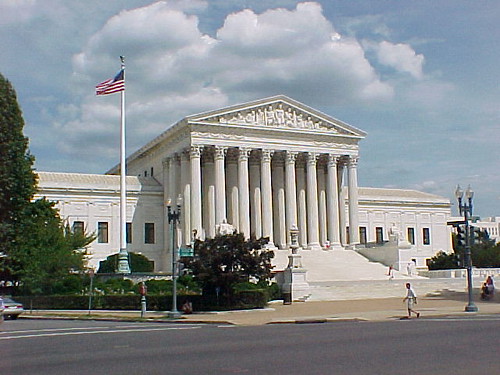

Quick Summary: Supreme Court Blocks Postal Services Mail
- Postal Service finalized its mail-ballot restriction rule on August 21 and 22, 2026, despite federal court blocks.
- The rule requires states to provide voter lists and adopt ballot procedures before mail ballots are processed.
- Postmaster General David Steiner stated states not complying could face halted mail ballots.
- Opponents claim the rule weaponizes USPS for political gain, framing it as an election takeover attempt.
- A nationwide injunction currently blocks the rule’s implementation, pending higher court decisions.
Source: Open external resource
Source: Read original article
The U.S. Postal Service has ignited a political firestorm by finalizing its controversial mail-ballot restriction rule. Despite federal courts blocking the policy from taking effect for the 2026 midterms, the USPS went ahead and published the rule on August 21 and 22, 2026. This bold move has set the stage for a fierce legal battle, as the administration attempts to position the Postal Service as an unlikely gatekeeper of elections.
At the heart of the controversy is a rule that demands states provide voter lists and adopt specific ballot procedures before mail ballots can be processed. Critics, including voting-rights groups and Democratic lawmakers, argue that this rule is a political maneuver to control elections. Postmaster General David Steiner has defended the agency’s stance, distancing USPS from political affiliations, but opponents see it as a clear attempt to weaponize the Postal Service.
The legal landscape is complex, with a nationwide injunction currently blocking the rule’s implementation. Judge Indira Talwani’s decision underscores the judiciary’s resistance, emphasizing that no congressional law grants USPS authority over mail-in voting. Meanwhile, the administration’s persistence in finalizing the rule suggests a strategic move to keep the policy ready for rapid deployment should the Supreme Court eventually side with them.
As the courts hold the line, the Postal Service’s role in future elections hangs in the balance. The rule’s existence, juxtaposed with the injunction, creates a precarious situation for the election system. With nearly 100 million mail ballots potentially affected, the stakes are high. Until the Supreme Court makes a definitive ruling, the election system remains in limbo, caught between administrative ambitions and judicial checks.
Postal Service has now finalized its mail-ballot restriction rule anyway—publishing it on August 21 and 22, 2026—even though federal courts have already blocked the policy from taking effect for the 2026 midterms unless higher courts revive it. Another filing highlighted the legal risk for voters whose ballots are refused or intercepted, pointing to a federal felony punishable by up to five years in prison and a $10,000 fine for unlawful double voting, then asking what happens if a voter mails a ballot that USPS will not deliver and later tries to vote in person.
The New York Times reported that USPS said it would not implement the rule for the 2026 election unless the Supreme Court rules in the administration’s favor, meaning the government finalized a 95-page restriction regime while admitting it is presently blocked from using it this cycle. A Supreme Court filing cited in the current litigation says USPS delivered nearly 100 million mail ballots to or from voters in 2024, illustrating the scale of the system now potentially affected.
USPS then issued its proposed rule on May 29, published it in the Federal Register on June 2, and has now finalized it in late August. McNulty said the new rule is “an attempt to weaponize USPS as part of the Trump administration’s efforts to take over elections,” a quote that captures how opponents are framing the stakes.
South Florida Reporter’s version of the story, republishing Florida Phoenix reporting, said Trump’s March 31 executive order pushed USPS to require states to provide voter lists and adopt ballot procedures before ballots would move through the mail, and Postmaster General David Steiner later told senators that states refusing to comply could see their mail ballots halted. In other words, the administration has locked the rule into place now, even while acknowledging it cannot yet use it in November.
That is the sharpest new development because it shifts the fight from a proposed rule to a completed one, teeing up the next court battle. Reuters said challengers wanted her to go even further by stopping USPS from implementing any rule requiring states to submit approved-voter lists and follow new ballot procedures.
USPS then issued its proposed rule on May 29, published it in the Federal Register on June 2, and has now finalized it in late August. With nearly 100 million mail ballots potentially affected, the stakes are high.
McNulty said the new rule is “an attempt to weaponize USPS as part of the Trump administration’s efforts to take over elections,” a quote that captures how opponents are framing the stakes. South Florida Reporter’s version of the story, republishing Florida Phoenix reporting, said Trump’s March 31 executive order pushed USPS to require states to provide voter lists and adopt ballot procedures before ballots would move through the mail, and Postmaster General David Steiner later told senators that states refusing to comply could see their mail ballots halted.
A nationwide injunction currently blocks the rule’s implementation, pending higher court decisions. Postmaster General David Steiner has defended the agency’s stance, distancing USPS from political affiliations, but opponents see it as a clear attempt to weaponize the Postal Service.
Meanwhile, the administration’s persistence in finalizing the rule suggests a strategic move to keep the policy ready for rapid deployment should the Supreme Court eventually side with them. Until the Supreme Court makes a definitive ruling, the election system remains in limbo, caught between administrative ambitions and judicial checks.
The scale and speed of this development has caught many observers off guard. Each new update adds another dimension to a story that is still unfolding, and the full picture will only become clear as more verified details emerge from the people and institutions directly involved.
Analysts who have tracked this issue closely say the current moment represents a genuine turning point. The decisions made in the coming weeks are expected to set the direction for months ahead, with ripple effects likely to extend well beyond the immediate actors in the story.
For those directly affected, the practical impact is already visible. People navigating this fast-changing situation are dealing with real consequences while new information continues to reshape what is known and what remains open to interpretation.
Historical parallels offer some context, though experts caution against drawing too close a comparison. Similar situations have played out before, but the specific combination of pressures, personalities, and timing here makes this moment distinct in ways that matter for how it ultimately resolves.
The political and economic dimensions of this story are deeply intertwined. What appears as a single event on the surface is in practice the convergence of multiple pressures that have been building quietly over a longer period than most public reporting has captured.