


Quick Summary: Gov. Desantis Joins Opposition to Controversial Property Tax Proposal
- A court-ordered rewrite of Florida’s property-tax amendment removed biased language, highlighting critics’ concerns about misleading voter information.
- The amendment could cut local property-tax collections by nearly $4.93 billion in fiscal year 2027-28, escalating to about $11.83 billion annually.
- The proposal would increase the homestead exemption from $50,000 to $150,000 in 2027 and to $250,000 in 2028, while reducing the cap on non-homestead property assessments from 10% to 5%.
- Critics, including law enforcement associations, warn that the amendment threatens funding for public safety without providing alternative revenue sources.
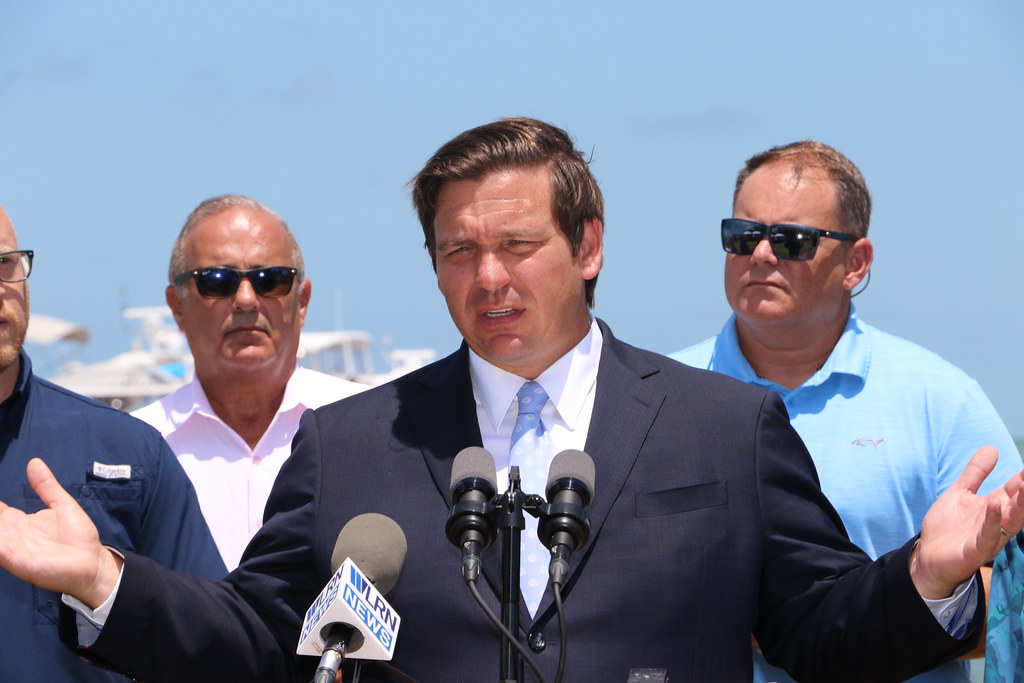
- Even some Republicans, including Gov. Ron DeSantis, have distanced themselves from the amendment, citing concerns over its execution and impact.
Source: Open external resource
Source: Read original article
The latest twist in Florida’s property tax amendment saga is a court-mandated rewrite that stripped away language deemed too promotional. This decision has intensified the debate over what critics are calling a ‘Trojan horse’ designed to mislead voters.
At the heart of the controversy is a proposal to drastically increase the homestead exemption while slashing the assessment cap on non-homestead properties. The fiscal impact is staggering, with potential cuts to local property-tax collections reaching billions. Critics argue that such cuts could decimate funding for essential services like law enforcement and emergency response.
Adding fuel to the fire, conservative law enforcement groups have joined the opposition, labeling the amendment a financial disaster waiting to happen. Their voices are amplified by the lack of a robust campaign supporting the amendment, leaving it politically vulnerable.
Governor Ron DeSantis, who initially supported property-tax relief, has expressed reservations about the current proposal, highlighting a rift within the Republican ranks. The amendment’s future now hinges on a court’s decision regarding its ballot wording and whether it can secure the necessary voter approval.
What happens next is crucial: the court must decide whether the revised wording is neutral enough to stay on the November ballot, and the amendment itself still needs at least 60% voter approval to pass. ” The Florida Sheriffs Association said it is “significantly concerned,” joining the Florida State Fraternal Order of Police, Florida Professional Firefighters and Florida Fire Chiefs Association in warning that the amendment could undercut public-safety funding without a replacement revenue stream.
3 ruling that the original ballot summary for Amendment 3 was “misleading and inaccurate,” prompting Attorney General James Uthmeier to submit a rewritten version by mid-August for the November 2026 ballot. 31, 2026, while newer residents would get a smaller exemption for four years before receiving the larger benefit in year five.
At the same time, renters, apartment owners and businesses would not receive the bigger homestead exemption, though non-homestead properties would get the lower 5% cap. A court-ordered rewrite of Florida’s property-tax amendment has become the story’s biggest new turning point, stripping out language a judge said read like a campaign pitch and underscoring critics’ argument that the measure was sold to voters in a misleading way.
The proposal would raise the homestead exemption from $50,000 to $150,000 in 2027 and then to $250,000 in 2028, while also reducing the annual assessment-growth cap on non-homestead properties such as rentals and commercial buildings from 10% to 5%. WFLX reported that “no comparable statewide ‘Yes On Three’ campaign has publicly materialized,” even as the “No On Three” side piles up endorsements and warnings.
Recent reporting notes that the full increase would immediately apply only to homeowners who establish permanent Florida residency by Dec. ” That is a remarkable admission from the state’s attorney general because it effectively concedes one of the opposition’s strongest political attacks — that a major tax rewrite was advanced without fully engaging the people who would have to manage the fallout.
” The Florida Sheriffs Association said it is “significantly concerned,” joining the Florida State Fraternal Order of Police, Florida Professional Firefighters and Florida Fire Chiefs Association in warning that the amendment could undercut public-safety funding without a replacement revenue stream. The proposal would increase the homestead exemption from $50,000 to $150,000 in 2027 and to $250,000 in 2028, while reducing the cap on non-homestead property assessments from 10% to 5%.
31, 2026, while newer residents would get a smaller exemption for four years before receiving the larger benefit in year five. At the same time, renters, apartment owners and businesses would not receive the bigger homestead exemption, though non-homestead properties would get the lower 5% cap.
Governor Ron DeSantis, who initially supported property-tax relief, has expressed reservations about the current proposal, highlighting a rift within the Republican ranks. A court-ordered rewrite of Florida’s property-tax amendment has become the story’s biggest new turning point, stripping out language a judge said read like a campaign pitch and underscoring critics’ argument that the measure was sold to voters in a misleading way.
The scale and speed of this development has caught many observers off guard. Each new update adds another dimension to a story that is still unfolding, and the full picture will only become clear as more verified details emerge from the people and institutions directly involved.
Analysts who have tracked this issue closely say the current moment represents a genuine turning point. The decisions made in the coming weeks are expected to set the direction for months ahead, with ripple effects likely to extend well beyond the immediate actors in the story.
For those directly affected, the practical impact is already visible. People navigating this fast-changing situation are dealing with real consequences while new information continues to reshape what is known and what remains open to interpretation.
Historical parallels offer some context, though experts caution against drawing too close a comparison. Similar situations have played out before, but the specific combination of pressures, personalities, and timing here makes this moment distinct in ways that matter for how it ultimately resolves.
The political and economic dimensions of this story are deeply intertwined. What appears as a single event on the surface is in practice the convergence of multiple pressures that have been building quietly over a longer period than most public reporting has captured.