


Quick Summary: Ossoff Surges Ahead in Georgia Senate Race With Massive Fundraising Edge
- Jon Ossoff has raised over $81 million this cycle — he holds $33 million in cash, significantly outpacing his Republican opponent.
- Sabato’s Crystal Ball shifted the Georgia Senate race from “leans Democrat” to “likely Democrat” — this represents a significant downgrade for GOP hopes.
- The GOP-aligned Senate Leadership Fund committed $44 million to the race — marking its largest investment in a Georgia Senate contest outside a runoff.
- A July 23 AARP poll shows Ossoff leading Collins 52-43 — this suggests older voters could play a decisive role.
- Controversy surrounds Collins due to antisemitic social-media activity by his son-in-law — this has provided Ossoff’s campaign with a specific line of attack.
Source: Open external resource
Source: Read original article
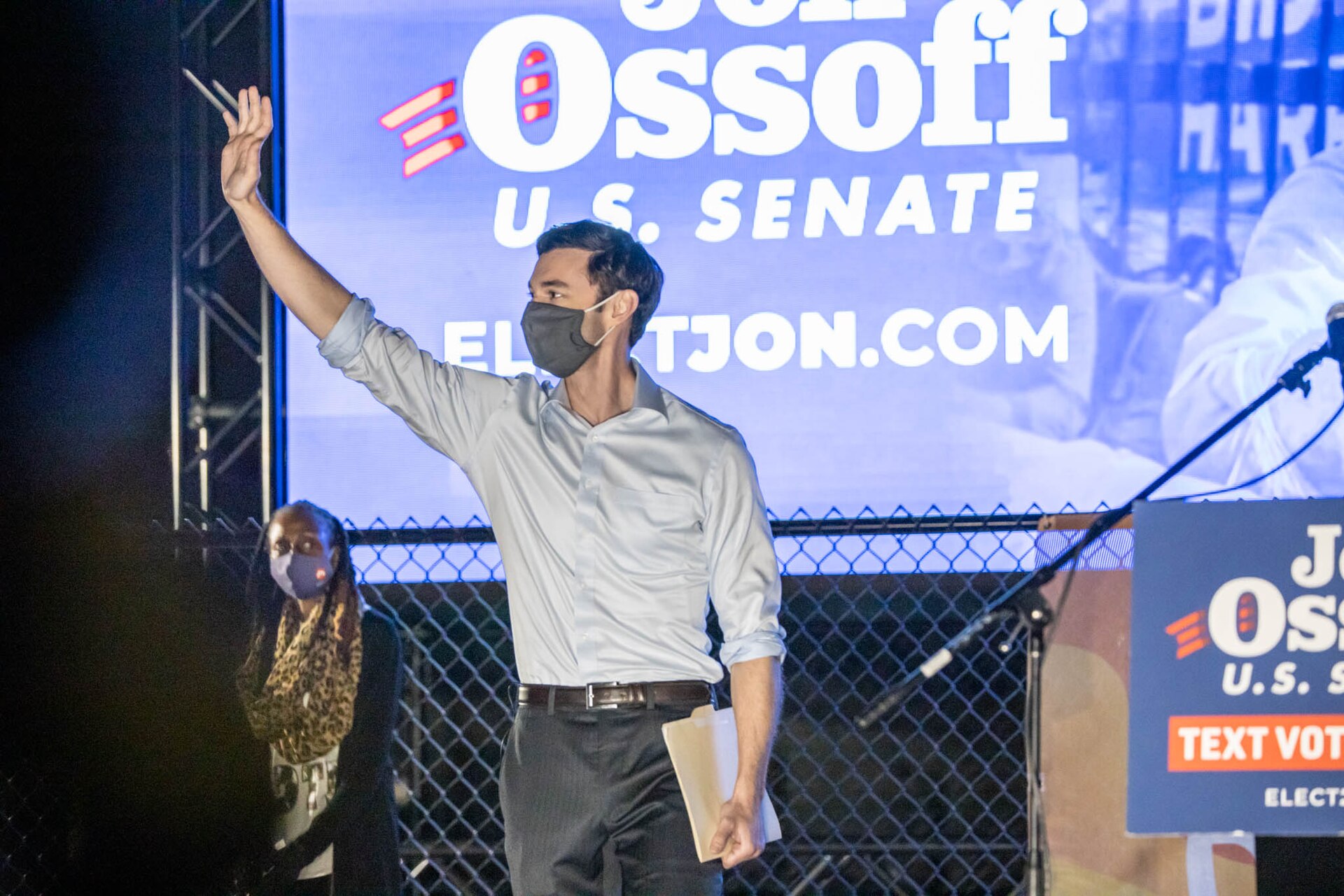
Jon Ossoff’s fundraising prowess is reshaping the Georgia Senate race landscape. With over $81 million raised and $33 million in the bank, Ossoff is not just leading in dollars but also in polls, creating a formidable challenge for his Republican opponent, Mike Collins.
The shift in narrative is palpable. Sabato’s Crystal Ball now categorizes the race as “likely Democrat,” a downgrade from “leans Democrat,” reflecting Ossoff’s growing advantage. This comes as the GOP-aligned Senate Leadership Fund pledges $44 million, their largest non-runoff investment in Georgia, attempting to counter Ossoff’s financial lead.
Recent polls, like the one from AARP showing Ossoff ahead by 9 points, underline the Democrats’ momentum. Meanwhile, Collins faces scrutiny over his son-in-law’s controversial social media activity, adding another layer of complexity to his campaign.
As the November 2026 election approaches, the question remains whether the GOP’s financial muscle can bridge the gap or if Ossoff’s fundraising juggernaut has already secured a Democratic hold on the race.
Reporting published July 30 said Sabato’s Crystal Ball moved the Georgia Senate race from “leans Democrat” to “likely Democrat,” a notable public downgrade for GOP hopes in a state Donald Trump carried in 2024. The AJC reported that the GOP-aligned Senate Leadership Fund has pledged an initial $44 million on the race, described as its largest investment ever in a Georgia Senate contest outside a runoff.
Reuters reported that the Georgia Democrat has raised more than $81 million so far this cycle and is sitting on nearly $33 million in campaign cash, about $30 million more than Republican Rep. The immediate next phase is not a hearing or vote but a spending war: Republicans are preparing to deploy that initial $44 million Senate Leadership Fund commitment, while Ossoff’s campaign enters the stretch run with one of the largest Senate war chests in the country.
What happens next is a collision between Ossoff’s cash machine and the Republican outside-money response in the final months before the November 2026 election. Earlier July reporting from the Atlanta Journal-Constitution and CBS Atlanta showed the same trend in quarterly form: Ossoff raised another $20 million in the second quarter and entered the fall stretch with more than $42 million on hand at that point, while Collins’ side emphasized far smaller-dollar grassroots donations and a much smaller reserve.
That came on top of a July 23 AARP poll showing Ossoff at 52 percent to Collins’ 43 percent among likely voters, and a Fox News poll released July 1 that had Ossoff up 56 percent to 43 percent, a 13-point lead. Esther Panitch warned that Collins’ previous support for Israel “is not a hall pass for antisemitism,” while later reporting said Collins abruptly ended a July 30 press conference after repeated questions about the matter.
On July 23, AARP released a poll putting Ossoff ahead 52-43 and showing older voters could still be decisive. The unresolved question in the latest reporting is whether Georgia’s underlying partisanship and GOP super PAC money can still drag Collins back into contention, or whether Ossoff’s $80 million-plus fundraising operation has already helped turn a top pickup target into a race slipping out of Republican reach.
This comes as the GOP-aligned Senate Leadership Fund pledges $44 million, their largest non-runoff investment in Georgia, attempting to counter Ossoff’s financial lead. With over $81 million raised and $33 million in the bank, Ossoff is not just leading in dollars but also in polls, creating a formidable challenge for his Republican opponent, Mike Collins.
Earlier July reporting from the Atlanta Journal-Constitution and CBS Atlanta showed the same trend in quarterly form: Ossoff raised another $20 million in the second quarter and entered the fall stretch with more than $42 million on hand at that point, while Collins’ side emphasized far smaller-dollar grassroots donations and a much smaller reserve. Esther Panitch warned that Collins’ previous support for Israel “is not a hall pass for antisemitism,” while later reporting said Collins abruptly ended a July 30 press conference after repeated questions about the matter.
The scale and speed of this development has caught many observers off guard. Each new update adds another dimension to a story that is still unfolding, and the full picture will only become clear as more verified details emerge from the people and institutions directly involved.
Analysts who have tracked this issue closely say the current moment represents a genuine turning point. The decisions made in the coming weeks are expected to set the direction for months ahead, with ripple effects likely to extend well beyond the immediate actors in the story.
For those directly affected, the practical impact is already visible. People navigating this fast-changing situation are dealing with real consequences while new information continues to reshape what is known and what remains open to interpretation.
Historical parallels offer some context, though experts caution against drawing too close a comparison. Similar situations have played out before, but the specific combination of pressures, personalities, and timing here makes this moment distinct in ways that matter for how it ultimately resolves.
The political and economic dimensions of this story are deeply intertwined. What appears as a single event on the surface is in practice the convergence of multiple pressures that have been building quietly over a longer period than most public reporting has captured.