

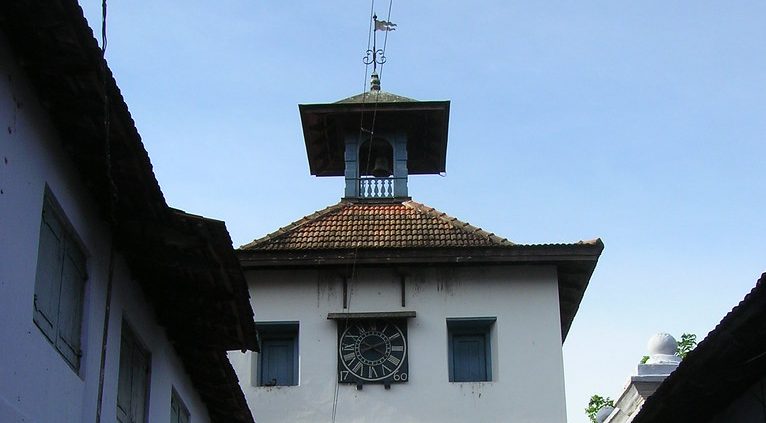

Quick Summary: Paradesi Synagogue Faces Solitude as Kochis Jewish Community Dwindles
- The 458-year-old Paradesi Synagogue in Kochi now has just one local congregant, Hallegua, who prays alone due to the lack of a minyan.
- Synagogue leaders opened a museum showcasing Kochi’s Jewish history, including a Hindu king’s charter from 1000 CE granting religious freedom.
- Josephai warns that the community’s memory might die with him, as there is no one left to tell their stories.
- The Jewish population in India has dwindled to fewer than 5,000, with many leaving for Israel in the 1950s.
- Interfaith support is crucial, with non-Jews also preserving the Cochin Jewish heritage.
Source: Open external resource
Source: Read original article
The last remnants of the Cochin Jews are fighting a losing battle against time and cultural extinction. The 458-year-old Paradesi Synagogue in Kochi stands nearly empty, with Keith Hallegua as its sole congregant, praying alone on holidays due to the absence of a minyan. This is a poignant symbol of a once-thriving community now reduced to whispers of its former self.
In an effort to preserve their rich history, synagogue leaders have opened a museum that features artifacts like a Hindu king’s charter from 1000 CE, which once granted them religious freedom. Yet, this is a race against time, as Elias “Babu” Josephai, the keeper of the Malabari synagogue, warns that the community’s stories may vanish with him.
India’s Jewish population has shrunk to fewer than 5,000, with many having emigrated to Israel in the 1950s. Despite this decline, interfaith support has become a lifeline, with Hindus and Muslims contributing to the preservation of Jewish heritage. The future remains uncertain, hinging on whether an outside organization will step in to continue these efforts.
In a story published Friday, August 7, 2026, the Associated Press says the 458-year-old Paradesi Synagogue now has just one local congregant, Hallegua, who prays there alone on some holidays because there is no minyan, the quorum of 10 men required for communal worship. The article also dates and locates the preservation effort with unusual precision: photos and reporting were gathered in Kochi on May 20 and May 21, 2026, and the synagogue at the center of the story is 458 years old.
Earlier in 2026, synagogue leaders opened a museum of Kochi’s Jewish history featuring two copper plates with a Hindu king’s charter from 1000 CE granting religious freedom to the community. There is no announced government intervention, no scheduled vote or court deadline, and no formal succession plan described by AP.
The emotional center of the story is Josephai’s warning that the community’s memory could die with him. AP quotes him saying, “Once I’m gone, there is no one who can tell these stories,” and also, “Every Jew has a dream that his last breath should be in Israel.
The bitter irony in the latest reporting is that those old divisions have outlived the people who enforced them, even as the community itself is vanishing. AP reports there are now fewer than 5,000 Jews in all of India, and much of Kochi’s Jewish population left for Israel in the 1950s, abandoning homes, synagogues and cemeteries.
The Kadavumbagam Synagogue, which Josephai has spent years reviving, is described as 12th century, underscoring how ancient the institutions are compared with how tiny the surviving community has become. Hallegua is identified as a Paradesi Jew descended from Sephardic arrivals from Spain and Portugal, while Josephai is a Malabari Jew whose community traces its roots back more than 2,000 years.
Synagogue leaders opened a museum showcasing Kochi’s Jewish history, including a Hindu king’s charter from 1000 CE granting religious freedom. In an effort to preserve their rich history, synagogue leaders have opened a museum that features artifacts like a Hindu king’s charter from 1000 CE, which once granted them religious freedom.
The 458-year-old Paradesi Synagogue in Kochi stands nearly empty, with Keith Hallegua as its sole congregant, praying alone on holidays due to the absence of a minyan. India’s Jewish population has shrunk to fewer than 5,000, with many having emigrated to Israel in the 1950s.
The scale and speed of this development has caught many observers off guard. Each new update adds another dimension to a story that is still unfolding, and the full picture will only become clear as more verified details emerge from the people and institutions directly involved.
Analysts who have tracked this issue closely say the current moment represents a genuine turning point. The decisions made in the coming weeks are expected to set the direction for months ahead, with ripple effects likely to extend well beyond the immediate actors in the story.
For those directly affected, the practical impact is already visible. People navigating this fast-changing situation are dealing with real consequences while new information continues to reshape what is known and what remains open to interpretation.
Historical parallels offer some context, though experts caution against drawing too close a comparison. Similar situations have played out before, but the specific combination of pressures, personalities, and timing here makes this moment distinct in ways that matter for how it ultimately resolves.
The political and economic dimensions of this story are deeply intertwined. What appears as a single event on the surface is in practice the convergence of multiple pressures that have been building quietly over a longer period than most public reporting has captured.