

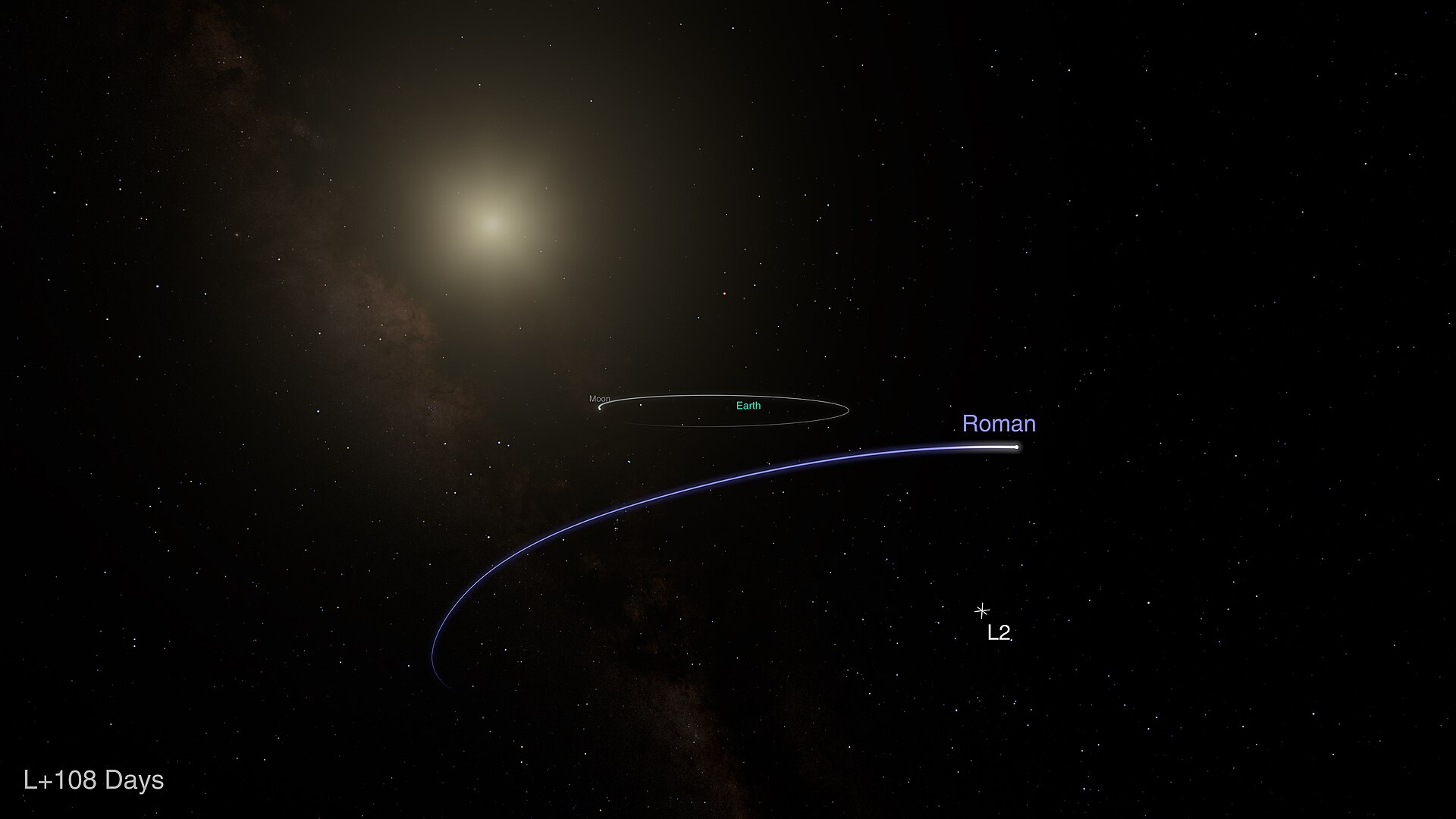

Quick Summary: NASA Accelerates Roman Telescope Launch to Explore Dark Energy
- NASA’s Roman Space Telescope is launching nine months ahead of schedule, originally planned for 2027.
- The launch is scheduled for August 30, 2026, from Kennedy Space Center via Falcon Heavy.
- This mission aims to explore dark energy, dark matter, and exoplanets with a field of view 100 times larger than Hubble’s.
- The Roman Telescope is expected to measure light from a billion galaxies during its five-year mission.
- NASA Administrator Jared Isaacman will be present for the launch activities at Kennedy Space Center.
Source: Open external resource
Source: Read original article
NASA is gearing up to launch the Nancy Grace Roman Space Telescope, a mission that promises to open a new window on the universe. Set to lift off on August 30, 2026, from Kennedy Space Center, this telescope is launching nine months ahead of its original schedule, a rare acceleration for a project of this magnitude.
The Roman Telescope is designed to tackle some of the most profound questions in astrophysics, including the mysteries of dark energy and dark matter, as well as the study of exoplanets. Its field of view is touted to be 100 times larger than that of the Hubble Space Telescope, allowing it to measure light from a billion galaxies over its five-year mission.
NASA Administrator Jared Isaacman is expected to attend the launch, underscoring the significance of this mission. The telescope’s deployment and commissioning will take time, meaning the first scientific images won’t be immediate, but the anticipation is palpable as the mission promises to revolutionize our understanding of the universe.
The Roman Telescope’s mission is not just a scientific endeavor but a testament to NASA’s ability to manage complex projects under tight timelines. The successful launch will mark a pivotal moment in space exploration, with the potential to transform how astronomers study the cosmos.
NASA said the telescope is launching “nine months ahead of schedule,” while recent reporting noted the mission had once been slated for 2027 before being pulled forward to this weekend. A recent GAO assessment said the project had been working to an August 2026 launch readiness date, earlier than the original October 2026 target, while also needing Deep Space Network maintenance adjusted so downtime would not interfere with launch and early orbit operations.
EDT after moving the mission ahead of its previously expected 2027 timetable. On August 24, NASA published launch coverage plans and confirmed Administrator Jared Isaacman was expected at Kennedy activities tied to the mission.
EDT on August 30, Roman begins a mission planned to last at least five years, according to current reporting, with NASA and SpaceX then shifting to deployment, checkout, and commissioning milestones before releasing science imagery and starting survey operations. The headline scientific number driving attention is Roman’s scale: NASA says its field of view is at least 100 times larger than Hubble’s and that it could measure light from a billion galaxies over its lifetime.
On August 25, the encapsulated telescope was moved to the SpaceX hangar at Launch Complex 39A. By August 29 and 30, coverage shifted to live countdown reporting focused on the Falcon Heavy, weather, and final pad operations.
The surprising twist is that the telescope’s first images will not arrive immediately after launch; according to this week’s reporting, commissioning and checkout will take time, meaning the real scientific payoff comes after a successful ascent and early-orbit sequence rather than in an instant post-launch reveal. On August 28, NASA declared Roman “Go” for launch.
The launch is scheduled for August 30, 2026, from Kennedy Space Center via Falcon Heavy. Set to lift off on August 30, 2026, from Kennedy Space Center, this telescope is launching nine months ahead of its original schedule, a rare acceleration for a project of this magnitude.
On August 24, NASA published launch coverage plans and confirmed Administrator Jared Isaacman was expected at Kennedy activities tied to the mission. EDT on August 30, Roman begins a mission planned to last at least five years, according to current reporting, with NASA and SpaceX then shifting to deployment, checkout, and commissioning milestones before releasing science imagery and starting survey operations.
This mission aims to explore dark energy, dark matter, and exoplanets with a field of view 100 times larger than Hubble’s. The headline scientific number driving attention is Roman’s scale: NASA says its field of view is at least 100 times larger than Hubble’s and that it could measure light from a billion galaxies over its lifetime.
The scale and speed of this development has caught many observers off guard. Each new update adds another dimension to a story that is still unfolding, and the full picture will only become clear as more verified details emerge from the people and institutions directly involved.
Analysts who have tracked this issue closely say the current moment represents a genuine turning point. The decisions made in the coming weeks are expected to set the direction for months ahead, with ripple effects likely to extend well beyond the immediate actors in the story.
For those directly affected, the practical impact is already visible. People navigating this fast-changing situation are dealing with real consequences while new information continues to reshape what is known and what remains open to interpretation.
Historical parallels offer some context, though experts caution against drawing too close a comparison. Similar situations have played out before, but the specific combination of pressures, personalities, and timing here makes this moment distinct in ways that matter for how it ultimately resolves.
The political and economic dimensions of this story are deeply intertwined. What appears as a single event on the surface is in practice the convergence of multiple pressures that have been building quietly over a longer period than most public reporting has captured.