

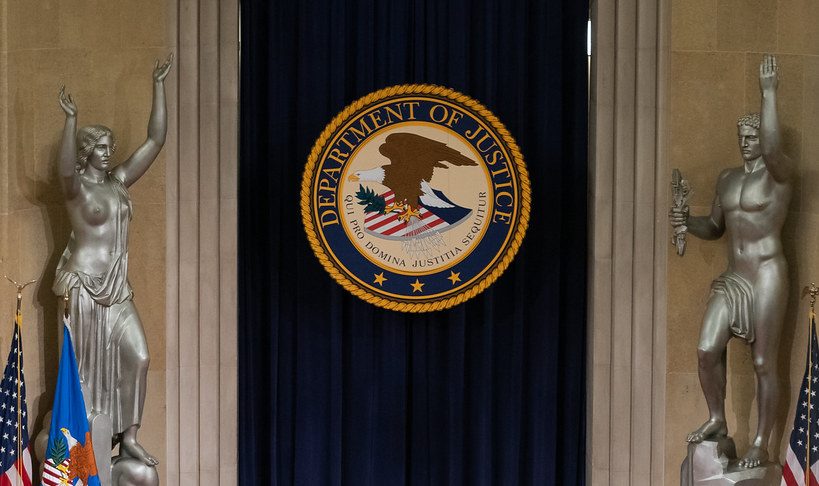

Quick Summary: DOJ Charges 16 in Multistate Crackdown on Election Crimes
- The Justice Department charged 16 individuals across multiple states with election crimes, highlighting a focus on alleged illegal voting.
- Texas prosecutors charged seven non-citizens, including Helen Sayen Adams, for allegedly voting illegally in the 2024 general election.
- In Georgia, Analiea Milliscent Eccles allegedly voted nine times between 2008 and 2024, representing the most egregious case.
- U.S. Attorney Ryan Raybould emphasized that federal elections are for citizens only, reinforcing the DOJ’s commitment to election integrity.
- The charges are part of a broader effort to address non-citizen voting, despite research suggesting such cases are rare.
Source: Open external resource
Source: Read original article
The Justice Department has taken a bold stance by charging 16 individuals across various states with alleged election crimes, underscoring the federal government’s intensified focus on illegal voting practices. This unprecedented move highlights the ongoing battle over election integrity in the United States.
Among the charged are seven non-citizens in Texas, accused of unlawfully participating in the 2024 general election. Notably, Helen Sayen Adams is alleged to have falsely claimed U.S. citizenship to cast her vote. Meanwhile, in Georgia, Analiea Milliscent Eccles stands accused of voting nine times over a span of 16 years, marking one of the most severe allegations.
Federal officials, including U.S. Attorney Ryan Raybould, have made it clear that these charges are meant to safeguard the sanctity of American elections. Raybould stated, “Federal elections belong to American citizens—period,” signaling a zero-tolerance approach to election crimes.
This crackdown comes amid a contentious political climate, with the Trump administration spotlighting non-citizen voting ahead of the midterms. Despite evidence suggesting such instances are infrequent, the DOJ’s actions are likely to fuel further debate on election security and integrity.
citizenship on a Texas voter registration application in June 2024 and then voted in the November 2024 general election in Tarrant County, and Khalwinder Singh Bhengura, 69, who prosecutors say falsely claimed citizenship in January 2024, voted in November 2024, and was arrested on September 11. ” Two of the Texas defendants, Carlos Salas Barrios and Celestin Katubadi, are accused of casting provisional ballots in Tarrant County in the November 2024 general election, but prosecutors say those ballots were ultimately rejected; the DOJ position is that the act of casting them was still unlawful under Texas and federal law.
In another twist, Joshua Nmelichukwu Akpom was not charged directly for the 2018 voting conduct because, according to prosecutors, the five-year statute of limitations had run, so the government instead charged him with making false statements on a 2026 naturalization application. Another Texas defendant, Moises Anwar Arellano-Alba, 36, had already been ordered deported in July and allegedly voted early in the 2024 general election in Dallas County despite being a non-citizen and a convicted felon.
The biggest new development is that the Justice Department has now bundled 16 defendants from several states into a high-profile election-crimes push, with the most striking allegation being that one Georgia defendant, Analiea Milliscent Eccles, illegally voted nine times between 2008 and 2024 while other cases involve ballots cast or attempted in the 2018, 2022 and 2024 federal elections. passport application, while Pauline Lewis, 65, was arrested on a complaint charging her with voting as a non-citizen in a federal election.
Two days later, on September 18, the DOJ’s main Office of Public Affairs issued the broader statement saying 16 individuals across multiple jurisdictions had been charged with illegal voting and related election crimes. In the same reporting window, AP said Attorney General Todd Blanche had previewed a “big development” on illegal voting in Texas at a White House news conference, and the Supreme Court on Monday rejected a separate Trump-backed effort to require tighter citizenship verification for mailed ballots, a setback that sharpened the focus on criminal prosecutions like these.
AP also noted that the seven Texas defendants do not appear to be accused of working together, undercutting any claim of a single organized scheme, while the administration continues to pursue other election-related steps, including lawsuits seeking detailed voter data in 30 states and the District of Columbia. The most eye-catching single allegation outside Texas is in Georgia, where the DOJ says Eccles, a 44-year-old Venezuelan national and DACA recipient, voted nine times between 2008 and 2024.
Among the charged are seven non-citizens in Texas, accused of unlawfully participating in the 2024 general election. Another Texas defendant, Moises Anwar Arellano-Alba, 36, had already been ordered deported in July and allegedly voted early in the 2024 general election in Dallas County despite being a non-citizen and a convicted felon.
passport application, while Pauline Lewis, 65, was arrested on a complaint charging her with voting as a non-citizen in a federal election. Two days later, on September 18, the DOJ’s main Office of Public Affairs issued the broader statement saying 16 individuals across multiple jurisdictions had been charged with illegal voting and related election crimes.
In the same reporting window, AP said Attorney General Todd Blanche had previewed a “big development” on illegal voting in Texas at a White House news conference, and the Supreme Court on Monday rejected a separate Trump-backed effort to require tighter citizenship verification for mailed ballots, a setback that sharpened the focus on criminal prosecutions like these. In Georgia, Analiea Milliscent Eccles allegedly voted nine times between 2008 and 2024, representing the most egregious case.
The scale and speed of this development has caught many observers off guard. Each new update adds another dimension to a story that is still unfolding, and the full picture will only become clear as more verified details emerge from the people and institutions directly involved.
Analysts who have tracked this issue closely say the current moment represents a genuine turning point. The decisions made in the coming weeks are expected to set the direction for months ahead, with ripple effects likely to extend well beyond the immediate actors in the story.
For those directly affected, the practical impact is already visible. People navigating this fast-changing situation are dealing with real consequences while new information continues to reshape what is known and what remains open to interpretation.
Historical parallels offer some context, though experts caution against drawing too close a comparison. Similar situations have played out before, but the specific combination of pressures, personalities, and timing here makes this moment distinct in ways that matter for how it ultimately resolves.
The political and economic dimensions of this story are deeply intertwined. What appears as a single event on the surface is in practice the convergence of multiple pressures that have been building quietly over a longer period than most public reporting has captured.