

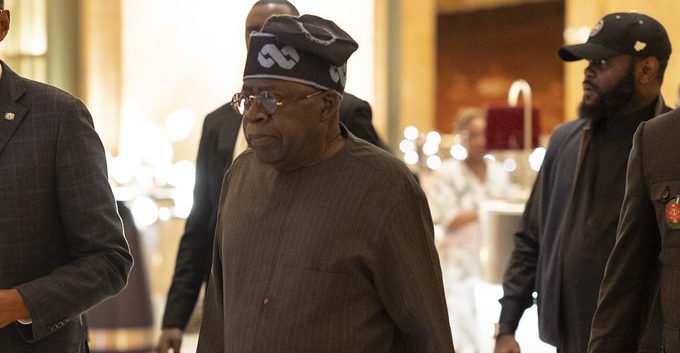

Quick Summary: FBI Court Filing Reveals Criminal Probe Into Nigerian President Tinubu
- On August 28, 2026, the FBI filing and Tinubu’s opposition were lodged in court, revealing a criminal investigation.
- The FBI acknowledged that records were compiled for a criminal probe, contradicting years of denial.
- Tinubu’s lawyers argue against releasing records, citing privacy protections under FOIA Exemption 7(C).
- The lobbying firm Von Batten-Montague-York frames the FBI’s filing as a public-interest revelation.
- The court must decide if the FBI can keep records sealed or must disclose them after private review.
Source: Open external resource
Source: Read original article
The political landscape is shaken as the FBI filing concerning Nigerian President Bola Tinubu unveils a criminal investigation, contradicting long-standing denials. The August 28, 2026, court documents have reignited debates, with the FBI’s declaration providing opponents with potent language to challenge Tinubu.
Central to this controversy is the FBI’s admission that the records were part of a criminal investigation, a stark shift from previous political narratives. Tinubu’s legal team is fighting to keep these records private, invoking the Freedom of Information Act’s privacy protections, while critics argue for transparency.
The role of the lobbying firm Von Batten-Montague-York adds a layer of complexity, as it amplifies the FBI’s filing as a significant public-interest disclosure. This firm, linked to Tinubu’s political rival Atiku Abubakar, intensifies the political stakes, framing the narrative as a battle over transparency and accountability.
The court’s impending decision on whether to release the records will determine the public’s access to potentially explosive details. Judge Howell’s ruling could shift the focus from speculation to concrete evidence, impacting both the legal and political arenas.
On or around August 28, 2026, the FBI declaration and Tinubu’s opposition filing were lodged in court. The sharpest surprise, therefore, is not that old allegations exist, but that fresh court papers in late August 2026 gave opponents new language from the FBI itself to wield in public.
That older amount is resurfacing now because transparency activist Aaron Greenspan, who filed the FOIA suit in June 2023, is seeking the FBI’s full file, interview records from 1992 and 1993, and related DEA and Justice Department materials. Tinubu’s lawyers, in a filing reported on August 29, asked the court to block release of the records, arguing that the Freedom of Information Act is meant to expose government operations, not hand over private law-enforcement material about individuals.
According to the reported filing, his side said, “Plaintiff does not point to an existing public record that contains details of a governmental criminal investigation or findings about Intervenor,” and relied on FOIA Exemption 7(C), the privacy provision that protects against an unwarranted invasion of personal privacy. Peter Obi, according to reporting published September 1, criticized Tinubu’s attempt to suppress the records, while the lobbying firm Von Batten-Montague-York has pushed out excerpts and commentary that frame the FBI’s filing as a major public-interest revelation.
No new criminal proceeding against Tinubu has been reported in this latest burst of coverage; the action is in the FOIA case, where the next consequential decision is whether the court orders fuller disclosure, accepts the agencies’ exemption claims, or splits the difference with partial release. What has made this story newly combustible over the last week is the wording in the FBI’s sworn declaration and the way it was amplified by Washington lobbying firm Von Batten-Montague-York, which has been tied in reporting to former Nigerian vice president Atiku Abubakar.
District Court for the District of Columbia that the records were “compiled in furtherance” of investigations into drug-trafficking crimes and that “the court has already determined that an official acknowledgement had been made” of an investigation involving Tinubu. Over the weekend and into September 1, more reports focused on the FBI’s acknowledgment that a criminal investigation had been officially recognized by the court and on the judge’s decision to permit private review of withheld material.
The August 28, 2026, court documents have reignited debates, with the FBI’s declaration providing opponents with potent language to challenge Tinubu. On or around August 28, 2026, the FBI declaration and Tinubu’s opposition filing were lodged in court.
The sharpest surprise, therefore, is not that old allegations exist, but that fresh court papers in late August 2026 gave opponents new language from the FBI itself to wield in public. Quick Summary: FBI court filing says Tinubu was subject of US criminal investigation – Lobbying firm – Daily Trust On August 28, 2026, the FBI filing and Tinubu’s opposition were lodged in court, revealing a criminal investigation.
Tinubu’s lawyers, in a filing reported on August 29, asked the court to block release of the records, arguing that the Freedom of Information Act is meant to expose government operations, not hand over private law-enforcement material about individuals. According to the reported filing, his side said, “Plaintiff does not point to an existing public record that contains details of a governmental criminal investigation or findings about Intervenor,” and relied on FOIA Exemption 7(C), the privacy provision that protects against an unwarranted invasion of personal privacy.
Peter Obi, according to reporting published September 1, criticized Tinubu’s attempt to suppress the records, while the lobbying firm Von Batten-Montague-York has pushed out excerpts and commentary that frame the FBI’s filing as a major public-interest revelation. The court’s impending decision on whether to release the records will determine the public’s access to potentially explosive details.
Tinubu’s lawyers argue against releasing records, citing privacy protections under FOIA Exemption 7(C). Over the weekend and into September 1, more reports focused on the FBI’s acknowledgment that a criminal investigation had been officially recognized by the court and on the judge’s decision to permit private review of withheld material.
The scale and speed of this development has caught many observers off guard. Each new update adds another dimension to a story that is still unfolding, and the full picture will only become clear as more verified details emerge from the people and institutions directly involved.
Analysts who have tracked this issue closely say the current moment represents a genuine turning point. The decisions made in the coming weeks are expected to set the direction for months ahead, with ripple effects likely to extend well beyond the immediate actors in the story.
For those directly affected, the practical impact is already visible. People navigating this fast-changing situation are dealing with real consequences while new information continues to reshape what is known and what remains open to interpretation.
Historical parallels offer some context, though experts caution against drawing too close a comparison. Similar situations have played out before, but the specific combination of pressures, personalities, and timing here makes this moment distinct in ways that matter for how it ultimately resolves.
The political and economic dimensions of this story are deeply intertwined. What appears as a single event on the surface is in practice the convergence of multiple pressures that have been building quietly over a longer period than most public reporting has captured.