

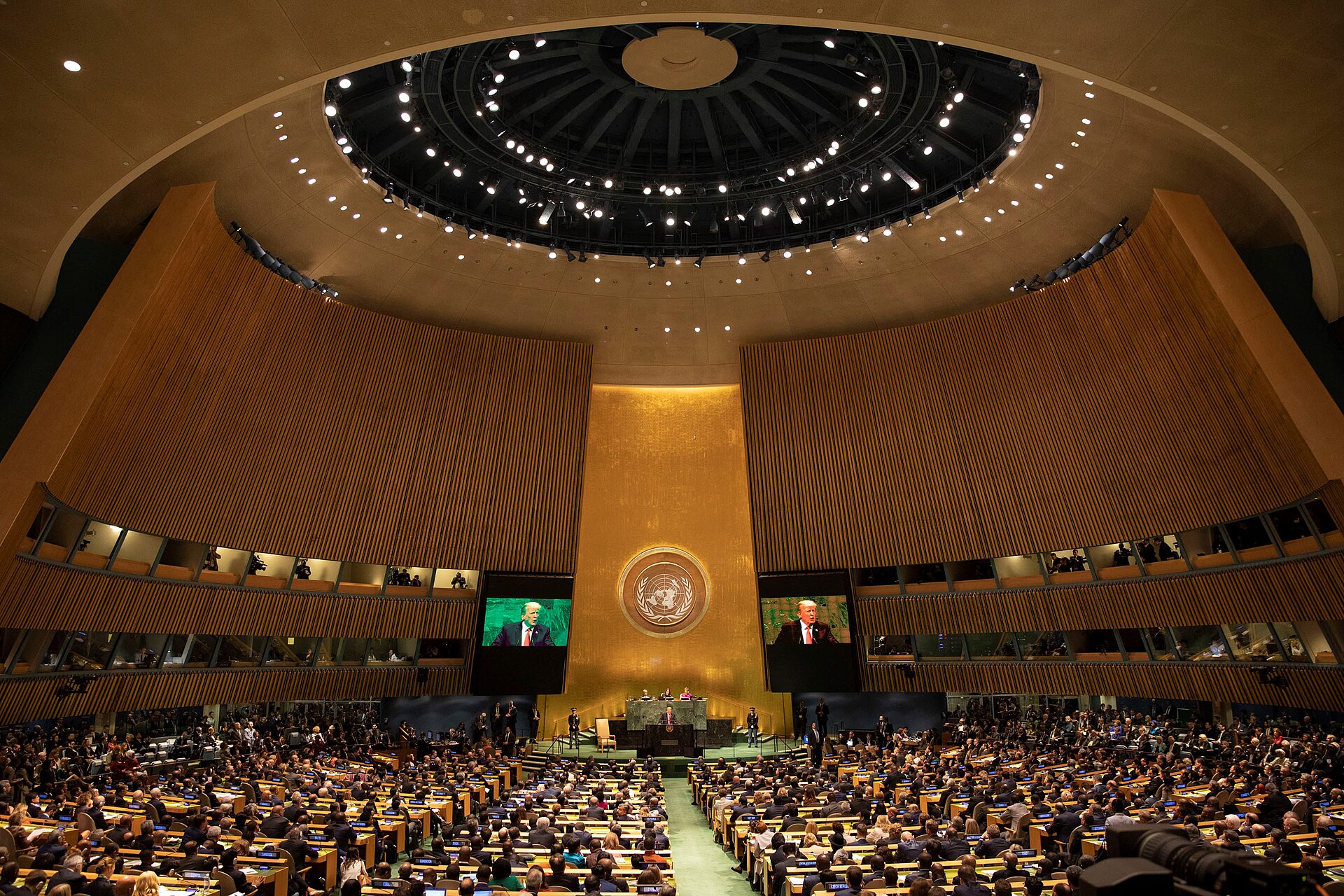

Quick Summary: Trump’s U.n. Speech Threatens Iran Amid Rising Global Tensions
- Trump used the U.N. stage to threaten Iran with annihilation, raising global tensions.
- Arab mediators push for a U.S.-Iran meeting to prevent further conflict escalation.
- Trump’s mixed messages leave allies uncertain about U.S. intentions: diplomacy or war.
- Iran’s alleged ceasefire violations in the Strait of Hormuz are a key trigger for U.S. action.
- Trump’s rhetoric is seen as both a bargaining tool and a signal of potential military escalation.
Source: Open external resource
Source: Read original article
In a dramatic turn of events, Donald Trump took the U.N. General Assembly podium to issue a stark warning to Iran, threatening annihilation while suggesting that negotiations could still emerge after the November midterms. This duality has left diplomats and allies puzzled, questioning whether the U.S. is on the brink of war or diplomacy.
The tension is palpable as Arab mediators push for an emergency meeting between the U.S. and Iran to halt the conflict’s escalation. Trump’s rhetoric, however, suggests a hardening stance, with accusations against Iran for destabilizing maritime security in the Strait of Hormuz.
The mixed signals from the U.S. administration have overshadowed the broader U.N. agenda, as Gulf states attempt to maintain a ceasefire and revive talks. The approval of visas for Iranian officials to attend the U.N. meetings adds another layer of complexity to this unfolding drama.
As the world watches, the question remains whether Trump’s threats are mere leverage or a genuine readiness to widen the war. The coming weeks, especially with the midterm elections looming, will be pivotal in determining the path forward.
coverage said Trump has “struggled to find an endgame to the Iran war after more than six months,” and the uncertainty is being compounded by his choice not to meet Israel’s prime minister at the same moment he is set to engage Gulf leaders. national security team trying to hold together military pressure and diplomatic signaling at once.
military is running low on advanced weapons, and accusing Iran of destabilizing shipping routes. A major controversy now is whether Trump’s threat is meant as leverage or signals a genuine readiness to widen the war.
On September 17, reporting indicated Trump was approaching a “critical juncture” on whether to resume massive attacks or make another push for diplomacy. Supporters inside his orbit appear to see the language as bargaining pressure on Tehran and reassurance to domestic hawks, but critics see it as proof that the administration still lacks a coherent endgame after months of fighting.
For now, the standout fact is that the president used the world’s premier diplomatic forum to openly pose a binary choice between negotiation and annihilation, and nobody in the latest reporting can say with confidence which option he actually intends to choose. allies unsure whether Washington is preparing for negotiations or another major round of attacks.
” He also argued that Iran had violated a ceasefire by attacking commercial ships in the Strait of Hormuz, making maritime security—not just the nuclear issue—the immediate trigger for possible next steps. The central conflict driving the story is the collapse of any clean line between war and diplomacy.
On September 17, reporting indicated Trump was approaching a “critical juncture” on whether to resume massive attacks or make another push for diplomacy. For now, the standout fact is that the president used the world’s premier diplomatic forum to openly pose a binary choice between negotiation and annihilation, and nobody in the latest reporting can say with confidence which option he actually intends to choose.
Trump’s rhetoric, however, suggests a hardening stance, with accusations against Iran for destabilizing maritime security in the Strait of Hormuz. agenda, as Gulf states attempt to maintain a ceasefire and revive talks.
The scale and speed of this development has caught many observers off guard. Each new update adds another dimension to a story that is still unfolding, and the full picture will only become clear as more verified details emerge from the people and institutions directly involved.
Analysts who have tracked this issue closely say the current moment represents a genuine turning point. The decisions made in the coming weeks are expected to set the direction for months ahead, with ripple effects likely to extend well beyond the immediate actors in the story.
For those directly affected, the practical impact is already visible. People navigating this fast-changing situation are dealing with real consequences while new information continues to reshape what is known and what remains open to interpretation.
Historical parallels offer some context, though experts caution against drawing too close a comparison. Similar situations have played out before, but the specific combination of pressures, personalities, and timing here makes this moment distinct in ways that matter for how it ultimately resolves.
The political and economic dimensions of this story are deeply intertwined. What appears as a single event on the surface is in practice the convergence of multiple pressures that have been building quietly over a longer period than most public reporting has captured.