

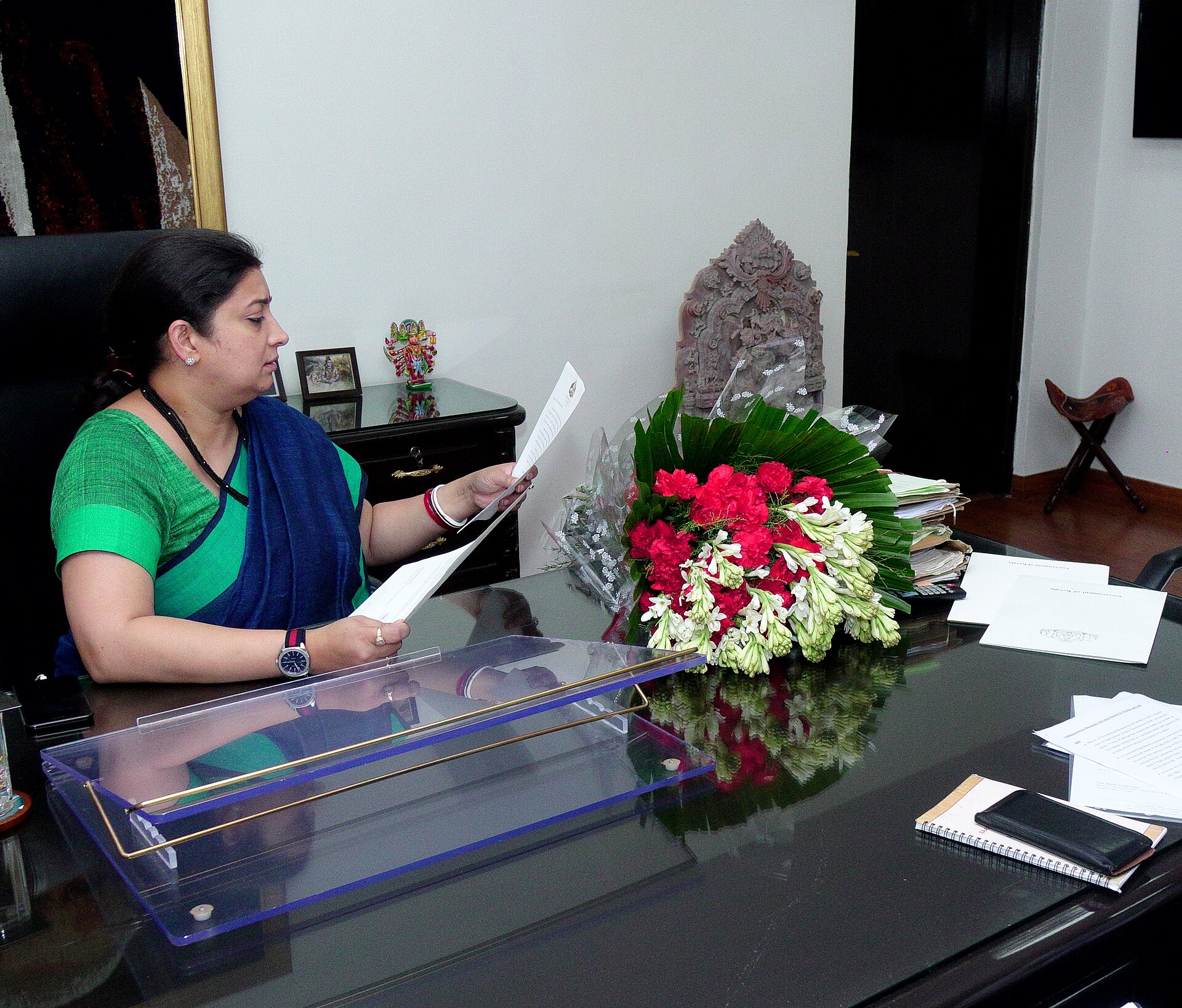

Quick Summary: Smriti Iranis Bold Move : Seeking TV Role After Election Loss
- Smriti Irani admitted to calling media executive Uday Shankar for work post her 2024 election defeat, highlighting her abrupt career shift.
- Irani returned to television with the second season of ‘Kyunki Saas Bhi Kabhi Bahu Thi’ on July 29, 2025, marking her comeback.
- Uday Shankar was reportedly surprised by Irani’s direct request for employment, emphasizing the unusual nature of her transition.
- Irani’s defeat in Amethi by over 1.67 lakh votes was a significant reversal from her 2019 victory against Rahul Gandhi.
- Irani’s statement about Shankar being both the reason for her job loss and gain adds a personal twist to her comeback story.
Source: Open external resource
Source: Read original article
Smriti Irani’s candid admission of her post-election job hunt has sent ripples across the media landscape. After her shocking defeat in Amethi in June 2024, Irani reached out to media executive Uday Shankar, openly acknowledging her unemployed status and seeking work. This revelation is not just a personal story but a commentary on the volatile nature of political careers. Iranis is at the center of this development.
Irani’s return to television with the second season of ‘Kyunki Saas Bhi Kabhi Bahu Thi’ on July 29, 2025, underscores a significant career shift. Her direct plea to Shankar, a powerful media figure, highlights the stark reality of her transition from a cabinet minister to a television actor. The move was surprising even to industry insiders, illustrating the unpredictable trajectory of public figures.
Irani’s defeat in Amethi was not just a political loss but a personal recalibration. She lost by over 1.67 lakh votes, a stark contrast to her 2019 victory over Rahul Gandhi. This defeat, however, has been framed by Irani as a liberating experience, allowing her to redefine her career path and public persona.
As Smriti Irani navigates her return to the entertainment industry, her story serves as a powerful narrative of resilience and reinvention. It challenges the traditional notions of political success and highlights the personal agency in career transitions. The public and media continue to watch closely, debating whether this is a story of comeback or image management.
The sharpest new turn in this story is Smriti Irani’s own unusually blunt admission that after losing Amethi in June 2024, she personally called media executive Uday Shankar and said, in effect, that she was unemployed and needed work — a confession now driving a fresh wave of reporting on how abruptly a former Union minister moved from cabinet office back to seeking a job on a TV set. In the interview now being picked up across outlets on September 5 and September 6, 2026, she described the defeat as “liberating” and said, “I picked up my phone and asked for work in media and entertainment.
The freshest coverage cluster is concentrated on September 5 and September 6, 2026 — India Today on September 5, Times Now Navbharat on September 5, and NDTV on September 6 — suggesting this is a fast-moving interview-driven story rather than one built around a new official action. What makes the latest reporting stand out is that Irani is not framing the 2024 defeat simply as political loss but as a professional reset.
The specific political fact anchoring the story is the scale of Irani’s 2024 defeat in Amethi. Multiple reports say Irani’s return happened with the second season of Kyunki Saas Bhi Kabhi Bahu Thi, and India Today dates that comeback to July 29, 2025, when the show premiered on Star Plus and began streaming on JioHotstar.
The same report reminds readers that in 2019 she had defeated Rahul Gandhi from Amethi with 4,68,514 votes, which is why the reversal still carries symbolic weight: one of the BJP’s highest-profile giant-killers lost one of India’s most watched seats by a six-figure margin. NDTV likewise says she returned to television in July 2025.
That makes the real timeline clearer than some of the viral retellings: the election loss came on June 4, 2024, the job-seeking phase followed after that defeat, and the on-screen comeback arrived more than a year later, not immediately. India Today’s September 5 report says Shankar was abroad when Irani called him and was surprised that a former cabinet minister was directly asking for work, underscoring how jarring the transition looked even to industry insiders.
After her shocking defeat in Amethi in June 2024, Irani reached out to media executive Uday Shankar, openly acknowledging her unemployed status and seeking work. Irani’s return to television with the second season of ‘Kyunki Saas Bhi Kabhi Bahu Thi’ on July 29, 2025, underscores a significant career shift.
67 lakh votes, a stark contrast to her 2019 victory over Rahul Gandhi. Multiple reports say Irani’s return happened with the second season of Kyunki Saas Bhi Kabhi Bahu Thi, and India Today dates that comeback to July 29, 2025, when the show premiered on Star Plus and began streaming on JioHotstar.
India Today’s September 5 report says Shankar was abroad when Irani called him and was surprised that a former cabinet minister was directly asking for work, underscoring how jarring the transition looked even to industry insiders. Uday Shankar was reportedly surprised by Irani’s direct request for employment, emphasizing the unusual nature of her transition.
The scale and speed of this development has caught many observers off guard. Each new update adds another dimension to a story that is still unfolding, and the full picture will only become clear as more verified details emerge from the people and institutions directly involved.
Analysts who have tracked this issue closely say the current moment represents a genuine turning point. The decisions made in the coming weeks are expected to set the direction for months ahead, with ripple effects likely to extend well beyond the immediate actors in the story.
For those directly affected, the practical impact is already visible. People navigating this fast-changing situation are dealing with real consequences while new information continues to reshape what is known and what remains open to interpretation.
Historical parallels offer some context, though experts caution against drawing too close a comparison. Similar situations have played out before, but the specific combination of pressures, personalities, and timing here makes this moment distinct in ways that matter for how it ultimately resolves.
The political and economic dimensions of this story are deeply intertwined. What appears as a single event on the surface is in practice the convergence of multiple pressures that have been building quietly over a longer period than most public reporting has captured.