

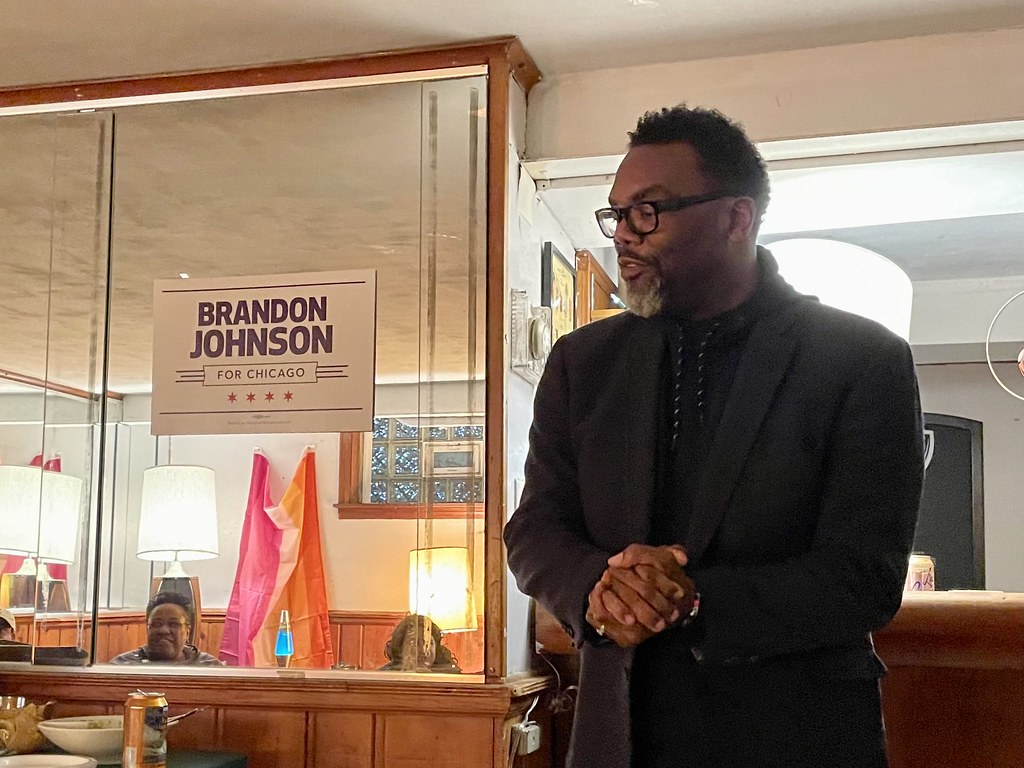

Quick Summary: Chicagos 2027 Mayoral Race Heats Up as Candidates Declare
- Mayor Brandon Johnson has not formally declared his candidacy for the 2027 election, leaving room for rivals to organize and campaign.
- Illinois Comptroller Susana Mendoza and U.S. Rep. Mike Quigley have entered the race, both advocating for a more centrist approach than Johnson.
- Secretary of State Alexi Giannoulias joined the race with significant financial backing and union support, positioning himself as a major contender.
- Giannoulias proposes hiring 1,000 more police officers, which would add $150 million to the police budget, as part of his public-safety plan.
- The race is shaping into a contest between Johnson’s progressive policies and the centrist, managerial approaches of his opponents.
Source: Open external resource
Source: Read original article
Chicago’s political landscape is heating up as the 2027 mayoral race takes shape. Incumbent Mayor Brandon Johnson’s silence on his re-election plans has opened the field for a host of challengers eager to redefine the city’s future.
Among the prominent candidates, Illinois Comptroller Susana Mendoza and U.S. Rep. Mike Quigley have thrown their hats in the ring, both advocating for a shift from Johnson’s progressive policies to a more centrist governance. Their campaigns focus on fiscal responsibility and addressing Chicago’s financial challenges.
Alexi Giannoulias, the Secretary of State, has emerged as a formidable contender with substantial financial resources and union endorsements. His campaign promises include hiring 1,000 additional police officers, a plan that would significantly impact the city’s budget but aims to enhance public safety.
The central issue in this election is whether Chicagoans will continue with Johnson’s progressive agenda or pivot towards the centrist, law-and-order approach proposed by his rivals. With the budget deficit looming large, the candidates’ fiscal strategies will be under intense scrutiny.
As the race progresses, the political dynamics and campaign controversies are expected to intensify. The candidates are currently gathering signatures, with petitions due in late October, setting the stage for a fierce electoral battle.
WTTW calculated that, at an average annual cost of $150,000 per officer including benefits, that would add roughly $150 million to the Chicago Police Department budget. ” The most consequential newer development in the broader WTTW reporting is the entrance of Secretary of State Alexi Giannoulias, who launched his campaign August 2 with visible trade-union backing and immediately altered the race’s center of gravity.
WTTW’s latest roundup, updated September 9, says the ballot-access clock is already ticking, with petitions having started July 28 and due in late October ahead of the February 23, 2027 election, while Johnson remains publicly undeclared despite long signaling he wants multiple terms. On September 2, WTTW reported that mayoral hopeful John Kelly kept filming campaign content around Chicago Fire Department stations even while the Chicago Board of Ethics investigated him for possible violations.
WTTW explicitly said the declared candidates, including Mendoza, Quigley, Cardenas and Giannoulias, have all promised a more centrist course than Johnson, who “routinely celebrates” being the city’s most progressive mayor since Harold Washington. 7 million on hand, giving him what it called a likely “enormous financial advantage” over the field.
6 million in overtime, which Giannoulias argued could be reduced with more hiring and more civilianization of desk jobs. 15 billion deficit city officials confronted a year earlier, but still an enormous election-year burden.
State campaign-finance rules also loom large: individuals are generally capped at $7,300, businesses at $14,600 and PACs at $72,800 unless self-funding changes the equation. He also tied his public-safety message to a quantifiable proposal: hire 1,000 more police officers.
WTTW calculated that, at an average annual cost of $150,000 per officer including benefits, that would add roughly $150 million to the Chicago Police Department budget. Giannoulias proposes hiring 1,000 more police officers, which would add $150 million to the police budget, as part of his public-safety plan.
7 million on hand, giving him what it called a likely “enormous financial advantage” over the field. 6 million in overtime, which Giannoulias argued could be reduced with more hiring and more civilianization of desk jobs.
15 billion deficit city officials confronted a year earlier, but still an enormous election-year burden. State campaign-finance rules also loom large: individuals are generally capped at $7,300, businesses at $14,600 and PACs at $72,800 unless self-funding changes the equation.
The scale and speed of this development has caught many observers off guard. Each new update adds another dimension to a story that is still unfolding, and the full picture will only become clear as more verified details emerge from the people and institutions directly involved.
Analysts who have tracked this issue closely say the current moment represents a genuine turning point. The decisions made in the coming weeks are expected to set the direction for months ahead, with ripple effects likely to extend well beyond the immediate actors in the story.
For those directly affected, the practical impact is already visible. People navigating this fast-changing situation are dealing with real consequences while new information continues to reshape what is known and what remains open to interpretation.
Historical parallels offer some context, though experts caution against drawing too close a comparison. Similar situations have played out before, but the specific combination of pressures, personalities, and timing here makes this moment distinct in ways that matter for how it ultimately resolves.
The political and economic dimensions of this story are deeply intertwined. What appears as a single event on the surface is in practice the convergence of multiple pressures that have been building quietly over a longer period than most public reporting has captured.