

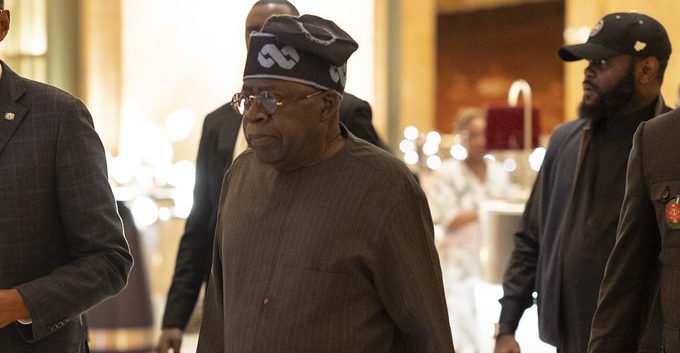

Quick Summary: Tinubu Fights to Keep FBI and DEA Records Private Amid Legal Battle
- Tinubu’s legal team seeks to block release of FBI and DEA records, arguing privacy protections under U.S. law.
- Greenspan argues the records are of public interest due to Tinubu’s presidency affecting over 230 million Nigerians.
- Nigeria’s presidency frames the issue as a civil FOIA dispute, not a criminal case.
- Recent court filings reveal Tinubu was once the subject of a criminal investigation, intensifying public scrutiny.
- The next legal responses are due by September 11 and September 18, potentially determining the records’ fate.
Source: Open external resource
Source: Read original article
The Tinubu administration is embroiled in a legal battle over the release of potentially sensitive U.S. records. Dubbed a ‘journey to nowhere’ by Nigeria’s aviation minister, this fight centers on whether FBI and DEA files from the early ’90s should be made public. The government’s stance is clear: these records are private and should remain so.
On the other side, Aaron Greenspan insists these documents are of significant public interest. With President Bola Tinubu’s decisions impacting millions, Greenspan argues transparency is crucial. The presidency, however, maintains this is a civil matter under the Freedom of Information Act, not a criminal investigation.
Recent revelations have added fuel to the fire. Court documents confirm Tinubu was once under criminal investigation, a fact that critics say undermines efforts to downplay the issue. The legal chess game continues, with key filings expected in mid-September that could shift the narrative.
At its core, this dispute is about more than just legal technicalities. It questions the balance between privacy and public interest, especially when it involves a sitting president. As the court dates approach, the stakes are high, and the outcome remains uncertain.
court to block release of FBI and DEA materials, including requests for the “entire FBI file” and FBI interview records from 1992 to 1993. Greenspan’s side argues the records concern “the sitting President of Nigeria” and therefore carry unusual public significance, especially in a country of more than 230 million people affected by Tinubu’s decisions.
Tinubu’s side says FOIA is meant to show “what the government is up to,” not expose personal files for opposition use, and the presidency has emphasized that redactions and withholding claims rest on grand-jury secrecy, attorney-client privilege, law-enforcement concerns and privacy. The next immediate inflection points are September 11, when Greenspan is expected to answer the latest filings, and September 18, when the FBI, DEA and Tinubu may submit further responses.
-records fight is that the presidency is now openly calling the fresh court push a “journey to nowhere” even as the legal calendar tightens, with Aaron Greenspan due back in court filings by September 11 and the FBI, DEA and Tinubu scheduled to respond again by September 18. In other words, the surprise is not a new prosecution, but a fresh official acknowledgment in court papers that there was an underlying investigation, which critics of Tinubu say undercuts efforts to minimize the issue as mere opposition noise.
case; on August 29, Tinubu formally moved to block release of records from the FBI, DOJ and DEA; on September 1, reporting highlighted the filing’s significance; on September 3, the Nigerian presidency publicly declared the matter a civil FOIA dispute; and on September 6, Politics Nigeria carried Keyamo’s “journey to nowhere” reaction to the latest court move. Unless the court grants broader protection or the agencies prevail on exemptions, the next round of filings by September 11 and September 18 will determine whether this “journey to nowhere,” as Keyamo called it, actually edges closer to disclosure.
Punch said Tinubu’s lawyers advanced four reasons against release and argued the FOIA process was being used to obtain private information for political purposes in Nigeria. Guardian reported that Peter Obi faulted Tinubu’s move to block release of the records, while Reno Omokri defended it by saying the files might contain private, non-criminal material.
Dubbed a ‘journey to nowhere’ by Nigeria’s aviation minister, this fight centers on whether FBI and DEA files from the early ’90s should be made public. It questions the balance between privacy and public interest, especially when it involves a sitting president.
In other words, the surprise is not a new prosecution, but a fresh official acknowledgment in court papers that there was an underlying investigation, which critics of Tinubu say undercuts efforts to minimize the issue as mere opposition noise. case; on August 29, Tinubu formally moved to block release of records from the FBI, DOJ and DEA; on September 1, reporting highlighted the filing’s significance; on September 3, the Nigerian presidency publicly declared the matter a civil FOIA dispute; and on September 6, Politics Nigeria carried Keyamo’s “journey to nowhere” reaction to the latest court move.
The government’s stance is clear: these records are private and should remain so. Court documents confirm Tinubu was once under criminal investigation, a fact that critics say undermines efforts to downplay the issue.
The scale and speed of this development has caught many observers off guard. Each new update adds another dimension to a story that is still unfolding, and the full picture will only become clear as more verified details emerge from the people and institutions directly involved.
Analysts who have tracked this issue closely say the current moment represents a genuine turning point. The decisions made in the coming weeks are expected to set the direction for months ahead, with ripple effects likely to extend well beyond the immediate actors in the story.
For those directly affected, the practical impact is already visible. People navigating this fast-changing situation are dealing with real consequences while new information continues to reshape what is known and what remains open to interpretation.
Historical parallels offer some context, though experts caution against drawing too close a comparison. Similar situations have played out before, but the specific combination of pressures, personalities, and timing here makes this moment distinct in ways that matter for how it ultimately resolves.
The political and economic dimensions of this story are deeply intertwined. What appears as a single event on the surface is in practice the convergence of multiple pressures that have been building quietly over a longer period than most public reporting has captured.