Quick Summary: Farage Faces Scrutiny Over £72 Million Donations to Reform UK
uk article published today said two billionaires have made “record-breaking donations totalling £72 million” to Reform UK in recent weeks, which it described as eight times the previous single-sum donation record of £9 million by a living donor.
Nigel Farage’s most acute new problem is no longer just scrutiny of his own finances but a fast-widening row over whether Reform UK’s top team tried to route foreign money into British politics, with the issue now bleeding into a broader backlash over a staggering £72 million in recent billionaire donations tied to his party.
On 1 September, the Electoral Commission publicly briefed on stronger anti-foreign-funding provisions.
On 4 and 5 September, Reform’s conference was overshadowed by the suspensions, Farage’s denials and fresh demands for investigation.
On 3 September, Channel 4’s undercover reporting landed.
Nigel Farage is at the center of this developing story, and the following analysis explains what matters most right now. Reform is at the center of this development.
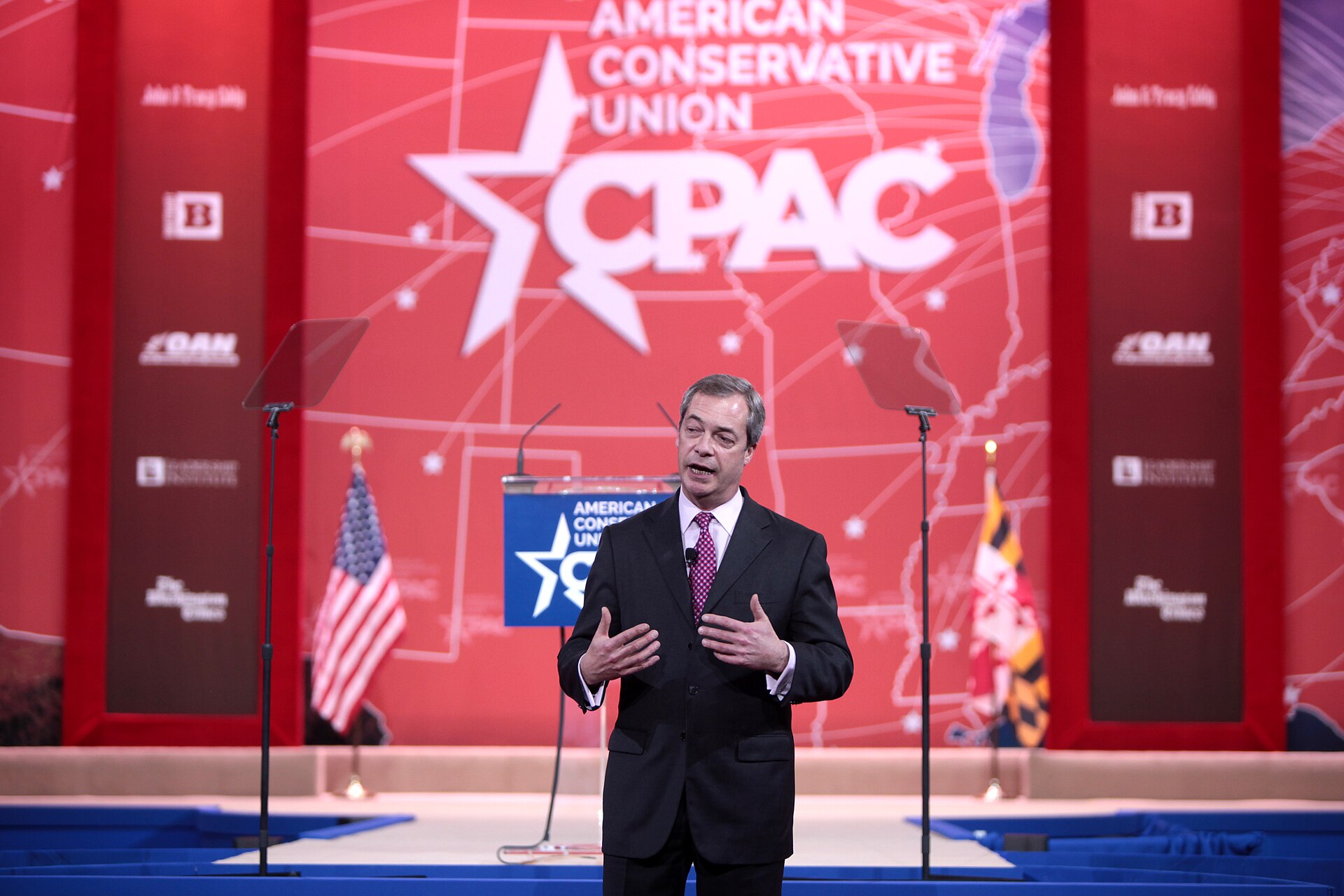
Gage Skidmore. Photo: Wikimedia Commons
Nigel Farage’s most acute new problem is no longer just scrutiny of his own finances but a fast-widening row over whether Reform UK’s top team tried to route foreign money into British politics, with the issue now bleeding into a broader backlash over a staggering £72 million in recent billionaire donations tied to his party. (theguardian. The sharpest revelation in the latest reporting is that undercover footage broadcast by Channel 4 News showed senior Reform UK figures appearing to discuss ways around electoral law on foreign donations, a story that forced the suspension of two senior officials just as Reform gathered for its Birmingham conference in early September. The Guardian reported that Dan Jukes, a senior adviser to Farage, appeared to suggest that a US-based donor could channel money through a UK-based son, while ITV reported that Liberal Democrat Cabinet Office spokesperson Lisa Smart asked parliamentary standards commissioner Daniel Greenberg to investigate what she called “the lengths that close aides of Nigel Farage went to in order to facilitate an impermissible donation and to conceal it.” (theguardian. Farage’s public defence has been aggressive but notably narrowed to denial rather than dismissal. ITV reported on 5 September that he said he was “100% confident” Reform had never taken illegal donations, while at conference he said the allegations were surfacing because opponents were “scared of us.” Yet even in later reporting he conceded the row “looks bad,” a phrase that matters because it marks a shift from pure counterattack to political damage control. That tonal change is one reason the story remains live: the argument is no longer only whether the law was broken, but whether Farage can keep claiming outsider purity while surrounded by questions about money, intermediaries and undeclared support. (itv. The numbers now driving the debate are enormous. A Politics.co.uk article published today said two billionaires have made “record-breaking donations totalling £72 million” to Reform UK in recent weeks, which it described as eight times the previous single-sum donation record of £9 million by a living donor. The same piece cited Electoral Commission research finding that 93% of participants thought measures such as donation limits, stronger rules and higher fines would help rebuild trust. Those figures have turned what might have been a niche compliance argument into a mainstream argument about whether Farage’s anti-establishment brand is being bankrolled at a scale that makes his populist message harder to sustain. (politics.co. The conflict is intensified by the fact that this donations storm lands on top of pre-existing questions about Farage’s personal finances. Politics.co.uk notes that in April 2026 the Guardian reported Farage had received £5 million from crypto billionaire Christopher Harborne shortly before announcing he would stand in the 2024 general election, and that the parliamentary standards commissioner opened a fresh inquiry on 13 May into whether he broke Commons rules by accepting and not declaring that gift. Politics.co.uk also says the Sunday Times reported on 4 July that Farage had received support from longtime ally George Cottrell, including security and social media staff, before becoming an MP. Reform’s repeated response has been that “no rules had been broken,” but the cumulative effect is to keep moving Farage from insurgent campaigner into the territory of a politician under rolling financial examination. (politics.co. One surprising twist is how quickly the issue has fused with wider calls to rewrite Britain’s political funding rules rather than remaining a narrow party scandal. The Electoral Commission said in a 1 September briefing on amendments to the Representation of the People Bill that proposed changes would restrict donations via cryptoassets and strengthen its ability to “prevent, detect, and respond to impermissible funding” and protect the system from “foreign interference.” That means the Farage-Reform controversy is not just a reputational headache; it is now being used as a real-time test case in arguments over tougher powers, tighter reporting rules and anti-loophole reforms in Westminster. (electoralcommission.org. The key timeline is compressed and politically brutal. On 1 September, the Electoral Commission publicly briefed on stronger anti-foreign-funding provisions. On 3 September, Channel 4’s undercover reporting landed. On 4 and 5 September, Reform’s conference was overshadowed by the suspensions, Farage’s denials and fresh demands for investigation. Then on 21 September, Politics.co.uk escalated the wider significance by framing the recent £72 million in Reform-linked donations as evidence that British democracy is being “tested to its limit.” In other words, the most newsworthy change in the last seven days is that the Farage story has evolved from a conference-week scandal into a bigger argument about whether UK politics itself is now dangerously exposed to ultra-wealthy influence. (electoralcommission.org. What happens next is likely to unfold on two tracks: political and regulatory. Politically, Farage must contain the contradiction between claiming Reform speaks for ignored voters and defending a funding operation associated with billionaire cash, secretive structures and alleged foreign-donation workarounds. Regulators and parliamentary watchdogs, meanwhile, face pressure to determine whether any impermissible donations were solicited, routed or concealed, while broader legislative moves on crypto and foreign-linked money are already in play. The immediate question is no longer simply whether Farage can ride out another scandal; it is whether this becomes the scandal that turns Reform’s biggest strength, its anti-system appeal, into its most vulnerable point. (itv.com)
uk article published today said two billionaires have made “record-breaking donations totalling £72 million” to Reform UK in recent weeks, which it described as eight times the previous single-sum donation record of £9 million by a living donor. Nigel Farage’s most acute new problem is no longer just scrutiny of his own finances but a fast-widening row over whether Reform UK’s top team tried to route foreign money into British politics, with the issue now bleeding into a broader backlash over a staggering £72 million in recent billionaire donations tied to his party.
On 1 September, the Electoral Commission publicly briefed on stronger anti-foreign-funding provisions. On 4 and 5 September, Reform’s conference was overshadowed by the suspensions, Farage’s denials and fresh demands for investigation.
On 3 September, Channel 4’s undercover reporting landed. Farage’s public defence has been aggressive but notably narrowed to denial rather than dismissal.
” Yet even in later reporting he conceded the row “looks bad,” a phrase that matters because it marks a shift from pure counterattack to political damage control. Reform’s repeated response has been that “no rules had been broken,” but the cumulative effect is to keep moving Farage from insurgent campaigner into the territory of a politician under rolling financial examination.
” That means the Farage-Reform controversy is not just a reputational headache; it is now being used as a real-time test case in arguments over tougher powers, tighter reporting rules and anti-loophole reforms in Westminster. ” In other words, the most newsworthy change in the last seven days is that the Farage story has evolved from a conference-week scandal into a bigger argument about whether UK politics itself is now dangerously exposed to ultra-wealthy influence.
Nigel Farage’s most acute new problem is no longer just scrutiny of his own finances but a fast-widening row over whether Reform UK’s top team tried to route foreign money into British politics, with the issue now bleeding into a broader backlash over a staggering £72 million in recent billionaire donations tied to his party. On 1 September, the Electoral Commission publicly briefed on stronger anti-foreign-funding provisions.
On 4 and 5 September, Reform’s conference was overshadowed by the suspensions, Farage’s denials and fresh demands for investigation. On 3 September, Channel 4’s undercover reporting landed.
Nigel Farage: Key Takeaways Nigel Farage is at the center of this developing story, and the following analysis explains what matters most right now. Farage’s public defence has been aggressive but notably narrowed to denial rather than dismissal.