

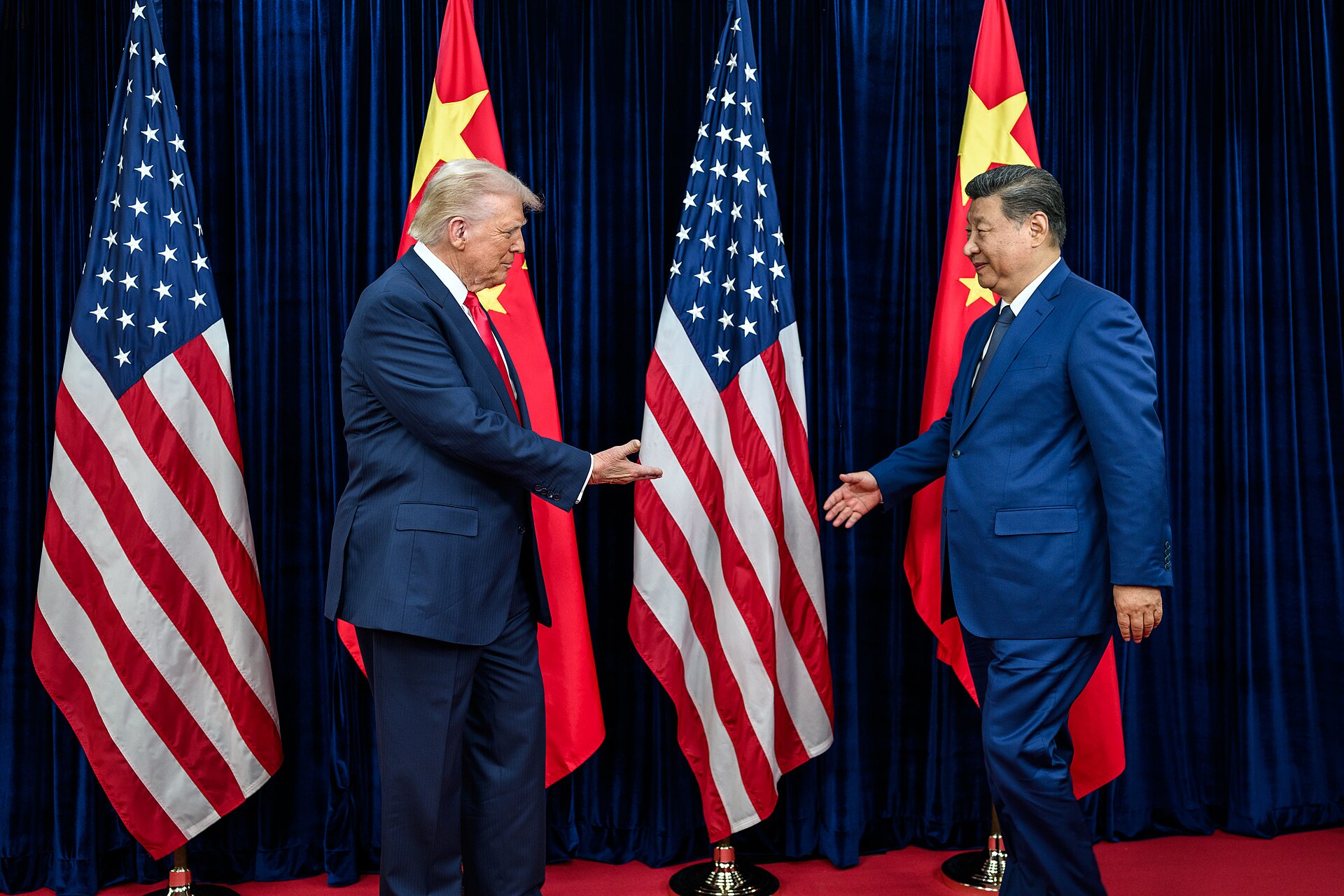

Quick Summary: Washington Summit to Address AI and Taiwan Amid Trade Truce Deadline
- President Trump has delayed new China tariffs, aiming to secure progress on rare earths and AI guardrails before a Washington summit with Xi Jinping.
- Trump’s administration is negotiating a potential $30 billion in tariff relief and significant Chinese purchase commitments, including $17 billion in U.S. agricultural goods.
- China’s Commerce Ministry confirmed ongoing talks on tariff reductions, highlighting the transactional nature of the U.S.-China rapprochement.
- Trump’s public praise of Xi marks a stark political reversal, as he prepares to host Xi with high-profile gestures of respect.
- The upcoming summit will address critical issues like trade, AI, and Taiwan, with the current trade truce set to expire on November 10.
Source: Open external resource
Source: Read original article
In a surprising turn of events, President Donald Trump, once a vocal critic of China, is now extending a warm welcome to President Xi Jinping. The upcoming Washington summit is less about ideological shifts and more about strategic leverage. With new tariffs on hold, Trump is focusing on rare earths, AI, and a potential $30 billion trade package, signaling a transactional approach to U.S.-China relations.
The stakes are high as Treasury Secretary Scott Bessent and Chinese Vice Premier He Lifeng meet to finalize summit deliverables. Discussions center on AI, tariffs, and critical minerals, with China considering a $17 billion increase in U.S. agricultural purchases and the acquisition of over 200 Boeing aircraft. This shift underscores Trump’s pragmatic pivot from his earlier hardline stance.
Trump’s recent praise of Xi, calling him a “great gentleman,” marks a significant political reversal. The White House’s decision to delay new tariffs reflects a balancing act between domestic optics and strategic dependencies. As the summit approaches, both nations aim to stabilize relations, albeit temporarily, with Taiwan and AI as key discussion points.
With the trade truce deadline looming on November 10, the summit’s outcome remains uncertain. If the Bessent-He meeting fails to bridge differences, the event may end with ceremonial gestures rather than substantive resolutions. Trump’s red-carpet treatment of Xi highlights the urgency to secure economic gains without reigniting tensions.
Chinese officials said this past week that the two sides were continuing talks on tariff cuts worth $30 billion, with prior reporting indicating that amount could apply to each side in less-sensitive goods. Reuters added that the broader agenda also includes Chinese commitments from the May Beijing meeting, while Euronews reported that a pre-approved $14 billion Taiwan arms package has still not been formally notified, a delay widely read as an effort to avoid inflaming Beijing before the summit.
Taiwan remains a flashpoint, and AP reported Friday, September 18, that Taiwan held its first joint military drills using attack drones ahead of the Trump-Xi summit because the island’s future is expected to come up in the talks. President Donald Trump’s sudden warmth toward Xi Jinping is being driven less by ideology than by hard leverage: with a Washington summit days away, the White House has delayed fresh China tariffs while scrambling to secure progress on rare earths, AI guardrails and a possible trade package that now reportedly includes $30 billion in tariff relief and major Chinese purchase commitments.
On September 17, China’s Commerce Ministry spokesperson He Yadong said the sides were still negotiating tariff reductions. agricultural goods by $17 billion a year and buying more than 200 Boeing aircraft, showing how transactional the rapprochement has become.
On September 16, Axios reported preparatory talks centered on AI, trade and rare earths. On September 20, Reuters reported the Bessent-He meeting in New York to tee up summit agreements.
The clearest new development from the latest reporting is that Treasury Secretary Scott Bessent and Chinese Vice Premier He Lifeng are meeting in New York on Sunday, September 20, to prepare deliverables for Trump and Xi before Xi’s state visit to Washington this week. The political reversal is stark because Trump, who built his rise on attacking China, is now publicly flattering Xi ahead of a state dinner.
Trump’s red-carpet treatment of Xi highlights the urgency to secure economic gains without reigniting tensions. The political reversal is stark because Trump, who built his rise on attacking China, is now publicly flattering Xi ahead of a state dinner.
com President Trump has delayed new China tariffs, aiming to secure progress on rare earths and AI guardrails before a Washington summit with Xi Jinping. The upcoming summit will address critical issues like trade, AI, and Taiwan, with the current trade truce set to expire on November 10.
The scale and speed of this development has caught many observers off guard. Each new update adds another dimension to a story that is still unfolding, and the full picture will only become clear as more verified details emerge from the people and institutions directly involved.
Analysts who have tracked this issue closely say the current moment represents a genuine turning point. The decisions made in the coming weeks are expected to set the direction for months ahead, with ripple effects likely to extend well beyond the immediate actors in the story.
For those directly affected, the practical impact is already visible. People navigating this fast-changing situation are dealing with real consequences while new information continues to reshape what is known and what remains open to interpretation.
Historical parallels offer some context, though experts caution against drawing too close a comparison. Similar situations have played out before, but the specific combination of pressures, personalities, and timing here makes this moment distinct in ways that matter for how it ultimately resolves.
The political and economic dimensions of this story are deeply intertwined. What appears as a single event on the surface is in practice the convergence of multiple pressures that have been building quietly over a longer period than most public reporting has captured.