

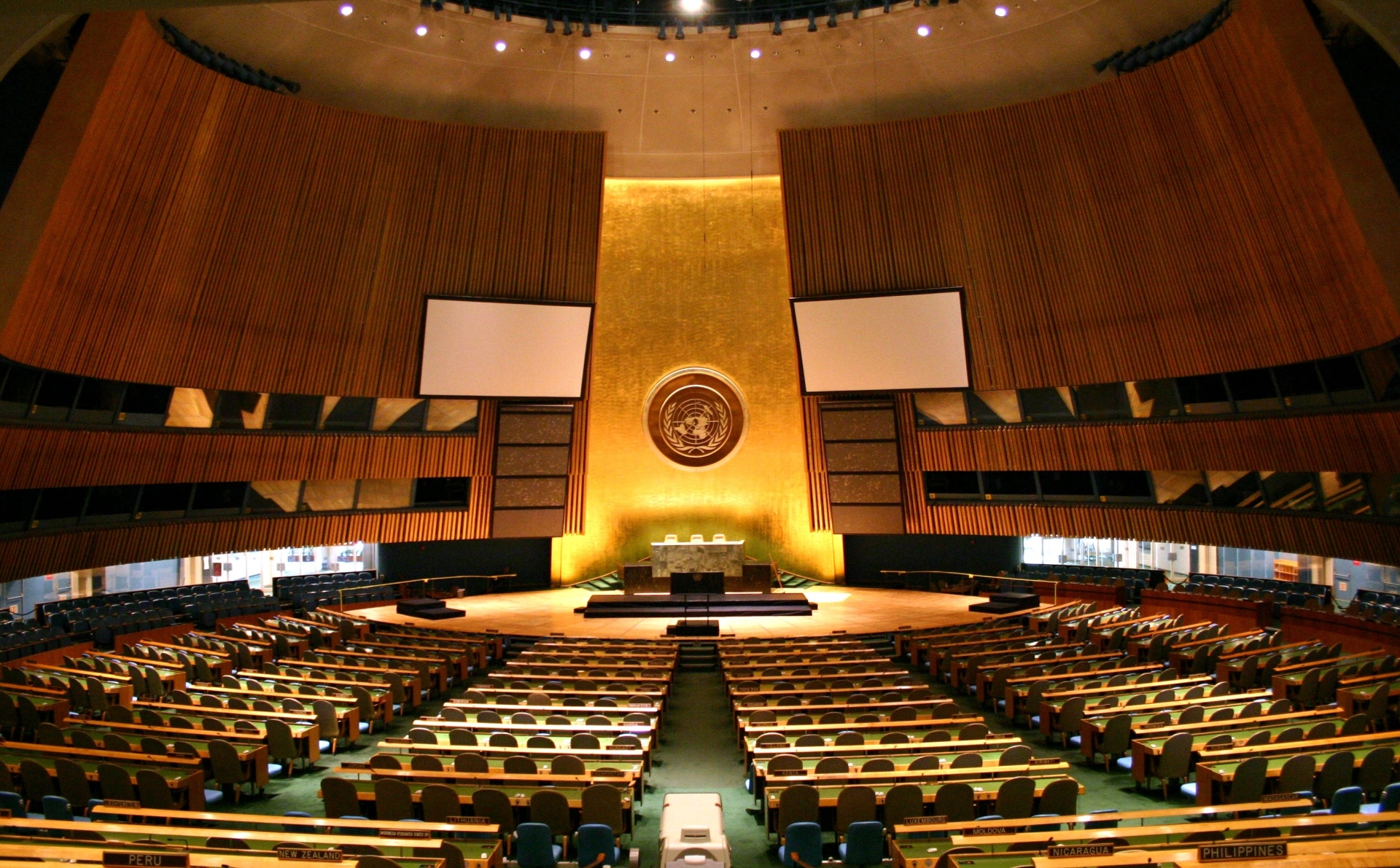

Quick Summary: Chinas Influence Grows as UN Faces Calls for Security Council Reform
- The UN’s High-Level Week from September 18-28, 2026, focuses on reform and governance, engaging global leaders.
- Western nations’ complaints about UN efficiency hide a geopolitical anxiety as their financial influence wanes.
- Calls for Security Council reform and stronger African representation highlight outdated power structures since 1945.
- China’s growing economic and diplomatic influence in the UN challenges traditional Western dominance.
- The U.S. and China have nearly equal financial contributions to the UN, reflecting a shift in global power balance.
Source: Open external resource
Source: Read original article
In a world where power dynamics are constantly shifting, the real battle over UN reform is not about cutting costs but about who holds the reins of influence. As the Mail & Guardian highlights, the Western push for efficiency and cost-cutting at the UN masks a deeper geopolitical anxiety. The traditional powerhouses are realizing that their financial contributions no longer guarantee the influence they once wielded.
At the heart of this debate is the outdated structure of the UN Security Council, which still mirrors the power distribution of 1945 rather than today’s geopolitical realities. Calls for reform are growing louder, especially from African nations, which, despite having 54 member states, lack a permanent seat on the council. Meanwhile, China is leveraging its economic might to reshape the multilateral landscape, challenging the status quo.
This shift is underscored by the financial contributions to the UN, where China’s share has nearly caught up with that of the United States. The numbers tell a story of a changing world order, where the influence is increasingly tied to economic power rather than historical alliances.
As the UN’s High-Level Week unfolds, the focus is on whether established powers will genuinely share authority or simply redesign procedures to maintain control. The stakes are high, and the outcome will shape the future of global governance.
1 billion in 2023 and that Chinese official data showed Beijing had remained the continent’s largest trading partner for 15 consecutive years by 2024. It notes that the UN began in 1945 with 51 members, while General Assembly membership rose from 60 in 1950 to 127 in 1970 during decolonization.
The UN’s High-Level Week is running from September 18 to September 28, 2026, putting reform, financing and multilateral governance in front of heads of state right now. What happens next is less a single vote than a chain of member-state driven decisions: the UN says the UN80 process is being steered by member states, and the Pact for the Future framework points toward further intergovernmental consultations through 2026 and a heads-of-state review in 2028.
The UN80 Initiative’s latest public updates include a Secretary-General’s information brief on Joint Knowledge Hubs dated September 18, 2026, and earlier September briefings on system-wide results management and the wider UN80 process. 004%, a gap narrow enough to underscore how much the balance has shifted.
It adds that China describes itself as the largest contributor of uniformed personnel among the five permanent Security Council members, with more than 50,000 peacekeepers dispatched since 1990. Published on September 24, 2026, Anthony Ohemeng-Boamah’s article says the sharpest new point is that Western complaints about “efficiency” and “cost-cutting” conceal “a deeper geopolitical anxiety”: big contributors are discovering that paying more no longer buys the influence it once did.
The article argues that calls for Security Council reform, stronger African representation, fairer development finance and climate justice all stem from the same problem: institutions created in 1945 have not kept pace with 21st-century power realities. ” Africa’s grievance is quantified bluntly: 54 UN member states, but no permanent seat; India and Latin America also lack permanent representation, while any one of the five permanent members can still block substantive action with a veto.
004%, a gap narrow enough to underscore how much the balance has shifted. Published on September 24, 2026, Anthony Ohemeng-Boamah’s article says the sharpest new point is that Western complaints about “efficiency” and “cost-cutting” conceal “a deeper geopolitical anxiety”: big contributors are discovering that paying more no longer buys the influence it once did.
Western nations’ complaints about UN efficiency hide a geopolitical anxiety as their financial influence wanes. China’s growing economic and diplomatic influence in the UN challenges traditional Western dominance.
The scale and speed of this development has caught many observers off guard. Each new update adds another dimension to a story that is still unfolding, and the full picture will only become clear as more verified details emerge from the people and institutions directly involved.
Analysts who have tracked this issue closely say the current moment represents a genuine turning point. The decisions made in the coming weeks are expected to set the direction for months ahead, with ripple effects likely to extend well beyond the immediate actors in the story.
For those directly affected, the practical impact is already visible. People navigating this fast-changing situation are dealing with real consequences while new information continues to reshape what is known and what remains open to interpretation.
Historical parallels offer some context, though experts caution against drawing too close a comparison. Similar situations have played out before, but the specific combination of pressures, personalities, and timing here makes this moment distinct in ways that matter for how it ultimately resolves.
The political and economic dimensions of this story are deeply intertwined. What appears as a single event on the surface is in practice the convergence of multiple pressures that have been building quietly over a longer period than most public reporting has captured.