

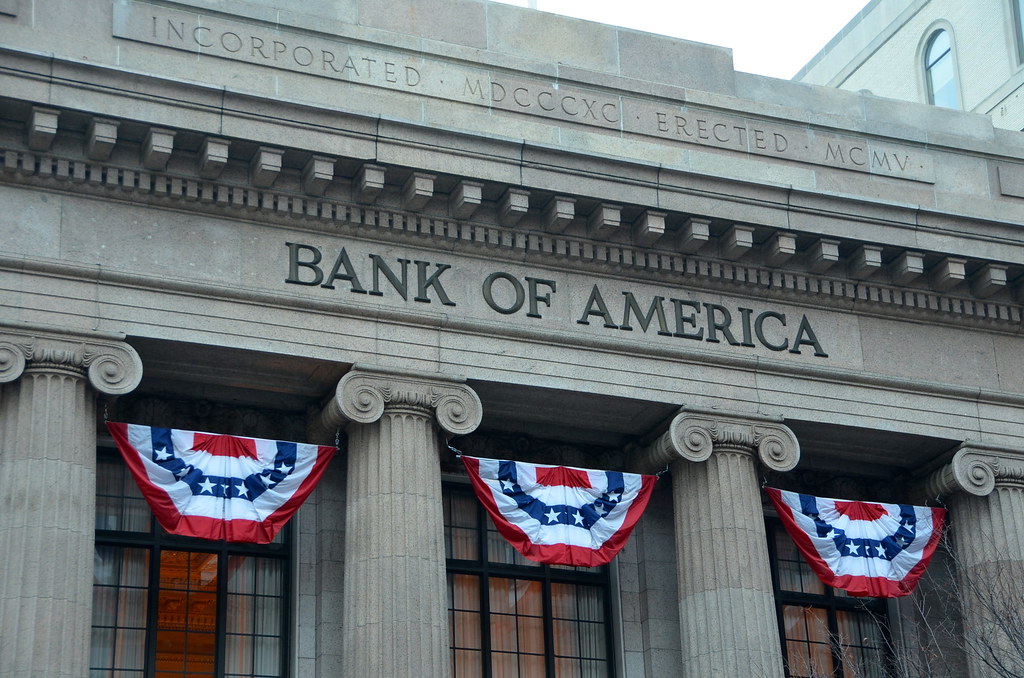

Quick Summary: Bank of America Reports 22% Surge in First-Time Sports Bettors
- 52% of Gen Z investors are diverting funds from traditional investments to sports betting, signaling a shift in financial priorities.
- Sportsbooks incorporate a fee, making it necessary for bettors to risk $110 to win $100, highlighting the inherent disadvantage in betting.
- Bank of America reports a 22% increase in first-time sports bettors last season, driven by pro and college football.
- 40% of Gen Z views sports betting as an investment, raising concerns about the perception of gambling as a financial strategy.
- Arizona State University research shows the stock market offers a 10% annual return, contrasting with betting’s negative expectation.
Source: Open external resource
Source: Read original article
Gen Z is rewriting the rules of investing, and not in the way traditional financial advisors would recommend. A staggering 52% of Gen Z investors are shifting their funds from traditional investments to sports betting. This isn’t just a cultural trend; it’s a seismic shift in how young adults view money management. Bank is at the center of this development.
Sportsbooks are thriving, not because they’re offering a fair game, but because they’re built to profit from bettors’ losses. With a built-in fee, or vig, what seems like a 50/50 chance requires risking $110 to win $100. Despite this, the allure of quick gains is pulling Gen Z away from the stock market’s average 10% annual return.
The numbers are telling: 40% of Gen Z sees sports betting as an investment. This perception is troubling, as it blurs the line between gambling and investing. As football season draws in more first-time bettors, the scrutiny on sportsbook marketing and gamified finance apps is bound to intensify.
Bank of America highlights a 22% rise in new sports bettors, fueled by the excitement of pro and college football. Yet, the reality remains that sportsbooks are billion-dollar businesses for a reason—most bettors lose over time.
The conversation is shifting from whether Gen Z is betting to how they’re integrating it into their financial plans. With 26% of Gen Z bettors considering it part of their long-term strategy, the implications for financial education and regulation are profound.
The same report says a Betterment survey of 1,000 investors found that 52% of Gen Zers moved money that was supposed to go into investments over to sports betting instead. The article underlines that sportsbooks build a fee, or vig, into bets, turning what looks like a 50/50 wager into one where a bettor must risk $110 to win $100.
Morning Brew says last season produced a 22% year-over-year increase in first-time users, according to Bank of America, and explicitly notes that pro and college football tend to pull more people into betting. The strongest new takeaway from the latest reporting is that Gen Z is not just gambling more on sports, but increasingly treating sports betting as an actual investing strategy, with fresh survey data showing 40% of Gen Z views it as an investment and 52% of Gen Z investors have redirected money meant for investing into bets.
The main organizations behind the story are Bank of America, which produced the survey showing 20% of Americans overall and 40% of Gen Z classify sports betting as an investment, and Betterment, which surveyed 1,000 investors and found the 52% diversion figure. But the emerging pressure point is obvious: if 40% of Gen Z sees sports betting as an investment and 52% are rerouting investment money into wagers, expect sharper scrutiny of sportsbook marketing, “gamified” finance apps, and the way betting platforms present risk during the heart of the 2026 football season.
Against that, the piece contrasts the stock market’s roughly 10% average annual weighted return over the past century, citing Arizona State University research. A report published October 6, 2026 by The Donut says two-thirds of Gen Z investors, 66%, participate in sports betting, and that among those bettors, 26% say sports betting is part of their long-term financial plan.
That same write-up repeats the Betterment finding that 52% redirected investment money into wagers. The most substantive current reporting appears to stem from a September 27, 2026 Morning Brew piece by Dave Lozo, which says “one in five Americans view wagering on sports as an investment tool, and for Gen Z, it’s two in five,” citing a recent Bank of America survey.
Sportsbooks incorporate a fee, making it necessary for bettors to risk $110 to win $100, highlighting the inherent disadvantage in betting. Bank of America highlights a 22% rise in new sports bettors, fueled by the excitement of pro and college football.
40% of Gen Z views sports betting as an investment, raising concerns about the perception of gambling as a financial strategy. A staggering 52% of Gen Z investors are shifting their funds from traditional investments to sports betting.
The scale and speed of this development has caught many observers off guard. Each new update adds another dimension to a story that is still unfolding, and the full picture will only become clear as more verified details emerge from the people and institutions directly involved.
Analysts who have tracked this issue closely say the current moment represents a genuine turning point. The decisions made in the coming weeks are expected to set the direction for months ahead, with ripple effects likely to extend well beyond the immediate actors in the story.
For those directly affected, the practical impact is already visible. People navigating this fast-changing situation are dealing with real consequences while new information continues to reshape what is known and what remains open to interpretation.
Historical parallels offer some context, though experts caution against drawing too close a comparison. Similar situations have played out before, but the specific combination of pressures, personalities, and timing here makes this moment distinct in ways that matter for how it ultimately resolves.
The political and economic dimensions of this story are deeply intertwined. What appears as a single event on the surface is in practice the convergence of multiple pressures that have been building quietly over a longer period than most public reporting has captured.