

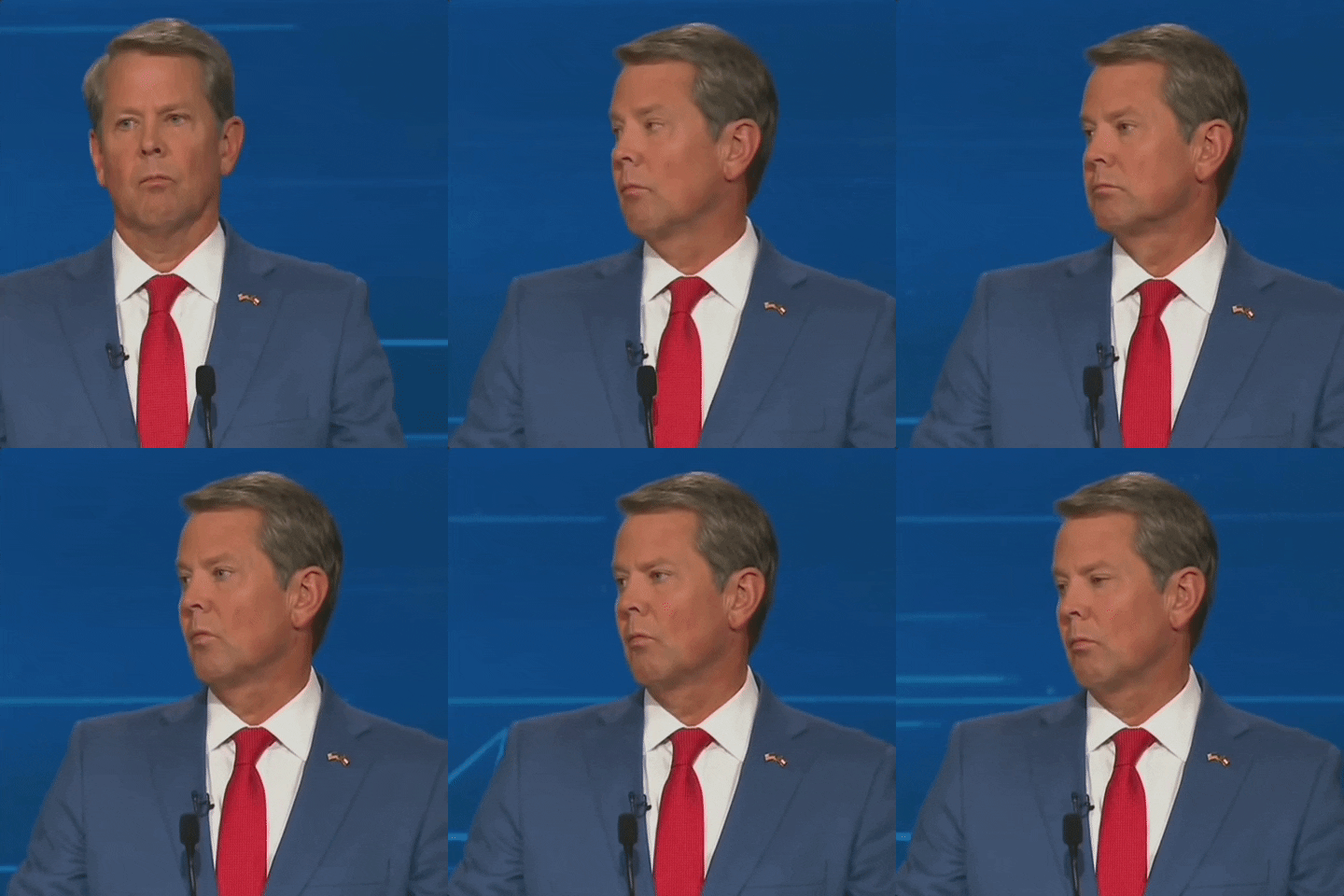

Quick Summary: Governor Kemp Backs Rick Jackson as Debate Boycott Raises Questions
- Rick Jackson skipped a debate with Keisha Lance Bottoms — this absence is turning into a campaign issue.
- Early voting in Georgia began on October 13, 2026 — both parties are focusing on turnout.
- Keisha Lance Bottoms emphasized early voting — she cited a past election decided by 21 votes per precinct.
- Rick Jackson is aligning with Gov. Brian Kemp — he aims to leverage Kemp’s political legacy.
- Debate participation is a point of contention — Jackson’s absence is being used by Democrats to question his transparency.
Source: Open external resource
Source: Read original article
As Georgia’s early voting kicks off, the real drama isn’t about policies but about who shows up and who doesn’t. Republican candidate Rick Jackson’s decision to skip a debate with Democrat Keisha Lance Bottoms has turned the spotlight on his campaign tactics, casting a shadow over the start of in-person voting.
Both parties are framing early voting as a crucial battleground in what is shaping up to be a tightly contested governor’s race. While Jackson launched his campaign alongside Gov. Brian Kemp, signaling continuity with Kemp’s legacy, Bottoms is urging voters to cast their ballots early, emphasizing the razor-thin margins that have defined past elections.
The absence of Jackson from the debate stage is not just a strategic choice but a potential liability. Democrats are seizing on this as a sign of Jackson’s reluctance to engage directly with voters, while Republicans argue that controlled campaign events are more effective. The stakes are high, with early voting running through October 30, and each side is racing to lock in votes before the November 3 election.
In the end, the question remains: will Jackson’s strategy of avoiding debates pay off, or will Bottoms’ focus on voter engagement tip the scales? The answer lies in the hands of Georgia’s voters as they head to the polls.
She told supporters that in the 2018 governor’s race, “21 votes per precinct, on average, made the difference between the winner and loser,” using that number to argue that tiny shifts in turnout could decide the contest again. That is the practical meaning of early voting beginning now: Georgia’s official early-vote window for the November 3, 2026 general election runs from October 13 through October 30, with counties controlling specific hours and sites, and voters allowed to cast ballots at any early-voting location inside their county rather than only at an assigned Election Day precinct.
Georgia Public Broadcasting reported that the Atlanta Press Club scheduled its final statewide debate events for October 12 and 13, but Jackson formally declined to attend the governor’s debate slot, leaving Bottoms to face journalists without him. FOX 5 Atlanta reported Monday that Jackson launched a statewide push in Atlanta with Gov.
On Thursday, October 8, or thereabouts according to local accounts, Jackson skipped the Macon forum that Bottoms attended. On Tuesday, October 13, early voting officially started statewide, and the final Atlanta Press Club debate programming was set to continue the same day even without Jackson on the governor’s stage.
” The most specific statistic driving the Democratic pitch came from Bottoms, who invoked a razor-close benchmark from the state’s recent political history. GPB also reported that Jackson skipped a Macon forum moderated by a local NBC affiliate last week, prompting Bottoms to tell the audience, “He didn’t feel that you all were worthy enough of his presence this evening.
Kemp personally joined Jackson at the start of the early-vote push and said, “We got early voting starting tomorrow. ” That cameo signals Republicans want voters to see Jackson as the direct heir to a still-potent statewide brand rather than as a standalone candidate who must prove himself in debates.
On Tuesday, October 13, early voting officially started statewide, and the final Atlanta Press Club debate programming was set to continue the same day even without Jackson on the governor’s stage. As Georgia’s early voting kicks off, the real drama isn’t about policies but about who shows up and who doesn’t.
Kemp personally joined Jackson at the start of the early-vote push and said, “We got early voting starting tomorrow. Keisha Lance Bottoms emphasized early voting — she cited a past election decided by 21 votes per precinct.
The stakes are high, with early voting running through October 30, and each side is racing to lock in votes before the November 3 election. Debate participation is a point of contention — Jackson’s absence is being used by Democrats to question his transparency.
The scale and speed of this development has caught many observers off guard. Each new update adds another dimension to a story that is still unfolding, and the full picture will only become clear as more verified details emerge from the people and institutions directly involved.
Analysts who have tracked this issue closely say the current moment represents a genuine turning point. The decisions made in the coming weeks are expected to set the direction for months ahead, with ripple effects likely to extend well beyond the immediate actors in the story.
For those directly affected, the practical impact is already visible. People navigating this fast-changing situation are dealing with real consequences while new information continues to reshape what is known and what remains open to interpretation.
Historical parallels offer some context, though experts caution against drawing too close a comparison. Similar situations have played out before, but the specific combination of pressures, personalities, and timing here makes this moment distinct in ways that matter for how it ultimately resolves.
The political and economic dimensions of this story are deeply intertwined. What appears as a single event on the surface is in practice the convergence of multiple pressures that have been building quietly over a longer period than most public reporting has captured.