

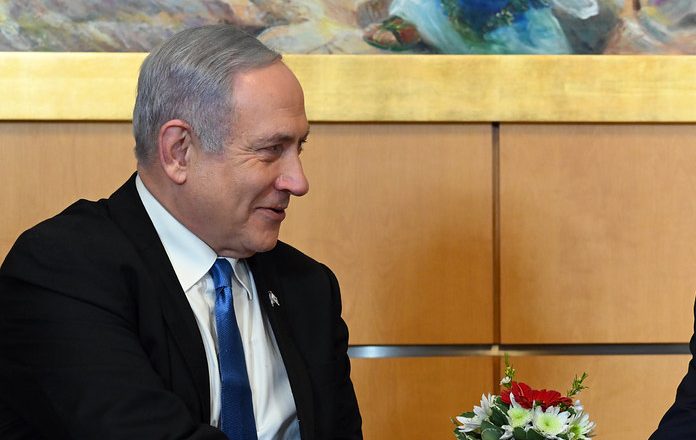

Quick Summary: Netanyahu Faces Political Dilemma as Unity Government Talks Intensify
- Final polls show Eisenkot’s Yashar at 23 seats and Likud at 21, indicating a close race with no clear majority.
- Ben-Gvir warns that a unity government with Eisenkot could harm Israel, urging strong support for Netanyahu’s camp.
- Trump surrogates are reportedly discussing a Netanyahu-Eisenkot unity government, excluding far-right ministers.
- On Election Day, Ben-Gvir warns of a potential Mansour Abbas government if Netanyahu’s allies do not win.
- Netanyahu’s most viable path to remain prime minister may involve a deal that excludes current allies.
Source: Open external resource
Source: Read original article
As Israel braces for its upcoming election, the political landscape is shifting with whispers of a potential unity government between Benjamin Netanyahu and his rival, Gadi Eisenkot. The stakes are high, with final polls showing a neck-and-neck race that could lead to yet another political deadlock.
The political drama intensifies as far-right leader Itamar Ben-Gvir warns that a unity government with Eisenkot would be detrimental to Israel, cautioning voters that Netanyahu might strike a deal over his allies’ heads if his camp doesn’t secure a decisive victory. Meanwhile, Trump surrogates are reportedly advocating for a coalition that excludes far-right ministers, a move that could reshape the political alliances in Israel.
This development underscores the complexity of Israeli politics, where Netanyahu’s survival as prime minister might depend on sidelining the very allies who helped elevate him. The potential for a unity government has moved from speculative whispers to a tangible possibility, as insiders and international figures weigh in on the future of Israeli governance.
The outcome of this election could redefine Netanyahu’s political strategy, forcing him to consider alliances that might alienate his traditional base. As the polls close, the question remains whether Netanyahu can forge a new path to leadership or if Eisenkot will emerge as a formidable challenger capable of uniting disparate factions.
In this high-stakes political chess game, the next moves will be critical. As Israelis cast their votes, the potential for a unity government looms large, promising to reshape the country’s political future in ways that few could have predicted.
In the Times of Israel’s final poll, Eisenkot’s Yashar was on 23 seats and Likud on 21; a Maariv poll cited by The Jerusalem Post showed the opposition bloc ahead 54-48 and said 60 percent of Israelis favored a unity government. Ben-Gvir told The Jerusalem Post that a unity government with Eisenkot would “harm Israel,” and he has been openly warning voters that unless his camp wins strongly, Netanyahu could cut a deal over his head.
The Washington Post reported that “Trump surrogates privately discussed with Israelis the possibility of a unity government,” while The Jerusalem Post said voices in Trump’s orbit were specifically promoting a broad coalition without far-right ministers Itamar Ben-Gvir and Bezalel Smotrich. On Election Day itself, AP reported that Ben-Gvir warned, “it will be Mansour Abbas’ government” if Netanyahu and his allies do not win, showing how the right is using fear of Arab-backed or centrist coalition arrangements to rally turnout in the closing hours.
The surprise is that Netanyahu’s most realistic path to staying prime minister may now depend not on the allies who brought him here, but on a deal that could cut them out. The biggest new wrinkle in Israel’s election endgame is that even as Donald Trump endorsed Benjamin Netanyahu on October 18, Trump surrogates were also privately discussing a possible Netanyahu-Gadi Eisenkot unity government, underscoring just how seriously insiders are taking the prospect that Tuesday’s vote will produce another deadlock.
” Axios, in a profile published Monday, said Eisenkot had campaigned on the failure to prevent the October 7 attacks and entered the race assuming Netanyahu would eventually be backed by Trump, which now appears to have happened exactly as expected. The most revealing detail from the latest reporting is not simply that unity talks exist, but who is pushing them and on what terms.
That turns the story from routine coalition math into a struggle over whether Netanyahu could remain in power only by sidelining the partners who define his current bloc. That is the central political conflict driving the story now: Netanyahu may need Eisenkot to survive, but bringing Eisenkot in could mean freezing out Ben-Gvir and Smotrich, who have treated the idea as a betrayal.
Ben-Gvir warns that a unity government with Eisenkot could harm Israel, urging strong support for Netanyahu’s camp. Ben-Gvir told The Jerusalem Post that a unity government with Eisenkot would “harm Israel,” and he has been openly warning voters that unless his camp wins strongly, Netanyahu could cut a deal over his head.
This development underscores the complexity of Israeli politics, where Netanyahu’s survival as prime minister might depend on sidelining the very allies who helped elevate him. The Washington Post reported that “Trump surrogates privately discussed with Israelis the possibility of a unity government,” while The Jerusalem Post said voices in Trump’s orbit were specifically promoting a broad coalition without far-right ministers Itamar Ben-Gvir and Bezalel Smotrich.
On Election Day itself, AP reported that Ben-Gvir warned, “it will be Mansour Abbas’ government” if Netanyahu and his allies do not win, showing how the right is using fear of Arab-backed or centrist coalition arrangements to rally turnout in the closing hours. The surprise is that Netanyahu’s most realistic path to staying prime minister may now depend not on the allies who brought him here, but on a deal that could cut them out.
The biggest new wrinkle in Israel’s election endgame is that even as Donald Trump endorsed Benjamin Netanyahu on October 18, Trump surrogates were also privately discussing a possible Netanyahu-Gadi Eisenkot unity government, underscoring just how seriously insiders are taking the prospect that Tuesday’s vote will produce another deadlock. ” Axios, in a profile published Monday, said Eisenkot had campaigned on the failure to prevent the October 7 attacks and entered the race assuming Netanyahu would eventually be backed by Trump, which now appears to have happened exactly as expected.
The scale and speed of this development has caught many observers off guard. Each new update adds another dimension to a story that is still unfolding, and the full picture will only become clear as more verified details emerge from the people and institutions directly involved.
Analysts who have tracked this issue closely say the current moment represents a genuine turning point. The decisions made in the coming weeks are expected to set the direction for months ahead, with ripple effects likely to extend well beyond the immediate actors in the story.
For those directly affected, the practical impact is already visible. People navigating this fast-changing situation are dealing with real consequences while new information continues to reshape what is known and what remains open to interpretation.
Historical parallels offer some context, though experts caution against drawing too close a comparison. Similar situations have played out before, but the specific combination of pressures, personalities, and timing here makes this moment distinct in ways that matter for how it ultimately resolves.
The political and economic dimensions of this story are deeply intertwined. What appears as a single event on the surface is in practice the convergence of multiple pressures that have been building quietly over a longer period than most public reporting has captured.