


Quick Summary: Spacex Expands Beyond Launches With $19.6 Billion in Capital Spending
- Rocket Lab’s Neutron launch is delayed to 2027 — this delay challenges the ‘buy Rocket Lab instead’ thesis.
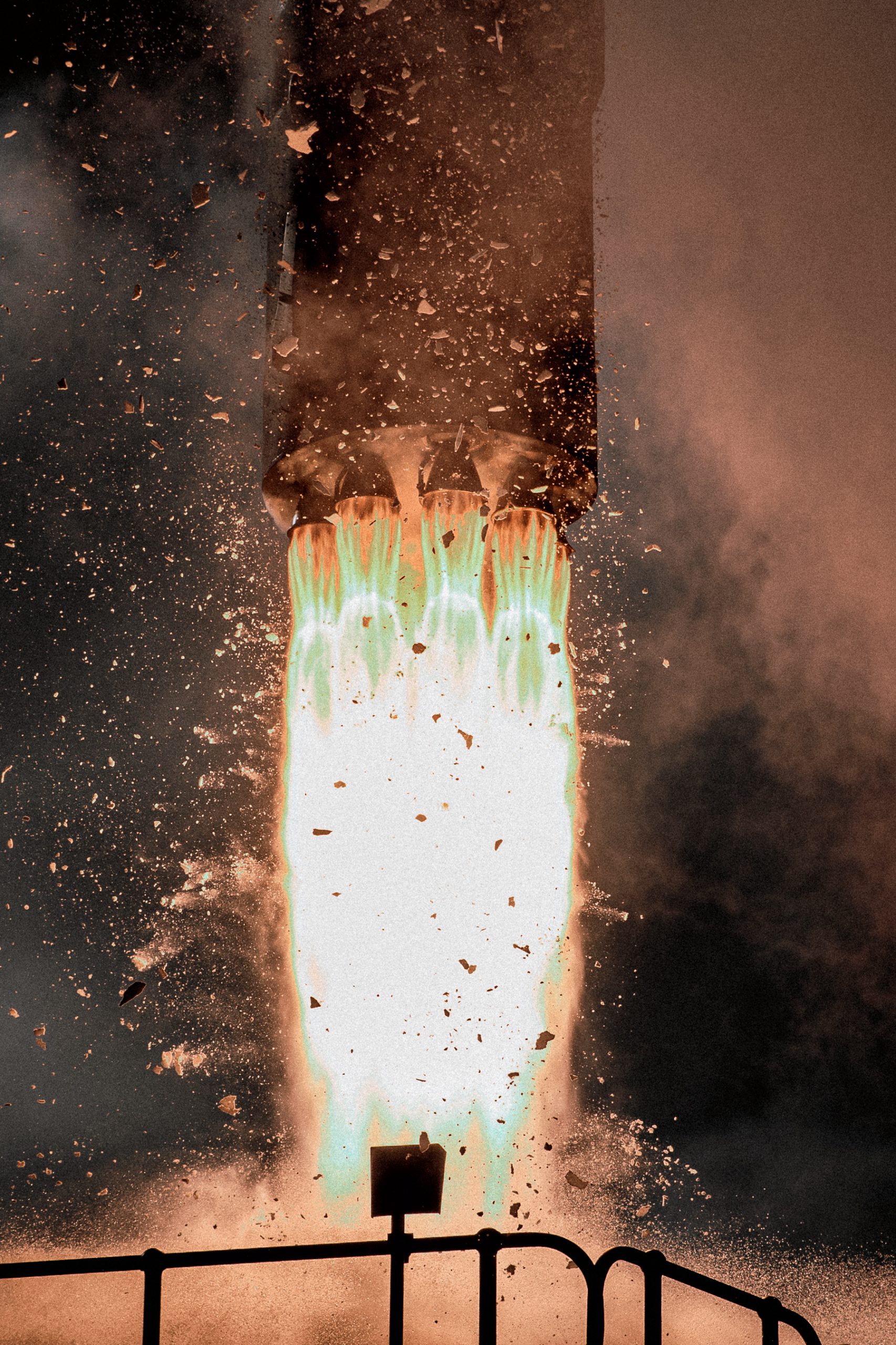
- Rocket Lab completed its 98th Electron launch on October 23 — this marks its 19th launch of 2026, showcasing operational execution.
- Rocket Lab emphasizes concrete achievements — the company highlights its turnaround speed and schedule assurance for commercial and defense customers.
- SpaceX’s capital expenditures reached $19.6 billion last quarter — this spending is set to rise, broadening its business scope beyond launches.
- Rocket Lab’s recent success in launching HawkEye 360 satellites — this demonstrates its capability in national-security and intelligence-linked operations.
Source: Open external resource
Source: Read original article
In the battle of the space titans, Rocket Lab and SpaceX are vying for investor attention, each with a distinct narrative. Rocket Lab recently celebrated its 98th Electron launch, reinforcing its reputation for operational reliability. However, the delay of its Neutron rocket to 2027 casts a shadow over its future prospects. Launches is at the center of this development.
Rocket Lab’s current strength lies in its flight cadence and concrete achievements. With 19 launches in 2026 alone, the company is proving its mettle in the small-launch sector. This success is crucial as it competes with SpaceX, which continues to dominate the market with its ambitious projects and hefty capital investments.
SpaceX, on the other hand, is not just about launches anymore. With capital expenditures soaring to $19.6 billion last quarter, SpaceX is expanding into AI and telecommunications, capturing a broader market interest. This diversification, while risky, keeps SpaceX at the forefront of investor discussions.
The competition is not a straightforward choice between Rocket Lab and SpaceX. Rocket Lab’s recent HawkEye 360 satellite launch highlights its growing role in national-security operations, offering dedicated services that complement SpaceX’s rideshare capabilities. This dual approach by customers underscores the complexity of the market landscape.
Ultimately, investors must weigh Rocket Lab’s reliable execution against SpaceX’s expansive vision. With Rocket Lab’s next major update on November 9, 2026, the focus will be on whether it can provide clarity on its Neutron program and maintain its operational momentum.
On October 14, the company said Neutron’s inaugural launch is “now expected to occur in 2027,” and that single update is the biggest reality check cutting against any simple “buy Rocket Lab instead” thesis. The hardest number in Rocket Lab’s favor right now is flight cadence: the company said its October 23 mission was its 98th Electron launch and its 19th launch of 2026, including 16 Electron flights and three HASTE missions this year.
Rocket Lab, by contrast, is talking less grandly and more concretely: after the latest Electron mission it said the 98th flight “moves Rocket Lab closer to a record 100 launches,” and described 2026 as proof of the “turnaround speed, high production rate, and schedule assurance demanded” by commercial and defense customers. 6 billion last quarter, nearly triple the year-earlier figure, with spending forecast to rise to $35 billion to $40 billion in the current quarter.
That event now carries more weight because investors will want specifics on launch margins, backlog, and especially whether management can put firmer timing around Neutron after the October 14 slip into 2027. ” argument is that Rocket Lab’s operating business just notched another launch success on October 23, but that good news is colliding head-on with a new and damaging delay in its much more important Neutron rocket program, pushing the inaugural launch into 2027 and sharpening the debate over whether investors are buying execution or just another promise.
Rocket Lab said the satellites operate in “tri-satellite formation” and gather RF data for “maritime tracking, GNSS jamming detection, radar monitoring, communications mapping, and space defense,” underscoring that Rocket Lab is winning real national-security-adjacent and intelligence-linked work now, not just talking about future opportunity. com noted that the three HawkEye 360 satellites Rocket Lab launched this week followed another set of three Hawk satellites that had gone up just two days earlier on SpaceX’s Bandwagon-5 rideshare mission.
But the article landed one day after Rocket Lab announced its 98th Electron mission success, a fact that makes the timing especially notable because it showcases a company executing in small launch even as its most strategic future vehicle slips again. Rocket Lab can win business because it offers schedule assurance and dedicated access, but SpaceX remains embedded in the same customer workflows.
6 billion last quarter — this spending is set to rise, broadening its business scope beyond launches. However, the delay of its Neutron rocket to 2027 casts a shadow over its future prospects.
With 19 launches in 2026 alone, the company is proving its mettle in the small-launch sector. 6 billion last quarter, SpaceX is expanding into AI and telecommunications, capturing a broader market interest.
With Rocket Lab’s next major update on November 9, 2026, the focus will be on whether it can provide clarity on its Neutron program and maintain its operational momentum. 6 billion last quarter, nearly triple the year-earlier figure, with spending forecast to rise to $35 billion to $40 billion in the current quarter.
The scale and speed of this development has caught many observers off guard. Each new update adds another dimension to a story that is still unfolding, and the full picture will only become clear as more verified details emerge from the people and institutions directly involved.
Analysts who have tracked this issue closely say the current moment represents a genuine turning point. The decisions made in the coming weeks are expected to set the direction for months ahead, with ripple effects likely to extend well beyond the immediate actors in the story.
For those directly affected, the practical impact is already visible. People navigating this fast-changing situation are dealing with real consequences while new information continues to reshape what is known and what remains open to interpretation.
Historical parallels offer some context, though experts caution against drawing too close a comparison. Similar situations have played out before, but the specific combination of pressures, personalities, and timing here makes this moment distinct in ways that matter for how it ultimately resolves.
The political and economic dimensions of this story are deeply intertwined. What appears as a single event on the surface is in practice the convergence of multiple pressures that have been building quietly over a longer period than most public reporting has captured.