


Quick Summary: Political Instability Threatens Brazil and Indonesias GDP Gains
- The Business Times highlights a global economic recovery in October 2026, driven by US resilience and AI investment, but warns of fragile foundations due to inflation and political instability.
- The Brookings-FT TIGER update by Eswar Prasad and Thomas Riveros notes India’s standout growth of nearly 8% in early 2026, contrasting with the eurozone’s economic malaise.
- Japan’s inflation is near 2%, but weak growth and high public debt highlight uneven recovery among advanced economies.
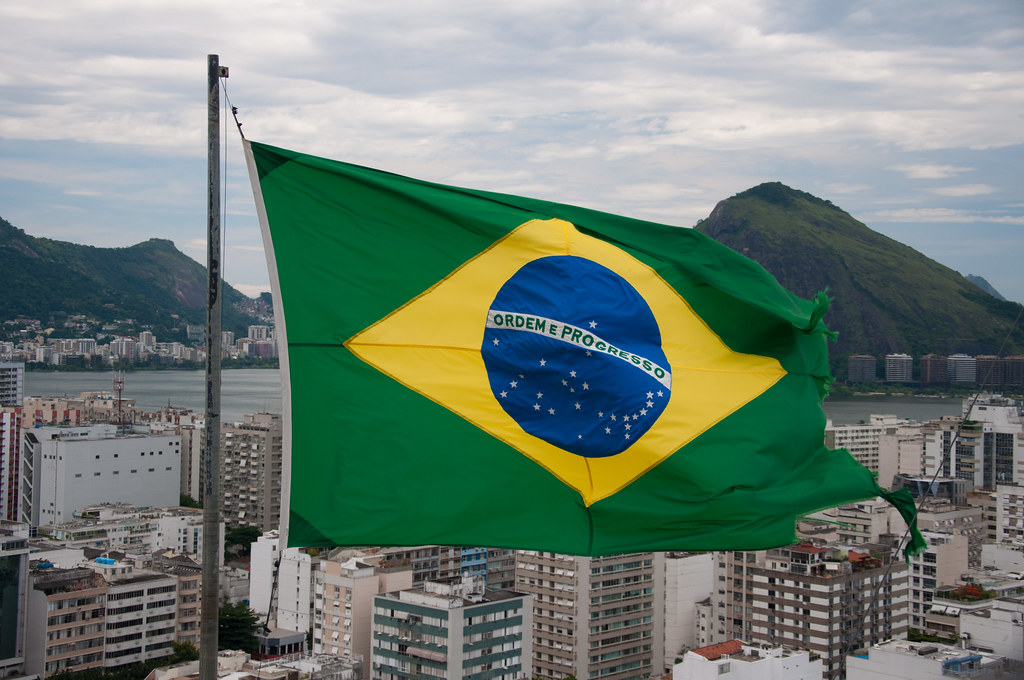
- Indonesia and Brazil show robust GDP growth; however, political instability remains a potential risk.
- The report suggests that AI-led investments are crucial for sustaining growth, though their long-term impact on employment and wages remains uncertain.
Source: Open external resource
Source: Read original article
As the world economy shows signs of recovery in October 2026, it’s clear that this resurgence rests on precarious grounds. The Business Times’ latest report underscores a narrative of growth driven by US resilience and AI-fueled business spending. However, this optimism is tempered by the lurking threats of inflation, mounting debt, and political instability.
The Brookings-FT TIGER update, crafted by Cornell’s Eswar Prasad and Thomas Riveros, paints a mixed picture. While India boasts a remarkable growth rate of nearly 8%, the eurozone is mired in economic stagnation. Japan’s inflation, hovering around 2%, might seem stable, but when paired with weak growth and a battered yen, it underscores the unevenness of this recovery.
Even as Indonesia and Brazil enjoy robust GDP growth, political instability casts a shadow over their economic prospects. The report emphasizes the critical role of AI-led investments in sustaining global growth, though it warns of the ambiguous effects on employment and wages. This uncertainty fuels the debate on whether AI will broaden prosperity or simply inflate corporate earnings.
In this fragile landscape, the stakes are high. The Federal Reserve’s actions, France’s fiscal challenges, and the trajectory of AI investments will be pivotal in determining the global economy’s path forward. The looming question remains: can this recovery endure, or is it merely a temporary reprieve?
The most specific and revealing number in the piece is not a market index but India’s growth rate: Prasad and Riveros say real GDP grew “nearly 8% in the first half” of 2026, making India the standout major economy. Brookings published the TIGER update on October 11, 2026; The Business Times ran its version on October 14, 2026, putting this analysis squarely in the current week.
The sharpest new takeaway from The Business Times’ latest report is that the world economy is growing again in October 2026, but that recovery is resting heavily on a narrow mix of US resilience and AI-fueled business spending while inflation, debt and political instability keep the foundation dangerously fragile. The Business Times published “A global economic recovery built on shaky foundations” on Wednesday, October 14, 2026, adapting a Brookings-FT TIGER update first published on October 11 by Cornell economist Eswar Prasad and Cornell student Thomas Riveros.
” The authors also say Japan’s inflation is hovering near 2%, a level that would once have looked healthy, but in the article it is framed alongside weak growth, high public debt and a battered yen, underscoring how uneven this recovery is across advanced economies. ” That tension between stronger headline growth and worsening structural risk is the story’s central conflict right now.
Indonesia and Brazil are described as posting “robust GDP growth,” though political instability remains a risk in both. The article also ties the near future to politics by noting that the Federal Reserve is “less constrained” ahead of November’s US midterm elections if inflation keeps easing and no new energy shock hits.
What happens next, then, is less about a single scheduled vote than about a cluster of looming tests: incoming inflation data, energy-price moves, how far bond yields climb, whether France’s fiscal strains deepen, and whether AI-led capital spending actually turns into the productivity growth that markets are already pricing in. The surprise twist is that business optimism is improving even as household confidence is softer in some advanced economies, suggesting ordinary consumers are not fully buying the recovery story.
Japan’s inflation is near 2%, but weak growth and high public debt highlight uneven recovery among advanced economies. Japan’s inflation, hovering around 2%, might seem stable, but when paired with weak growth and a battered yen, it underscores the unevenness of this recovery.
Brookings published the TIGER update on October 11, 2026; The Business Times ran its version on October 14, 2026, putting this analysis squarely in the current week. The sharpest new takeaway from The Business Times’ latest report is that the world economy is growing again in October 2026, but that recovery is resting heavily on a narrow mix of US resilience and AI-fueled business spending while inflation, debt and political instability keep the foundation dangerously fragile.
The Business Times published “A global economic recovery built on shaky foundations” on Wednesday, October 14, 2026, adapting a Brookings-FT TIGER update first published on October 11 by Cornell economist Eswar Prasad and Cornell student Thomas Riveros. ” The authors also say Japan’s inflation is hovering near 2%, a level that would once have looked healthy, but in the article it is framed alongside weak growth, high public debt and a battered yen, underscoring how uneven this recovery is across advanced economies.
Indonesia and Brazil show robust GDP growth; however, political instability remains a potential risk. The Federal Reserve’s actions, France’s fiscal challenges, and the trajectory of AI investments will be pivotal in determining the global economy’s path forward.
The scale and speed of this development has caught many observers off guard. Each new update adds another dimension to a story that is still unfolding, and the full picture will only become clear as more verified details emerge from the people and institutions directly involved.
Analysts who have tracked this issue closely say the current moment represents a genuine turning point. The decisions made in the coming weeks are expected to set the direction for months ahead, with ripple effects likely to extend well beyond the immediate actors in the story.
For those directly affected, the practical impact is already visible. People navigating this fast-changing situation are dealing with real consequences while new information continues to reshape what is known and what remains open to interpretation.
Historical parallels offer some context, though experts caution against drawing too close a comparison. Similar situations have played out before, but the specific combination of pressures, personalities, and timing here makes this moment distinct in ways that matter for how it ultimately resolves.
The political and economic dimensions of this story are deeply intertwined. What appears as a single event on the surface is in practice the convergence of multiple pressures that have been building quietly over a longer period than most public reporting has captured.