


Quick Summary: IMF Warns of Global Impact as Houthi Strikes Hit Saudi Oil Hub
- The Houthis struck Saudi Aramco’s headquarters in Dhahran, causing damage to top floors but no casualties.
- IMF warns of potential global economic impact due to rising oil prices, projected to average $96 a barrel this year.
- Recent Houthi attacks have killed at least 16 people and injured over 300 in Riyadh, escalating tensions.
- Saudi Arabia’s defenses were breached, raising questions about their ability to protect key oil infrastructure.
- The IMF highlighted a significant disruption in oil supply, with 1.1 billion barrels failing to reach the market.
Source: Open external resource
Source: Read original article
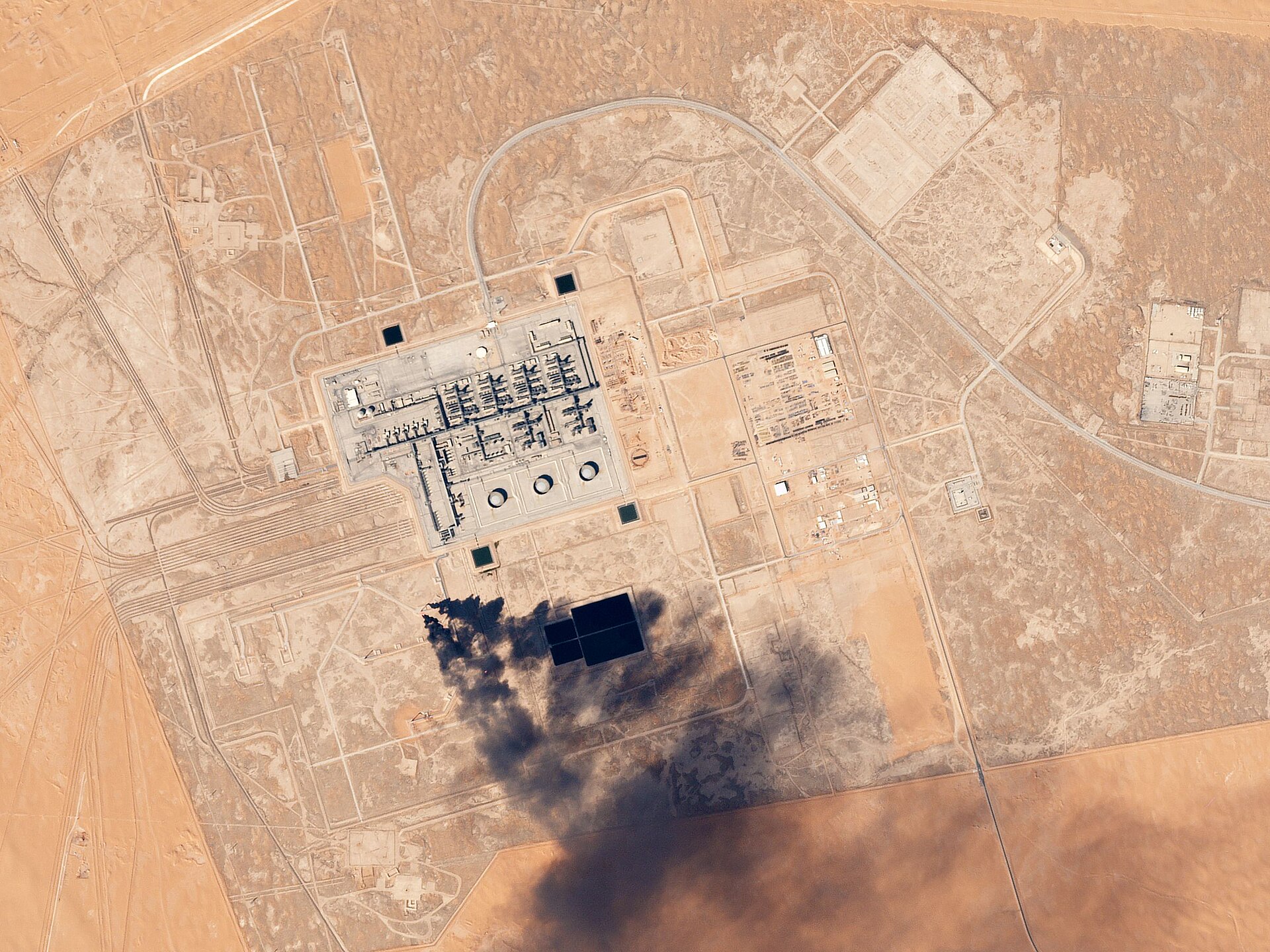
The recent Houthi attacks on Saudi Arabian oil facilities have reverberated far beyond the Middle East, sending shockwaves through global markets. The Houthis, in a bold move, targeted the nerve center of Saudi Aramco, the world’s largest oil exporter, signaling their capability to breach Saudi defenses.
This attack is not just about physical damage; it is a strategic blow to Saudi Arabia’s economic heart. The incident has raised alarms worldwide, with the International Monetary Fund (IMF) warning of a potential ripple effect on global oil prices, which have already surged by nearly 41% this year.
Saudi Arabia’s struggle to defend its critical infrastructure comes at a time when the global economy is vulnerable. The IMF’s forecast hinges on the assumption that oil routes will stabilize, yet the recent disruptions have already led to a significant shortfall in global oil supply.
The stakes are high, and the world is watching closely. As the situation unfolds, the decisions made by key players like Saudi Arabia and the United States could determine the trajectory of global economic stability in the coming months.
According to AP’s latest reporting from Wednesday, October 14, two regional officials said the overnight strike damaged the offices of Aramco’s chief executive and other senior officials, though there were no reported casualties. 0%, but built that forecast on a nearly 41% increase in oil prices this year to an average of $96 a barrel.
1 billion barrels of crude — about 10 days of typical world use — had failed to reach the market. ” The new Houthi hit on Aramco raises the risk that the market’s remaining assumption — that Saudi export capacity and oil administration would stay broadly intact — may no longer hold.
Saudi Civil Defense also said debris from two intercepted Houthi missiles injured four people and damaged 15 homes in Riyadh. AP reported that attacks on Riyadh’s King Khalid International Airport killed three Saudi citizens, including an airline pilot, on Friday, October 9, while another AP dispatch said a separate attack on Riyadh’s international airport had killed at least 13 people and wounded more than 300.
Saudi Arabia’s Energy Ministry separately confirmed a “limited fire” in an administrative building at the Aramco compound in the Eastern Province and said no injuries were reported. Yahya Saree warned that any attack on Sanaa would bring a “harsh and painful” response against Riyadh; hours later, Saudi-led strikes hit Yemen’s capital, and later still an Aramco facility was set ablaze.
The Houthis also warned global airlines “for the last time” about operating in Saudi airspace, underscoring how civilian aviation is now part of the pressure campaign. The main actors are now locked into a dangerous sequence of threat and counterthreat.
The incident has raised alarms worldwide, with the International Monetary Fund (IMF) warning of a potential ripple effect on global oil prices, which have already surged by nearly 41% this year. According to AP’s latest reporting from Wednesday, October 14, two regional officials said the overnight strike damaged the offices of Aramco’s chief executive and other senior officials, though there were no reported casualties.
0%, but built that forecast on a nearly 41% increase in oil prices this year to an average of $96 a barrel. 1 billion barrels of crude — about 10 days of typical world use — had failed to reach the market.
AP reported that attacks on Riyadh’s King Khalid International Airport killed three Saudi citizens, including an airline pilot, on Friday, October 9, while another AP dispatch said a separate attack on Riyadh’s international airport had killed at least 13 people and wounded more than 300. The Houthis, in a bold move, targeted the nerve center of Saudi Aramco, the world’s largest oil exporter, signaling their capability to breach Saudi defenses.
Saudi Arabia’s Energy Ministry separately confirmed a “limited fire” in an administrative building at the Aramco compound in the Eastern Province and said no injuries were reported. The Houthis also warned global airlines “for the last time” about operating in Saudi airspace, underscoring how civilian aviation is now part of the pressure campaign.
The scale and speed of this development has caught many observers off guard. Each new update adds another dimension to a story that is still unfolding, and the full picture will only become clear as more verified details emerge from the people and institutions directly involved.
Analysts who have tracked this issue closely say the current moment represents a genuine turning point. The decisions made in the coming weeks are expected to set the direction for months ahead, with ripple effects likely to extend well beyond the immediate actors in the story.
For those directly affected, the practical impact is already visible. People navigating this fast-changing situation are dealing with real consequences while new information continues to reshape what is known and what remains open to interpretation.
Historical parallels offer some context, though experts caution against drawing too close a comparison. Similar situations have played out before, but the specific combination of pressures, personalities, and timing here makes this moment distinct in ways that matter for how it ultimately resolves.
The political and economic dimensions of this story are deeply intertwined. What appears as a single event on the surface is in practice the convergence of multiple pressures that have been building quietly over a longer period than most public reporting has captured.