

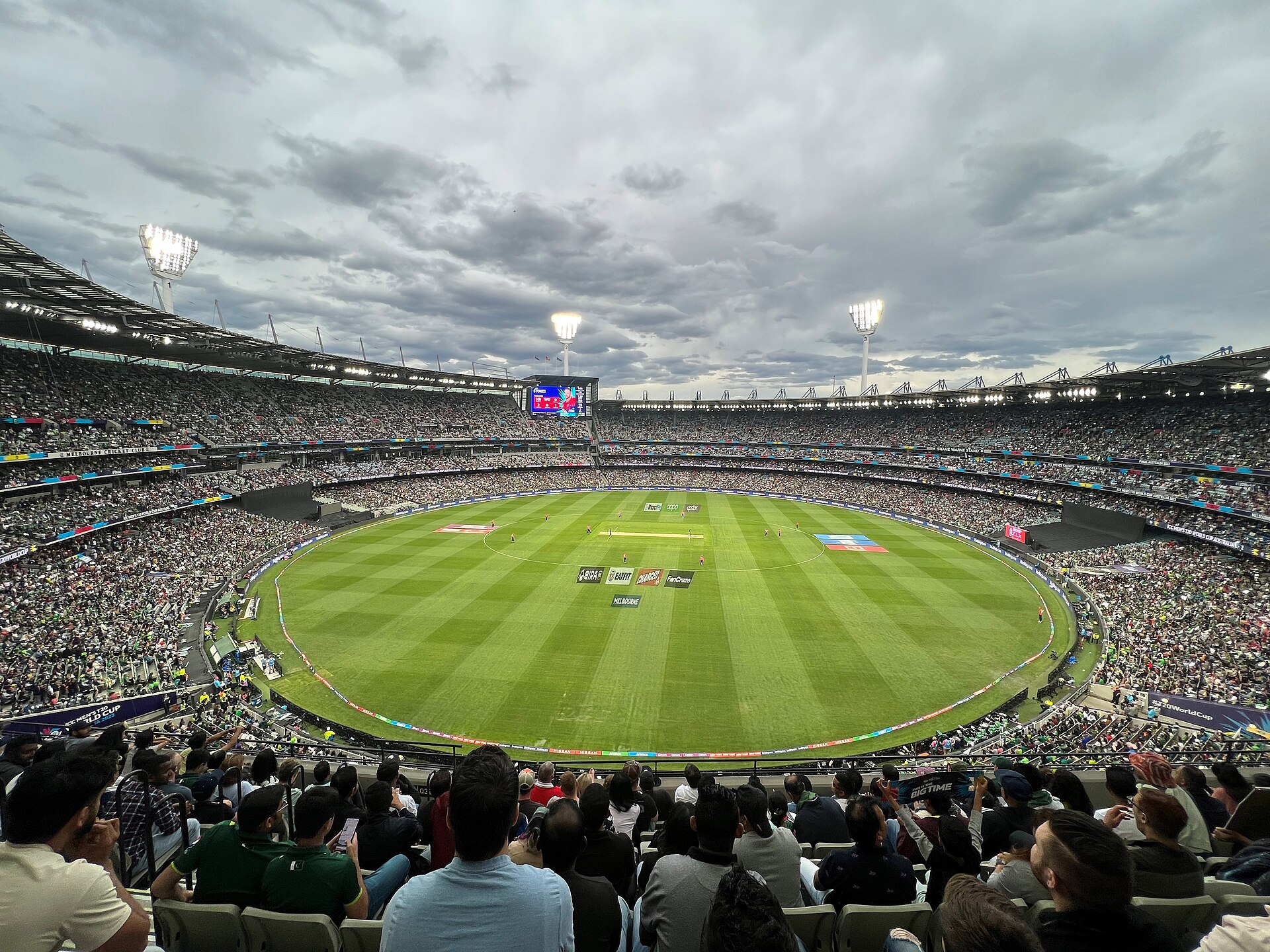

Quick Summary: Sahibzada Farhan Takes Helm as Pakistan Faces T20 Identity Crisis
- Pakistan’s T20 team faces a crisis of identity, entering the Sri Lanka series with a new captain and missing key players.
- Dawn criticizes Pakistan’s lack of a consistent strategy, noting their 9-16 T20 record in 2024 despite frequent coaching changes.
- Sahibzada Farhan leads Pakistan as the new T20 captain, marking a significant shift with the exclusion of Babar Azam and others.
- Pakistan’s recent performance at the 2026 Asian Games highlights their inconsistency, losing to India in the final but showing potential in earlier matches.
- The series against Sri Lanka is a critical test for Pakistan to establish defined roles and a coherent game plan.
Source: Open external resource
Source: Read original article
Pakistan’s T20 cricket team is at a crossroads, facing an identity crisis as they prepare for a crucial series against Sri Lanka. With a new captain at the helm and several key players absent, the team is under pressure to redefine itself and move beyond its reputation for unpredictability.
Dawn’s analysis highlights the core issue: Pakistan’s lack of a consistent strategy. Despite frequent coaching changes and promises of structure, the team has struggled to find a settled shape, as evidenced by their 9-16 T20 record in 2024. The appointment of Sahibzada Farhan as the new T20 captain symbolizes a potential reset, but the absence of stars like Babar Azam raises questions about the team’s direction.
Recent performances at the 2026 Asian Games further underscore Pakistan’s inconsistency. While they managed a silver medal, losing to India in the final exposed their ongoing struggle to maintain composure under pressure. The upcoming series against Sri Lanka is more than just a set of matches; it’s a litmus test for Pakistan’s ability to establish defined roles and a coherent game plan.
The stakes are high as Pakistan seeks to transform its raw talent into a well-oiled machine. With Sri Lanka also in transition, the series promises to be a revealing examination of both teams’ capabilities. Will Pakistan finally shed its unpredictable nature, or will this reset be yet another short-lived shake-up?
Dawn reported on October 4 that more than 1,500 additional police personnel, including Special Protection Unit officers, Elite Force teams and 50 snipers, were deployed for the Pakistan-Sri Lanka T20s and the wider Oct. Officials also said 200 extra surveillance cameras, 200 walkie-talkie sets, 20 police pick-up vans and a 30-bed emergency field hospital were being put in place, with the food street on Double Road closed from October 3.
Sri Lanka, led by Kusal Mendis, arrive in transition too, without Wanindu Hasaranga because of injury and after a 3-0 loss to England, but with a decent historical edge in the rivalry narrative because they swept Pakistan 3-0 in Lahore in 2019. Pakistan begin the series in Rawalpindi on Friday, October 9, 2026, under new full-time T20 captain Sahibzada Farhan, with the next two matches scheduled for October 11 and October 13 at the same ground.
At the 2026 Asian Games in Japan, Pakistan took silver after losing the final to India by 19 runs on October 3. Dawn points back to the 2021 T20 World Cup win over India, when India made 151 for 7 and Babar Azam and Rizwan chased it without losing a wicket, with 13 balls to spare, as proof that clarity works.
That diagnosis is tied to a stark recent record: Pakistan won 9 and lost 16 of their 27 T20 internationals in 2024, while coaching changes kept coming and “each new regime has promised structure” without producing a settled team shape. Across those two innings, Nawaz made 123 runs, which has sharpened the debate over whether Pakistan have finally found a real middle-order option or simply stumbled onto one in a low-pressure event.
It contrasts that with the 2021 semi-final against Australia, where Pakistan had the Australians at 96 for 5 defending 177, only for Matthew Wade and Marcus Stoinis to add an unbeaten 81 after Hasan Ali dropped Wade; Wade then hit three straight sixes off Shaheen Afridi in the 19th over. Dawn’s central revelation on October 9 is blunt: Pakistan are “unpredictable even to themselves,” and the coming three-match home series against Sri Lanka is being treated as a live test of whether the side can finally define basics such as who bats at No.
Pakistan’s recent performance at the 2026 Asian Games highlights their inconsistency, losing to India in the final but showing potential in earlier matches. Dawn reported on October 4 that more than 1,500 additional police personnel, including Special Protection Unit officers, Elite Force teams and 50 snipers, were deployed for the Pakistan-Sri Lanka T20s and the wider Oct.
Officials also said 200 extra surveillance cameras, 200 walkie-talkie sets, 20 police pick-up vans and a 30-bed emergency field hospital were being put in place, with the food street on Double Road closed from October 3. Sri Lanka, led by Kusal Mendis, arrive in transition too, without Wanindu Hasaranga because of injury and after a 3-0 loss to England, but with a decent historical edge in the rivalry narrative because they swept Pakistan 3-0 in Lahore in 2019.
Despite frequent coaching changes and promises of structure, the team has struggled to find a settled shape, as evidenced by their 9-16 T20 record in 2024. Recent performances at the 2026 Asian Games further underscore Pakistan’s inconsistency.
Pakistan begin the series in Rawalpindi on Friday, October 9, 2026, under new full-time T20 captain Sahibzada Farhan, with the next two matches scheduled for October 11 and October 13 at the same ground. At the 2026 Asian Games in Japan, Pakistan took silver after losing the final to India by 19 runs on October 3.
The scale and speed of this development has caught many observers off guard. Each new update adds another dimension to a story that is still unfolding, and the full picture will only become clear as more verified details emerge from the people and institutions directly involved.
Analysts who have tracked this issue closely say the current moment represents a genuine turning point. The decisions made in the coming weeks are expected to set the direction for months ahead, with ripple effects likely to extend well beyond the immediate actors in the story.
For those directly affected, the practical impact is already visible. People navigating this fast-changing situation are dealing with real consequences while new information continues to reshape what is known and what remains open to interpretation.
Historical parallels offer some context, though experts caution against drawing too close a comparison. Similar situations have played out before, but the specific combination of pressures, personalities, and timing here makes this moment distinct in ways that matter for how it ultimately resolves.
The political and economic dimensions of this story are deeply intertwined. What appears as a single event on the surface is in practice the convergence of multiple pressures that have been building quietly over a longer period than most public reporting has captured.