

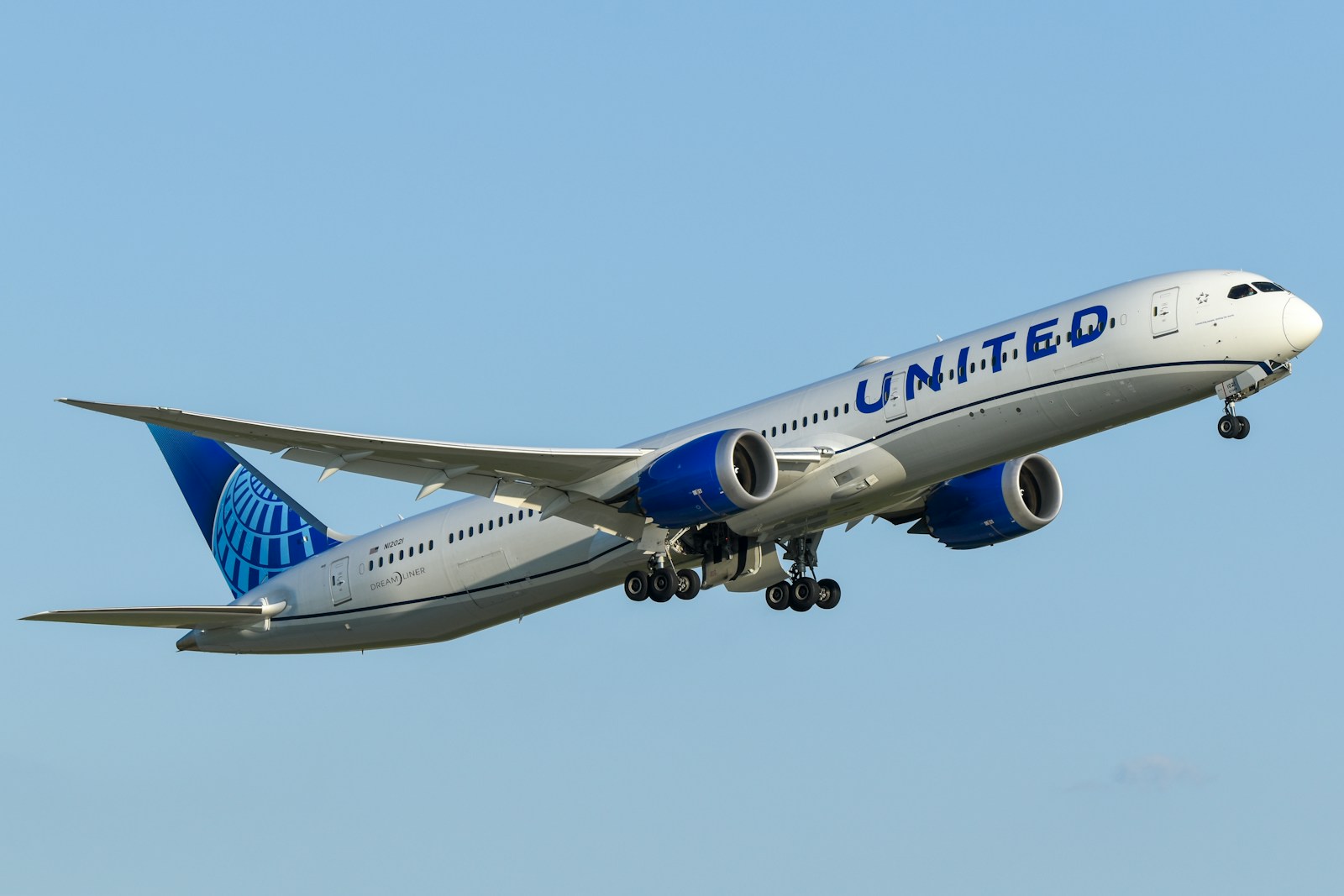

Quick Summary: United Airlines Launches Aggressive Wi-Fi Status Match Campaign
- United Airlines launched a new Wi-Fi status match targeting Delta and American elites, offering a faster path to Premier status.
- The promotion waives United’s usual once-every-three-years restriction, allowing a 90-day match opportunity.
- Eligible Delta and American elites can achieve United tiers by meeting specific spending thresholds on United flights.
- United’s move exploits a gap in Delta’s Wi-Fi rollout, emphasizing its Starlink-equipped fleet.
- Observers note the unusually aggressive nature of United’s campaign, likening it to an airline ‘war’.
Source: Open external resource
Source: Read original article
United Airlines has boldly entered the airline Wi-Fi battle, launching a new status match promotion that directly targets Delta and American Airlines elites. The offer, dubbed ‘Switch To Better Wi-Fi,’ provides a quicker, simplified path to United’s Premier status by emphasizing superior onboard connectivity.
In a strategic move, United is waiving its typical three-year status match restriction for this promotion. Eligible Delta and American elites can match to corresponding United tiers for 90 days, with the possibility of retaining that status until January 2028 if they meet specific spending requirements on United flights. The spending targets are clear: Delta Silver Medallion and American Gold can match to Premier Silver with $1,500 in spending, while higher tiers require more.
The crux of this promotion is not just about status matching; it’s a public confrontation over which airline offers better onboard Wi-Fi. United is outfitting its fleet with Starlink, while Delta’s rollout with Amazon’s service is perceived as lagging. This technological gap has given United a strategic advantage to challenge its rivals.
Airline analyst Henry Harteveldt captured the essence of this competitive move, describing it as ‘war, airline style.’ United’s aggressive campaign language is a departure from the norm, highlighting the intensity of this market rivalry. Delta, meanwhile, is promoting its Delta Sync Wi-Fi, emphasizing broader connectivity experiences for its members.
The timeline for this offer is tight, with the promotion rolling out on October 1, 2026, and a deadline of October 15 for travelers to apply. The real test will be whether this aggressive move by United provokes a broader response from competitors or simply results in a temporary shift among top-tier flyers.
In a Delta News Hub post published last month, Delta said Delta Sync Wi‑Fi on international routes will add Sport 24 live sports access and emphasized broader connected experiences for SkyMiles members. 1, 2026, and at least one closely tracked summary says travelers have until Oct.
3 report, United is waiving its normal once-every-three-years restriction for this Wi‑Fi promotion, matching eligible Delta and American elites to corresponding United tiers for 90 days, with a chance to keep that status into January 2028 if they hit spending thresholds on qualifying United flights. United says Delta Silver Medallion and American Gold can match to Premier Silver and keep it with $1,500 in qualifying spend; Delta Gold and American Platinum can match to Premier Gold with $3,000; Delta Platinum and American Platinum Pro can match to Premier Platinum with $4,500; and Delta Diamond plus American Executive Platinum can match to Premier 1K with $7,000.
The central conflict is not really status matching by itself; it is a public fight over which airline has the better onboard connectivity product and who gets to use that as a weapon in the battle for premium frequent flyers. The same report says invitation-only Delta 360 and American Concierge Key travelers also have additional match options.
That gap, and chatter after leaked comments attributed to Delta CEO Ed Bastian about not choosing Starlink and about Elon Musk, appears to have given United an opening to attack. Airline analyst Henry Harteveldt told CNBC, as quoted by The Points Guy, “This is war, airline style,” adding that “It’s very rare for an airline to be as blatant as United is being” in going after rivals.
Delta said Sync Wi‑Fi is available on all international flights, with full coverage across its transatlantic network, Latin America, Israel and Africa, and that gate-to-gate connectivity on trans-Pacific routes is coming this fall. The standard United status match, as summarized in the same report, usually gives travelers 120 days and requires a mix of Premier Qualifying Flights and Premier Qualifying Points, such as 20 PQFs plus 7,500 PQPs for Premier 1K.
– The Points Guy United Airlines launched a new Wi-Fi status match targeting Delta and American elites, offering a faster path to Premier status. In a Delta News Hub post published last month, Delta said Delta Sync Wi‑Fi on international routes will add Sport 24 live sports access and emphasized broader connected experiences for SkyMiles members.
The spending targets are clear: Delta Silver Medallion and American Gold can match to Premier Silver with $1,500 in spending, while higher tiers require more. The timeline for this offer is tight, with the promotion rolling out on October 1, 2026, and a deadline of October 15 for travelers to apply.
1, 2026, and at least one closely tracked summary says travelers have until Oct. Quick Summary: United’s new Wi-Fi status match aimed at Delta: Who’s eligible to be Premier?
The same report says invitation-only Delta 360 and American Concierge Key travelers also have additional match options. That gap, and chatter after leaked comments attributed to Delta CEO Ed Bastian about not choosing Starlink and about Elon Musk, appears to have given United an opening to attack.
The scale and speed of this development has caught many observers off guard. Each new update adds another dimension to a story that is still unfolding, and the full picture will only become clear as more verified details emerge from the people and institutions directly involved.
Analysts who have tracked this issue closely say the current moment represents a genuine turning point. The decisions made in the coming weeks are expected to set the direction for months ahead, with ripple effects likely to extend well beyond the immediate actors in the story.
For those directly affected, the practical impact is already visible. People navigating this fast-changing situation are dealing with real consequences while new information continues to reshape what is known and what remains open to interpretation.
Historical parallels offer some context, though experts caution against drawing too close a comparison. Similar situations have played out before, but the specific combination of pressures, personalities, and timing here makes this moment distinct in ways that matter for how it ultimately resolves.
The political and economic dimensions of this story are deeply intertwined. What appears as a single event on the surface is in practice the convergence of multiple pressures that have been building quietly over a longer period than most public reporting has captured.