


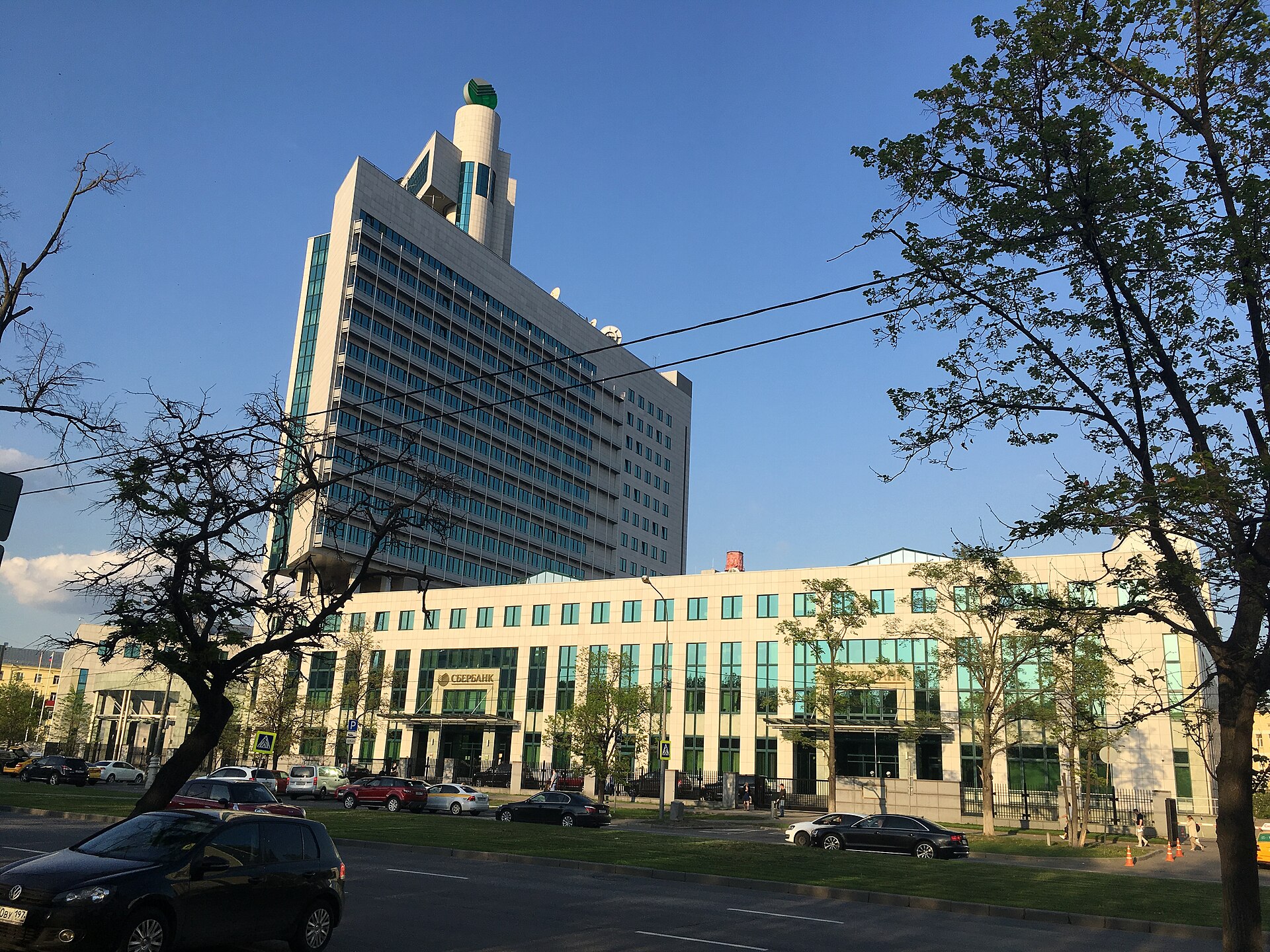

Quick Summary: Sberbank Targets 21% ROE Amid Regulatory Challenges By 2029
- Sberbank aims for a return on equity (ROE) of at least 21% from 2027 to 2029 — signaling confidence despite regulatory challenges.
- The bank plans to maintain a dividend payout of 50% of profits during this period — indicating a commitment to shareholder returns.
- Sberbank forecasts corporate lending growth of 10%-12% and retail lending growth of 7%-9% in 2027 — aligning with market expectations.
- Cost of credit risk is expected to normalize to around 1% by 2029 — reflecting a stabilization in financial risk management.
- The bank emphasizes technology investment, particularly in AI, to drive efficiency and new revenue streams — highlighting a strategic focus on innovation.
Source: Open external resource
Source: Read original article
Sberbank, Russia’s financial titan, is setting ambitious targets for the future while navigating a tightening regulatory landscape. The bank’s recent strategy announcement reveals a plan to achieve a return on equity (ROE) of at least 21% from 2027 to 2029, a slight step down from its previous goal of over 22%. Despite this adjustment, Sberbank remains committed to distributing 50% of its profits as dividends, demonstrating a strong dedication to rewarding its shareholders.
The bank’s leadership, including CFO Taras Skvortsov, has outlined a robust strategy to maintain profitability. Sberbank expects corporate lending to grow by 10%-12% and retail lending by 7%-9% in 2027, aligning with broader market trends. This growth is anticipated to be driven by secured lending, mortgages, and car loans, with private-client funds projected to increase by 11%-13% annually as interest rates ease.
In a bid to bolster its financial stability, Sberbank is also investing heavily in technology. The bank plans to leverage generative AI as a key pillar of its strategy, aiming to reduce costs and create new revenue opportunities. This tech-forward approach is part of Sberbank’s broader effort to enhance resilience and efficiency in an increasingly competitive banking sector.
As Sberbank moves forward, the real challenge will be maintaining its ambitious targets amid regulatory and economic pressures. The bank’s ability to keep its capital adequacy ratio above 13.3% while sustaining generous dividends will be closely scrutinized. With technology and strategic lending as its guiding lights, Sberbank is poised to navigate the complexities of the financial landscape in the coming years.
3%, and Reuters reported that he also said the bank expects a dividend payout of 50% of profit across the period. Interfax’s account of the same presentation said CFO Taras Skvortsov projected ROE would “exceed 21%” in 2027 and remain there through the plan period.
3% or above, preserving the same basic framework that had still not been formally approved when management discussed it in late October. 5% by the end of 2029 even after a gradual decline, the cost of credit risk should normalize to roughly 1% by the end of the period, and the cost-to-income ratio should be held in a roughly 32%-35% band over the next three years.
Skvortsov said, “The regulator’s cautious approach to easing monetary policy combined with fairly strict prudential regulations for the banking sector is limiting the acceleration of lending,” a blunt explanation for why the bank is stepping down from a 22%-plus ROE target to 21%-plus while still calling that sustainable. On October 28, before the strategy launch, Skvortsov said the dividend policy for 2027-2029 would go to the supervisory board on November 10 and be presented on November 12, underscoring that this week’s announcement was the culmination of a closely watched governance decision.
For 2027, Sber forecasts sector-wide corporate lending growth of 10%-12% and retail lending growth of 7%-9%, while saying its own loan book will expand roughly in line with the market; across the full 2027-2029 period, Skvortsov said corporate lending should average 10%-11% growth and retail lending 9%-12%. In the strategy materials published around the launch, the bank said wider commercial deployment of generative AI would be “one of the key pillars” of the 2027-2029 plan, with the aim not only of reducing costs but also of creating new revenue streams.
The most telling new detail from the strategy presentation is the explicit admission that 2027 will be the squeeze year. 4% in 2027, a cost-to-income ratio in the 30%-33% range, zero growth in net commission income, and net interest margin of around 6% for that year.
Sberbank forecasts corporate lending growth of 10%-12% and retail lending growth of 7%-9% in 2027 — aligning with market expectations. The bank’s recent strategy announcement reveals a plan to achieve a return on equity (ROE) of at least 21% from 2027 to 2029, a slight step down from its previous goal of over 22%.
The scale and speed of this development has caught many observers off guard. Each new update adds another dimension to a story that is still unfolding, and the full picture will only become clear as more verified details emerge from the people and institutions directly involved.
Analysts who have tracked this issue closely say the current moment represents a genuine turning point. The decisions made in the coming weeks are expected to set the direction for months ahead, with ripple effects likely to extend well beyond the immediate actors in the story.
For those directly affected, the practical impact is already visible. People navigating this fast-changing situation are dealing with real consequences while new information continues to reshape what is known and what remains open to interpretation.
Historical parallels offer some context, though experts caution against drawing too close a comparison. Similar situations have played out before, but the specific combination of pressures, personalities, and timing here makes this moment distinct in ways that matter for how it ultimately resolves.
The political and economic dimensions of this story are deeply intertwined. What appears as a single event on the surface is in practice the convergence of multiple pressures that have been building quietly over a longer period than most public reporting has captured.