


The Trump Iran conflict entered a more volatile phase Sunday after the president acknowledged that additional American casualties are likely as military operations intensify across the region.
The Trump Iran conflict has already resulted in the deaths of three US service members, with several others seriously wounded, according to US Central Command.
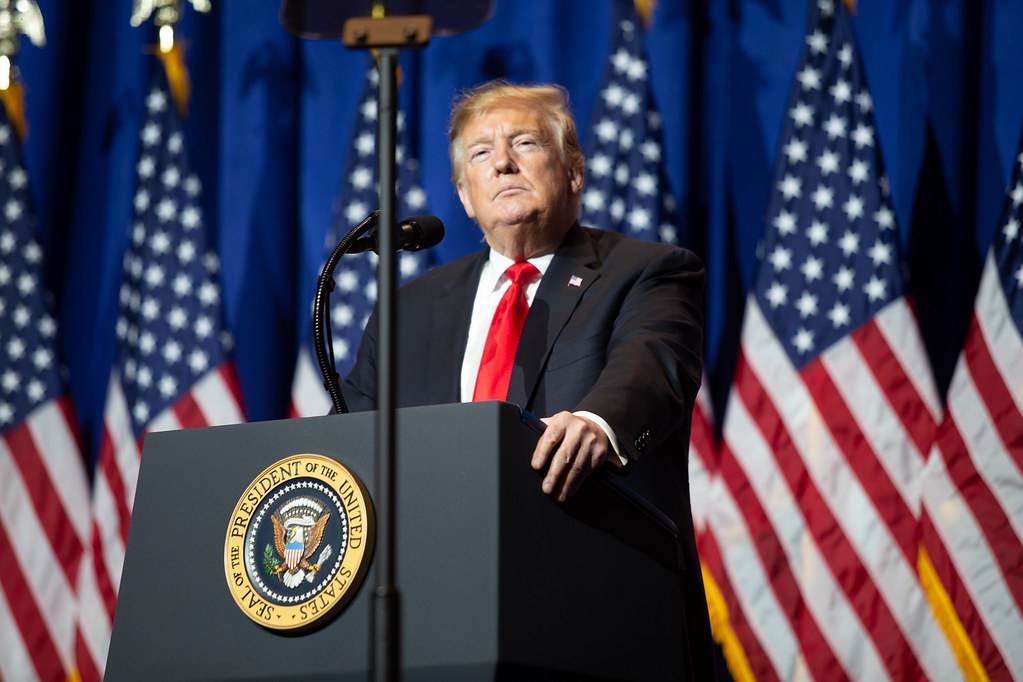
President Donald Trump addressed the nation in a recorded statement, confirming the losses and warning that the military campaign against Iranian targets may continue for weeks. The remarks come as retaliatory strikes ripple across the Persian Gulf, raising fears of wider instability.
Escalation of the Trump Iran conflict
The Trump Iran conflict intensified following coordinated US and Israeli strikes on key Iranian military infrastructure. According to US officials, the operations targeted facilities linked to missile production, drone deployment systems and Revolutionary Guard installations.
In his address, Trump defended the operation as necessary to prevent what he described as an escalating security threat. He stated that American forces acted to neutralize what he called “imminent dangers” to US personnel and regional allies.
While international observers have urged caution, the administration maintains that the action was defensive in nature.
The Trump Iran conflict marks one of the most direct confrontations between Washington and Tehran in recent years, with both sides signaling readiness for further engagement.
Casualties confirmed by US Central Command
United States Central Command confirmed that three American service members were killed during the latest phase of operations. Five additional troops were seriously wounded and are receiving treatment. Several others sustained minor injuries.
Officials declined to release identities pending notification of families.
The Trump Iran conflict represents the first confirmed US combat fatalities in this campaign. Military analysts say such losses underscore the risks of sustained engagement in a region saturated with missile capabilities and proxy forces.
Pentagon officials described the situation as “fluid,” indicating that further strikes remain possible as retaliation continues.
Military objectives and strategic messaging
In his remarks, Trump said the campaign aims to significantly degrade Iran’s military capabilities. He asserted that preventing the development of long-range strike systems and deterring regional aggression remain central goals.
The Trump Iran conflict, he said, is about sending a clear message that attacks on US forces will be met with decisive action.
Defense officials say hundreds of targets have been assessed and prioritized, though operational details remain classified.
Some independent experts note that while infrastructure can be damaged, strategic deterrence often depends on broader diplomatic and political factors.
Regional retaliation and Gulf tensions
Iran’s Revolutionary Guard Corps vowed a forceful response, launching missiles toward installations believed to house US personnel in the Gulf.
Explosions were reported near strategic sites in Bahrain and the United Arab Emirates. Air defense systems were activated in multiple locations.
The Trump Iran conflict has heightened concerns about shipping lanes in the Strait of Hormuz, a critical corridor for global energy supplies. Naval patrols have increased, and regional governments have strengthened security measures around oil infrastructure.
Security analysts warn that miscalculation could quickly expand the scope of hostilities.
European reaction and allied coordination
European leaders have urged restraint while reaffirming commitments to protect their own forces stationed in the Middle East.
The United Kingdom confirmed that limited defensive support would be provided to help intercept potential missile threats. Officials described the cooperation as focused strictly on defensive measures.
The Trump Iran conflict has placed allied governments in a delicate position — balancing solidarity with Washington against fears of broader regional destabilization.
Diplomatic channels remain open, though no formal negotiations have been announced.
Energy markets and global implications
Global energy markets reacted sharply to news of the escalation. Oil prices fluctuated as traders assessed the risk of supply disruptions in the Gulf.
Economists note that prolonged instability in the region could influence inflation, shipping costs and global supply chains.
The Trump Iran conflict is unfolding at a time of economic sensitivity, adding another layer of uncertainty for markets already navigating geopolitical volatility.
Intelligence assessments and nuclear concerns
Trump argued that Iranian capabilities posed an urgent concern, though international monitoring bodies have not publicly confirmed active weaponization efforts.
The Trump Iran conflict is therefore being closely examined through both military and intelligence lenses.
Some analysts suggest that military pressure may aim to reshape strategic calculations in Tehran, while others caution that escalation could harden positions on both sides.
Domestic political response
Lawmakers across party lines offered mixed reactions.
Supporters argue that the Trump Iran conflict demonstrates resolve in defending American personnel. Critics warn that sustained operations could entangle the US in a prolonged regional confrontation.
Public opinion polls show concern about troop safety and the financial cost of extended engagement.
Congressional briefings are expected in the coming days.
Duration and military outlook
When asked how long operations might continue, Trump said the campaign could last several weeks.
Military planners emphasize flexibility, noting that future developments will depend heavily on Iranian responses.
The Trump Iran conflict could evolve into a limited campaign focused on deterrence, or expand if retaliatory strikes intensify.
Experts stress that sustained air and missile exchanges increase the probability of further casualties.
What comes next in the Trump Iran conflict
Central Command continues coordinating with allied forces while monitoring regional activity.
Diplomatic intermediaries have reportedly begun informal outreach efforts aimed at preventing further escalation.
For now, the Trump Iran conflict remains a rapidly developing situation with military, economic and diplomatic dimensions.
Whether the confrontation stabilizes or deepens will depend on the next phase of strategic decisions on both sides.
As operations continue, the focus remains on troop safety, regional stability and the broader implications for global security.