

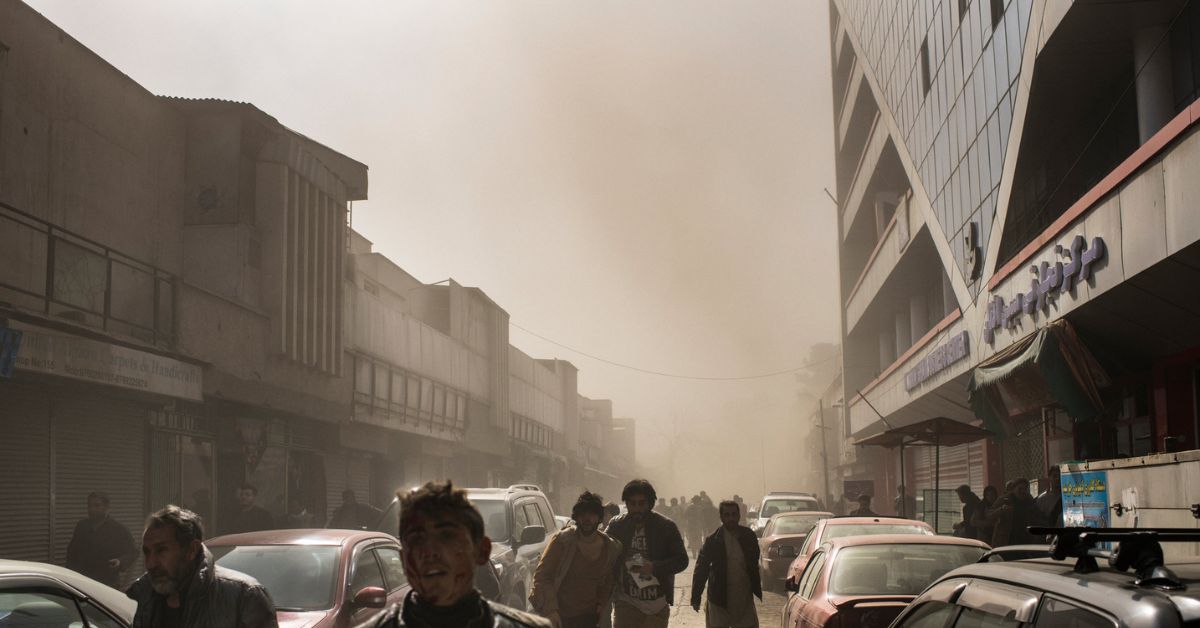

Afghanistan has accused Pakistan of carrying out a devastating airstrike on a major medical facility in Kabul, an allegation that has sharply intensified tensions between the two neighboring countries. The Kabul hospital strike is being described by Afghan officials as one of the deadliest incidents in recent years, with early reports suggesting that hundreds of people may have been killed and many more injured.
The accusation has been strongly denied by Pakistan, which insists that its military operations were carefully targeted and did not involve civilian infrastructure. The conflicting claims have created uncertainty around the exact nature of the incident, but the scale of destruction reported from Kabul has already triggered alarm across the international community.
Background of Rising Tensions
Tensions between Afghanistan and Pakistan have been steadily increasing over the past several weeks, driven by repeated accusations and retaliatory actions along their shared border. Pakistan has long claimed that militant groups are operating from Afghan territory, carrying out attacks inside its borders. Afghanistan, on the other hand, has rejected these allegations and accused Pakistan of violating its sovereignty.
These tensions have manifested in frequent cross-border exchanges, with both sides reporting casualties and damage. The Kabul hospital strike appears to be the most serious development yet, pushing the conflict into a more dangerous and unpredictable phase.
Kabul Hospital Strike: What Happened
The Kabul hospital strike reportedly took place late in the evening, when a large medical facility in the Afghan capital was hit by what officials described as an aerial attack. According to Afghan authorities, the hospital was functioning as a drug rehabilitation center with a capacity to treat thousands of patients.
Eyewitness accounts describe a sudden explosion followed by fires and structural collapse across multiple sections of the building. Rescue teams were seen working through the night, searching for survivors and recovering bodies from the rubble. The sheer scale of the damage has made it difficult to determine the exact number of casualties, but initial estimates suggest that hundreds may have lost their lives.
Officials have stated that many of the victims were patients undergoing treatment, along with healthcare workers and support staff. The Kabul hospital strike has therefore raised serious concerns about the protection of civilian infrastructure in conflict zones.
Conflicting Narratives from Both Sides
Afghanistan’s leadership has strongly condemned the Kabul hospital strike, describing it as a violation of international law. Officials have argued that the attack targeted a clearly civilian facility and should be treated as a potential war crime.
Pakistan, however, has rejected these accusations and maintains that its operations were aimed solely at militant targets. According to Pakistani officials, the strikes were carried out with precision and were intended to neutralize infrastructure linked to armed groups that pose a threat to its national security.
The absence of independent verification has made it difficult to establish the facts. While Afghanistan insists that the Kabul hospital strike was a direct attack on a medical facility, Pakistan argues that any damage to civilian structures was unintended or misreported.
Humanitarian Impact and Casualties
The humanitarian consequences of the Kabul hospital strike are severe. Hospitals and rehabilitation centers play a critical role in providing care to vulnerable populations, and the destruction of such a facility represents a major setback for public health in the region.
Rescue operations have been complicated by ongoing instability and limited resources. Emergency responders have faced significant challenges in accessing parts of the damaged structure, and the risk of further collapse has slowed recovery efforts.
In addition to the reported fatalities, hundreds of individuals have been injured, many of them critically. The Kabul hospital strike has placed additional strain on other medical facilities in the city, which are now struggling to accommodate the influx of patients.
Regional Security Concerns
The Kabul hospital strike has heightened fears of a broader regional conflict. The escalation between Afghanistan and Pakistan comes at a time when the region is already dealing with multiple security challenges, including the presence of various militant groups.
Analysts warn that continued hostilities could create opportunities for these groups to expand their influence. The breakdown of trust between the two countries also reduces the likelihood of coordinated efforts to address shared security threats.
The situation is further complicated by geopolitical dynamics, as neighboring countries and global powers closely monitor developments. Any escalation beyond the current level could have far-reaching implications for stability in South Asia.
Global Reaction and Diplomatic Pressure
The international community has responded with concern to the Kabul hospital strike, urging both Afghanistan and Pakistan to exercise restraint. Calls for an immediate ceasefire and renewed dialogue have been issued by multiple organizations and governments.
There is also growing demand for an independent investigation into the incident. Establishing the facts surrounding the Kabul hospital strike will be crucial for ensuring accountability and preventing further escalation.
Diplomatic efforts are expected to intensify in the coming days, with global leaders emphasizing the importance of protecting civilians and maintaining regional stability.
Historical Roots of the Conflict
The tensions between Afghanistan and Pakistan are rooted in a complex history of political, territorial, and security disputes. Over the years, both countries have accused each other of supporting or harboring militant groups.
These longstanding issues have created a cycle of mistrust and retaliation, making it difficult to achieve lasting peace. The Kabul hospital strike is seen by many as a continuation of this pattern, albeit at a much more severe level.
Understanding the historical context is essential for assessing the current situation and identifying potential pathways toward resolution.
Risk of Escalation and Future Outlook
The Kabul hospital strike has significantly increased the risk of further escalation. Both countries have adopted strong rhetoric, signaling a willingness to defend their positions.
Military analysts suggest that without immediate diplomatic intervention, the situation could deteriorate rapidly. The possibility of additional strikes or retaliatory actions cannot be ruled out.
At the same time, there is cautious optimism that international pressure may encourage both sides to step back from the brink. The coming days will be critical in determining whether the conflict moves toward de-escalation or intensifies further.
Civilian Safety and Infrastructure Damage
One of the most troubling aspects of the Kabul hospital strike is its impact on civilian infrastructure. Hospitals are protected under international humanitarian law, and any attack on such facilities raises serious ethical and legal questions.
The destruction of the hospital has left a gap in healthcare services, affecting not only those directly involved but also the broader community. Efforts to rebuild and restore services are likely to take significant time and resources.
Ensuring the safety of civilians will be a key priority moving forward, particularly if tensions remain high.
Calls for Investigation and Accountability
The Kabul hospital strike has prompted widespread calls for accountability. International organizations and human rights groups have emphasized the need for a transparent and impartial investigation.
Such an investigation would aim to determine the exact circumstances of the strike, identify those responsible, and ensure that appropriate measures are taken to prevent similar incidents in the future.
Accountability is seen as a crucial step toward restoring trust and preventing further violence. Without it, the risk of continued conflict remains high.
Conclusion
The Kabul hospital strike has brought Afghanistan and Pakistan to a critical juncture, with serious implications for both countries and the wider region. The conflicting narratives surrounding the incident underscore the complexity of the situation and the challenges of establishing the truth.
As tensions continue to rise, the need for diplomatic engagement, independent investigation, and humanitarian support has never been greater. The outcome of this crisis will likely shape the future of regional stability and determine whether a path toward peace can be found.