

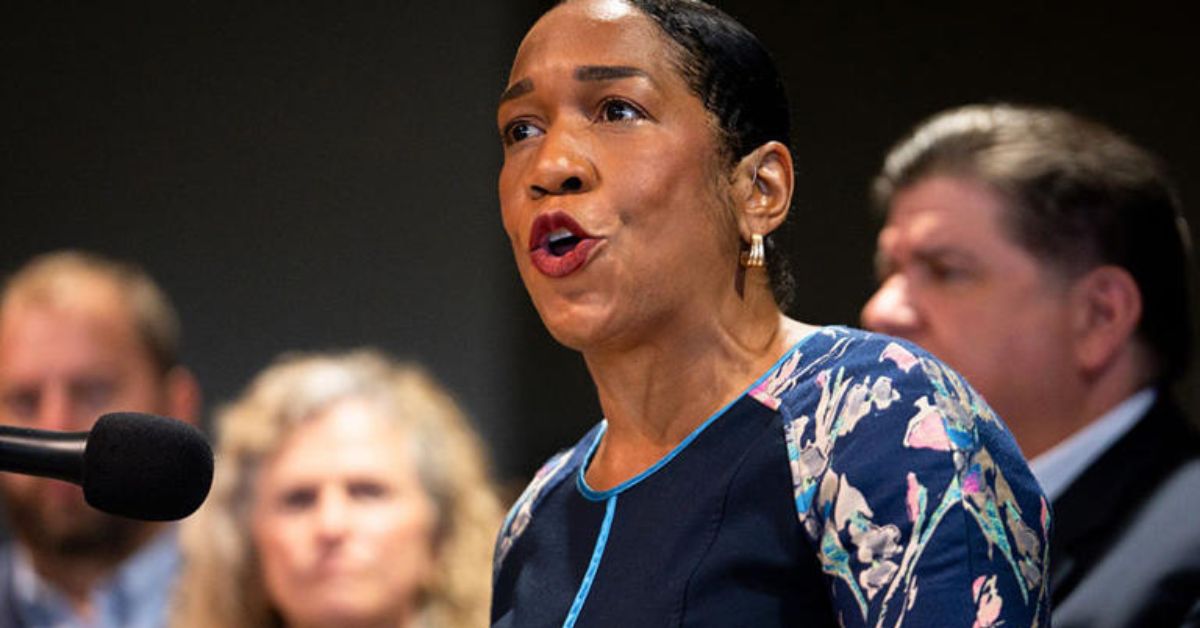

The outcome of the Illinois Democratic Senate primary has taken a dramatic turn, with Juliana Stratton emerging as the unexpected victor in a closely contested race that had drawn national attention.
The result signals a decisive shift in voter sentiment across the state, where a late surge in support helped her overcome early disadvantages and secure a commanding lead over her closest rival. The contest, widely viewed as one of the most competitive primaries in recent Illinois political history, has now set the stage for a high-stakes general election.
A race that transformed in its final weeks
In the early stages of the campaign, the contest appeared to favor a well-funded and widely recognized opponent. Polling data suggested a consistent lead, backed by strong fundraising and established political networks. However, the trajectory of the race began to shift as the campaign entered its final phase.
Juliana Stratton capitalized on this moment by expanding her outreach efforts, sharpening her messaging, and consolidating support among key voter groups. Her campaign focused heavily on grassroots engagement, emphasizing direct communication with communities that often feel overlooked in statewide races.
This strategy proved effective. As early voting numbers began to emerge, signs of momentum became increasingly visible. By the time election day arrived, the race had transformed into a tight contest, ultimately tipping in her favor.
Key issues that shaped voter decisions
The campaign unfolded against a backdrop of pressing national and state-level concerns. Voters were not only evaluating candidates based on experience and endorsements but also on their positions regarding critical policy issues.
Healthcare remained one of the dominant topics throughout the race. Many voters expressed concern over rising costs and accessibility, prompting candidates to present detailed proposals aimed at reform. Juliana Stratton aligned herself with a more progressive approach, advocating for broader coverage and systemic changes.
Economic issues also played a central role. With inflation and wage growth continuing to affect households across Illinois, the campaign addressed topics such as minimum wage increases, job creation, and economic equity. Her messaging emphasized long-term structural solutions rather than short-term fixes.
Immigration policy emerged as another defining issue. Public discourse surrounding enforcement practices and humanitarian considerations brought the topic to the forefront. The campaign’s stance on reform resonated strongly with segments of the electorate seeking comprehensive changes.
The role of endorsements and political backing
Endorsements often serve as a crucial factor in shaping voter perception, particularly in high-profile primaries. In this race, support from influential political figures played a significant role in amplifying campaign visibility.
Juliana Stratton received backing from key state leaders, which helped boost credibility and expand her reach. These endorsements were accompanied by increased financial support, allowing the campaign to invest in advertising, field operations, and voter outreach initiatives.
The timing of this support proved critical. Arriving during the final stretch of the campaign, it provided the necessary momentum to challenge the early frontrunner and reshape the narrative surrounding the race.
Fundraising and campaign strategy
Financial resources often determine the scale and effectiveness of a campaign. In this contest, fundraising disparities initially appeared to favor her opponent, who had amassed a substantial war chest over the course of the election cycle.
Despite this gap, Juliana Stratton demonstrated a strategic approach to resource allocation. Rather than relying solely on large-scale advertising, the campaign prioritized targeted outreach and digital engagement.
This approach allowed for more personalized communication with voters, fostering a sense of connection and trust. It also enabled the campaign to adapt quickly to changing dynamics, responding to emerging issues and voter concerns in real time.
Voter turnout and demographic shifts
One of the most notable aspects of the primary was the level of voter participation. Turnout exceeded expectations for a non-presidential election cycle, indicating heightened interest in the race.
Several factors contributed to this surge. Increased political awareness, combined with the competitiveness of the contest, motivated voters to engage more actively. Early voting options also played a role, providing greater accessibility and convenience.
Demographic shifts further influenced the outcome. Younger voters and urban communities showed strong support for Juliana Stratton, reflecting a broader trend toward progressive candidates in these groups. At the same time, she managed to secure enough backing from suburban areas to build a winning coalition.
A campaign built on narrative and connection
Beyond policy positions, the campaign placed significant emphasis on storytelling and personal connection. Juliana Stratton’s messaging often drew from her own experiences, highlighting themes of resilience, opportunity, and community.
This narrative approach resonated with voters who sought authenticity in political leadership. By presenting a vision that combined personal perspective with policy proposals, the campaign was able to establish a strong emotional connection with the electorate.
Such connections can be decisive in close races, where voter engagement and enthusiasm often determine the final outcome.
The impact of a multi-candidate field
The presence of multiple candidates added complexity to the race. With several contenders appealing to overlapping voter bases, the distribution of support became a critical factor.
In particular, the progressive vote was initially divided among more than one candidate. This raised questions about whether a fragmented base would weaken the chances of any single contender.
However, Juliana Stratton managed to consolidate support as the campaign progressed. Strategic messaging and effective outreach helped unify key segments of the electorate, allowing her to overcome the challenges posed by a crowded field.
Historical and political significance
The outcome of the primary carries broader implications beyond the immediate race. Juliana Stratton’s victory represents a moment of significance in terms of representation and political direction.
Her candidacy reflects a growing emphasis on diversity and inclusion within national politics. If successful in the general election, it would mark an important milestone in the composition of the Senate.
The result also highlights the evolving priorities of voters within the Democratic Party. The shift toward progressive policies suggests a changing landscape that may influence future elections across the country.
The general election outlook
With the primary concluded, attention now turns to the general election. The political environment in Illinois has historically favored Democratic candidates in statewide contests, providing a potential advantage.
Juliana Stratton is expected to face a Republican opponent in November. While the general election presents a different set of challenges, the momentum gained from the primary could prove decisive.
Campaign strategies are likely to evolve in response to a broader electorate. Issues that dominated the primary will continue to play a role, but messaging may expand to address concerns that resonate across party lines.
National implications of the result
The outcome of the Illinois primary is being closely watched beyond state borders. Political analysts view it as part of a larger trend shaping national dynamics.
Juliana Stratton’s victory underscores the influence of grassroots movements and voter-driven campaigns. It also reflects the increasing importance of adaptability in modern political contests.
As parties prepare for upcoming elections, the lessons from this race may inform strategies in other states. The emphasis on direct engagement, clear messaging, and timely support has demonstrated its effectiveness in a competitive environment.
Challenges ahead
Despite the success in the primary, the path forward presents new challenges. Maintaining momentum, expanding outreach, and addressing a wider range of voter concerns will be essential.
Juliana Stratton will need to balance the expectations of her existing supporters with the need to appeal to undecided voters. This requires careful positioning on key issues and consistent communication.
The general election campaign is likely to intensify as both parties seek to mobilize their bases. In such an environment, adaptability and resilience will be critical factors in determining the final outcome.
A defining moment in Illinois politics
The primary has already left a lasting impact on the state’s political landscape. Juliana Stratton’s victory has reshaped expectations and introduced a new dynamic into the race for the Senate.
It has also highlighted the role of voters in driving change. By responding to evolving concerns and priorities, the electorate has demonstrated its ability to influence the direction of political leadership.
As the campaign moves forward, the focus will remain on how this momentum translates into the general election. The coming months will reveal whether the primary result marks the beginning of a broader shift or a singular moment in the state’s political history.
Conclusion
The Illinois Senate primary has delivered a result that few predicted at the outset. Juliana Stratton has emerged as a central figure in the state’s political future, propelled by a campaign that combined strategy, timing, and voter connection.
Her victory reflects changing priorities within the electorate and signals a potential shift in the broader political landscape. As the general election approaches, the implications of this result will continue to unfold, shaping not only the race ahead but also the direction of politics in Illinois and beyond.