

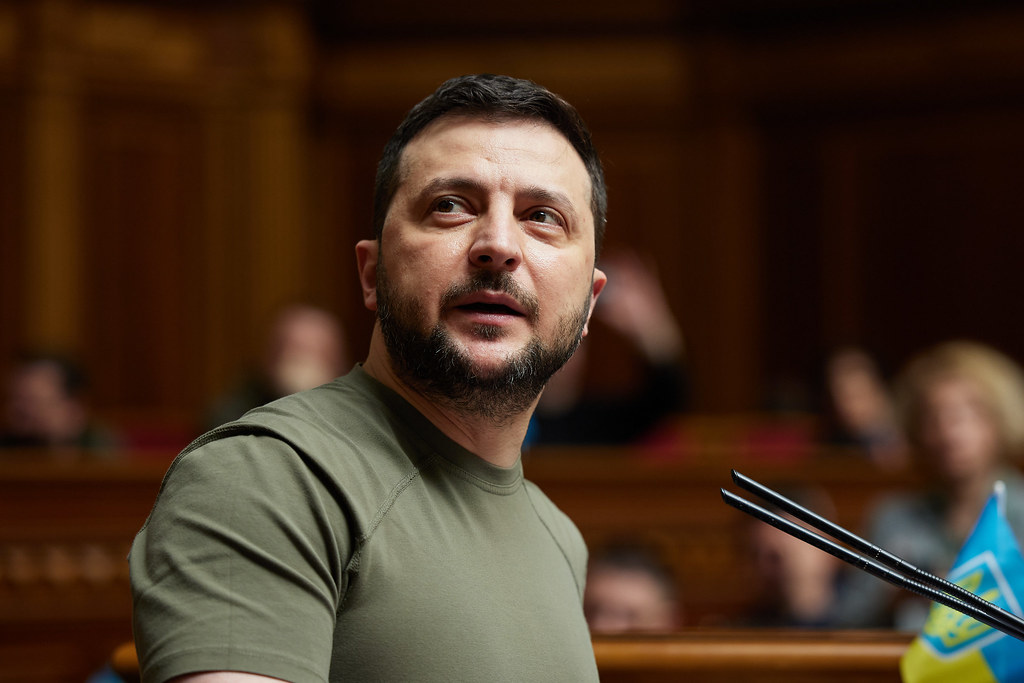

The latest Ukraine war developments signal a critical shift in diplomatic dynamics, as Ukrainian President Volodymyr Zelenskyy raised concerns over proposals that could tie future security guarantees to territorial concessions in the Donbas region. His remarks come at a time when the conflict is entering a complex phase shaped by military pressure, global politics, and evolving strategic interests among major powers.
The Ukraine war has now reached a point where negotiations are no longer confined to ceasefire discussions alone but are deeply intertwined with long-term security arrangements and geopolitical positioning.
Rising Concerns Over Security Guarantees in the Ukraine War
Zelenskyy indicated that discussions involving the United States have included proposals where Ukraine may need to relinquish control over parts of eastern territories in exchange for stronger security assurances. While such proposals are not formally confirmed through official agreements, the suggestion alone has triggered concern within Kyiv’s leadership.
For Ukraine, the Donbas region is not just a contested territory—it represents a core part of its sovereignty and national identity. Any concession, even under international guarantees, is viewed as a decision with long-lasting implications for both security and political stability.
Officials close to the matter suggest that these discussions are part of broader efforts to explore potential pathways to end the Ukraine war. However, the Ukrainian leadership has maintained that peace cannot come at the cost of territorial integrity.
Pressure Builds From Washington
The role of the United States has become increasingly central in shaping the direction of negotiations. Under President Donald Trump, Washington appears to be exploring faster routes toward de-escalation, potentially driven by shifting global priorities and the need to manage multiple geopolitical fronts.
Zelenskyy’s remarks suggest that Kyiv feels mounting pressure to consider compromises that it previously rejected outright. At the same time, U.S. officials continue to emphasize the importance of a negotiated settlement that ensures stability in the region.
This evolving stance highlights the delicate balance between supporting Ukraine militarily and encouraging diplomatic solutions to bring an end to the Ukraine war.
Intelligence and Strategic Bargaining
Another layer of complexity has emerged through allegations involving intelligence-sharing dynamics. Zelenskyy claimed that Russia attempted to influence the broader geopolitical equation by proposing limitations on intelligence cooperation with other nations.
According to his statements, Russia signaled a willingness to adjust certain intelligence activities in exchange for reduced support to Ukraine from Western allies. While these claims remain unverified publicly, they underscore the multifaceted nature of the Ukraine war, where intelligence, diplomacy, and military strategy are deeply interconnected.
Such developments reflect how the conflict extends far beyond the battlefield, involving covert negotiations and strategic calculations among global powers.
Battlefield Realities Continue to Escalate
Despite ongoing diplomatic conversations, the situation on the ground remains volatile. Ukrainian cities continue to face missile and drone strikes, particularly in regions close to the front lines.
In Kharkiv, attacks have resulted in civilian casualties and infrastructure damage, further highlighting the human cost of the Ukraine war. Energy facilities and port operations have also been targeted, raising concerns about economic stability and humanitarian conditions.
At the same time, Ukrainian forces have carried out cross-border drone operations targeting regions within Russia, including Belgorod. These developments indicate that the conflict is not contained within traditional boundaries but is expanding in both scope and intensity.
The Global Dimension of the Ukraine War
The Ukraine war has increasingly drawn in international actors, transforming it into a broader geopolitical issue. Reports of foreign nationals being recruited into the conflict have raised alarms about potential exploitation and human trafficking concerns.
Additionally, European nations are stepping up efforts to tighten economic restrictions on Russia. These measures aim to limit Moscow’s ability to finance its military operations, particularly through energy exports.
The conflict has thus become a focal point for global alliances, economic strategies, and security policies, with ripple effects being felt far beyond Eastern Europe.
Economic Pressure and Energy Strategies
One of the most significant aspects of the Ukraine war is the ongoing economic battle. Western nations are focusing on disrupting Russia’s oil trade, which remains a crucial source of revenue.
Efforts to counter what is often described as a “shadow fleet” of oil transport vessels are part of a broader strategy to enforce sanctions more effectively. These vessels are believed to operate outside traditional regulatory frameworks, allowing Russia to bypass restrictions.
By targeting these operations, Western countries aim to weaken Russia’s economic capacity to sustain prolonged military engagement.
Shifting Alliances and Diplomatic Signals
The geopolitical landscape surrounding the Ukraine war continues to evolve. High-level visits and diplomatic engagements among countries aligned with Russia signal a strengthening of alternative alliances.
These developments indicate that the conflict is not only reshaping regional dynamics but also contributing to a broader realignment of global power structures. Nations are increasingly positioning themselves based on strategic interests tied to the outcome of the war.
The Strategic Importance of Donbas
At the center of the current debate lies the Donbas region. Rich in industrial resources and strategically located, it has long been a focal point of the conflict.
For Ukraine, retaining control over Donbas is essential for maintaining economic stability and national unity. For Russia, the region holds both strategic and symbolic significance.
This makes any discussion about territorial concessions particularly sensitive, as it touches upon issues that go beyond immediate military considerations.
Ukraine’s Position on Sovereignty
Zelenskyy has consistently emphasized that Ukraine’s sovereignty is non-negotiable. While open to diplomatic solutions, Kyiv insists that any agreement must respect internationally recognized borders.
This stance reflects broader public sentiment within Ukraine, where there is strong resistance to any form of territorial compromise. The leadership’s challenge lies in balancing this sentiment with the realities of prolonged conflict and external pressure.
The Role of Ongoing Negotiations
Diplomatic efforts to resolve the Ukraine war are ongoing, with multiple stakeholders involved. These negotiations are complex, involving not only ceasefire terms but also long-term security frameworks, reconstruction plans, and international guarantees.
While progress has been slow, the continued engagement of global powers suggests that there is still a strong push toward finding a resolution.
However, the path forward remains uncertain, with significant differences in expectations and objectives among the parties involved.
Human Impact of the Ukraine War
Beyond political and military considerations, the Ukraine war continues to have a profound impact on civilians. Displacement, loss of infrastructure, and economic hardship are widespread.
Communities near conflict zones face daily challenges, including limited access to essential services and ongoing security threats. Humanitarian organizations are working to provide aid, but the scale of the crisis remains immense.
The human dimension of the conflict serves as a reminder of the urgency of finding a sustainable solution.
A Conflict at a Turning Point
The Ukraine war appears to be entering a phase where critical decisions could shape its future trajectory. The potential linkage between security guarantees and territorial concessions represents a significant shift in negotiation dynamics.
At the same time, continued military activity underscores that a resolution is not imminent. Both sides remain deeply entrenched, with strategic considerations influencing every move.
Conclusion
The Ukraine war is no longer defined solely by battlefield developments. It has become a complex interplay of diplomacy, global politics, economic strategy, and human resilience.
Zelenskyy’s remarks highlight the difficult choices facing Ukraine as it navigates pressure from allies while defending its sovereignty. The involvement of major powers and evolving geopolitical alliances further complicate the path toward peace.
As discussions continue and tensions persist, the coming period will be crucial in determining whether the Ukraine war moves closer to resolution or continues along its current trajectory of uncertainty and escalation.
For more updates, read the latest news on Digital Chew.