

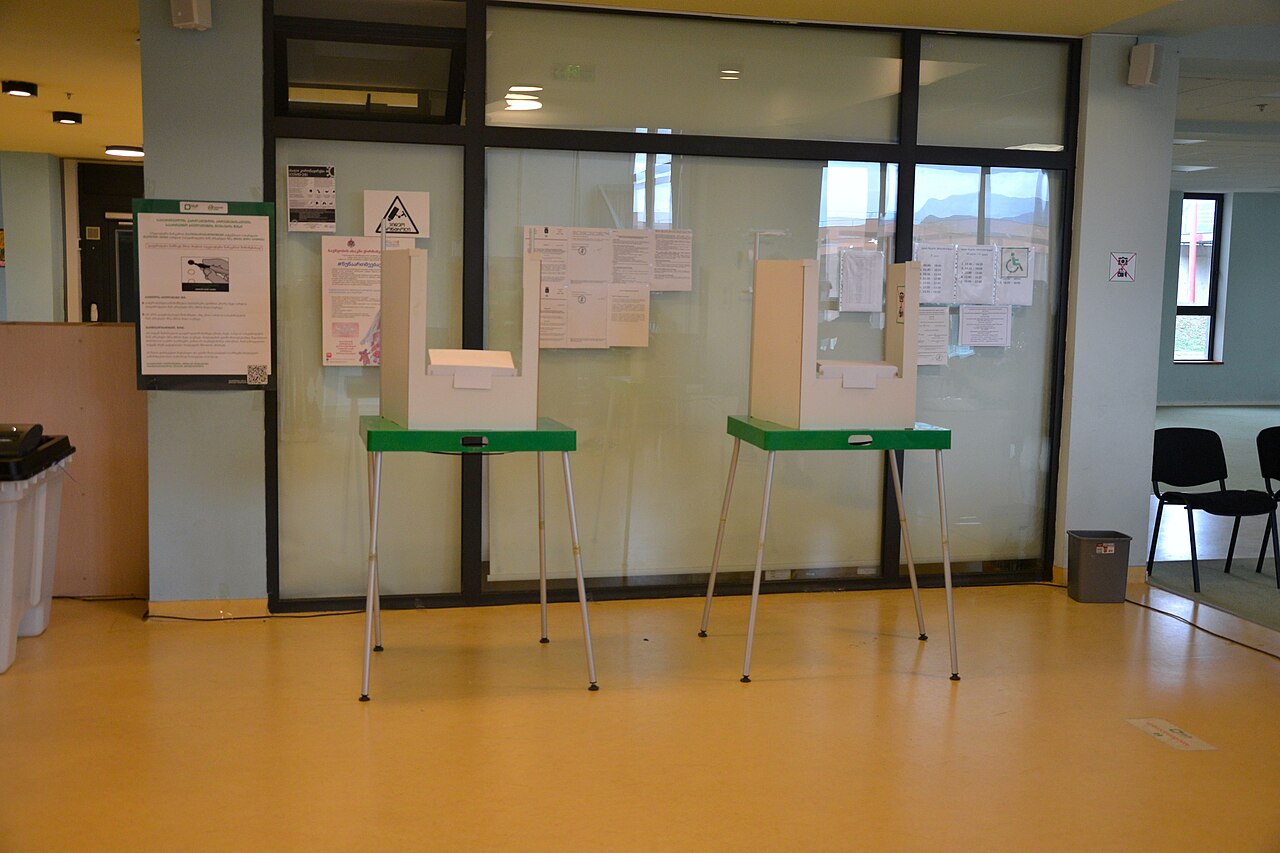

Quick Summary: Georgians Voted High Engagement
- Over 1 million Georgians voted early, representing 14% of registered voters, signaling high engagement.
- More than $125 million was spent on the Republican gubernatorial primary, with Jackson’s campaign contributing over $66 million.
- Jones and Jackson head to a runoff with 39% and 33% of the vote, respectively, after failing to secure a majority.
- Keisha Lance Bottoms secured the Democratic nomination outright with 57%, avoiding a runoff.
- The Senate race also heads to a runoff, with Collins and Dooley advancing, highlighting GOP divisions.
Source: Read original article
Georgia’s Republican primary has descended into chaos, with both the gubernatorial and Senate races heading to runoffs. Despite massive spending, no candidate secured a majority, leaving the GOP in disarray. Georgians Voted is at the center of this development.
The gubernatorial primary alone saw over $125 million in advertising, with Rick Jackson’s campaign spending over $66 million. Yet, the race remains unresolved, with Burt Jones and Jackson advancing to a runoff.
On the Democratic side, Keisha Lance Bottoms emerged victorious with 57%, securing her place as the party’s nominee. Meanwhile, the GOP continues to grapple with internal divisions, as the Senate race also heads to a runoff.
With the runoffs set for June 16, both parties have limited time to consolidate support and refine their strategies. The outcome will be a crucial indicator of the GOP’s direction in Georgia.
Before Election Day, more than 1 million Georgians had already cast ballots, roughly 14% of registered voters, according to figures cited by Axios from Secretary of State Brad Raffensperger’s office. AP reported that more than $125 million was spent on advertising in the Republican primary for governor alone, including more than $66 million from Jackson’s campaign, turning the contest into a bruising test of whether raw wealth could overpower Jones’s base as a statewide elected official and Donald Trump-aligned contender.
Axios, citing unofficial Georgia results, reported Jones at about 39% and Jackson at about 33%, forcing a runoff rather than the quick knockout either camp wanted. Senate race to June 16 runoffs after no candidate broke 50%.
Georgia’s primary runoff is set for June 16, 2026, a date confirmed by state election information and multiple race reports, and both parties now have less than a month to consolidate supporters, raise more money and sharpen contrasts. The headline from the latest reporting is not simply who won Tuesday, but who didn’t: after a night of huge spending, national attention and months of intraparty warfare, Georgia Republicans still do not have nominees for their two biggest 2026 races.
On the Democratic side, former Atlanta Mayor Keisha Lance Bottoms avoided that mess entirely, winning her nomination outright with 57%, instantly becoming the general-election standard-bearer while Republicans burn another month in an intraparty war. The same report said Democratic-ballot voters were running about 153,000 ahead of Republicans in early participation, a data point that fed Democratic hopes of another strong statewide showing even as the state remains fiercely competitive.
Tuesday, Collins was holding nearly 41% of the unofficial vote, enough to finish first but not enough to clinch the nomination outright. The runoff now gives Republicans another month of expensive combat before they can fully pivot to Ossoff, whose seat is one of the party’s top pickup opportunities of 2026.
Axios, citing unofficial Georgia results, reported Jones at about 39% and Jackson at about 33%, forcing a runoff rather than the quick knockout either camp wanted. Georgia’s primary runoff is set for June 16, 2026, a date confirmed by state election information and multiple race reports, and both parties now have less than a month to consolidate supporters, raise more money and sharpen contrasts.
Jones and Jackson head to a runoff with 39% and 33% of the vote, respectively, after failing to secure a majority. The gubernatorial primary alone saw over $125 million in advertising, with Rick Jackson’s campaign spending over $66 million.
The scale and speed of this development has caught many observers off guard. Each new update adds another dimension to a story that is still unfolding, and the full picture will only become clear as more verified details emerge from the people and institutions directly involved.
Analysts who have tracked this issue closely say the current moment represents a genuine turning point. The decisions made in the coming weeks are expected to set the direction for months ahead, with ripple effects likely to extend well beyond the immediate actors in the story.
For those directly affected, the practical impact is already visible. People navigating this fast-changing situation are dealing with real consequences while new information continues to reshape what is known and what remains open to interpretation.
Historical parallels offer some context, though experts caution against drawing too close a comparison. Similar situations have played out before, but the specific combination of pressures, personalities, and timing here makes this moment distinct in ways that matter for how it ultimately resolves.
The political and economic dimensions of this story are deeply intertwined. What appears as a single event on the surface is in practice the convergence of multiple pressures that have been building quietly over a longer period than most public reporting has captured.