

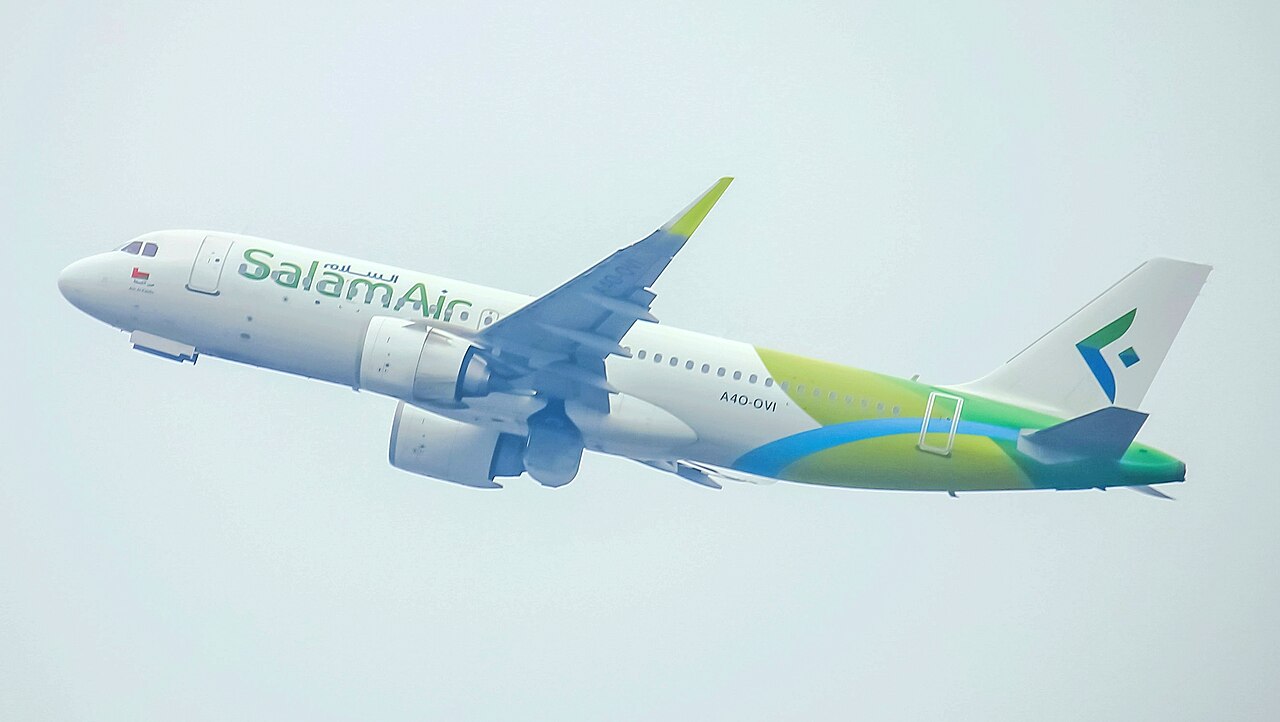

Quick Summary: Salamair Announced New Direct Muscat – Kigali Route
- SalamAir announced a new direct Muscat-Kigali route starting July 21, 2026, with two weekly flights.
- The Omani government acquired SalamAir in March 2026 to integrate its aviation sector with Oman Air.
- Earlier reports indicated Oman Air would launch the Kigali route in June 2026, but SalamAir took the lead.
- SalamAir plans to expand its fleet from 15 to 25 aircraft by 2028, supporting its African network growth.
- The Kigali route is part of SalamAir’s strategy to tap into underserved and high-potential markets.
Source: Read original article
SalamAir’s announcement of direct flights from Muscat to Kigali marks a significant strategic shift in Oman-Rwanda aviation relations. Scheduled to commence on July 21, 2026, this new route is not just a diplomatic gesture but a concrete step towards enhancing connectivity between the two regions. Salamair Announced is at the center of this development.
The Omani government’s acquisition of SalamAir earlier this year underscores a broader strategy to integrate the country’s aviation sector, aligning SalamAir’s operations with Oman Air’s ambitions. This move has shifted the operational face of the Kigali route from Oman Air to SalamAir, highlighting a strategic pivot.
Contextually, this development is part of SalamAir’s larger expansion plan into Africa, aiming to serve underserved markets with high potential. The airline’s fleet expansion and strategic focus on business and leisure travel between Oman and East Africa are central to this narrative.
As the inaugural flight date approaches, the aviation community is keenly watching for regulatory approvals and operational details that will solidify this route as a key corridor in Oman-Rwanda relations.
There is also a subtle competitive and planning wrinkle: earlier Rwanda-linked reporting in January said Oman Air, not SalamAir, would launch direct Muscat-Kigali flights, with one official Rwanda government item saying Oman Air service was due in June 2026. The airline said the service will begin on July 21, 2026, and route-tracking sites are already listing the nonstop at roughly 5 hours 35 minutes westbound, with the reverse direction around 5 hours 55 minutes.
Adding to that intrigue, public reference material notes that the Omani government completed its acquisition of SalamAir on March 26, 2026, in an effort to build a more integrated aviation sector alongside Oman Air, which could help explain why the operational face of the Rwanda route appears to have shifted. In January 2026, Rwanda’s infrastructure ministry publicized an Oman Air announcement for direct Kigali service, calling it a major step in connecting Oman and Africa and saying the flights were expected to commence in June 2026.
But the live, verifiable sales activity now sits with SalamAir, and the start date currently visible in the market is July 21, 2026, not June. The most specific and current reporting I could verify points back to SalamAir’s own April 30, 2026 announcement that ticket sales are open for direct Muscat-Kigali service, with flights planned every Tuesday and Thursday, subject to regulatory approvals.
The airline also disclosed meaningful scale behind that strategy: SalamAir says it currently operates a fleet of 15 Airbus A320/A321 aircraft, runs more than 80 daily flights to 38 destinations, and plans to grow to 25 aircraft by 2028 after announcing an order for 10 additional planes in February 2025. As for the timeline, the key dated events are tight and recent by aviation standards: April 30, 2026 was SalamAir’s formal route announcement; May 7, 2026 trade reporting was still describing the launch as pending approvals; and as of this week, live schedule databases continue to show the route beginning on July 21, 2026.
” He added that “Rwanda has seen consistent growth in tourism and business travel in recent years,” and described Kigali as “a vibrant, modern gateway” that opens access to wider eco-tourism demand. The main organizations driving the story are SalamAir, Oman’s aviation authorities and government stakeholders, and Rwanda’s tourism and infrastructure ecosystem, with Kigali positioned as both a destination and a gateway.
In January 2026, Rwanda’s infrastructure ministry publicized an Oman Air announcement for direct Kigali service, calling it a major step in connecting Oman and Africa and saying the flights were expected to commence in June 2026. But the live, verifiable sales activity now sits with SalamAir, and the start date currently visible in the market is July 21, 2026, not June.
The Omani government’s acquisition of SalamAir earlier this year underscores a broader strategy to integrate the country’s aviation sector, aligning SalamAir’s operations with Oman Air’s ambitions. ” He added that “Rwanda has seen consistent growth in tourism and business travel in recent years,” and described Kigali as “a vibrant, modern gateway” that opens access to wider eco-tourism demand.
The scale and speed of this development has caught many observers off guard. Each new update adds another dimension to a story that is still unfolding, and the full picture will only become clear as more verified details emerge from the people and institutions directly involved.
Analysts who have tracked this issue closely say the current moment represents a genuine turning point. The decisions made in the coming weeks are expected to set the direction for months ahead, with ripple effects likely to extend well beyond the immediate actors in the story.
For those directly affected, the practical impact is already visible. People navigating this fast-changing situation are dealing with real consequences while new information continues to reshape what is known and what remains open to interpretation.
Historical parallels offer some context, though experts caution against drawing too close a comparison. Similar situations have played out before, but the specific combination of pressures, personalities, and timing here makes this moment distinct in ways that matter for how it ultimately resolves.
The political and economic dimensions of this story are deeply intertwined. What appears as a single event on the surface is in practice the convergence of multiple pressures that have been building quietly over a longer period than most public reporting has captured.