

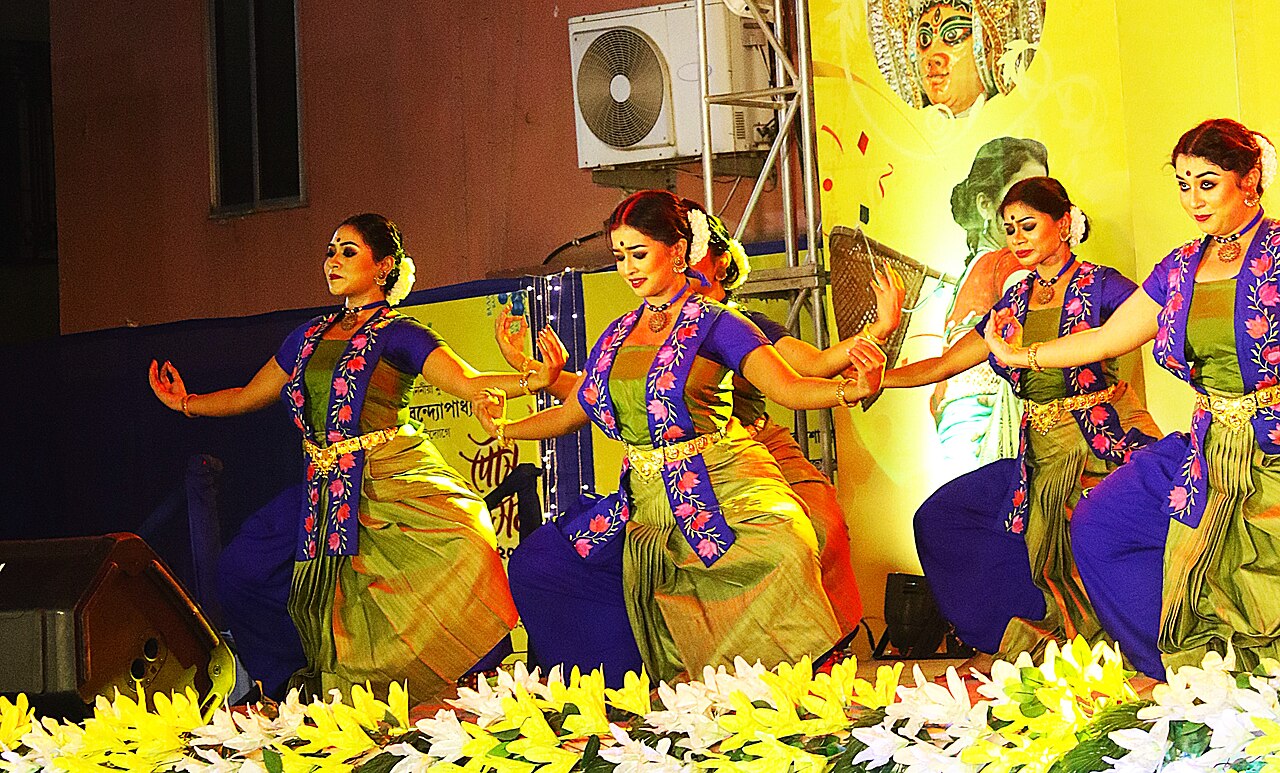

Quick Summary: Ananya Panday Defends Bharatanatyam Fusion Performance Amid Controversy
- The controversy centers on a Bharatanatyam-fusion stage sequence from Chand Mera Dil, released on May 22, 2026, starring Ananya Panday.
- Shobhaa De defends Ananya Panday, arguing responsibility lies with the choreographer and director.
- De’s comments have shifted the debate from cultural insult to questioning the role of filmmakers.
- The film’s weak box-office performance has intensified scrutiny on Ananya’s dance sequence.
- Chunky Panday, Ananya’s father, also defended the performance, urging critics to consider the full context.
Source: Read original article
In a whirlwind of online criticism, Shobhaa De has boldly redirected the blame from Ananya Panday to the filmmakers behind the controversial Bharatanatyam-fusion sequence in Chand Mera Dil. De’s intervention comes as social media users mock the performance, dubbing it ‘Nepo Natyam’ and accusing it of disrespecting classical dance traditions.
The film, which premiered on May 22, 2026, features Ananya Panday in a pivotal role, performing a dance that blends Bharatanatyam with hip-hop. This fusion has sparked outrage, leading to a broader debate about who should be held accountable for the perceived misstep. De argues that the choreographer and director should face the brunt of the criticism, not Panday, who is not a trained Bharatanatyam dancer.
Adding fuel to the fire, the film’s lackluster box-office performance has intensified the backlash, with critics seizing on the dance sequence as a symbol of the film’s struggles. Ananya’s father, Chunky Panday, has also stepped in, urging audiences to view the performance in its full context rather than through viral clips.
As the debate rages on, the focus has shifted from the dance itself to the responsibilities of filmmakers in crafting culturally sensitive performances. Whether this controversy remains a social media spectacle or evolves into a serious discussion about cultural representation and performance standards will depend on the filmmakers’ response.
The controversy centers on a Bharatanatyam-fusion stage sequence from Chand Mera Dil, which released in theaters on May 22, 2026, and stars Ananya Panday opposite Lakshya in their first film together. On May 26, NDTV published De’s defense, and on May 27, The Indian Express amplified it further, turning what began as trolling into a broader debate over who bears responsibility when actors perform poorly in highly stylized sequences: the performer, the choreographer, or the director.
She said, “She’s not a trained Bharatanatyam dancer, and if you have to call out anyone, shouldn’t it be the choreographer and the director? Cinema Express captured the fury of the backlash on May 24, quoting users who called the performance “cultural desecration” and “talentless nepo cosplay,” while also noting that criticism drew on older claims that Hindi cinema gives her opportunities unavailable to outsiders.
As of the latest reporting, no choreographer or director rebuttal had surfaced in the articles reviewed, which is precisely why De’s remarks land as the key development: she has created a new pressure point by naming the off-screen decision-makers as the people who should answer. ” In another pointed remark, she said the clip may have been “taken out of context,” which is significant because it reframes the argument from cultural insult to selective outrage over a short viral excerpt.
39 crore on day 1, a figure that sharpened scrutiny on every aspect of the release, including Ananya’s performance. By May 24, trade and entertainment outlets were already reporting a severe backlash to the dance clip, with social-media posts mocking Ananya’s expressions and technique.
A second new layer in the last 24 hours is the family defense. On May 22, Chand Mera Dil opened in cinemas.
The film, which premiered on May 22, 2026, features Ananya Panday in a pivotal role, performing a dance that blends Bharatanatyam with hip-hop. On May 26, NDTV published De’s defense, and on May 27, The Indian Express amplified it further, turning what began as trolling into a broader debate over who bears responsibility when actors perform poorly in highly stylized sequences: the performer, the choreographer, or the director.
She said, “She’s not a trained Bharatanatyam dancer, and if you have to call out anyone, shouldn’t it be the choreographer and the director? As of the latest reporting, no choreographer or director rebuttal had surfaced in the articles reviewed, which is precisely why De’s remarks land as the key development: she has created a new pressure point by naming the off-screen decision-makers as the people who should answer.
This fusion has sparked outrage, leading to a broader debate about who should be held accountable for the perceived misstep. ” In another pointed remark, she said the clip may have been “taken out of context,” which is significant because it reframes the argument from cultural insult to selective outrage over a short viral excerpt.
Shobhaa De defends Ananya Panday, arguing responsibility lies with the choreographer and director. 39 crore on day 1, a figure that sharpened scrutiny on every aspect of the release, including Ananya’s performance.
The scale and speed of this development has caught many observers off guard. Each new update adds another dimension to a story that is still unfolding, and the full picture will only become clear as more verified details emerge from the people and institutions directly involved.
Analysts who have tracked this issue closely say the current moment represents a genuine turning point. The decisions made in the coming weeks are expected to set the direction for months ahead, with ripple effects likely to extend well beyond the immediate actors in the story.
For those directly affected, the practical impact is already visible. People navigating this fast-changing situation are dealing with real consequences while new information continues to reshape what is known and what remains open to interpretation.
Historical parallels offer some context, though experts caution against drawing too close a comparison. Similar situations have played out before, but the specific combination of pressures, personalities, and timing here makes this moment distinct in ways that matter for how it ultimately resolves.
The political and economic dimensions of this story are deeply intertwined. What appears as a single event on the surface is in practice the convergence of multiple pressures that have been building quietly over a longer period than most public reporting has captured.